Machine Learning

Machine learning (ML) is a key area of artificial intelligence (AI) that helps computers learn from data and get better at tasks over time, without needing to be directly programmed. By recognizing patterns in data, ML algorithms can make predictions and decisions that are useful in many fields, from healthcare to finance and e-commerce. Whether it’s improving customer service or helping businesses make smarter decisions, machine learning is changing the way we interact with technology. Keep up with the latest in machine learning by following our blog for updates and insights.

A high-resolution differential interference contrast (DIC) image of cancer cells undergoing immunogenic cell death, analyzed by an AI-powered detection system, highlighting swollen and ruptured cells in real time.

7 Revolutionary Breakthroughs in Cancer Immunotherapy: How AI is Transforming ICD Screening

Cancer remains one of the most formidable challenges in modern medicine. While immunotherapy has revolutionized treatment for some, many tumors—known as “cold tumors”—remain unresponsive. These tumors lack the immune cell infiltration necessary for therapies like checkpoint inhibitors to work. The key to unlocking their potential? Immunogenic Cell Death (ICD). ICD is a powerful form of […]

7 Revolutionary Breakthroughs in Cancer Immunotherapy: How AI is Transforming ICD Screening Read More »

Infographic showing 7 key advancements in AI uncertainty estimation, highlighting SRBF model, subclass learning, and performance metrics like AUROC.

7 Revolutionary Breakthroughs in AI Uncertainty Estimation: The Good, the Bad, and the Future of Trustworthy AI

In the rapidly evolving world of artificial intelligence, one of the most pressing challenges isn’t just accuracy—it’s trust. How can we rely on AI systems in high-stakes environments like healthcare, autonomous driving, or finance if they can’t tell us when they’re uncertain? This is where uncertainty estimation in deep learning becomes not just a technical

7 Revolutionary Breakthroughs in AI Uncertainty Estimation: The Good, the Bad, and the Future of Trustworthy AI Read More »

Infographic showing a person wearing smart sensors while AI models analyze activity data in real-time, highlighting accuracy, bias, and model performance trade-offs in healthcare applications.

7 Shocking Truths About Wearable AI in Healthcare: The Good, The Bad, and The Overhyped

In the rapidly evolving world of digital health, wearable AI for human activity recognition (HAR) is being hailed as a revolutionary tool—promising to transform elder care, chronic disease management, and rehabilitation. But how much of the hype is real, and how much is overblown? A groundbreaking 2025 study published in Neurocomputing dives deep into this

7 Shocking Truths About Wearable AI in Healthcare: The Good, The Bad, and The Overhyped Read More »

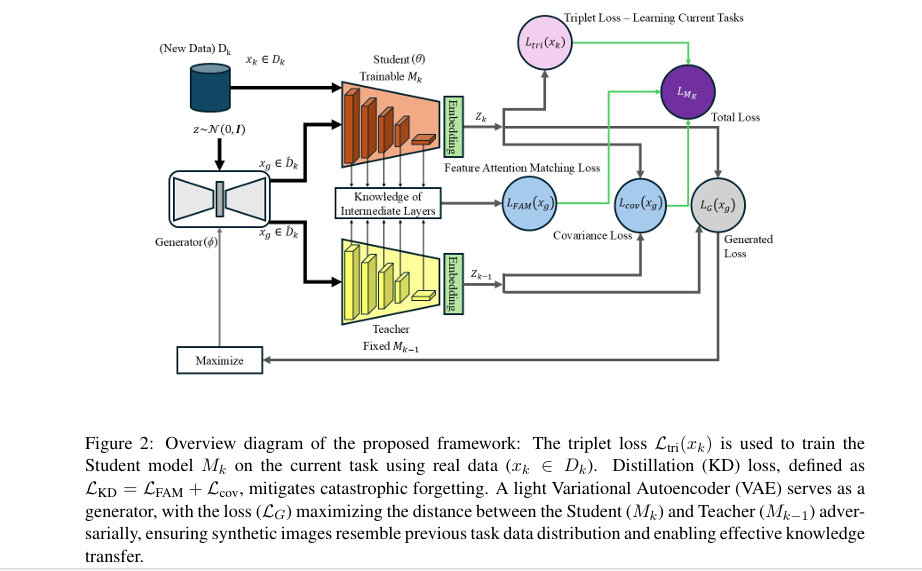
Adapt&Align framework

7 Revolutionary Breakthroughs in Continual Learning: The Rise of Adapt&Align

In the fast-evolving world of artificial intelligence, one of the most persistent challenges has been catastrophic forgetting—a phenomenon where neural networks abruptly lose performance on previously learned tasks when trained on new data. This flaw undermines the dream of truly intelligent, adaptive systems. But what if there was a way to not only prevent forgetting

7 Revolutionary Breakthroughs in Continual Learning: The Rise of Adapt&Align Read More »

Diagram showing how AdaPAC improves AI model accuracy by aligning test data with source prototypes using contrastive learning – a breakthrough in domain generalization.

Shocking Failures of Standard AI Models (And the 1 Solution That Fixes Them All) – AdaPAC Explained

In the fast-evolving world of artificial intelligence, deep learning models are expected to perform flawlessly across diverse environments — from self-driving cars navigating foggy streets to medical imaging systems diagnosing rare conditions. But here’s the shocking truth: most AI models fail when faced with real-world data shifts. A groundbreaking new study titled “AdaPAC: Prototypical Anchored

Shocking Failures of Standard AI Models (And the 1 Solution That Fixes Them All) – AdaPAC Explained Read More »

Infographic showing a hybrid CNN-QNN model analyzing a dermatoscopic image of a melanoma diagnosis, with quantum circuits and deep learning layers integrated.

7 Revolutionary Breakthroughs in Melanoma Diagnosis: The Quantum AI Edge That’s Changing Everything

Melanoma, one of the most aggressive forms of skin cancer, is on the rise globally, with incidence rates increasing by 3–5% annually in white populations. Despite advances in dermatology, early detection remains a challenge due to the subjectivity of visual diagnosis and the risk of human error. But what if artificial intelligence (AI) could not

7 Revolutionary Breakthroughs in Melanoma Diagnosis: The Quantum AI Edge That’s Changing Everything Read More »

ETDHDNet model architecture for advanced tuberculosis prediction in chest X-rays – a fusion of texture analysis and deep learning.

9 Revolutionary ETDHDNet Breakthrough: The Ultimate AI Tool That’s Transforming Tuberculosis Detection (And Why Older Methods Are Failing)

Tuberculosis (TB) remains one of the world’s deadliest infectious diseases, claiming over 1.25 million lives in 2023 alone — more than daily deaths from COVID-19 at its peak. Despite advances in medicine, early and accurate diagnosis continues to challenge healthcare systems globally, especially in low-resource regions where access to skilled radiologists is limited. Now, a

9 Revolutionary ETDHDNet Breakthrough: The Ultimate AI Tool That’s Transforming Tuberculosis Detection (And Why Older Methods Are Failing) Read More »

Hybrid CNN-ViT model analyzing breast ultrasound images from the KAUH-BCUSD dataset, achieving 95.12% classification accuracy.”

Revolutionary Breakthroughs in Breast Cancer Detection: The +95% Accuracy Model vs. Outdated Methods

Breast cancer remains the leading cause of cancer-related deaths among women worldwide—but what if we told you a new AI-powered breakthrough could change that forever? In a landmark study published in Intelligence-Based Medicine, researchers from Jordan have unveiled a hybrid deep learning model that achieves an astonishing 95.12% accuracy in classifying breast tumors from ultrasound

Revolutionary Breakthroughs in Breast Cancer Detection: The +95% Accuracy Model vs. Outdated Methods Read More »

AI analyzing retinal scan on smartphone – real-time diabetic retinopathy detection using DenseNet-121 and oDocs nun IR camera”

7 Revolutionary Breakthroughs in Diabetic Retinopathy Detection – How AI Is Saving Sight (And Why Most Mobile Apps Fail)

The Silent Thief of Sight: Diabetic Retinopathy’s Global Crisis Every 20 seconds, someone in the world loses their vision due to diabetic retinopathy (DR)—a complication of diabetes that damages the retina. With over 463 million diabetics globally—a number projected to rise to 700 million by 2025—DR has become the leading cause of preventable blindness in

7 Revolutionary Breakthroughs in Diabetic Retinopathy Detection – How AI Is Saving Sight (And Why Most Mobile Apps Fail) Read More »

Infographic showing the PU-MLP model workflow: from drug feature extraction to AI-powered side effect prediction, preventing dangerous polypharmacy interactions.

7 Shocking Side Effects of Polypharmacy — And How This 99% Accurate AI Model (PU-MLP) Can Prevent ThemPU-MLPSide Effects of Polypharmacy

The Hidden Danger of Taking Multiple Medications — And the AI Revolution Saving Lives Every year, millions of patients suffer preventable harm due to polypharmacy — the simultaneous use of multiple medications. While often necessary, especially for elderly or chronically ill patients, combining drugs can trigger dangerous, unpredictable side effects caused by drug-drug interactions (DDIs).

7 Shocking Side Effects of Polypharmacy — And How This 99% Accurate AI Model (PU-MLP) Can Prevent ThemPU-MLPSide Effects of Polypharmacy Read More »

Follow by Email
Tiktok