Machine Learning

Machine learning (ML) is a key area of artificial intelligence (AI) that helps computers learn from data and get better at tasks over time, without needing to be directly programmed. By recognizing patterns in data, ML algorithms can make predictions and decisions that are useful in many fields, from healthcare to finance and e-commerce. Whether it’s improving customer service or helping businesses make smarter decisions, machine learning is changing the way we interact with technology. Keep up with the latest in machine learning by following our blog for updates and insights.

Visual comparison of feature clustering with CE vs. SuperCM using t-SNE plots on CIFAR-10, SVHN, and MNIST datasets—showing tighter, more separated clusters with SuperCM."

7 Shocking Ways SuperCM Boosts Accuracy (And 1 Fatal Flaw You Must Avoid)

In the world of machine learning, semi-supervised learning (SSL) and unsupervised domain adaptation (UDA) are game-changers—especially when labeled data is scarce or expensive to obtain. But what if you could supercharge these models with a simple yet powerful technique? Enter SuperCM, a novel framework introduced in a groundbreaking 2025 Pattern Recognition paper that’s turning heads […]

7 Shocking Ways SuperCM Boosts Accuracy (And 1 Fatal Flaw You Must Avoid) Read More »

Infographic showing Gauging-β algorithm workflow: border detection, hierarchical clustering, and reassignment of points for superior data separation.

7 Revolutionary Clustering Breakthroughs: Why Gauging-β Outperforms (And When It Fails)

In the rapidly evolving world of machine learning and data science, clustering algorithms are the backbone of unsupervised learning. Yet, despite decades of research, many algorithms still struggle with non-convex shapes, overlapping clusters, and sensitivity to parameters. Enter Gauging-β — a powerful new algorithm that redefines how we approach data clustering by intelligently identifying and

7 Revolutionary Clustering Breakthroughs: Why Gauging-β Outperforms (And When It Fails) Read More »

Diagram showing transported velocity fields transforming cell shape sequences into Euclidean time series for advanced analysis.

7 Revolutionary Breakthroughs in Cell Shape Analysis: How a Powerful New Model Outshines Old Methods

In the fast-evolving world of biomedical research and artificial intelligence, understanding cell motility—how cells move and change shape—is critical for unlocking secrets behind cancer metastasis, immune responses, and developmental biology. Yet, traditional methods have long struggled to accurately model the complex dynamics of cellular shapes over time. Now, a groundbreaking study titled “Time-series analysis of

7 Revolutionary Breakthroughs in Cell Shape Analysis: How a Powerful New Model Outshines Old Methods Read More »

Illustration showing a futuristic AI-powered medical imaging analyzing a brain MRI, with digital neural network pathways glowing in blue, symbolizing the Recurrent Inference Image Registration (RIIR) process.

7 Revolutionary Breakthroughs in AI Medical Imaging: The Good, the Bad, and the Future of RIIR

In the rapidly evolving world of medical imaging, a groundbreaking new technology is emerging that promises to redefine how doctors align and analyze patient scans. Meet the Recurrent Inference Image Registration (RIIR) network—a revolutionary deep learning framework that’s not only faster and more accurate than traditional methods but also works with dramatically less data. This

7 Revolutionary Breakthroughs in AI Medical Imaging: The Good, the Bad, and the Future of RIIR Read More »

Illustration of CONFIDERAI score function analyzing overlapping decision rules in a 2D feature space, highlighting high-risk prediction zones and conformal critical sets for trustworthy AI.

5 Revolutionary Breakthroughs in AI Safety: How CONFIDERAI Eliminates Prediction Failures While Boosting Trust (But Watch Out for Hidden Risks)

In the rapidly evolving world of artificial intelligence, one question looms larger than ever: Can we truly trust AI systems when lives are on the line? From detecting DNS tunneling attacks to predicting cardiovascular disease, the stakes have never been higher. While explainable AI (XAI) has made strides in transparency, a critical gap remains —

5 Revolutionary Breakthroughs in AI Safety: How CONFIDERAI Eliminates Prediction Failures While Boosting Trust (But Watch Out for Hidden Risks) Read More »

AI-generated 3D brain MRI progression map showing neurodegeneration over time, highlighting regions like hippocampus and ventricles with color-coded atrophy levels.

7 Revolutionary Brain Disease Prediction: How AI Beats Disease (But One Flaw Remains)

The Future of Brain Health is Here — And It’s Powered by AI Imagine a world where doctors can predict how your brain will age — years before symptoms appear. Where Alzheimer’s progression is not a surprise, but a forecast, allowing early, personalized interventions. This isn’t science fiction. It’s the reality being shaped by a

7 Revolutionary Brain Disease Prediction: How AI Beats Disease (But One Flaw Remains) Read More »

Integrated Gradients BOOST Knowledge Distillation

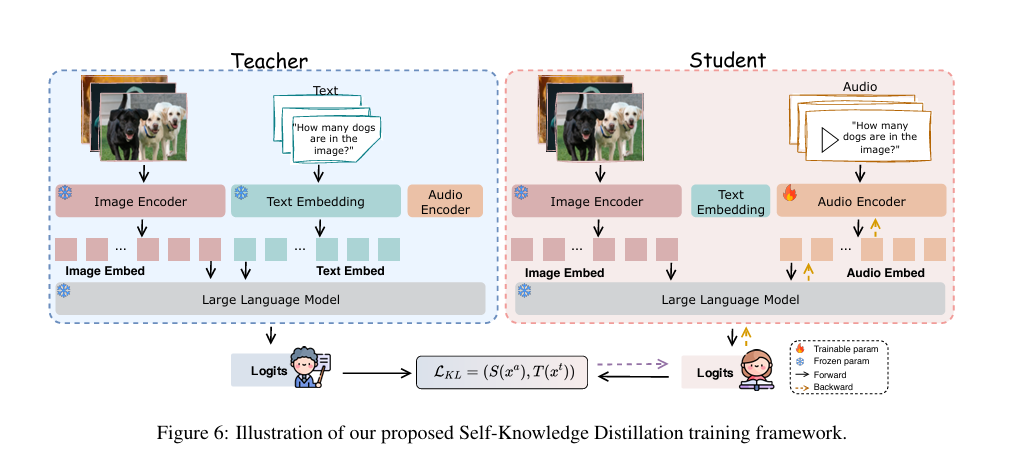
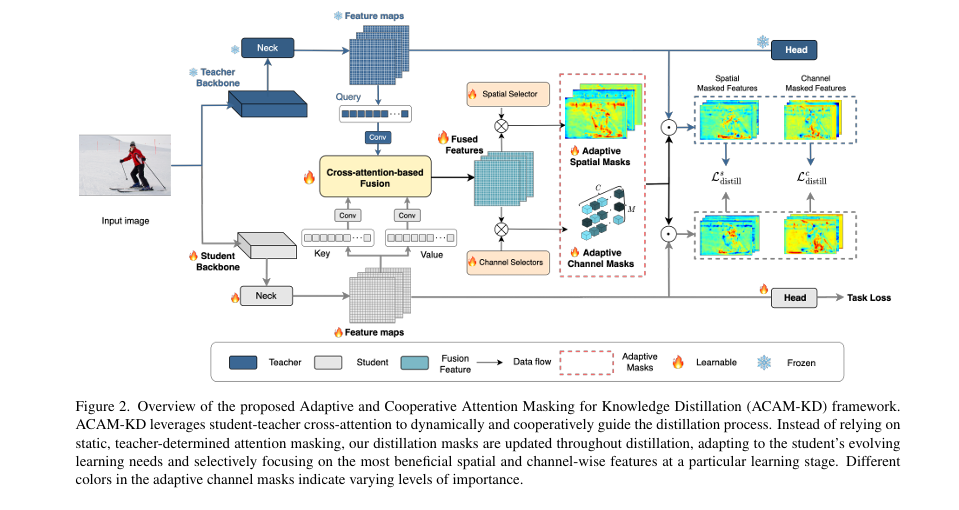
7 Shocking Ways Integrated Gradients BOOST Knowledge Distillation

In the fast-evolving world of artificial intelligence, efficiency and accuracy are locked in a constant tug-of-war. While large foundation models like GPT-4 dazzle with their capabilities, they’re too bulky for smartphones, IoT devices, and embedded systems. This is where model compression becomes not just useful—but essential. Enter Knowledge Distillation (KD): a powerful technique that transfers

7 Shocking Ways Integrated Gradients BOOST Knowledge Distillation Read More »

Illustration showing a compact AI model learning from a larger teacher model using uncertainty-aware knowledge distillation for precise 6DoF object pose estimation in augmented reality and space robotics.

7 Revolutionary Breakthroughs in 6DoF Pose Estimation: How Uncertainty-Aware Knowledge Distillation Beats Old Methods (And Why Most Fail)

In the rapidly evolving world of computer vision, 6 Degrees of Freedom (6DoF) pose estimation has become a cornerstone for applications ranging from robotic manipulation and augmented reality (AR) to autonomous spacecraft docking. Yet, despite significant advances, a critical challenge remains: how to achieve high accuracy with compact, efficient models suitable for real-time deployment on

7 Revolutionary Breakthroughs in 6DoF Pose Estimation: How Uncertainty-Aware Knowledge Distillation Beats Old Methods (And Why Most Fail) Read More »

CLASS-M model outperforms existing methods in ccRCC classification with adaptive stain separation and pseudo-labeling.

1 Breakthrough vs. 1 Major Flaw: CLASS-M Revolutionizes Cancer Detection in Histopathology

In the rapidly evolving field of medical imaging, artificial intelligence (AI) is transforming how we detect and diagnose diseases like cancer. A groundbreaking new study introduces CLASS-M, a semi-supervised deep learning model that achieves 95.35% accuracy in classifying clear cell renal cell carcinoma (ccRCC) — outperforming all current state-of-the-art models. But while this innovation marks

1 Breakthrough vs. 1 Major Flaw: CLASS-M Revolutionizes Cancer Detection in Histopathology Read More »

Diagram showing the SelfRDB diffusion bridge process transforming MRI to CT scans with high fidelity and noise robustness for medical image translation.

7 Revolutionary Breakthroughs in Medical Image Translation (And 1 Fatal Flaw That Could Derail Your AI Model)

Medical imaging has long been the cornerstone of modern diagnostics. From detecting tumors to planning radiotherapy, the quality and availability of imaging modalities like MRI and CT can make or break patient outcomes. But what if one scan could become another? What if a non-invasive MRI could reliably generate a synthetic CT—eliminating radiation exposure and

7 Revolutionary Breakthroughs in Medical Image Translation (And 1 Fatal Flaw That Could Derail Your AI Model) Read More »

Follow by Email
Tiktok