AI in healthcare

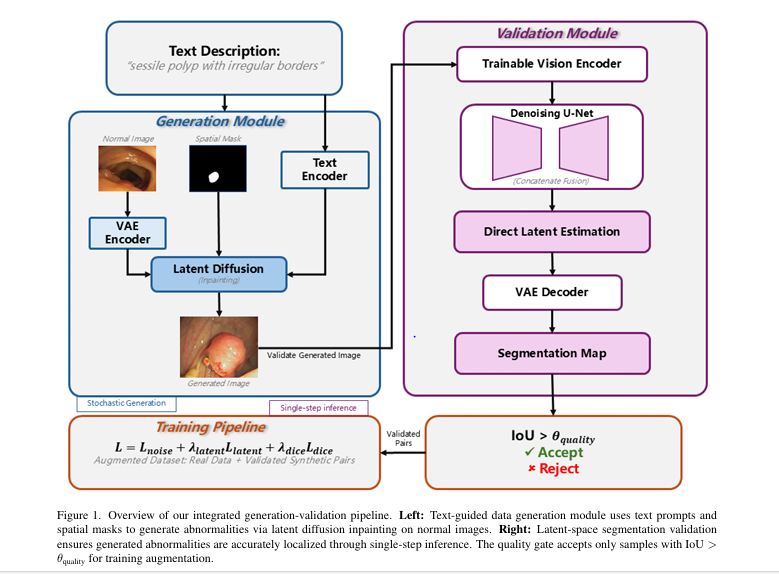
Diagram showing DiffAug framework: text-guided diffusion model generating synthetic polyps on colonoscopy images with latent-space validation for medical image segmentation.

Diffusion-Based Data Augmentation for Medical Image Segmentation

In the rapidly evolving field of medical imaging, diffusion-based data augmentation for medical image segmentation is emerging as a game-changing solution to one of the most persistent challenges in AI-driven diagnostics: the scarcity of annotated pathological data. A groundbreaking new framework, DiffAug, introduced by Nazir, Aqeel, and Setti in their 2025 paper, leverages the power […]

Diffusion-Based Data Augmentation for Medical Image Segmentation Read More »
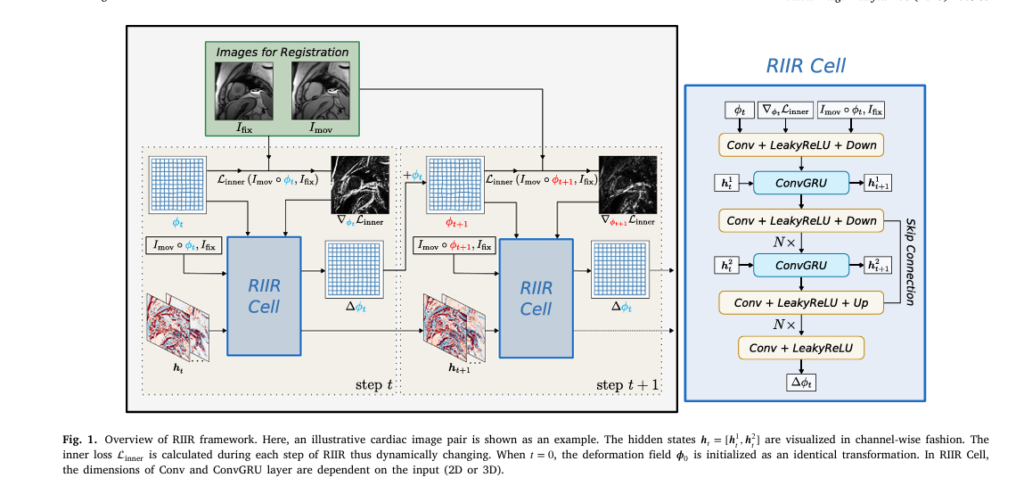
Illustration showing a futuristic AI-powered medical imaging analyzing a brain MRI, with digital neural network pathways glowing in blue, symbolizing the Recurrent Inference Image Registration (RIIR) process.

7 Revolutionary Breakthroughs in AI Medical Imaging: The Good, the Bad, and the Future of RIIR

In the rapidly evolving world of medical imaging, a groundbreaking new technology is emerging that promises to redefine how doctors align and analyze patient scans. Meet the Recurrent Inference Image Registration (RIIR) network—a revolutionary deep learning framework that’s not only faster and more accurate than traditional methods but also works with dramatically less data. This

7 Revolutionary Breakthroughs in AI Medical Imaging: The Good, the Bad, and the Future of RIIR Read More »

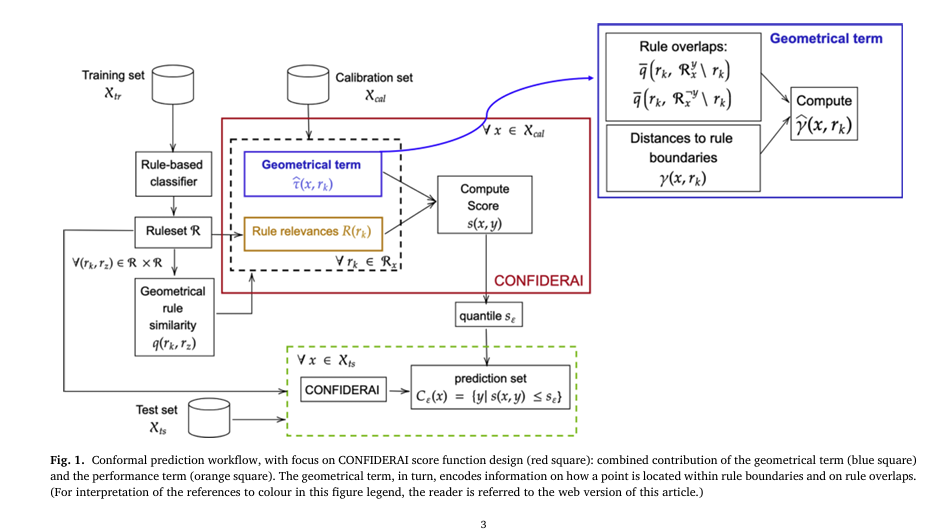
Illustration of CONFIDERAI score function analyzing overlapping decision rules in a 2D feature space, highlighting high-risk prediction zones and conformal critical sets for trustworthy AI.

5 Revolutionary Breakthroughs in AI Safety: How CONFIDERAI Eliminates Prediction Failures While Boosting Trust (But Watch Out for Hidden Risks)

In the rapidly evolving world of artificial intelligence, one question looms larger than ever: Can we truly trust AI systems when lives are on the line? From detecting DNS tunneling attacks to predicting cardiovascular disease, the stakes have never been higher. While explainable AI (XAI) has made strides in transparency, a critical gap remains —

5 Revolutionary Breakthroughs in AI Safety: How CONFIDERAI Eliminates Prediction Failures While Boosting Trust (But Watch Out for Hidden Risks) Read More »

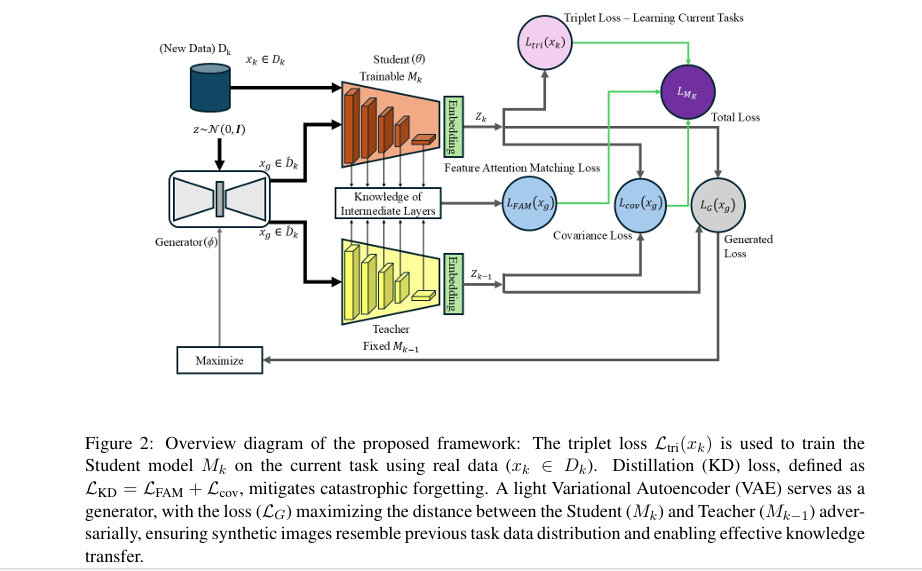
knowledge distillation model for medical diagnosis

7 Shocking Ways AI Fails at Medical Diagnosis (And the Brilliant Fix That Saves Lives)

Imagine an AI radiologist who, after learning to detect prostate cancer from MRI scans, suddenly forgets everything it knew about lung nodules when shown new chest X-rays. This isn’t a plot from a sci-fi movie—it’s a real and pressing problem in artificial intelligence called catastrophic forgetting. In the high-stakes world of medical diagnostics, where every

7 Shocking Ways AI Fails at Medical Diagnosis (And the Brilliant Fix That Saves Lives) Read More »

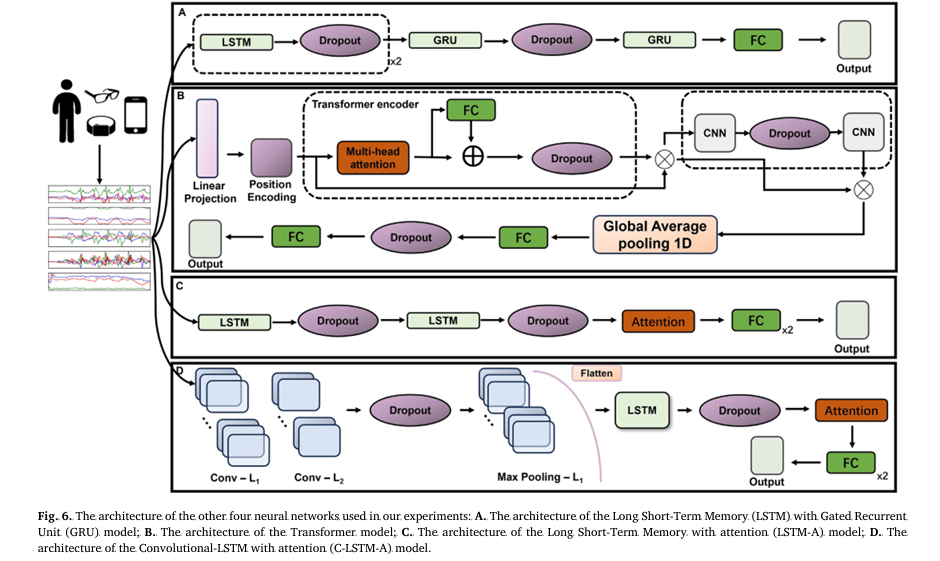
Infographic showing a person wearing smart sensors while AI models analyze activity data in real-time, highlighting accuracy, bias, and model performance trade-offs in healthcare applications.

7 Shocking Truths About Wearable AI in Healthcare: The Good, The Bad, and The Overhyped

In the rapidly evolving world of digital health, wearable AI for human activity recognition (HAR) is being hailed as a revolutionary tool—promising to transform elder care, chronic disease management, and rehabilitation. But how much of the hype is real, and how much is overblown? A groundbreaking 2025 study published in Neurocomputing dives deep into this

7 Shocking Truths About Wearable AI in Healthcare: The Good, The Bad, and The Overhyped Read More »

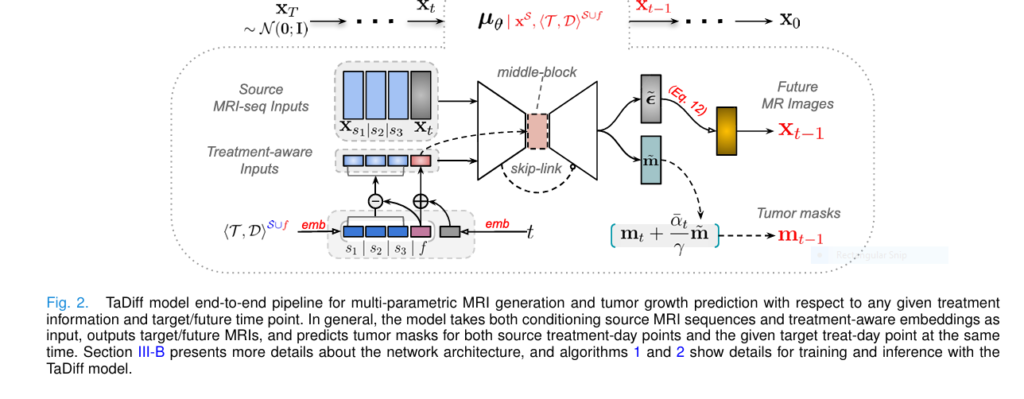
Overview of TaDiff Diffusion Models

10 Groundbreaking Innovations in Treatment-Aware Diffusion Models for Longitudinal MRI and Diffuse Glioma

Introduction: The Future of Glioma Prediction and MRI Generation The medical field has seen a surge in AI-driven diagnostic tools , and one of the most promising advancements is the Treatment-Aware Diffusion Probabilistic Model (TaDiff) . This cutting-edge technology is revolutionizing how we approach diffuse glioma growth prediction and longitudinal MRI generation . In this

10 Groundbreaking Innovations in Treatment-Aware Diffusion Models for Longitudinal MRI and Diffuse Glioma Read More »

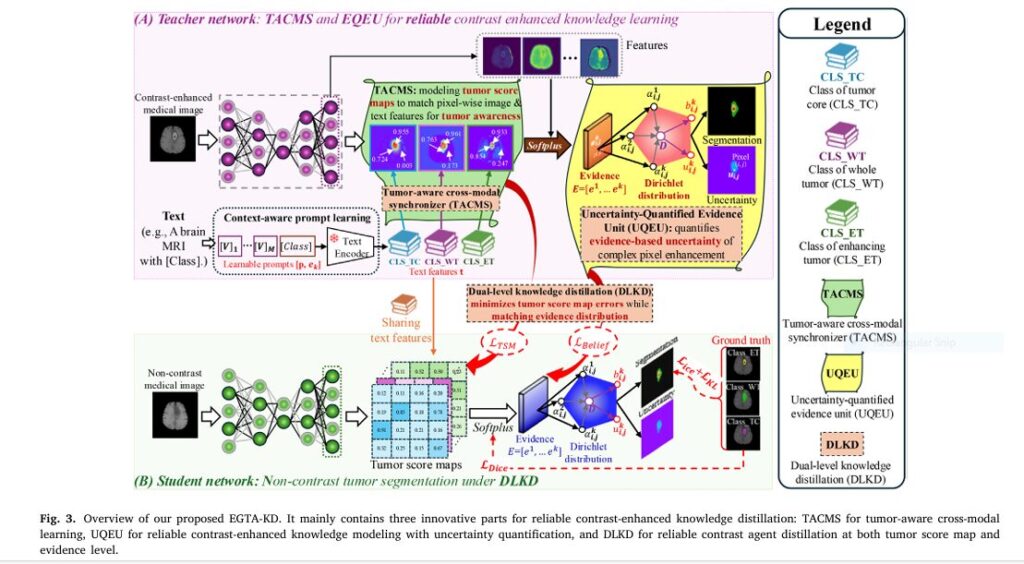
Medical AI transforming tumor segmentation with EGTA-KD technology

Revolutionary AI Breakthrough: Non-Contrast Tumor Segmentation Saves Lives & Avoids Deadly Risks

Imagine detecting deadly tumors without injecting risky contrast agents. A revolutionary AI framework called EGTA-KD is making this possible, achieving near-perfect segmentation (90.8% accuracy) on non-contrast scans while eliminating allergic reactions and kidney damage linked to traditional methods. This isn’t futuristic hype – it’s validated across brain, liver, and kidney tumors in major clinical datasets. The Deadly Cost of Current

Revolutionary AI Breakthrough: Non-Contrast Tumor Segmentation Saves Lives & Avoids Deadly Risks Read More »

Follow by Email
Tiktok