Unsupervised Domain Adaptation

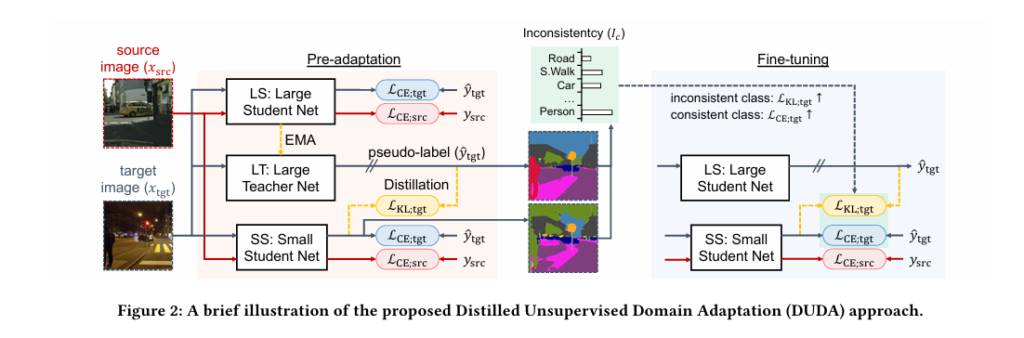
Visual diagram of DUDA’s three-network framework showing large teacher, auxiliary student, and lightweight student for unsupervised domain adaptation in semantic segmentation.

7 Shocking Secrets Behind DUDA: The Ultimate Breakthrough (and Why Most Lightweight Models Fail)

In the fast-evolving world of AI-powered visual understanding, lightweight semantic segmentation is the holy grail for real-time applications like autonomous driving, robotics, and augmented reality. But here’s the harsh truth: most lightweight models fail miserably when deployed in new environments due to domain shift—a phenomenon caused by differences in lighting, weather, camera sensors, and scene […]

7 Shocking Secrets Behind DUDA: The Ultimate Breakthrough (and Why Most Lightweight Models Fail) Read More »

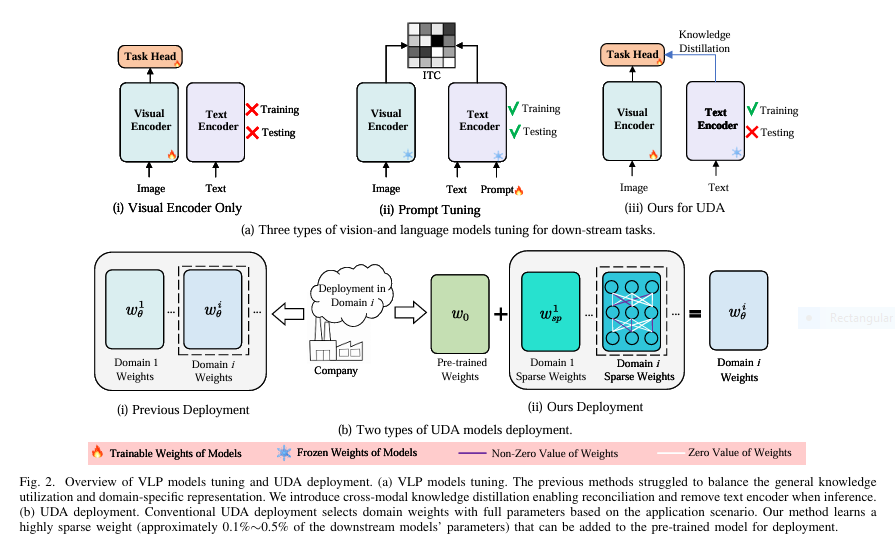
CMKD: Slash 99% Storage Costs & Dominate UDA Challenges

Unsupervised Domain Adaptation (UDA) faces two persistent roadblocks: effectively leveraging powerful modern foundation models and the crippling storage overhead of deploying multiple domain-specific models. A groundbreaking approach merges Vision-Language Pre-training (VLP) like CLIP with innovative techniques—Cross-Modal Knowledge Distillation (CMKD) and Residual Sparse Training (RST)—to smash these barriers, achieving state-of-the-art results while reducing deployment parameters by over 99%. Why Traditional Revolutionizing Unsupervised

CMKD: Slash 99% Storage Costs & Dominate UDA Challenges Read More »

Follow by Email
Tiktok