Machine Learning

Machine learning (ML) is a key area of artificial intelligence (AI) that helps computers learn from data and get better at tasks over time, without needing to be directly programmed. By recognizing patterns in data, ML algorithms can make predictions and decisions that are useful in many fields, from healthcare to finance and e-commerce. Whether it’s improving customer service or helping businesses make smarter decisions, machine learning is changing the way we interact with technology. Keep up with the latest in machine learning by following our blog for updates and insights.

Illustration of the framework of the proposed method. In the first stage, an adversarial image is processed with multiscale analysis: the image will be downsampled by a factor of 1/2 and 1/4, respectively, and upsampled by a factor of 2. Then in the second stage, we design and insert 𝑁 diffusive and denoising aggregation mechanism (DDA) blocks sequentially. Each DDA block involves a diffusive process (Section 3.2), a denoising process (Section 3.3), and an aggregation process (Section 3.4). The output samples from the last DDA block will be inversely processed to the original scale and smoothed to obtain the reversed image.

Skin Cancer AI Combats Adversarial Attacks with MDDA

In recent years, deep learning has revolutionized dermatology by automating skin cancer diagnosis with impressive accuracy. AI-powered systems like convolutional neural networks (CNNs) can now detect melanoma and other lesions with expert-level precision. However, alongside these advancements arises a critical vulnerability: adversarial attacks. These are subtle, often imperceptible image perturbations that can mislead even the […]

Skin Cancer AI Combats Adversarial Attacks with MDDA Read More »

Schematic representation of the proposed LungCT-NET, incorporating preprocessing, reconstructed transfer learning (TL) models, stacking ensemble learning, SHAP (Shapley Additive Explanations) for explainable artificial intelligence (XAI), along with model evaluation and comparison.

LungCT-NET: Revolutionizing Lung Cancer Diagnosis with AI

Introduction: The Urgent Need for Early Lung Cancer Detection Lung cancer is the leading cause of cancer-related deaths worldwide, accounting for 1.8 million fatalities in 2020 alone. Its deadliness is largely due to late diagnosis, as early-stage symptoms are often indistinct. Detecting malignant lung nodules from CT scans early can significantly improve survival rates. However,

LungCT-NET: Revolutionizing Lung Cancer Diagnosis with AI Read More »

Brain Tumor Diagnosis: GATE-CNN

Revolutionizing Brain Tumor Diagnosis: GATE-CNN

For patients facing a potential brain tumor diagnosis, time is brain tissue. Early and accurate detection isn’t just beneficial; it’s often the solitary lifeline separating treatable conditions from devastating outcomes. Magnetic Resonance Imaging (MRI) stands as the cornerstone of brain tumor visualization, offering unparalleled detail of the brain’s intricate structures. Yet, interpreting these complex images

Revolutionizing Brain Tumor Diagnosis: GATE-CNN Read More »

The block diagram of the Brain-GCN-Net model for Brain Tumor Diagnosis.

Beyond the Naked Eye: How AI Fusion is Revolutionizing Brain Tumor Diagnosis

Every year, thousands face the daunting diagnosis of a brain tumor. Speed and accuracy are paramount – early detection significantly improves survival rates and treatment outcomes. Yet, interpreting complex MRI scans remains a challenging, time-consuming task for even the most skilled radiologists. Misdiagnosis or delayed diagnosis can have devastating consequences. Enter artificial intelligence (AI), poised

Beyond the Naked Eye: How AI Fusion is Revolutionizing Brain Tumor Diagnosis Read More »

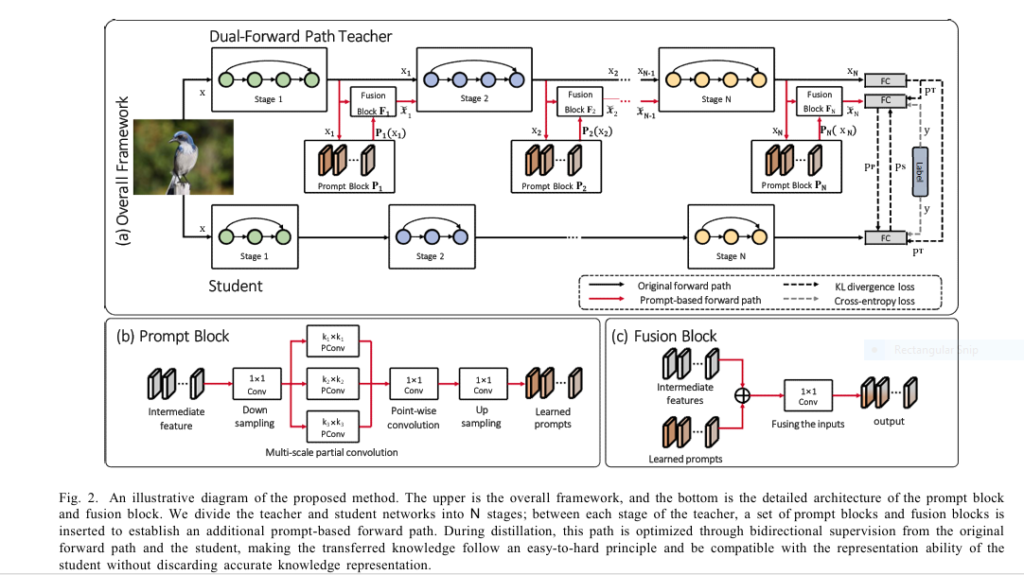
Fig. 1. The overall framework of our multi-teacher distillation method.

Adaptive Multi-Teacher Knowledge Distillation for Segmentation

Medical image segmentation is a cornerstone of modern diagnostics, enabling precise identification of tumors, organs, and anomalies in MRI and CT scans. However, challenges like limited data, privacy concerns, and the computational complexity of deep learning models hinder their real-world adoption. Enter adaptive multi-teacher knowledge distillation—a groundbreaking approach that balances accuracy, efficiency, and privacy. In this

Adaptive Multi-Teacher Knowledge Distillation for Segmentation Read More »

The flowchart of the medical image classification with SAM-based Image Enhancement (SAM-IE). The terms ‘low-grade’ and ‘high-grade’ can refer to benign and malignant, respectively, or to different degrees of disease severity.

SAM-IE: Enhancing Medical Imaging for Disease Detection

Medical imaging is a cornerstone of modern diagnostics, yet clinicians often grapple with challenges like ambiguous anatomical structures, inconsistent image quality, and the sheer complexity of interpreting subtle pathological patterns. Traditional methods rely heavily on manual analysis, which is time-consuming and prone to human error. Enter artificial intelligence (AI), which promises to automate and refine

SAM-IE: Enhancing Medical Imaging for Disease Detection Read More »

Block diagram of the proposed Res-WG-KNN model for pneumonia prediction comprising two sub-models, and soft voting ensemble learning. RFC represents Regularized Fully Connected Layers, FV represents Feature Vector, and D represents Dimension. Pneumonia and Non-Pneumonia represented by subscripts p and n respectively.

AI MODEL Boosts Pneumonia Detection in Chest X-Rays

Pneumonia remains a leading cause of global mortality, particularly among children and the elderly. Early detection is critical for improving survival rates, but traditional diagnostic methods rely heavily on chest X-rays (CXRs), which can be subjective and time-consuming for radiologists. Even subtle abnormalities in X-rays—such as lung opacities or fluid buildup—are often imperceptible to the

AI MODEL Boosts Pneumonia Detection in Chest X-Rays Read More »

Fig. 8. The training process of the classification and grading of cardiac views.

CACTUS Framework: Revolutionizing Cardiac Care with Deep Transfer Learning in Ultrasound Imaging

Cardiovascular diseases remain the leading cause of death globally, underscoring the critical need for accurate and accessible diagnostic tools. Cardiac ultrasound, or echocardiography, is a cornerstone of heart disease assessment, offering real-time imaging without radiation. However, interpreting these images requires expertise, and variability in quality or analysis can delay diagnoses. Enter CACTUS (Cardiac Assessment and

CACTUS Framework: Revolutionizing Cardiac Care with Deep Transfer Learning in Ultrasound Imaging Read More »

complete overview of our proposed model for brain tunor classification

Revolutionizing Brain Tumor Classification: The Power of DEF-SwinE2NET

Brain tumors are among the most challenging medical conditions to diagnose and treat. Their complexity, coupled with the need for precise classification, demands cutting-edge solutions that can support clinicians in making informed decisions. In recent years, deep learning has emerged as a game-changer in medical imaging, offering unprecedented accuracy and efficiency. One groundbreaking advancement in

Revolutionizing Brain Tumor Classification: The Power of DEF-SwinE2NET Read More »

Generative Adversarial Networks (GAN)

Unveiling the Power of Generative Adversarial Networks (GANs): A Comprehensive Guide

In today’s rapidly evolving world of artificial intelligence and machine learning, one technology stands out for its innovative approach to data generation and pattern recognition: Generative Adversarial Networks (GANs). This article dives deep into the realm of GANs, explaining their inner workings, applications, and potential to transform industries. Whether you’re a seasoned data scientist, an

Unveiling the Power of Generative Adversarial Networks (GANs): A Comprehensive Guide Read More »

Follow by Email
Tiktok