Machine Learning

Machine learning (ML) is a key area of artificial intelligence (AI) that helps computers learn from data and get better at tasks over time, without needing to be directly programmed. By recognizing patterns in data, ML algorithms can make predictions and decisions that are useful in many fields, from healthcare to finance and e-commerce. Whether it’s improving customer service or helping businesses make smarter decisions, machine learning is changing the way we interact with technology. Keep up with the latest in machine learning by following our blog for updates and insights.

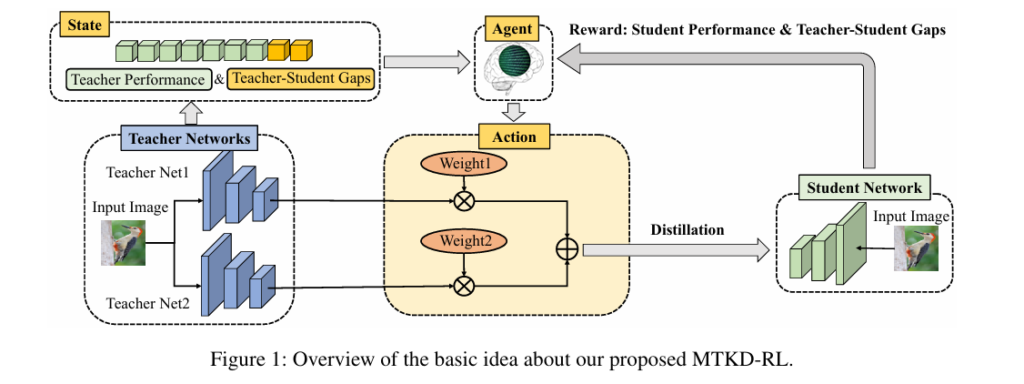
Visual explanation of Knowledge Distillation and Feature Map Visualization (KD-FMV) in medical AI models using CNNs for brain tumor, eye disease, and Alzheimer’s classification.

A Knowledge Distillation-Based Approach to Enhance Transparency of Classifier Models

Artificial Intelligence (AI) has revolutionized healthcare, particularly in medical image analysis. However, the “black-box” nature of deep learning models remains a significant barrier to their adoption in clinical settings. Clinicians demand not only accuracy but also transparency and interpretability—they need to understand why an AI system makes a particular diagnosis. In response to this challenge, […]

A Knowledge Distillation-Based Approach to Enhance Transparency of Classifier Models Read More »

Illustration of the ConvAttenMixer model architecture showing MRI input, convolutional layers, self-attention, external attention, and classification output for brain tumor detection.

ConvAttenMixer: Revolutionizing Brain Tumor Detection with Convolutional Mixer and Attention Mechanisms

In the rapidly advancing field of medical imaging and artificial intelligence (AI), brain tumor detection and classification remain among the most critical challenges in neurology and radiology. With over 5712 MRI scans analyzed in recent research, the demand for accurate, efficient, and scalable deep learning models has never been higher. Enter ConvAttenMixer—a groundbreaking transformer-based model

ConvAttenMixer: Revolutionizing Brain Tumor Detection with Convolutional Mixer and Attention Mechanisms Read More »

Diagram showing DiffAug framework: text-guided diffusion model generating synthetic polyps on colonoscopy images with latent-space validation for medical image segmentation.

Diffusion-Based Data Augmentation for Medical Image Segmentation

In the rapidly evolving field of medical imaging, diffusion-based data augmentation for medical image segmentation is emerging as a game-changing solution to one of the most persistent challenges in AI-driven diagnostics: the scarcity of annotated pathological data. A groundbreaking new framework, DiffAug, introduced by Nazir, Aqeel, and Setti in their 2025 paper, leverages the power

Diffusion-Based Data Augmentation for Medical Image Segmentation Read More »

ISALUX: A cutting-edge transformer model for low-light image enhancement using illumination and semantic awareness

ISALUX: Revolutionizing Low-Light Image Enhancement with Illumination and Semantics-Aware Transformers

In the world of digital imaging, capturing clear, vibrant photos in low-light conditions has always been a challenge. From dimly lit cityscapes to indoor environments with minimal lighting, traditional cameras and enhancement algorithms often fail to preserve detail, color accuracy, and structural integrity. Enter ISALUX — a groundbreaking deep learning framework that redefines low-light image

ISALUX: Revolutionizing Low-Light Image Enhancement with Illumination and Semantics-Aware Transformers Read More »

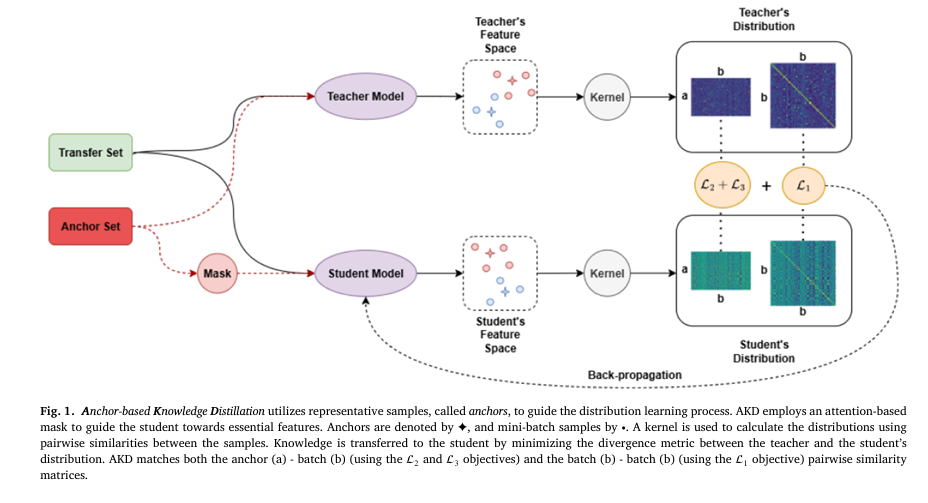
Illustration of VRM framework showing virtual relation matching between teacher and student models in knowledge distillation.

VRM: Knowledge Distillation via Virtual Relation Matching – A Breakthrough in Model Compression

In the rapidly evolving field of deep learning, knowledge distillation (KD) has emerged as a vital technique for transferring intelligence from large, powerful “teacher” models to smaller, more efficient “student” models. This enables deployment of high-performance AI on resource-constrained devices such as smartphones and edge sensors. While many KD methods focus on matching individual predictions—known

VRM: Knowledge Distillation via Virtual Relation Matching – A Breakthrough in Model Compression Read More »

Framework of the proposed ProMSC-MIS

Prompt-based Multimodal Semantic Communication (ProMSC-MIS) for Multi-spectral Image Segmentation

In the rapidly evolving landscape of AI-driven wireless communication, prompt-based multimodal semantic communication is emerging as a game-changer—especially in high-stakes applications like autonomous driving and nighttime surveillance. At the heart of this innovation lies a groundbreaking system called ProMSC-MIS, a novel framework designed to enhance multi-spectral image segmentation by intelligently fusing RGB and thermal data

Prompt-based Multimodal Semantic Communication (ProMSC-MIS) for Multi-spectral Image Segmentation Read More »

Self-Knowledge Distillation (Self-KD) enhances vision-audio capability in Omnimodal Large Language Models (OLLMs)

Enhancing Vision-Audio Capability in Omnimodal LLMs with Self-KD

Introduction: The Challenge of Audio-Vision Integration in Omnimodal LLMs Omnimodal Large Language Models (OLLMs) like GPT-4o and Megrez have revolutionized how AI interacts with the world by seamlessly processing text, images, and audio. However, a critical performance gap persists: OLLMs perform significantly better with vision-text inputs than with vision-audio inputs. For example, when asked “What’s

Enhancing Vision-Audio Capability in Omnimodal LLMs with Self-KD Read More »

Diagram of HSS-Net architecture showing encoder-decoder structure with separable convolution and Mamba blocks for echocardiography video segmentation.

Hierarchical Spatio-temporal Segmentation Network (HSS-Net) for Accurate Ejection Fraction Estimation

Cardiovascular diseases remain the leading cause of death worldwide, making accurate and early diagnosis critical. Among the most vital metrics in cardiac assessment is the Ejection Fraction (EF)—a measure of how much blood the left ventricle pumps out with each contraction. Traditionally, EF is calculated using manual segmentation of echocardiography videos, a process that is

Hierarchical Spatio-temporal Segmentation Network (HSS-Net) for Accurate Ejection Fraction Estimation Read More »

RoofSeg: An edge-aware transformer-based network for precise roof plane segmentation from LiDAR point clouds

RoofSeg: Revolutionizing Roof Plane Segmentation with Edge-Aware Transformers

RoofSeg: A Breakthrough in End-to-End Roof Plane Segmentation Using Transformers In the rapidly evolving field of 3D urban modeling and geospatial analysis, roof plane segmentation plays a pivotal role in reconstructing detailed building models at Levels of Detail (LoD) 2 and 3. Traditionally, this process has relied on manual feature engineering or post-processing techniques like

RoofSeg: Revolutionizing Roof Plane Segmentation with Edge-Aware Transformers Read More »

Visual representation of ACAM-KD framework showing student-teacher cross-attention and dynamic masking for improved knowledge distillation in object detection and segmentation.

ACAM-KD: Adaptive and Cooperative Attention Masking for Knowledge Distillation

In the rapidly evolving world of deep learning, deploying high-performance models on resource-constrained devices remains a critical challenge—especially for dense visual prediction tasks like object detection and semantic segmentation. These tasks are essential in real-time applications such as autonomous driving, video surveillance, and robotics. While large, deep neural networks deliver impressive accuracy, their computational demands

ACAM-KD: Adaptive and Cooperative Attention Masking for Knowledge Distillation Read More »

Follow by Email
Tiktok