AI in medical imaging

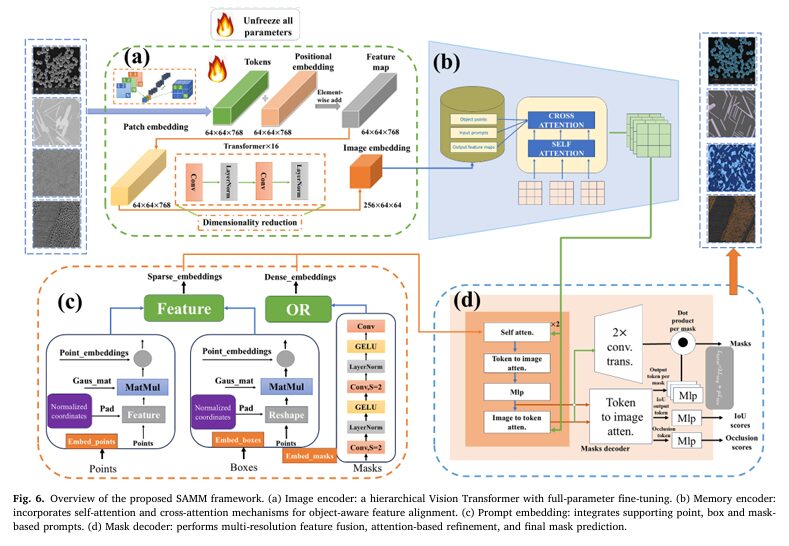
SAMM: SAM2 Fine-Tuned for Universal Material Micrograph Segmentation.

SAMM: SAM2 Fine-Tuned for Universal Material Micrograph Segmentation

SAMM: SAM2 Fine-Tuned for Universal Material Micrograph Segmentation | AI Trend Blend AITrendBlend Machine Learning Computer Vision About Materials Informatics · Advanced Powder Materials 5 (2026) 100404 · 20 min read SAMM: Teaching SAM2 to Read a Microstructure — and Generalise Across All of Materials Science Researchers at Central South University fine-tuned the Segment Anything […]

SAMM: SAM2 Fine-Tuned for Universal Material Micrograph Segmentation Read More »

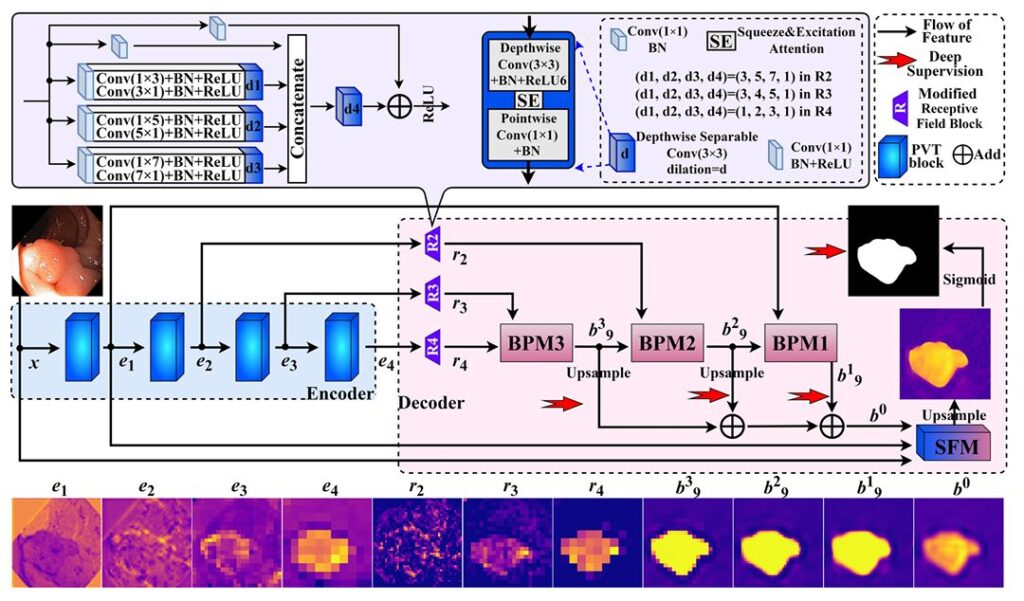
MSBP-Net: The Lightweight Polyp Detector.

MSBP-Net: The Lightweight Polyp Detector That Learned to See Boundaries the Way Surgeons Do

MSBP-Net: The Lightweight Polyp Detector That Learned to See Boundaries the Way Surgeons Do AITrendBlend Machine Learning Medical AI About Medical Imaging · Pattern Recognition 170 (2026) 112101 · 20 min read The Polyp Segmenter That Sees What Colonoscopies Miss — and Does It in Real Time Researchers at Sichuan University of Science and Engineering

MSBP-Net: The Lightweight Polyp Detector That Learned to See Boundaries the Way Surgeons Do Read More »

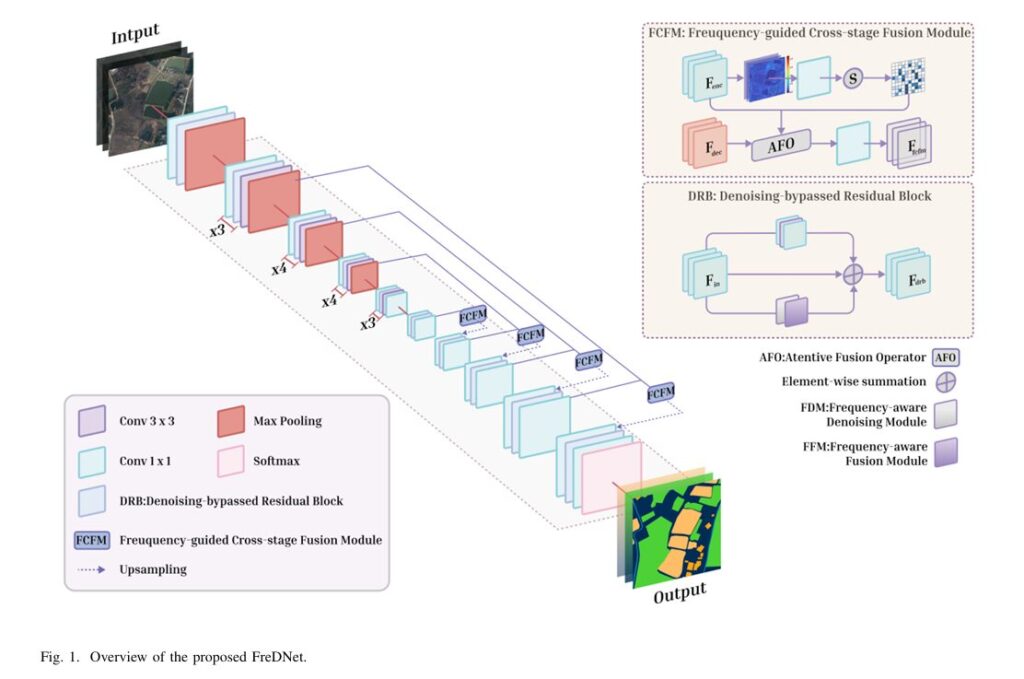
Overview of the proposed FreDNet.

FreDNet: The Remote Sensing Segmenter That Learned to Hear the Image, Not Just See It

FreDNet: The Remote Sensing Segmenter That Learned to Hear the Image, Not Just See It AITrendBlend Computer Vision About Remote Sensing AI · IEEE Trans. Geoscience & Remote Sensing, Vol. 64, 2026 · 22 min read The Segmentation Model That Learned to Hear the Image, Not Just See It Researchers at Hohai University built a

FreDNet: The Remote Sensing Segmenter That Learned to Hear the Image, Not Just See It Read More »

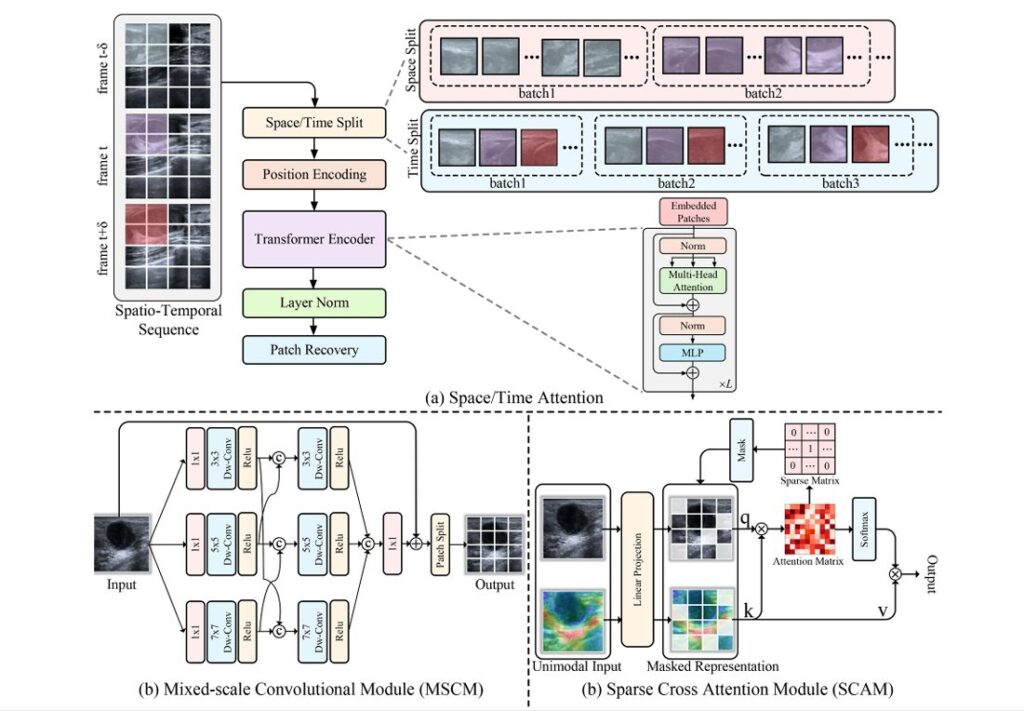
MSFT-Net: Multimodal Sparse Fusion Transformer for Breast Tumor Classification Using US, SMI & Elastography

MSFT-Net: Multimodal Sparse Fusion Transformer for Breast Tumor Classification Using US, SMI & Elastography Medical Image Analysis · 2026 Vol. 110 · doi:10.1016/j.media.2026.103966 When Three Ultrasound Windows See What One Cannot:MSFT-Net and the Sparse Fusion of Breast Tumor Intelligence Multimodal Medical AI ~2,400 words · 11 min read Xu, Zhuang et al. — Shantou University

MSFT-Net: Multimodal Sparse Fusion Transformer for Breast Tumor Classification Using US, SMI & Elastography Read More »

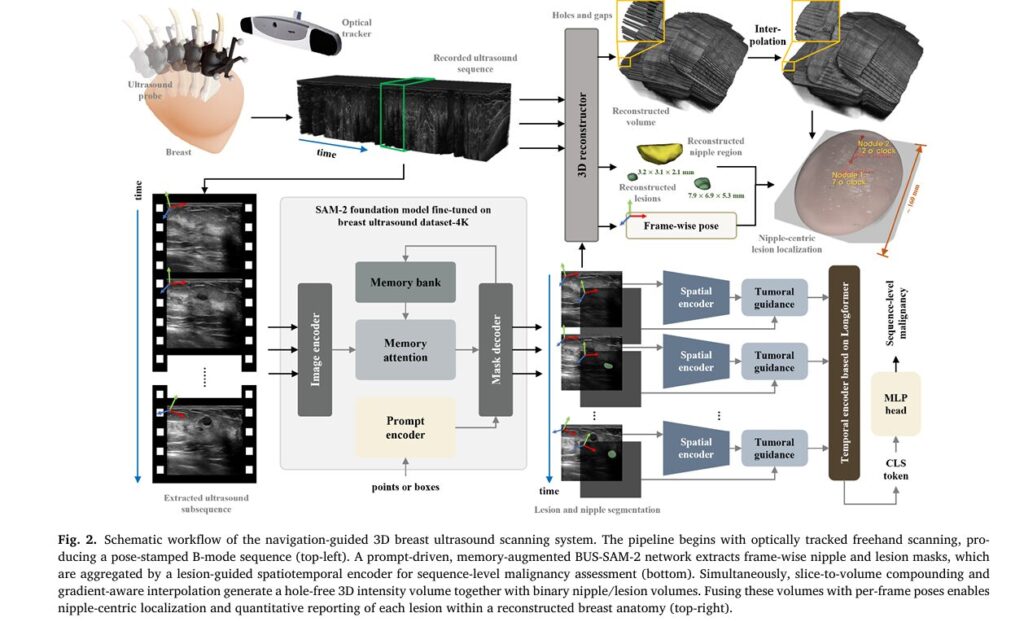
Revolutionizing Breast Cancer Detection: How AI-Powered 3D Ultrasound Navigation Is Transforming Early Diagnosis

Revolutionizing Breast Cancer Detection: How AI-Powered 3D Ultrasound Navigation Is Transforming Early Diagnosis

Introduction: The Critical Challenge in Breast Cancer Screening Breast cancer remains the leading cause of cancer-related deaths among women worldwide, accounting for 15.5% of all female cancer fatalities according to 2024 global statistics. With incidence rates rising particularly in low and middle-income regions, the need for accurate, accessible early detection has never been more urgent.

Revolutionizing Breast Cancer Detection: How AI-Powered 3D Ultrasound Navigation Is Transforming Early Diagnosis Read More »

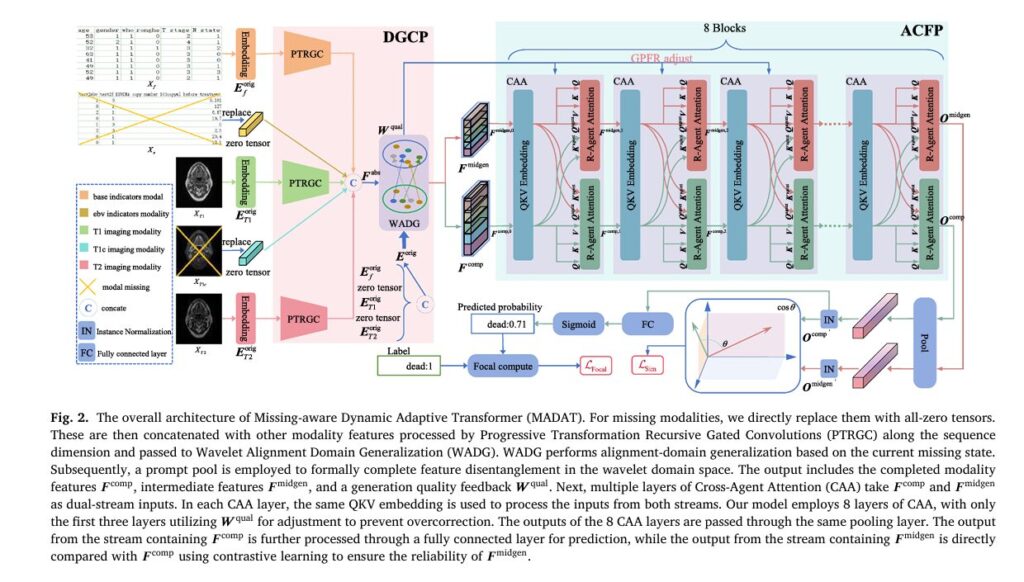
MADAT: A Revolutionary AI Framework for Medical Prognosis Prediction with Missing Multimodal Data

MADAT: A Revolutionary AI Framework for Medical Prognosis Prediction with Missing Multimodal Data

Introduction: The Critical Challenge of Incomplete Medical Data In modern healthcare, multimodal medical data—combining imaging scans, electronic health records (EHR), genetic information, and physiological parameters—has emerged as the gold standard for accurate prognosis prediction. Studies consistently demonstrate that integrating diverse data types significantly improves diagnostic accuracy, model interpretability, and personalized treatment decisions compared to unimodal

MADAT: A Revolutionary AI Framework for Medical Prognosis Prediction with Missing Multimodal Data Read More »

Anatomy-Guided Deep Learning Is Transforming Breast Cancer Detection in PET-CT Scans

Revolutionary AI Breakthrough: How Anatomy-Guided Deep Learning Is Transforming Breast Cancer Detection in PET-CT Scans

Introduction: The Critical Challenge of Metastatic Breast Cancer Detection Breast cancer remains the most diagnosed cancer among women worldwide, with approximately 3 million new cases detected in 2024 alone. While early-stage breast cancer boasts a nearly 100% five-year survival rate, this figure plummets to just 23% once metastasis occurs. The difference between life and death

Revolutionary AI Breakthrough: How Anatomy-Guided Deep Learning Is Transforming Breast Cancer Detection in PET-CT Scans Read More »

DPFR: A Breakthrough in AI-Powered Gland Segmentation for Cancer Diagnosis

DPFR: A Breakthrough in AI-Powered Gland Segmentation for Cancer Diagnosis

Introduction: The Critical Challenge in Digital Pathology The early detection and accurate grading of cancer remains one of modern medicine’s most pressing challenges. For pathologists worldwide, the assessment of gland morphology in histopathological images serves as the gold standard for cancer diagnosis—particularly in colorectal and prostate cancers. However, this critical diagnostic process faces a fundamental

DPFR: A Breakthrough in AI-Powered Gland Segmentation for Cancer Diagnosis Read More »

TransXV2S-Net: Revolutionary AI Architecture Achieves 95.26% Accuracy in Skin Cancer Detection

TransXV2S-Net: Revolutionary AI Architecture Achieves 95.26% Accuracy in Skin Cancer Detection

Introduction: The Critical Need for Intelligent Skin Cancer Diagnostics Skin cancer represents one of the most pervasive and rapidly growing cancer types globally, with incidence rates continuing to climb across all demographics. The primary culprits—DNA damage from ultraviolet (UV) radiation, excessive tanning bed use, and uncontrolled cellular growth—have created a public health imperative for early

TransXV2S-Net: Revolutionary AI Architecture Achieves 95.26% Accuracy in Skin Cancer Detection Read More »

M2CR: Revolutionizing Primary Liver Cancer Diagnosis with AI-Powered Multimodal Analysis

M2CR: Revolutionizing Primary Liver Cancer Diagnosis with AI-Powered Multimodal Analysis

Primary liver cancer stands as the third leading cause of cancer-related deaths worldwide, claiming hundreds of thousands of lives annually. Despite advances in medical imaging, diagnosing the three distinct subtypes—hepatocellular carcinoma (HCC), intrahepatic cholangiocarcinoma (ICC), and the rare combined hepatocellular-cholangiocarcinoma (cHCC-CCA)—remains a complex challenge that demands both radiological expertise and comprehensive clinical assessment. A revolutionary

M2CR: Revolutionizing Primary Liver Cancer Diagnosis with AI-Powered Multimodal Analysis Read More »

Follow by Email
Tiktok