Computer Vision

Computer vision is one of our deepest areas, covering how machines learn to see, segment, and reason about images and video. Articles here range from convolutional and transformer based architectures to dense prediction tasks like detection and segmentation, with regular coverage of medical imaging where reliable vision models carry real clinical weight. The emphasis stays on what makes a method work and where it breaks, backed by the original research.

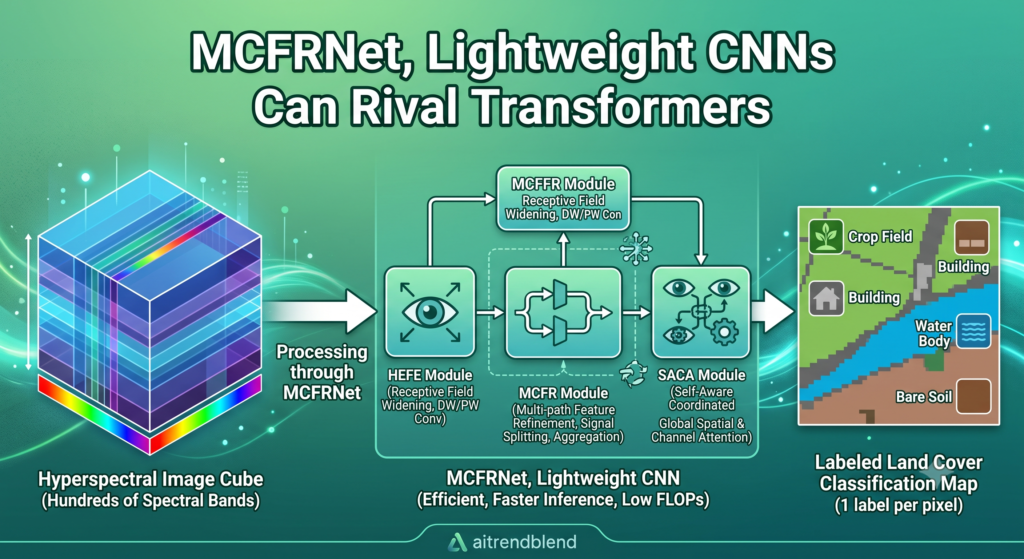
MCFRNet Shows Lightweight CNNs Can Rival Transformers

Analysis by the aitrendblend editorial team · Pillar 4, Vision transformers and attention · Reading time about 15 minutes hyperspectral imaging convolutional neural networks attention mechanisms remote sensing model efficiency Hundreds of spectral bands, one label per pixel, and a network that has to decide how much context it can afford to look at. Every […]

MCFRNet Shows Lightweight CNNs Can Rival Transformers Read More »

ADAPTS Classifies Concept Drift Before It Decides How To Adapt.

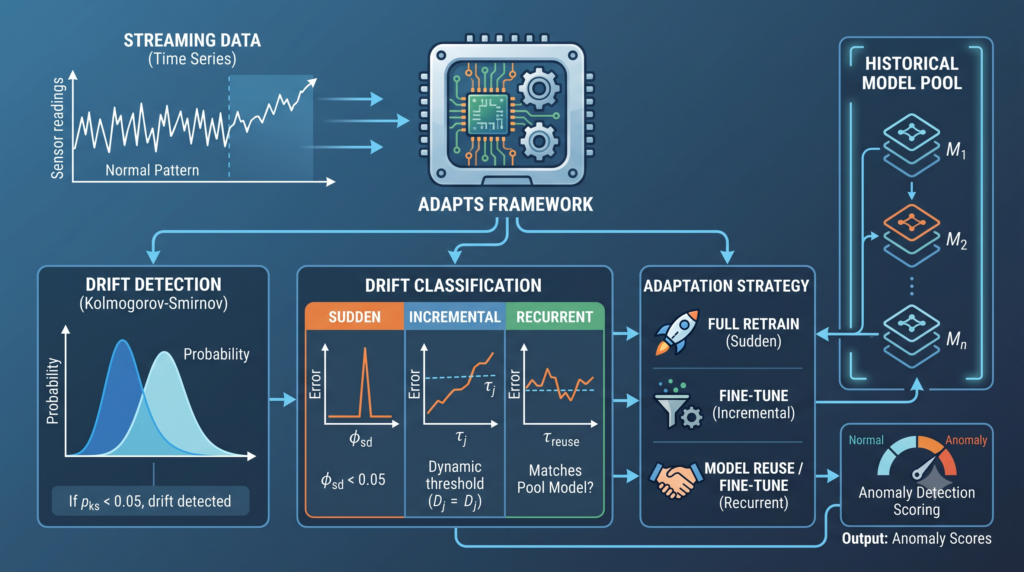
ADAPTS Classifies Concept Drift Before It Decides How To Adapt

Analysis by the aitrendblend editorial team · Continual Learning and Concept Drift Adaptation · 15 min read Concept Drift Anomaly Detection Continual Learning Time Series Unsupervised Learning A conceptual illustration of drift aware pool based adaptation, not an original figure from the paper. A sensor in an industrial plant fails overnight and its readings jump

ADAPTS Classifies Concept Drift Before It Decides How To Adapt Read More »

Graph Neural Networks Bring Coherent Forecasts to Retail

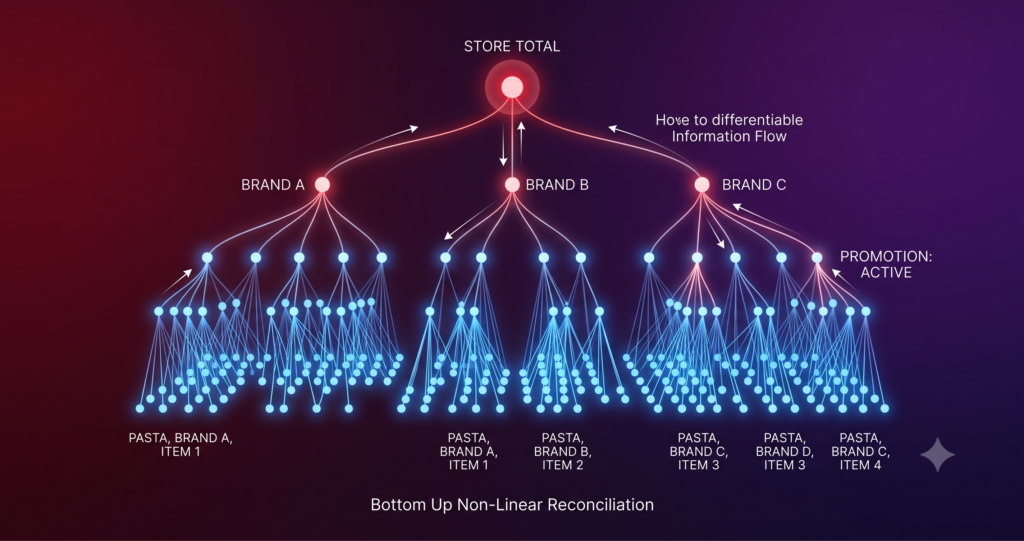
Graph Neural Networks Bring Coherent Forecasts to Retail

Analysis by the aitrendblend editorial team · Pillar 5, Graph neural networks · Reading time about 14 minutes graph neural networks hierarchical forecasting retail demand GCN and GAT forecast reconciliation A retail sales hierarchy reimagined as a graph, where store totals, brand groups and individual items all learn from each other before a forecast ever

Graph Neural Networks Bring Coherent Forecasts to Retail Read More »

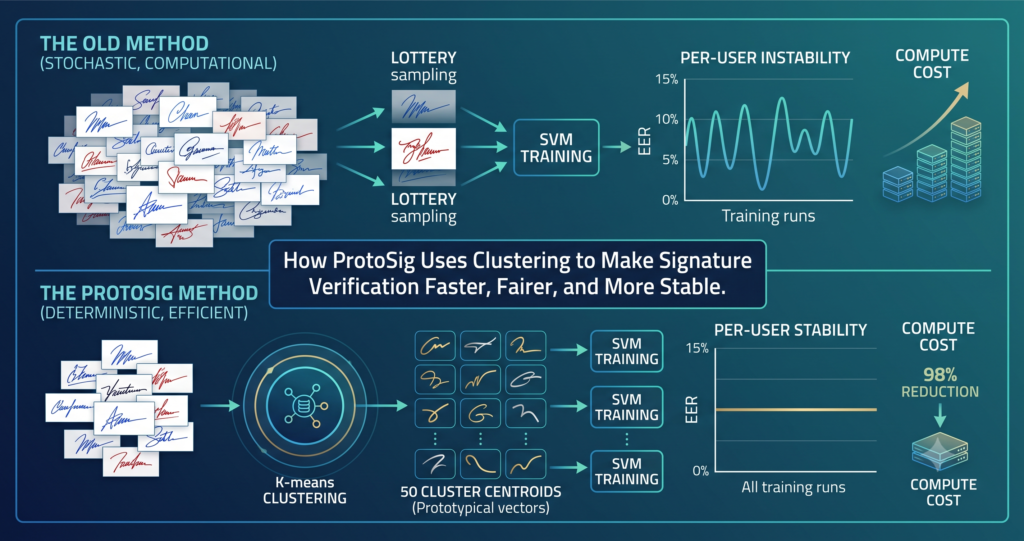
How ProtoSig Uses Clustering to Make Signature Verification Faster, Fairer, and More Stable.

How ProtoSig Uses Clustering to Make Signature Verification Faster, Fairer, and More Stable

ProtoSig replaces thousands of random forgeries with 50 clustered prototype signatures, cutting training compute by over 98% while matching verification accuracy — and making signature verification fairer and more stable.

How ProtoSig Uses Clustering to Make Signature Verification Faster, Fairer, and More Stable Read More »

DiffFuseNet: Why Feature-Space Diffusion Beats Image-Space Diffusion for Infrared-Visible Fusion

DiffFuseNet: Why Feature-Space Diffusion Beats Image-Space Diffusion for Infrared-Visible Fusion

DiffFuseNet runs diffusion denoising on shallow encoded features instead of full images, making infrared-visible fusion roughly ten times faster than prior diffusion methods without sacrificing quality.

DiffFuseNet: Why Feature-Space Diffusion Beats Image-Space Diffusion for Infrared-Visible Fusion Read More »