Computer Vision

Computer vision is one of our deepest areas, covering how machines learn to see, segment, and reason about images and video. Articles here range from convolutional and transformer based architectures to dense prediction tasks like detection and segmentation, with regular coverage of medical imaging where reliable vision models carry real clinical weight. The emphasis stays on what makes a method work and where it breaks, backed by the original research.

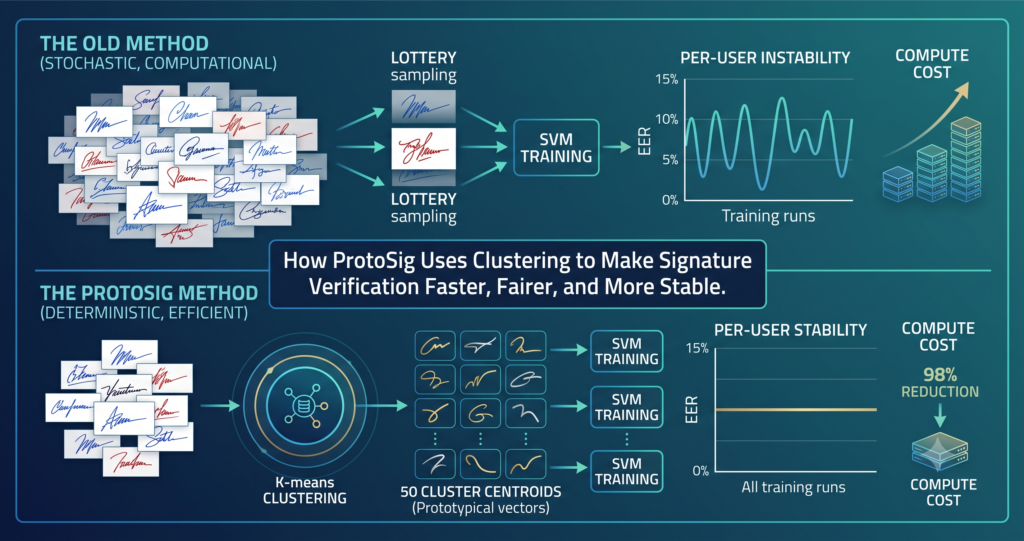
How ProtoSig Uses Clustering to Make Signature Verification Faster, Fairer, and More Stable.

How ProtoSig Uses Clustering to Make Signature Verification Faster, Fairer, and More Stable

ProtoSig replaces thousands of random forgeries with 50 clustered prototype signatures, cutting training compute by over 98% while matching verification accuracy — and making signature verification fairer and more stable.

How ProtoSig Uses Clustering to Make Signature Verification Faster, Fairer, and More Stable Read More »

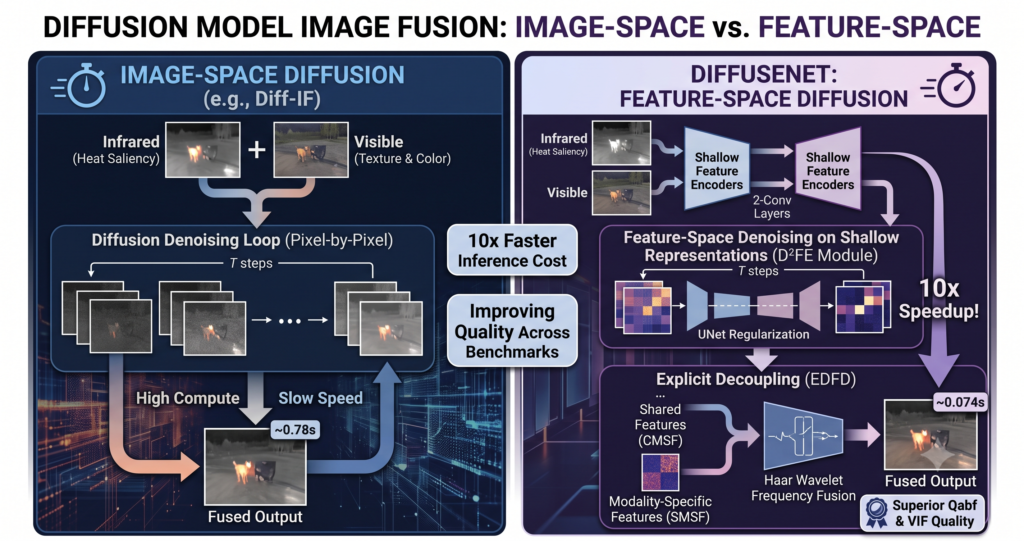
DiffFuseNet: Why Feature-Space Diffusion Beats Image-Space Diffusion for Infrared-Visible Fusion

DiffFuseNet: Why Feature-Space Diffusion Beats Image-Space Diffusion for Infrared-Visible Fusion

DiffFuseNet runs diffusion denoising on shallow encoded features instead of full images, making infrared-visible fusion roughly ten times faster than prior diffusion methods without sacrificing quality.

DiffFuseNet: Why Feature-Space Diffusion Beats Image-Space Diffusion for Infrared-Visible Fusion Read More »