Natural Language Processing

Natural language processing covers how machines represent, understand, and generate human language. Articles here move from foundational ideas like embeddings and attention to current research on language models, retrieval, and evaluation, written to connect the theory with the systems people use today.

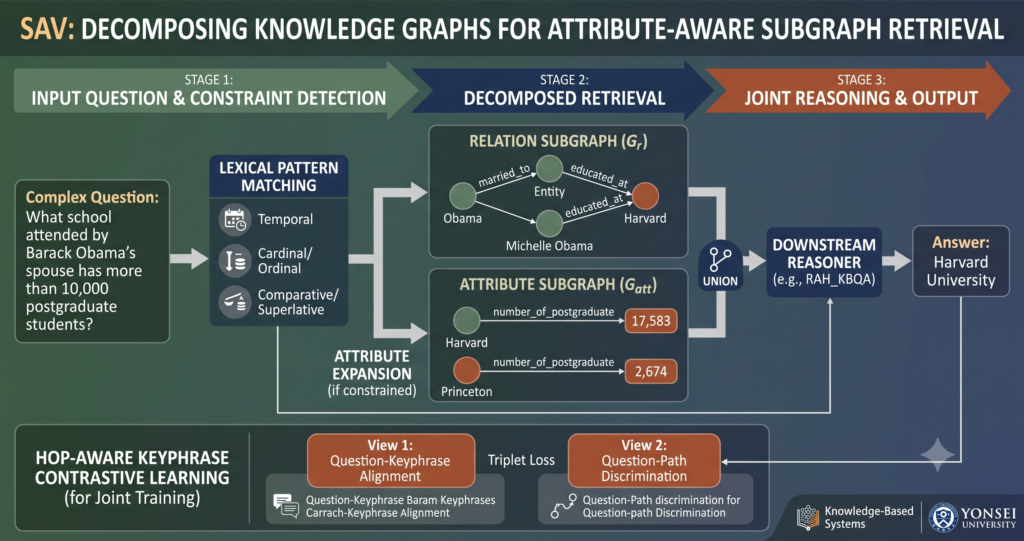
How SAV Adds Literal-Valued Attributes to Knowledge Graph Subgraph Retrieval for Complex Question Answering.

How SAV Adds Literal-Valued Attributes to Knowledge Graph Subgraph Retrieval for Complex Question Answering

A standard knowledge graph contains two qualitatively different types of edges. The first type connects entities to other entities through named relations, forming the relational backbone that most retrieval methods are built to traverse. The second type connects entities to…

How SAV Adds Literal-Valued Attributes to Knowledge Graph Subgraph Retrieval for Complex Question Answering Read More »

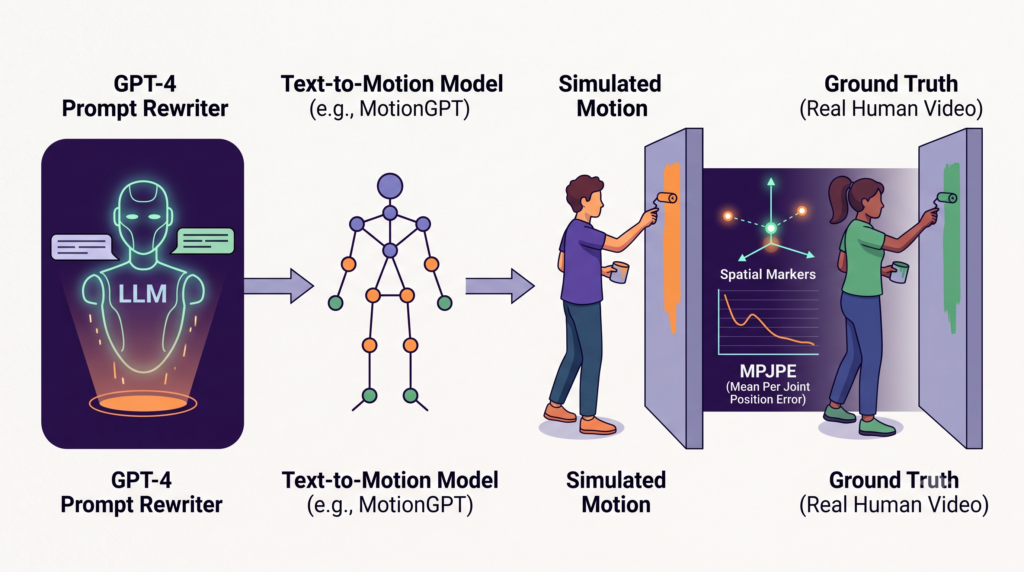
Why GPT-4 Rewritten Prompts Only Sometimes Improve HUMAN Motion Simulation

Why GPT-4 Rewritten Prompts Only Sometimes Improve HUMAN Motion Simulation

Human motion simulation supports a genuinely practical set of jobs, ergonomic risk assessment, safety training, and digital human modeling for manufacturing lines where getting a worker’s posture wrong on paper is a lot cheaper than getting it wrong on the…

Why GPT-4 Rewritten Prompts Only Sometimes Improve HUMAN Motion Simulation Read More »

Clinical LLMs 2026: Med-Gemini, Med-PaLM 2, and GPT-5 in Medicine.

Clinical LLMs 2026: Med-Gemini, Med-PaLM 2, and GPT-5 in Medicine

Dr. Fatima Nkosi is managing 19 patients on a Saturday night hospitalist shift. At 2am, she opens the clinical AI assistant embedded in her hospital’s Epic instance and types: “64-year-old male, day 2 post-op colectomy, HR 118, temp 38.9°C, WBC…

Clinical LLMs 2026: Med-Gemini, Med-PaLM 2, and GPT-5 in Medicine Read More »

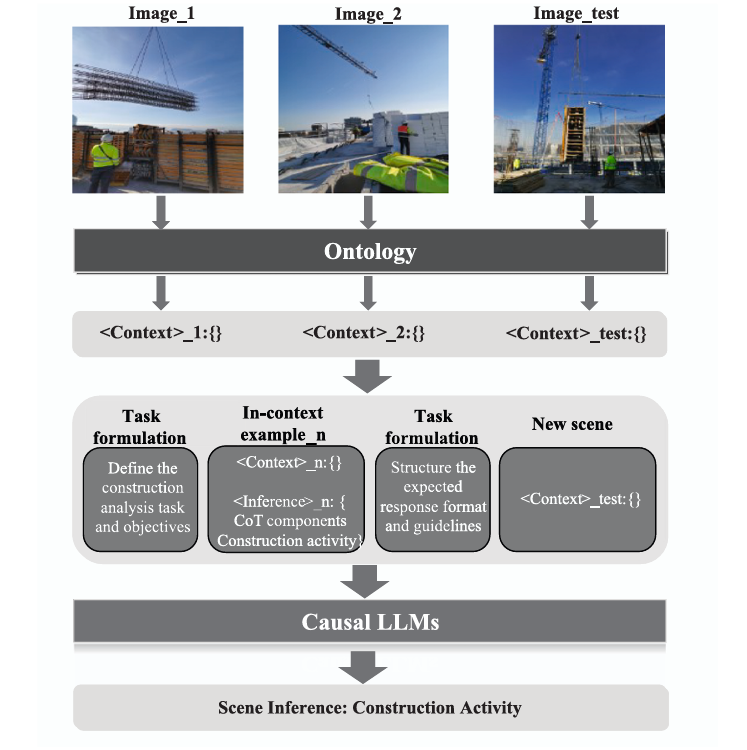
Ontology-Based LLM Prompting for Construction Activity Recognition: 73.68% Accuracy With No Training Data.

Ontology-Based LLM Prompting for Construction Activity Recognition: 73.68% Accuracy With No Training Data

Researchers at Technische Universität Berlin and Qingdao University of Technology achieved 73.68% construction activity recognition accuracy using pure prompting — no labeled training data, no fine-tuning, just a domain ontology, structured visual extraction, and carefully engineered in-context examples.

Ontology-Based LLM Prompting for Construction Activity Recognition: 73.68% Accuracy With No Training Data Read More »

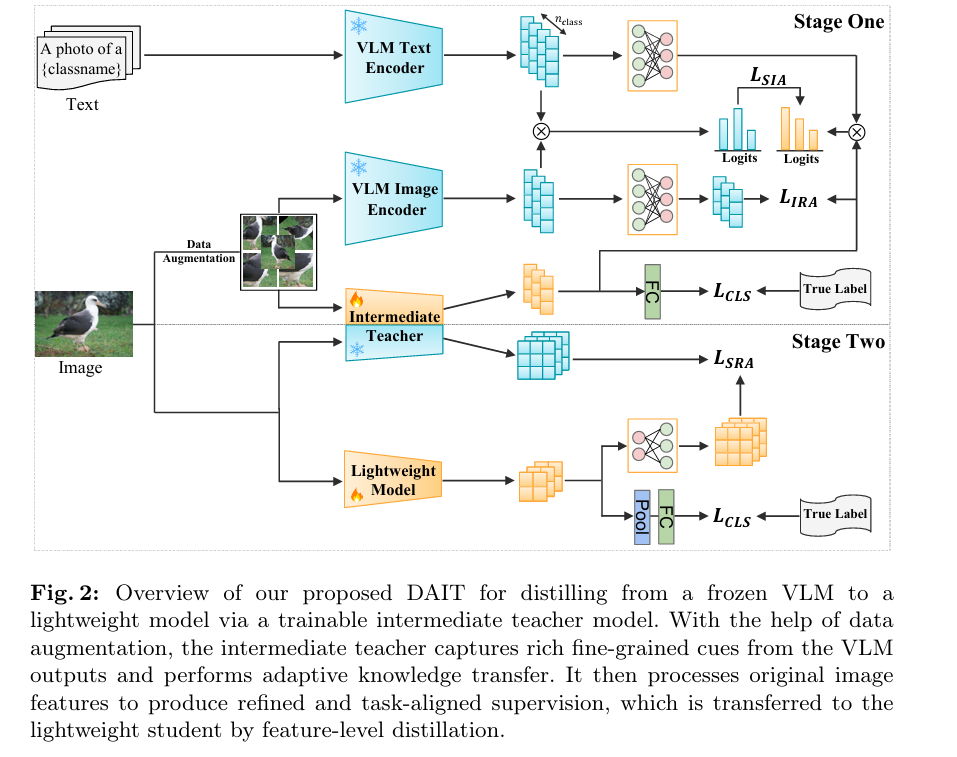
DAIT: Distilling CLIP into Tiny Classifiers with an Adaptive Intermediate Teacher

DAIT: Distilling CLIP into Tiny Classifiers with an Adaptive Intermediate Teacher

Researchers at Nanjing Normal University placed a trainable 10-million-parameter intermediary between a frozen 1.2-billion-parameter vision-language model and a tiny student classifier — solving the architectural mismatch, noise contamination, and unstable optimization that make direct VLM-to-lightweight distillation fail, and gaining +12.63%…

DAIT: Distilling CLIP into Tiny Classifiers with an Adaptive Intermediate Teacher Read More »

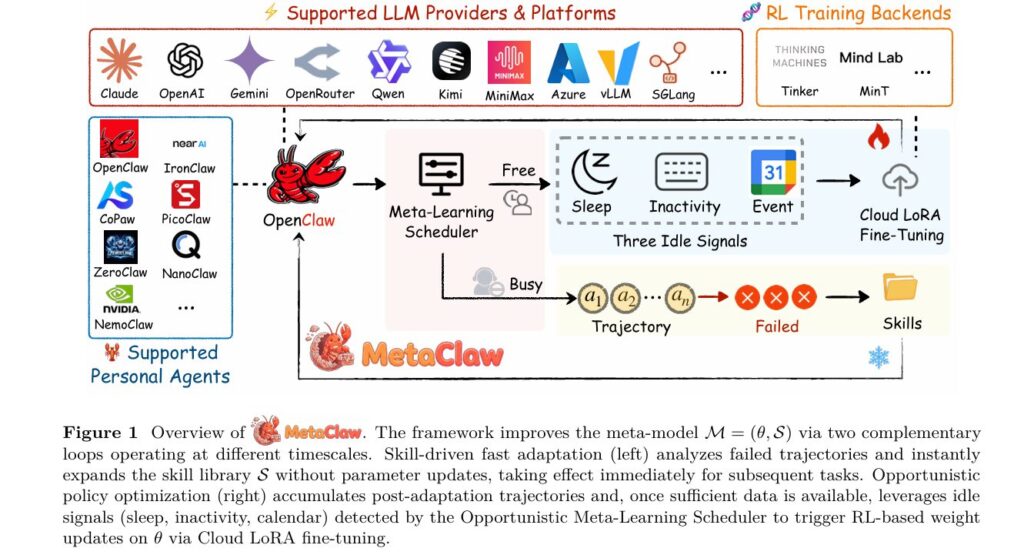
MetaClaw: The LLM Agent That Meta-Learns and Evolves in the Wild.

MetaClaw: The LLM Agent That Meta-Learns and Evolves in the Wild

Researchers from UNC-Chapel Hill, Carnegie Mellon, UC Santa Cruz, and UC Berkeley built a continual meta-learning framework that gives deployed language model agents two complementary superpowers: instant skill injection from failures, and opportunistic weight-level fine-tuning while you sleep — pushing…

MetaClaw: The LLM Agent That Meta-Learns and Evolves in the Wild Read More »