
Federated Learning & AI Privacy

Federated learning, differential privacy, and privacy-preserving machine learning. We cover how models train across devices and institutions without centralizing data, what privacy guarantees actually cost in accuracy, and the benchmarks and frameworks shaping the field, always traced back to the original research.

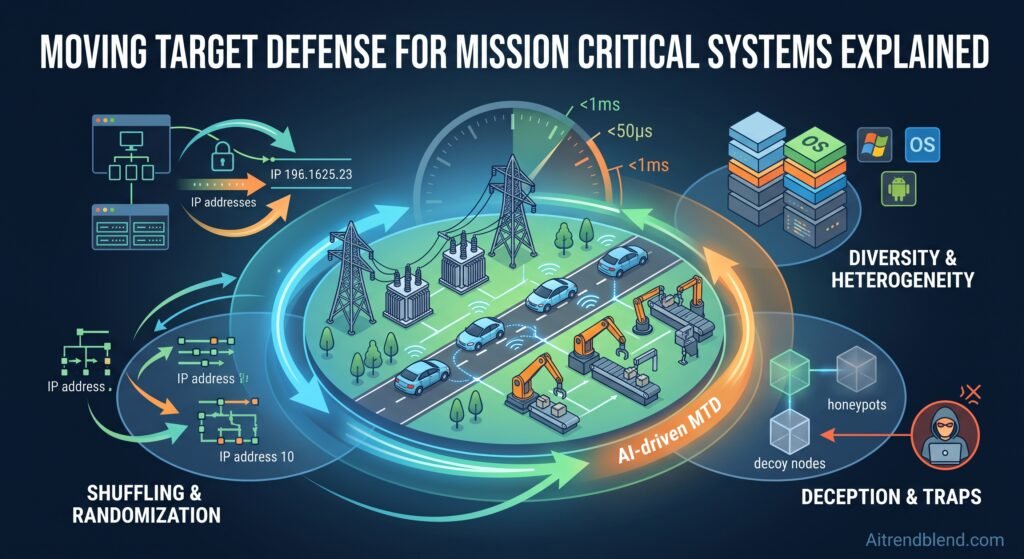
Moving Target Defense For Mission Critical Systems Explained

Moving Target Defense For Mission Critical Systems Explained

Analysis by the aitrendblend editorial team · Federated Learning · Reading time about 14 minutes moving target defense cyber physical systems real-time constraints smart grid security AI-driven MTD CPS security A power grid controller does not get to pause and think. Any defense bolted onto it has to work inside a timing budget measured in […]

Moving Target Defense For Mission Critical Systems Explained Read More »

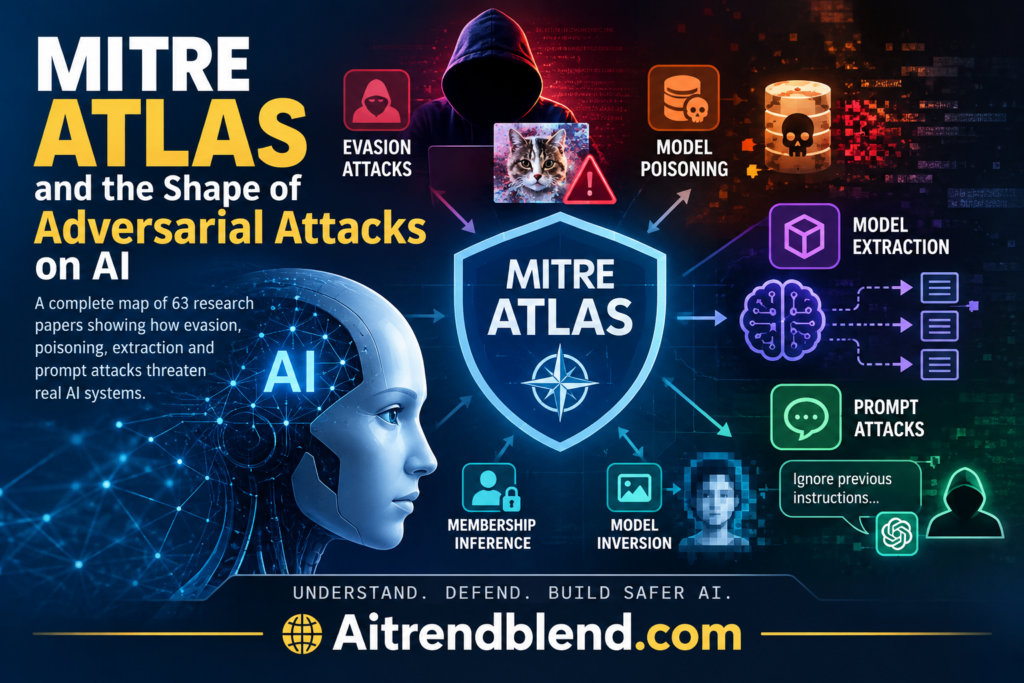
MITRE ATLAS and the Shape of Adversarial Attacks on AI

MITRE ATLAS and the Shape of Adversarial Attacks on AI

Analysis by the aitrendblend editorial team · Federated Learning and AI Privacy · 16 min read MITRE ATLAS Adversarial ML Model Poisoning Prompt Injection AI Security The MITRE ATLAS matrix organizes adversarial AI behavior into fourteen tactics. This piece walks through what happens when 63 research papers are mapped onto it. In 2019, researchers spent

MITRE ATLAS and the Shape of Adversarial Attacks on AI Read More »

What 72 Studies Reveal About Healthcare IoT Security

What 72 Studies Reveal About Healthcare IoT Security

Analysis by the aitrendblend editorial team · 14 min read · Healthcare AI security and privacy · Reviewer, N/A, editorial analysis of published research, not clinical guidance healthcare IoT cloud edge fog computing systematic literature review privacy preservation explainable AI Healthcare IoT security is not one problem. It is six overlapping problems spread across device,

What 72 Studies Reveal About Healthcare IoT Security Read More »

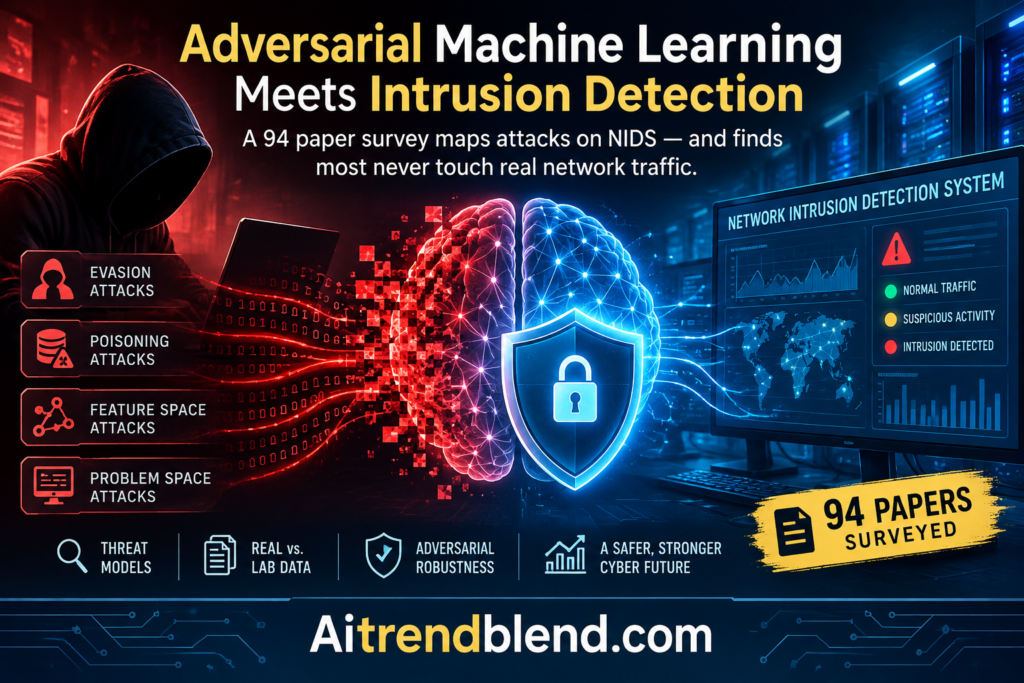
Adversarial Machine Learning Meets Intrusion Detection

Adversarial Machine Learning Meets Intrusion Detection

Analysis by the aitrendblend editorial team. Published based on Espindola, Santin, Casimiro, Ferreira, and Viegas, Computer Science Review, 2026. Adversarial Machine Learning Network Intrusion Detection Evasion Attacks Poisoning Attacks Threat Modeling Cybersecurity Survey A machine learning based intrusion detection pipeline, the point where adversarial perturbations get introduced and the point most published attacks never actually

Adversarial Machine Learning Meets Intrusion Detection Read More »

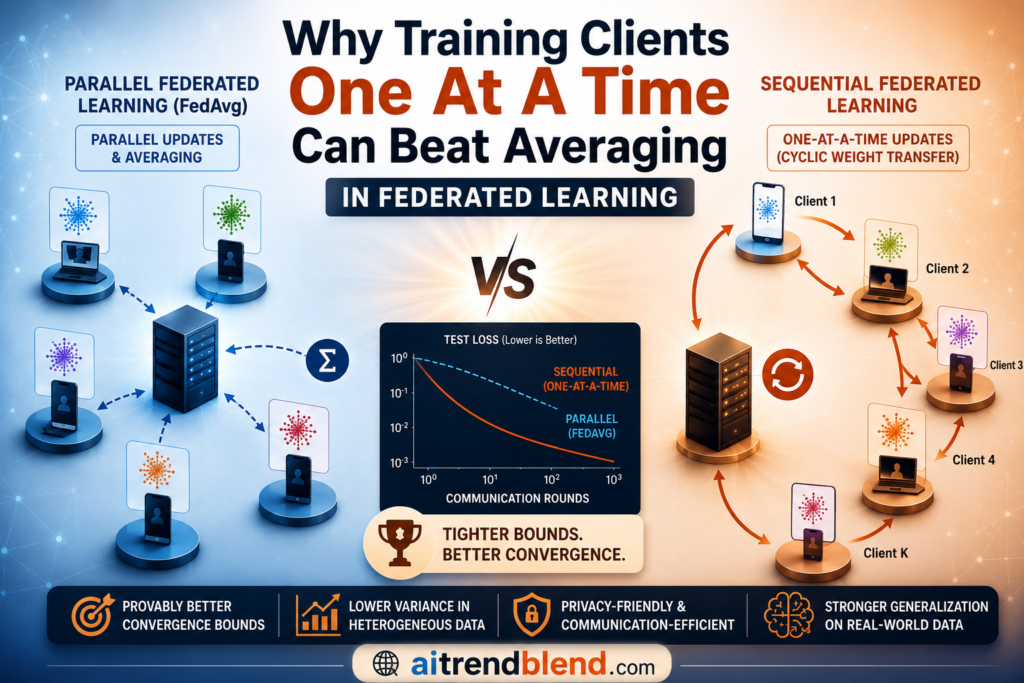
Why Training Clients One At A Time Can Beat Averaging In Federated Learning

Why Training Clients One At A Time Can Beat Averaging In Federated Learning

Analysis by the aitrendblend editorial team · Published from arXiv:2311.03154 and JMLR 26 (2025) · Federated learning and AI privacy sequential federated learning parallel federated learning data heterogeneity convergence bounds split learning random reshuffling Sequential handoffs versus central averaging, the two shapes federated training can take. Picture ten hospitals that each hold a slice of

Why Training Clients One At A Time Can Beat Averaging In Federated Learning Read More »

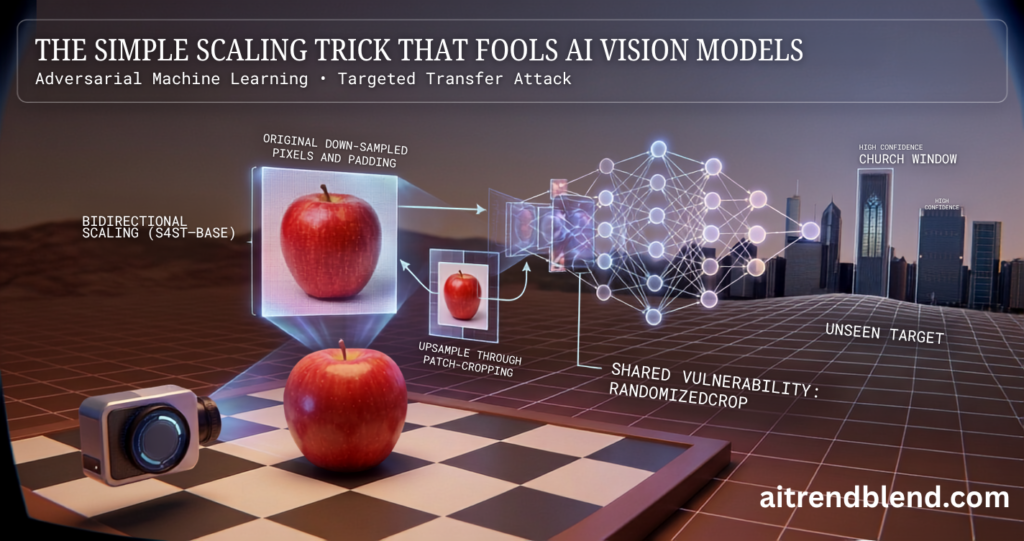
S4ST: The Simple Scaling Trick That Fools AI Vision Models

S4ST: The Simple Scaling Trick That Fools AI Vision Models

Vision Transformers and Attention · Adversarial Machine Learning · 13 min read Adversarial Examples Targeted Transfer Attack S4ST Black Box Security Vision Transformers S4ST · Scaling Based Adversarial TransferA basic resize operation, applied with the right recipe, turns out to be one of the most effective ways to fool an unseen image classifier. Shrink a

S4ST: The Simple Scaling Trick That Fools AI Vision Models Read More »

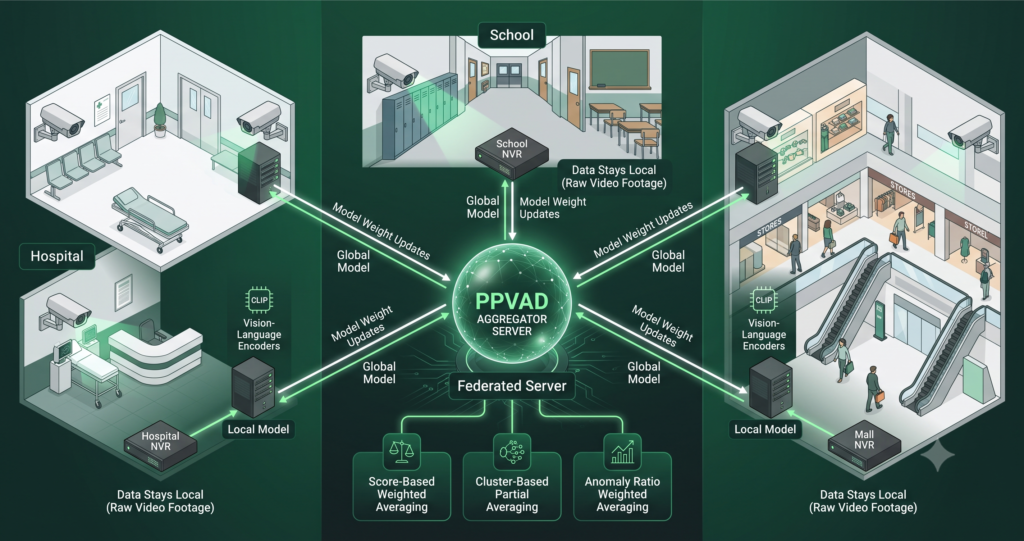
Federated Learning Lets Surveillance Cameras Learn Without Sharing

Federated Learning Lets Surveillance Cameras Learn Without Sharing

Analysis by the aitrendblend editorial team · Pillar 6, Federated learning and AI privacy · Reading time about 15 minutes federated learning video anomaly detection privacy preserving AI CLIP and vision language models surveillance systems Every institution keeps its own footage. Only the model’s learned weights ever leave the building. A hospital, a school, and

Federated Learning Lets Surveillance Cameras Learn Without Sharing Read More »

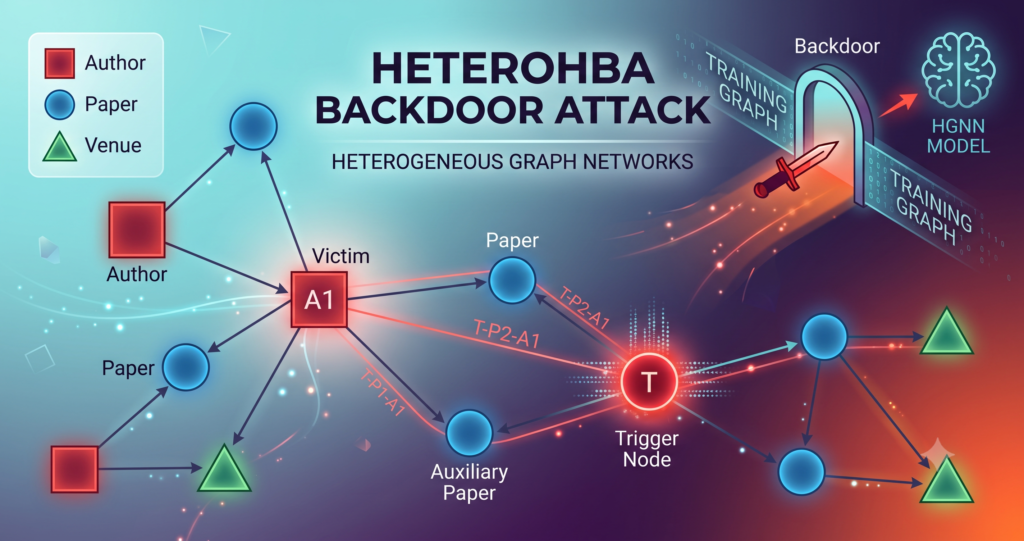
Backdoor Attacks Now Target Heterogeneous Graph Neural Networks.

Backdoor Attacks Now Target Heterogeneous Graph Neural Networks

Analysis by the aitrendblend editorial team · Pillar 5, Graph neural networks · Reading time about 15 minutes heterogeneous graph neural networks backdoor attacks graph security adversarial machine learning defense evaluation One extra node, a handful of new edges, and a graph neural network can be quietly taught to misclassify whatever the attacker wants. Imagine

Backdoor Attacks Now Target Heterogeneous Graph Neural Networks Read More »

How ProtoSig Uses Clustering to Make Signature Verification Faster, Fairer, and More Stable.

How ProtoSig Uses Clustering to Make Signature Verification Faster, Fairer, and More Stable

ProtoSig replaces thousands of random forgeries with 50 clustered prototype signatures, cutting training compute by over 98% while matching verification accuracy — and making signature verification fairer and more stable.

How ProtoSig Uses Clustering to Make Signature Verification Faster, Fairer, and More Stable Read More »