Computer Vision

Computer vision is one of our deepest areas, covering how machines learn to see, segment, and reason about images and video. Articles here range from convolutional and transformer based architectures to dense prediction tasks like detection and segmentation, with regular coverage of medical imaging where reliable vision models carry real clinical weight. The emphasis stays on what makes a method work and where it breaks, backed by the original research.

NeuralBoneReg Solved the Hardest Alignment Problem in Robotic Surgery Without a Single Labeled Training Example.

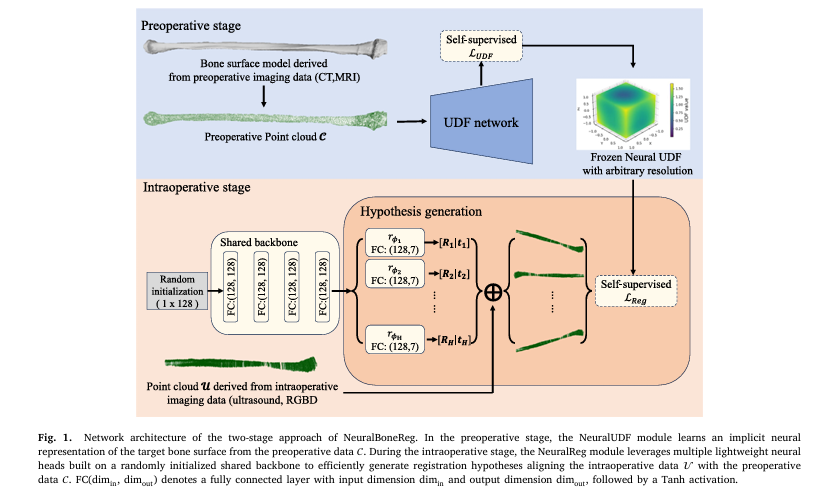
NeuralBoneReg: How a Self-Supervised Neural Framework Solved the Hardest Problem in Robotic Orthopedic Surgery

A team from Balgrist University Hospital and ETH Zurich built an instance-specific self-supervised framework that registers bone surfaces across imaging modalities by learning a continuous neural distance field from the preoperative scan and using thousands of neural hypothesis generation heads…

NeuralBoneReg: How a Self-Supervised Neural Framework Solved the Hardest Problem in Robotic Orthopedic Surgery Read More »

HP2L: How Hierarchical Prompt and Prototype Learning Finally Taught AI to Diagnose Brain Disorders Like a Radiologist.

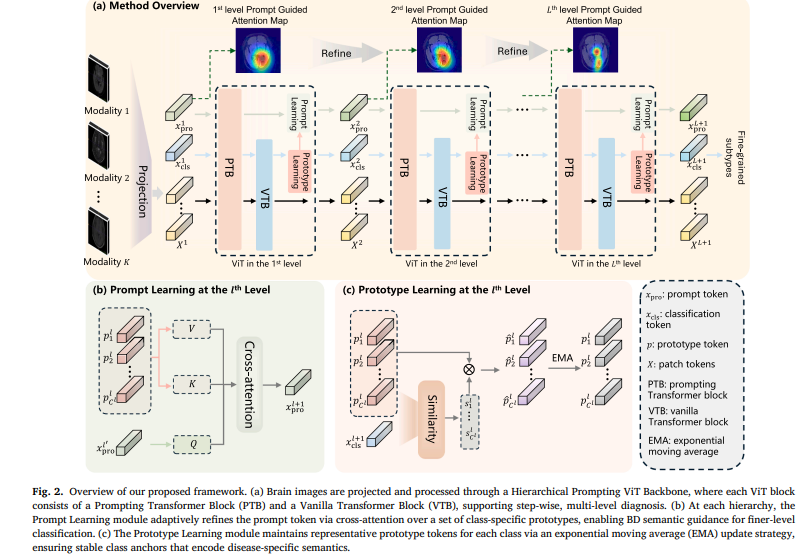
HP2L: How Hierarchical Prompt and Prototype Learning Finally Taught AI to Diagnose Brain Disorders Like a Radiologist

A team from ShanghaiTech University, Henan Provincial People’s Hospital, and Shanghai United Imaging Intelligence built a hierarchical framework that classifies 23 brain disorders across three diagnostic levels, cuts the performance gap between coarse and fine-grained predictions to just 2%, and…

HP2L: How Hierarchical Prompt and Prototype Learning Finally Taught AI to Diagnose Brain Disorders Like a Radiologist Read More »

M2OTCA: How Multi-Magnification Optimal Transport Finally Made Whole Slide Image AI Work the Way Pathologists Think.

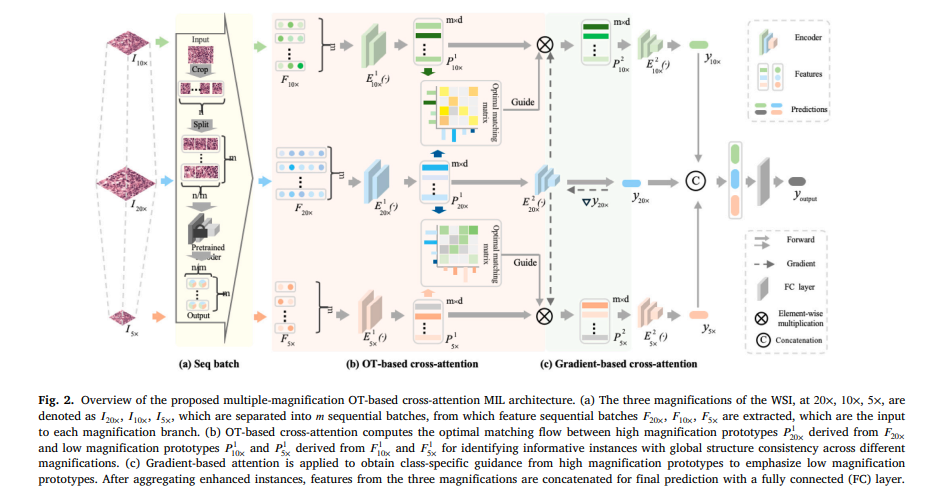
M2OTCA: How Multi-Magnification Optimal Transport Finally Made Whole Slide Image AI Work the Way Pathologists Think

A team from Wuhan University of Science and Technology, Xiamen University, and the University of New South Wales built a multiple-magnification MIL framework that uses optimal transport to match tissue features across magnification levels, outperforming every tested baseline across four…

M2OTCA: How Multi-Magnification Optimal Transport Finally Made Whole Slide Image AI Work the Way Pathologists Think Read More »

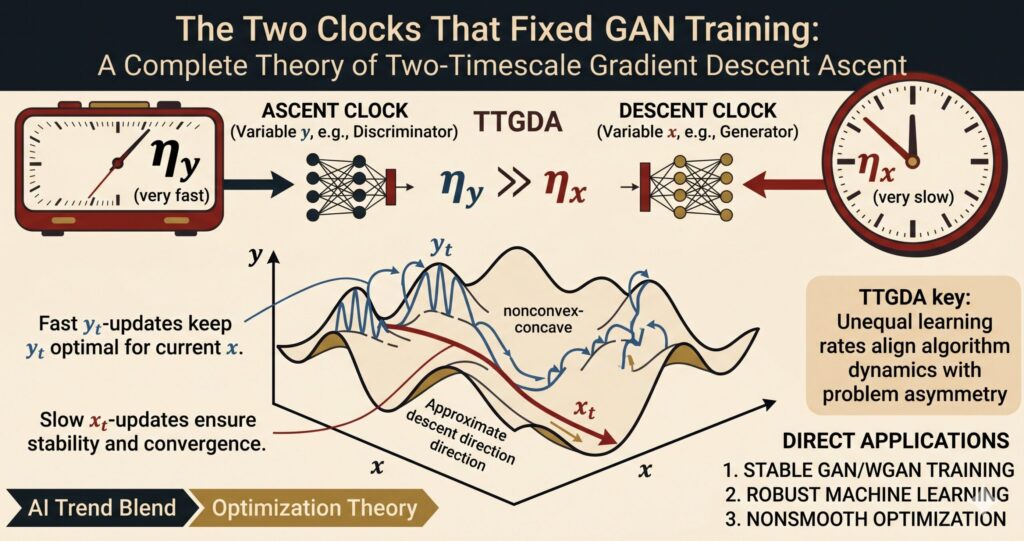
TTGDA: Two-Timescale Gradient Descent Ascent for Nonconvex Minimax Optimization.

TTGDA: Two-Timescale Gradient Descent Ascent for Nonconvex Minimax Optimization

Tianyi Lin, Chi Jin, and Michael I. Jordan from Columbia, Princeton, and UC Berkeley deliver the first rigorous nonasymptotic analysis of two-timescale gradient descent ascent — the algorithm that has powered GAN training in practice for years — establishing tight…

TTGDA: Two-Timescale Gradient Descent Ascent for Nonconvex Minimax Optimization Read More »

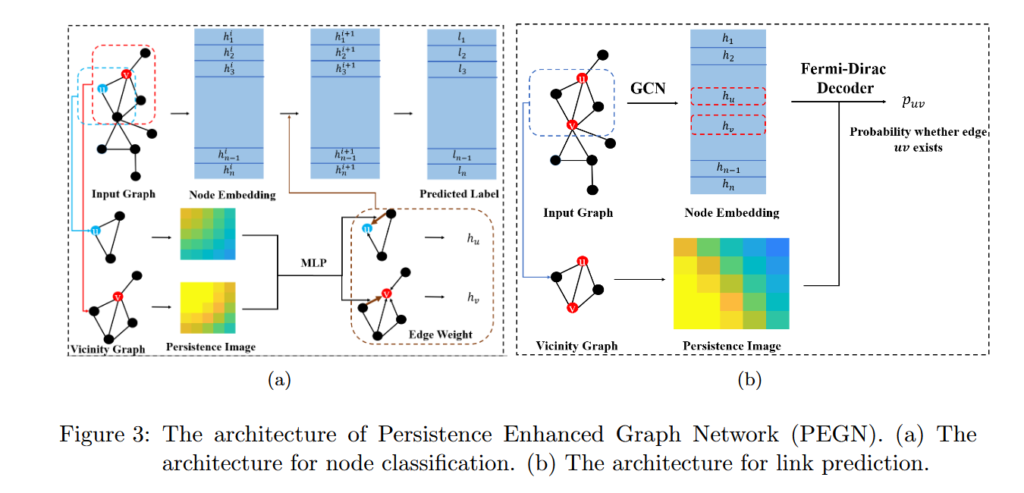
PEGN: How Persistent Homology Breaks the WL Barrier in Graph Neural Networks.

PEGN: How Persistent Homology Breaks the WL Barrier in Graph Neural Networks

A multi-institution team spanning Peking University, UC San Diego, Stony Brook University, and Weill Cornell Medicine built PEGN — a framework that injects localized topological features from extended persistent homology into graph neural networks, pushing expressiveness beyond the 3-WL barrier…

PEGN: How Persistent Homology Breaks the WL Barrier in Graph Neural Networks Read More »

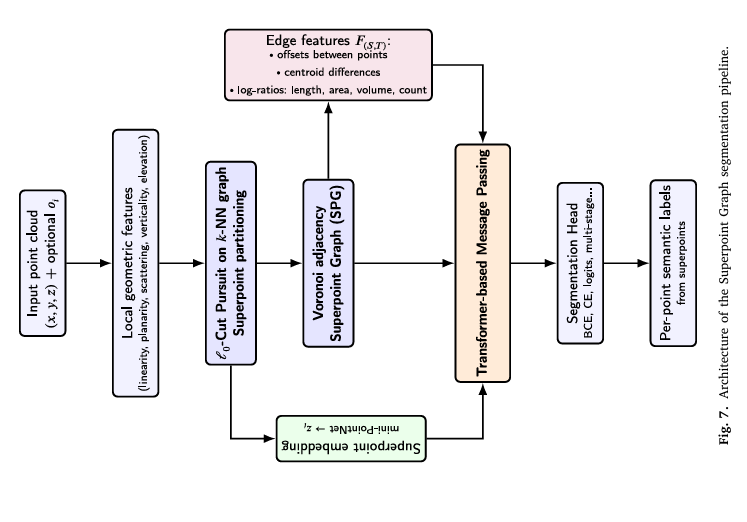
Railway Sinkhole Detection with Physics-Informed Synthetic Data and SuperPoint Transformer.

Railway Sinkhole Detection with Physics-Informed Synthetic Data and SuperPoint Transformer

When you only have a handful of real sinkhole examples, you either accept poor detection or get creative about generating training data. Researchers at Arts et Métiers ParisTech and SNCF Réseau chose the latter — building physics-informed synthetic sinkholes, embedding…

Railway Sinkhole Detection with Physics-Informed Synthetic Data and SuperPoint Transformer Read More »