AI in radiology

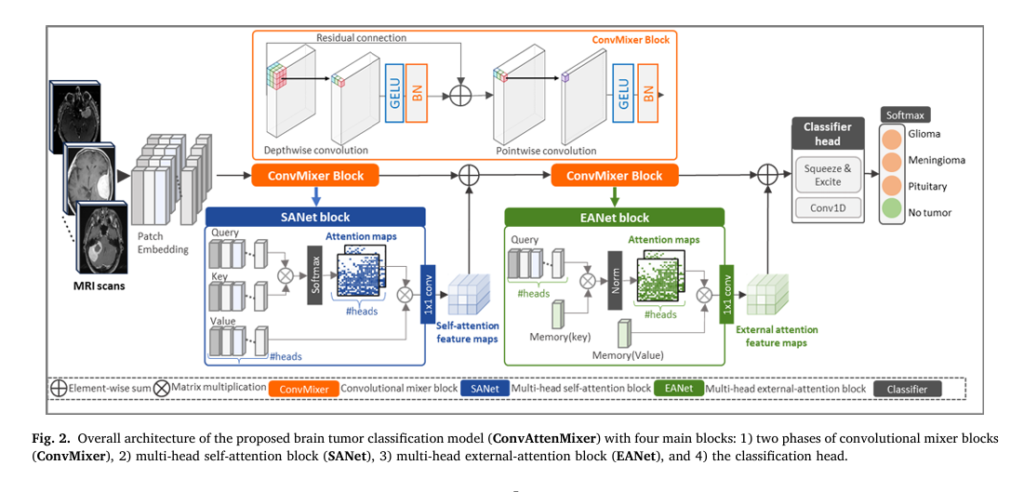
Illustration of the ConvAttenMixer model architecture showing MRI input, convolutional layers, self-attention, external attention, and classification output for brain tumor detection.

ConvAttenMixer: Revolutionizing Brain Tumor Detection with Convolutional Mixer and Attention Mechanisms

In the rapidly advancing field of medical imaging and artificial intelligence (AI), brain tumor detection and classification remain among the most critical challenges in neurology and radiology. With over 5712 MRI scans analyzed in recent research, the demand for accurate, efficient, and scalable deep learning models has never been higher. Enter ConvAttenMixer—a groundbreaking transformer-based model […]

ConvAttenMixer: Revolutionizing Brain Tumor Detection with Convolutional Mixer and Attention Mechanisms Read More »

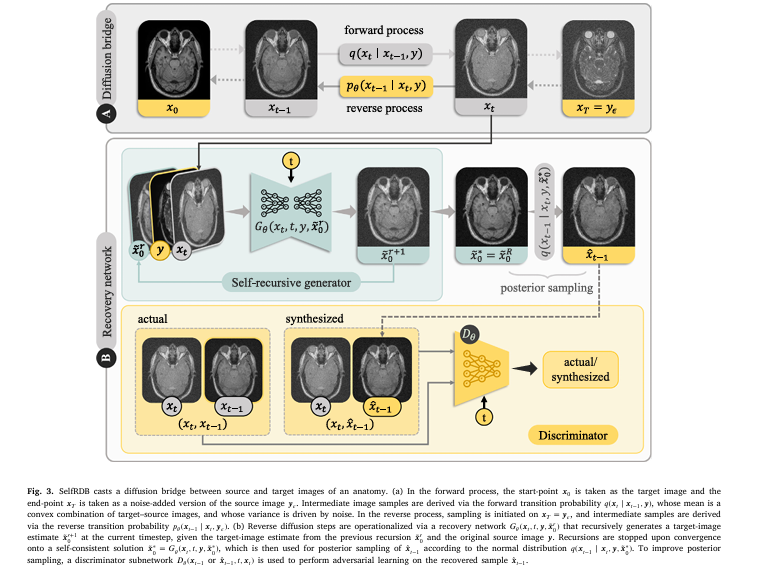
Diagram showing the SelfRDB diffusion bridge process transforming MRI to CT scans with high fidelity and noise robustness for medical image translation.

7 Revolutionary Breakthroughs in Medical Image Translation (And 1 Fatal Flaw That Could Derail Your AI Model)

Medical imaging has long been the cornerstone of modern diagnostics. From detecting tumors to planning radiotherapy, the quality and availability of imaging modalities like MRI and CT can make or break patient outcomes. But what if one scan could become another? What if a non-invasive MRI could reliably generate a synthetic CT—eliminating radiation exposure and

7 Revolutionary Breakthroughs in Medical Image Translation (And 1 Fatal Flaw That Could Derail Your AI Model) Read More »

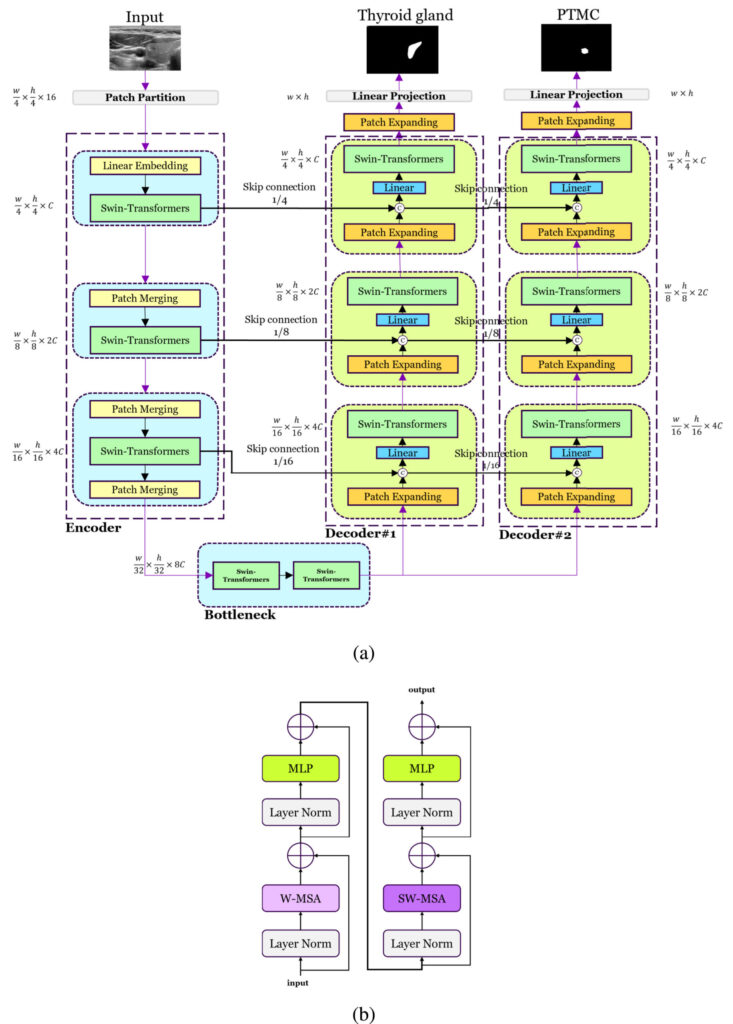
DualSwinUnet++ architecture diagram showing dual-decoder design for precise PTMC segmentation in ultrasound imaging

7 Revolutionary Breakthroughs in Thyroid Cancer AI: How DualSwinUnet++ Outperforms Old Models

In the rapidly evolving world of medical AI, few innovations have been as transformative as DualSwinUnet++—a cutting-edge deep learning model designed to revolutionize the way we detect and treat papillary thyroid microcarcinoma (PTMC). While traditional methods struggle with accuracy, speed, and real-time usability, this new architecture delivers unmatched precision, blazing-fast inference, and life-saving potential. But

7 Revolutionary Breakthroughs in Thyroid Cancer AI: How DualSwinUnet++ Outperforms Old Models Read More »

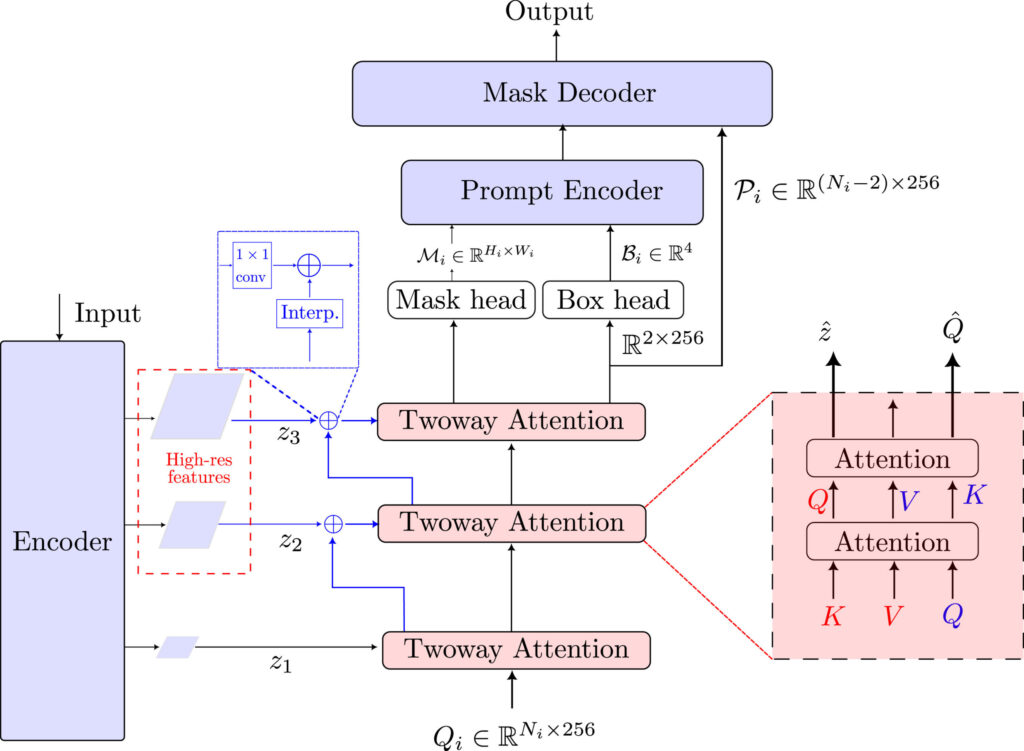
Sam2Rad architecture The Sam2Rad architecture incorporates a (hierarchical) two-way attention module to predict prompts for queried objects. Each object/class is represented by learnable queries . The Prompt Predictor Network (PPN) predicts bounding box coordinates of the target object , an intermediate mask prompt , and high-dimensional prompt embeddings . The prompt embeddings can represent various prompts suitable for the task, such as several point prompts or high-level semantic information. The predicted prompts (i.e., , , & ) are then fed to SAM’s mask decoder to generate the final segmentation mask. PPN also supports multi-class medical image segmentation by using class-specific queries .

Sam2Rad: Revolutionizing Medical Image Segmentation with AI-Powered Automation

Medical imaging has long been a cornerstone of modern healthcare, enabling clinicians to diagnose, treat, and monitor a wide range of conditions. However, the manual segmentation of structures in medical images remains a time-consuming and expertise-intensive task. With the advent of deep learning and foundation models like the Segment Anything Model (SAM), there is growing

Sam2Rad: Revolutionizing Medical Image Segmentation with AI-Powered Automation Read More »

Follow by Email
Tiktok