computer vision

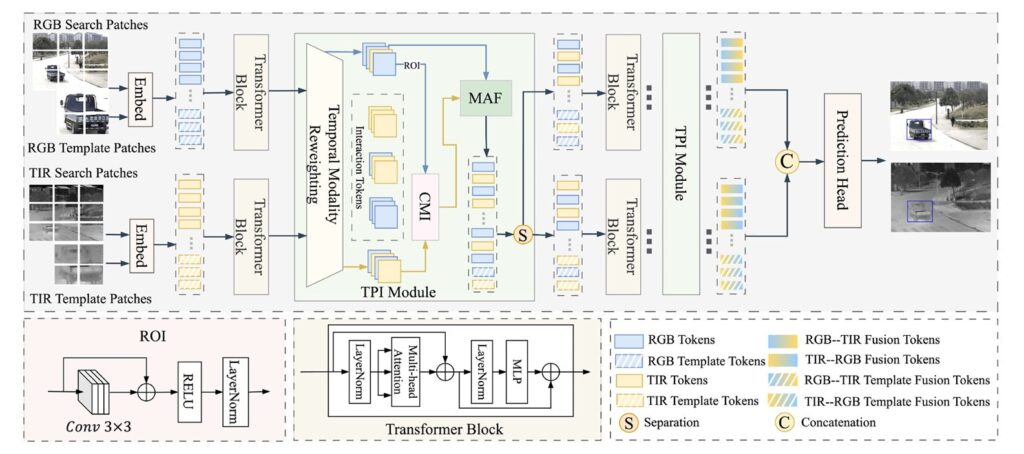
TPMRI Framework Architecture.

TPMRI: How Three-Stage Progressive Fusion Is Solving RGB-T Tracking’s Temporal Blindness

TPMRI: How Three-Stage Progressive Fusion Is Solving RGB-T Tracking’s Temporal Blindness | MedAI Research MedAI Research Machine Learning About Computer Vision · Knowledge-Based Systems, 2026 · 14 min read When RGB-T Trackers Lose Track: How TPMRI Learned to Remember Through Time TPMRI introduces a three-stage progressive fusion framework that fixes RGB-T tracking’s most frustrating failures […]

TPMRI: How Three-Stage Progressive Fusion Is Solving RGB-T Tracking’s Temporal Blindness Read More »
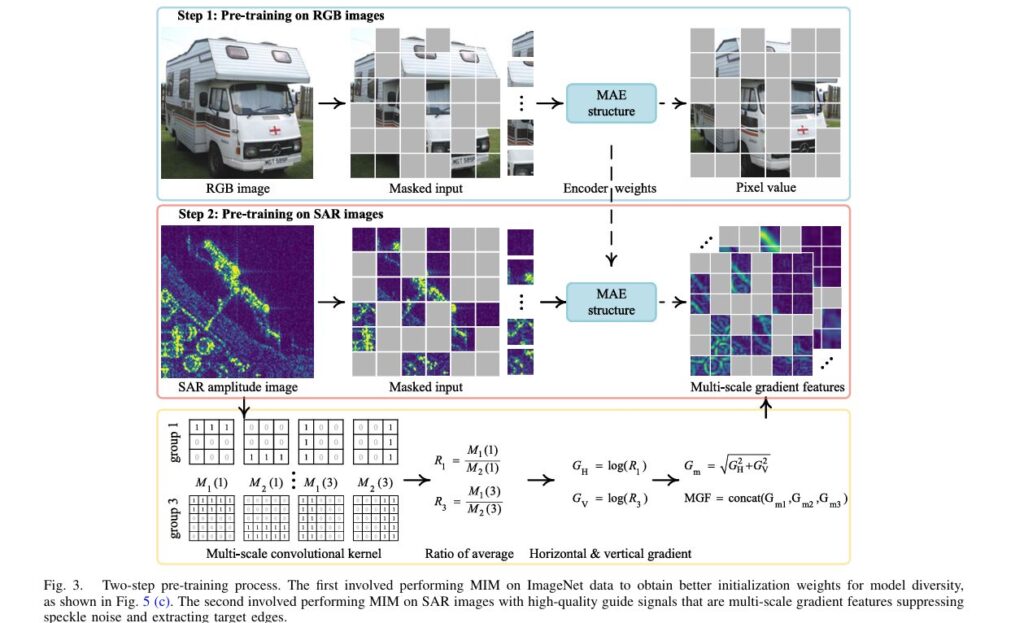
SARATR-X: Revolutionary Foundation Model Transforms SAR Target Recognition with Self-Supervised Learning

SARATR-X: Revolutionary Foundation Model Transforms SAR Target Recognition with Self-Supervised Learning

Introduction: Breaking New Ground in Radar Image Analysis Imagine a technology that can see through clouds, darkness, and adverse weather conditions to identify vehicles, ships, and aircraft with remarkable precision. This is the power of Synthetic Aperture Radar (SAR), and now, researchers have developed SARATR-X—the first foundation model specifically designed to revolutionize how machines understand

SARATR-X: Revolutionary Foundation Model Transforms SAR Target Recognition with Self-Supervised Learning Read More »

SurgeNetXL: Revolutionizing Surgical Computer Vision with Self-Supervised Learning

SurgeNetXL: Revolutionizing Surgical Computer Vision with Self-Supervised Learning

Introduction The operating room represents one of the most data-rich environments in modern medicine, yet surprisingly, computer vision technology has lagged behind other medical specialties. While pathology and radiology have embraced AI solutions at near-market deployment stages, surgical computer vision remains in its infancy—constrained not by algorithmic limitations, but by the scarcity of comprehensive, well-annotated

SurgeNetXL: Revolutionizing Surgical Computer Vision with Self-Supervised Learning Read More »

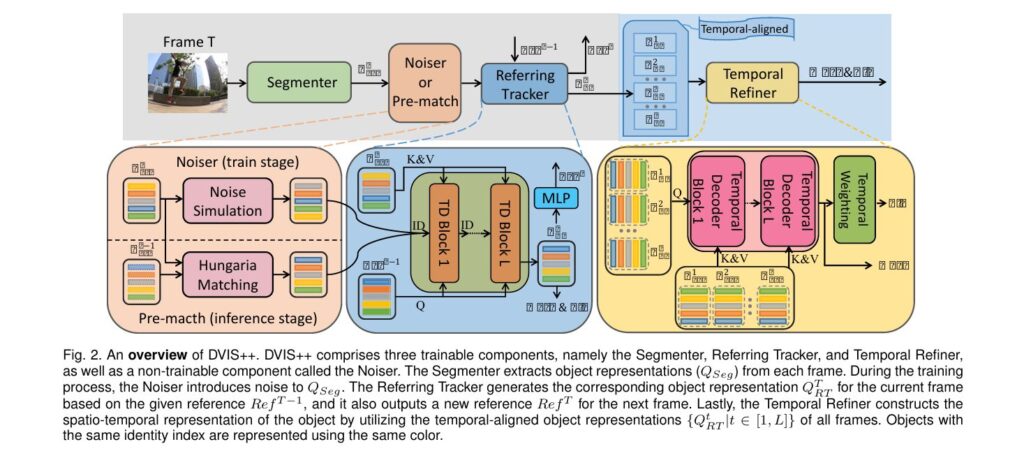
DVIS++: The Game-Changing Decoupled Framework Revolutionizing Universal Video Segmentation

DVIS++: The Game-Changing Decoupled Framework Revolutionizing Universal Video Segmentation

Introduction Video segmentation has become increasingly critical in computer vision applications, from autonomous driving to video editing and surveillance systems. However, existing approaches struggle with a fundamental challenge: how to accurately track and segment objects across long, complex videos while simultaneously identifying both foreground “things” (like people and cars) and background “stuff” (like roads and

DVIS++: The Game-Changing Decoupled Framework Revolutionizing Universal Video Segmentation Read More »

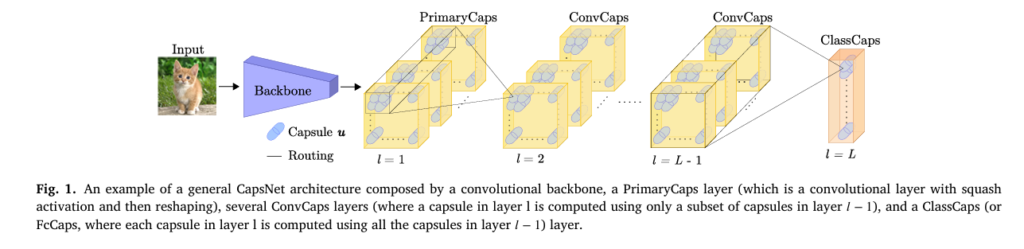
Diagram showing REM (Routing Entropy Minimization) applied to a Capsule Network, reducing unnecessary parse trees and focusing only on relevant object parts.

Capsule Networks Do Not Need to Model Everything: How REM Reduces Entropy for Smarter AI

In the fast-evolving world of deep learning, capsule networks (CapsNets) have emerged as a promising alternative to traditional convolutional neural networks (CNNs). Unlike CNNs, which lose spatial hierarchies due to pooling layers, CapsNets aim to preserve part-whole relationships through dynamic routing mechanisms. However, despite their biological inspiration and theoretical advantages, CapsNets often struggle with over-complication—modeling

Capsule Networks Do Not Need to Model Everything: How REM Reduces Entropy for Smarter AI Read More »

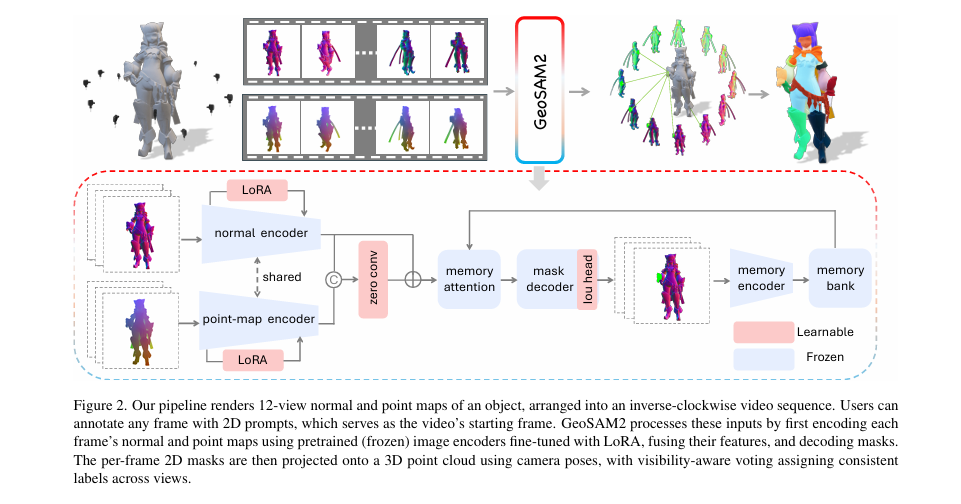
GeoSAM2 architecture diagram showing multi-view processing with SAM2 and LoRA modules.

GeoSAM2 3D Part Segmentation — Prompt-Controllable, Geometry-Aware Masks for Precision 3D Editing

In the rapidly evolving field of computer vision and 3D modeling, 3D part segmentation has emerged as a critical yet challenging task. Whether for robotic manipulation, 3D content generation, or interactive editing, accurately segmenting 3D objects into their constituent parts is essential. However, traditional methods often rely on extensive manual labeling, slow per-shape optimization, or lack fine-grained

GeoSAM2 3D Part Segmentation — Prompt-Controllable, Geometry-Aware Masks for Precision 3D Editing Read More »

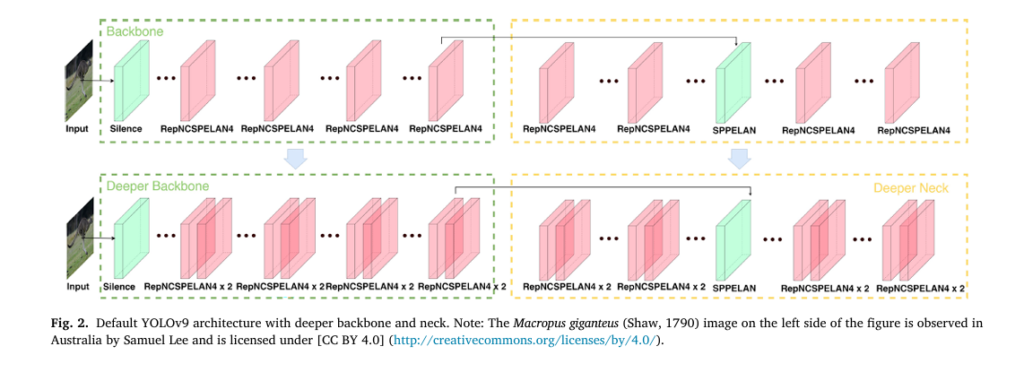
Scientific visualization of YOLO-FCE model outperforming older AI detection systems in identifying Australian wildlife species.

7 Reasons Why YOLO-FCE Outshines Traditional Models (And One Critical Flaw)

Australia is home to over 600 mammal species, 800 bird species, and countless reptiles and amphibians — many found nowhere else on Earth. Yet, as biodiversity declines at an alarming rate, accurate, fast, and scalable species identification has become a critical challenge for conservationists. Enter YOLO-FCE, a groundbreaking AI model that’s redefining how we detect

7 Reasons Why YOLO-FCE Outshines Traditional Models (And One Critical Flaw) Read More »

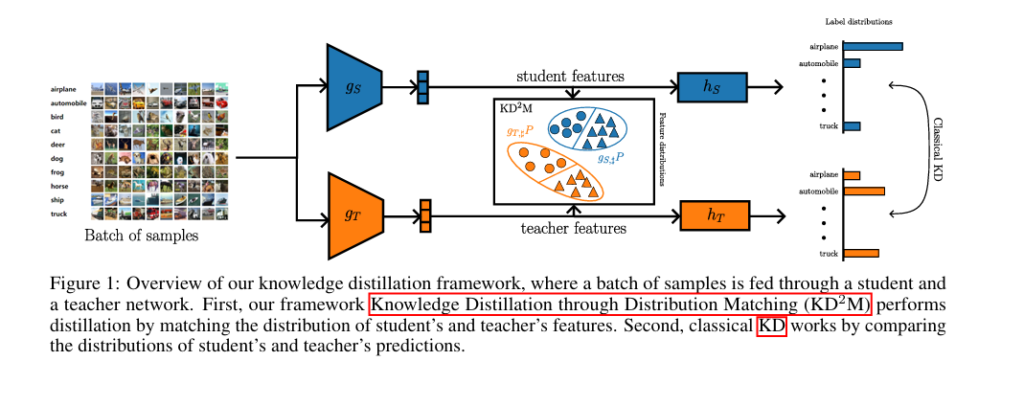
Visual comparison of misaligned vs. aligned neural network features using KD2M, showing dramatic improvement in model performance.

5 Shocking Mistakes in Knowledge Distillation (And the Brilliant Framework KD2M That Fixes Them)

In the fast-evolving world of deep learning, one of the most promising techniques for deploying AI on edge devices is Knowledge Distillation (KD). But despite its popularity, many implementations suffer from critical flaws that undermine performance. A groundbreaking new paper titled “KD2M: A Unifying Framework for Feature Knowledge Distillation” reveals 5 shocking mistakes commonly made

5 Shocking Mistakes in Knowledge Distillation (And the Brilliant Framework KD2M That Fixes Them) Read More »

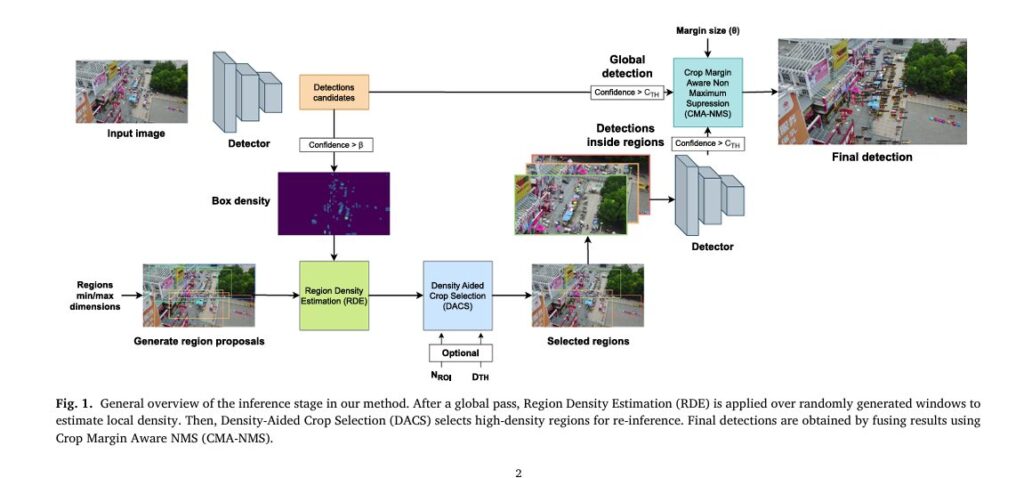
DAHI framework for small object detection

7 Revolutionary Breakthroughs in Small Object Detection: The DAHI Framework

Detecting tiny vehicles in drone footage. Spotting distant pedestrians in smart city surveillance. Identifying miniature components on a factory floor. These are the critical challenges facing modern computer vision—where small object detection (SOD) isn’t just a technical hurdle, but a make-or-break factor for safety, automation, and intelligence. Despite decades of progress, most deep learning models

7 Revolutionary Breakthroughs in Small Object Detection: The DAHI Framework Read More »

Follow by Email
Tiktok