Knowledge Distillation

Overview of DSKD training.

DSKD: How Sense Dictionaries Are Finally Making Decoder LLMs Smarter Without Slowing Them Down

DSKD: How Sense Dictionaries Are Finally Making Decoder LLMs Smarter Without Slowing Them Down | AI Research AITrendBlend Machine Learning About Natural Language Processing · arXiv:2602.22351v1 [cs.CL] · 15 min read DSKD: The Lexical Knowledge Injection That Finally Works for Decoder Language Models How researchers at RPI and IBM Research taught generative LLMs to understand […]
DSKD: How Sense Dictionaries Are Finally Making Decoder LLMs Smarter Without Slowing Them Down Read More »

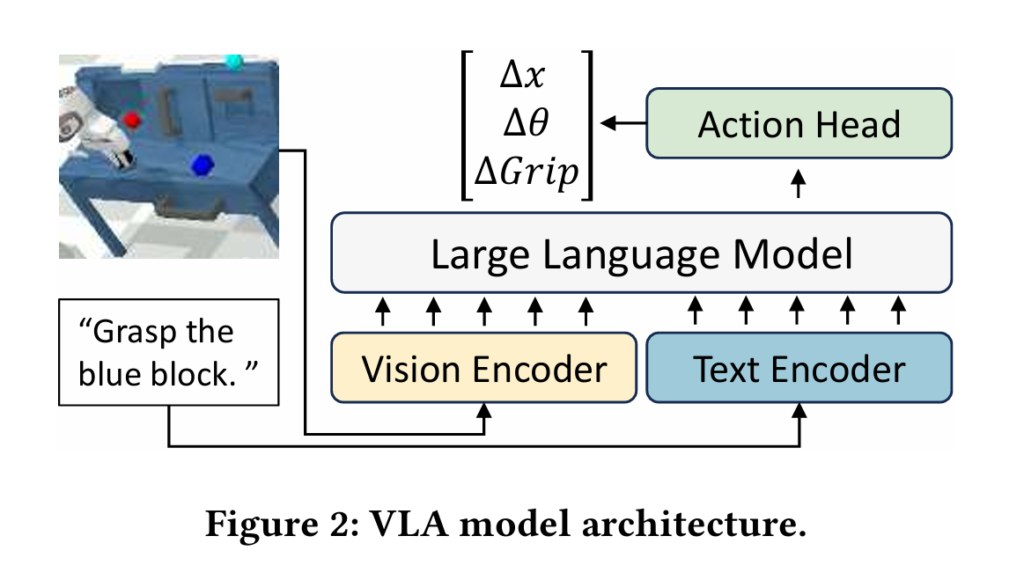
DySL-VLA: How Researchers Finally Taught Robots to Think Fast Without Thinking Less.

DySL-VLA: How Researchers Finally Taught Robots to Think Fast Without Thinking Less

DySL-VLA: How Researchers Finally Taught Robots to Think Fast Without Thinking Less | AI Systems Research AISecurity Research Machine Learning About Robot Learning · arXiv:2602.22896v2 [cs.RO] · 15 min read DySL-VLA: How Researchers Finally Taught Robots to Think Fast Without Thinking Less A team at Peking University discovered something that sounds almost too obvious once

DySL-VLA: How Researchers Finally Taught Robots to Think Fast Without Thinking Less Read More »

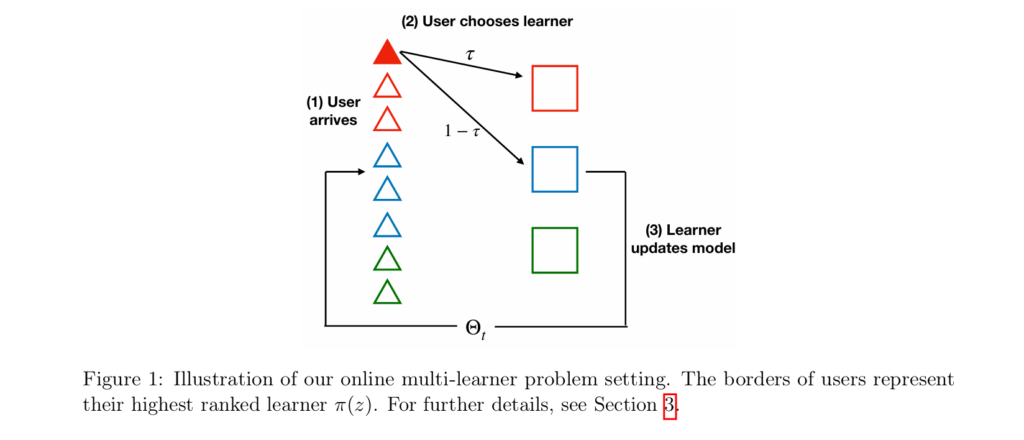
Dynamics of Learning under User Choice: Overspecialization and Peer-Model Probing.

How AI Platforms Get Trapped Serving Only Their Fans—and the peer-model PROBING Fix That Breaks the Cycle

How AI Platforms Get Trapped Serving Only Their Fans—and the Peer-Probing Fix That Breaks the Cycle | AI Systems Research AISecurity Research Machine Learning About Multi-Agent Learning · arXiv:2602.23565v1 [cs.LG] · 16 min read The Overspecialization Trap: Why Competing AI Platforms Inevitably Become Echo Chambers—and How Peer Probing Breaks the Cycle Researchers from UW and

How AI Platforms Get Trapped Serving Only Their Fans—and the peer-model PROBING Fix That Breaks the Cycle Read More »

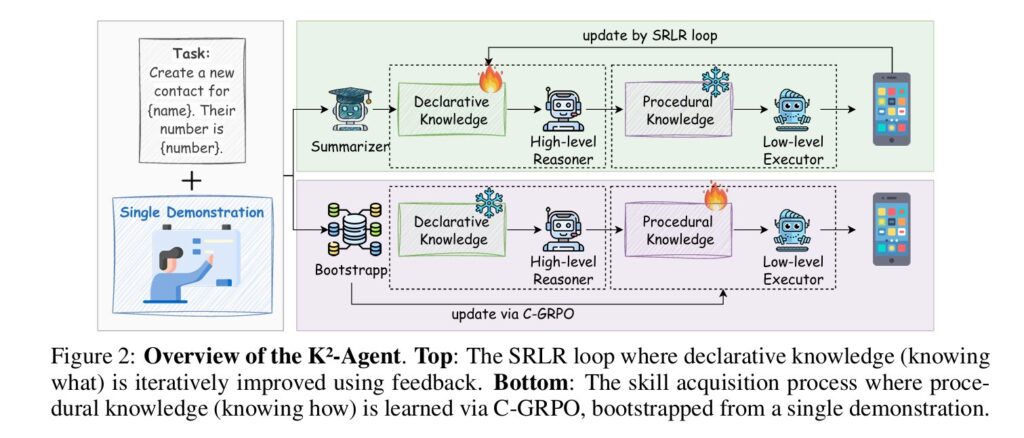
K2-Agent: The Cognitive Architecture That Taught AI to Think Like Humans About Mobile Tasks.

K2-Agent: Co-Evolving Know-What and Know-How for Hierarchical Mobile Device Control

K2-Agent: Co-Evolving Know-What and Know-How for Hierarchical Mobile Device Control | AI Security Research AISecurity Research Machine Learning About Agent Systems · ICLR 2026 · 18 min read K2-Agent: The Cognitive Architecture That Taught AI to Think Like Humans About Mobile Tasks A hierarchical framework separates “knowing what” from “knowing how” — enabling co-evolution of

K2-Agent: Co-Evolving Know-What and Know-How for Hierarchical Mobile Device Control Read More »

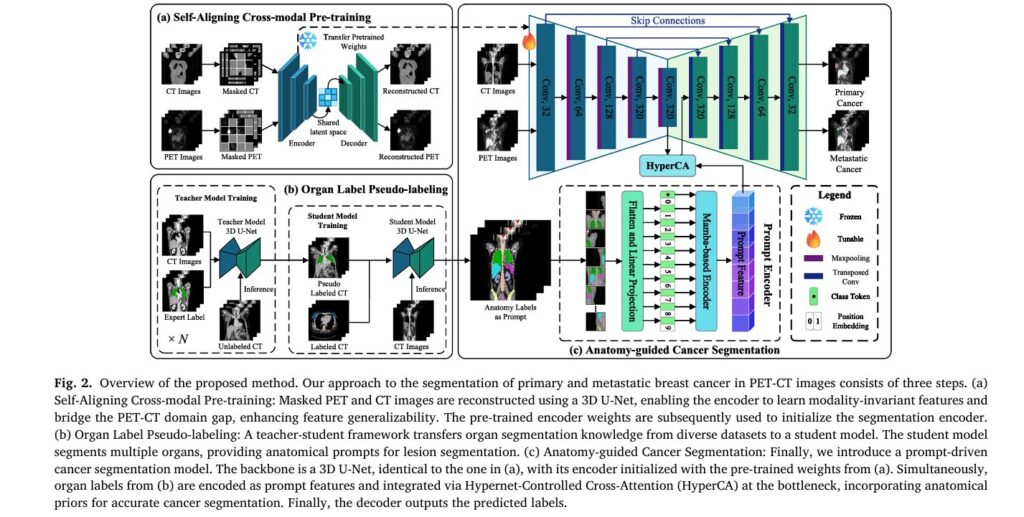
Anatomy-Guided Deep Learning Is Transforming Breast Cancer Detection in PET-CT Scans

Revolutionary AI Breakthrough: How Anatomy-Guided Deep Learning Is Transforming Breast Cancer Detection in PET-CT Scans

Introduction: The Critical Challenge of Metastatic Breast Cancer Detection Breast cancer remains the most diagnosed cancer among women worldwide, with approximately 3 million new cases detected in 2024 alone. While early-stage breast cancer boasts a nearly 100% five-year survival rate, this figure plummets to just 23% once metastasis occurs. The difference between life and death

Revolutionary AI Breakthrough: How Anatomy-Guided Deep Learning Is Transforming Breast Cancer Detection in PET-CT Scans Read More »

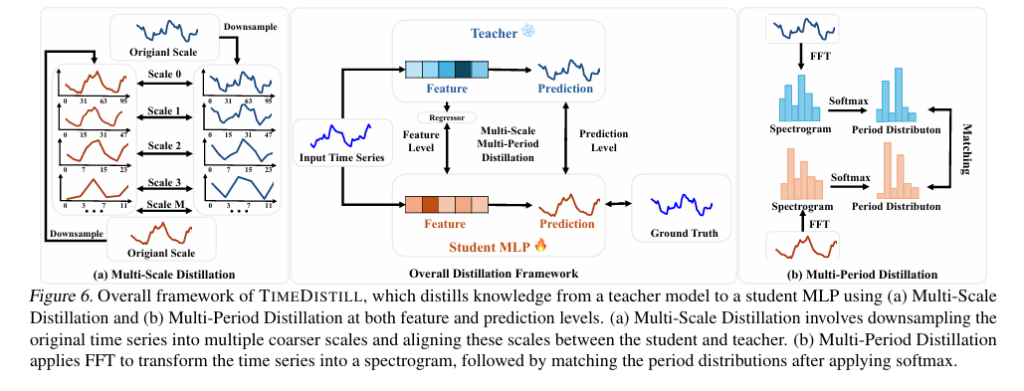
TimeDistill: Revolutionizing Time Series Forecasting with Cross-Architecture Knowledge Distillation

TimeDistill: Revolutionizing Time Series Forecasting with Cross-Architecture Knowledge Distillation

How MLP Models Are Achieving Transformer-Level Performance with 130x Fewer Parameters The Time Series Forecasting Dilemma Time series forecasting represents one of the most critical challenges in modern data science, with applications spanning climate modeling, traffic flow management, healthcare monitoring, and financial analytics. The global time series forecasting market, valued at 0.47 billion by 2033 with a

TimeDistill: Revolutionizing Time Series Forecasting with Cross-Architecture Knowledge Distillation Read More »

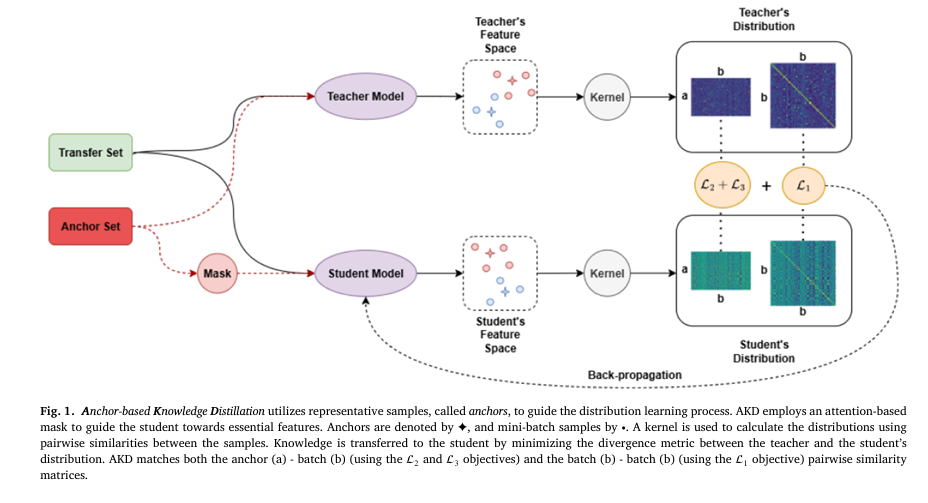
Anchor-Based Knowledge Distillation (AKD), a breakthrough in trustworthy AI for efficient model compression.

Anchor-Based Knowledge Distillation: A Trustworthy AI Approach for Efficient Model Compression

In the rapidly evolving field of artificial intelligence (AI), knowledge distillation (KD) has emerged as a cornerstone technique for compressing powerful, resource-intensive neural networks into smaller, more efficient models suitable for deployment on mobile and edge devices. However, traditional KD methods often fall short in capturing the full richness of a teacher model’s knowledge, especially

Anchor-Based Knowledge Distillation: A Trustworthy AI Approach for Efficient Model Compression Read More »

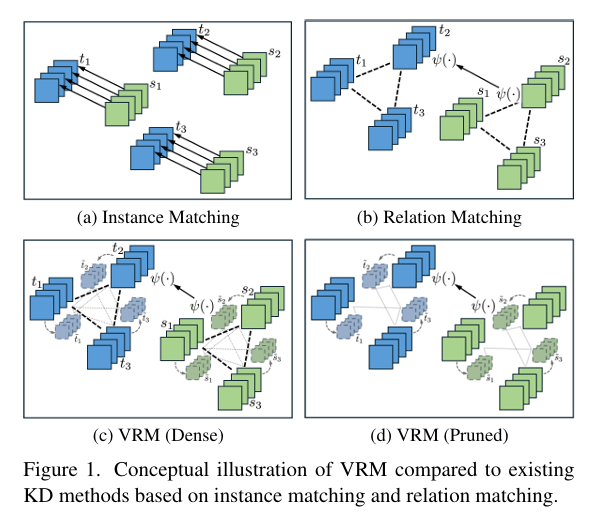
Illustration of VRM framework showing virtual relation matching between teacher and student models in knowledge distillation.

VRM: Knowledge Distillation via Virtual Relation Matching – A Breakthrough in Model Compression

In the rapidly evolving field of deep learning, knowledge distillation (KD) has emerged as a vital technique for transferring intelligence from large, powerful “teacher” models to smaller, more efficient “student” models. This enables deployment of high-performance AI on resource-constrained devices such as smartphones and edge sensors. While many KD methods focus on matching individual predictions—known

VRM: Knowledge Distillation via Virtual Relation Matching – A Breakthrough in Model Compression Read More »

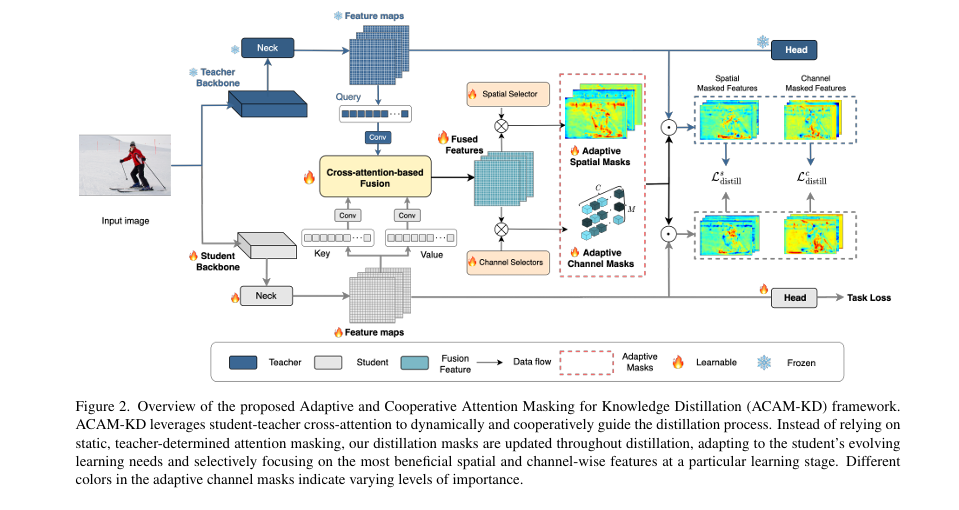
Visual representation of ACAM-KD framework showing student-teacher cross-attention and dynamic masking for improved knowledge distillation in object detection and segmentation.

ACAM-KD: Adaptive and Cooperative Attention Masking for Knowledge Distillation

In the rapidly evolving world of deep learning, deploying high-performance models on resource-constrained devices remains a critical challenge—especially for dense visual prediction tasks like object detection and semantic segmentation. These tasks are essential in real-time applications such as autonomous driving, video surveillance, and robotics. While large, deep neural networks deliver impressive accuracy, their computational demands

ACAM-KD: Adaptive and Cooperative Attention Masking for Knowledge Distillation Read More »

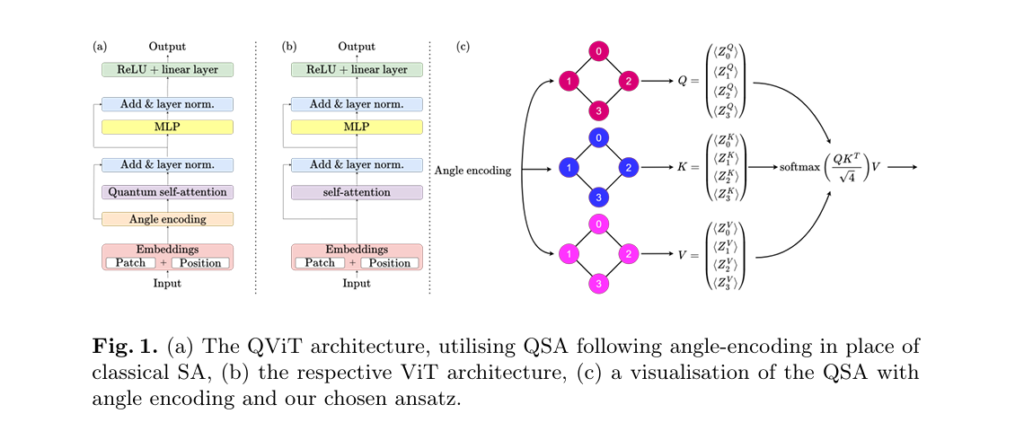
Diagram showing Quantum Vision Transformer (QViT) architecture with Quantum Self-Attention (QSA) replacing classical Self-Attention (SA) in a biomedical image classification model.

Quantum Self-Attention in Vision Transformers: A 99.99% More Efficient Path for Biomedical Image Classification

In the rapidly evolving field of biomedical image classification, deep learning models like Vision Transformers (ViTs) have set new performance benchmarks. However, their high computational cost and massive parameter counts—often in the millions—pose significant challenges for deployment in resource-constrained clinical environments. A groundbreaking new study titled “From O(n²) to O(n) Parameters: Quantum Self-Attention in Vision

Quantum Self-Attention in Vision Transformers: A 99.99% More Efficient Path for Biomedical Image Classification Read More »

Follow by Email
Tiktok