Medical image segmentation

SDCL Framework for Semi-Supervised Medical Image Segmentation

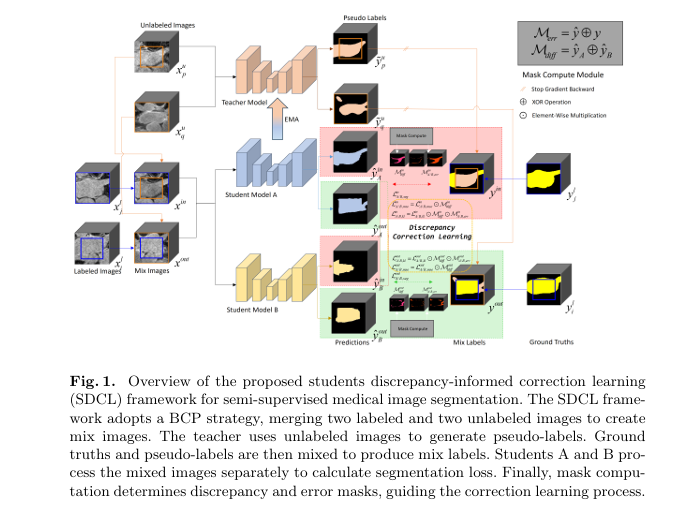
5 Revolutionary Advancements in Medical Image Segmentation: How SDCL Outperforms Existing Methods (With Math Explained)

Introduction: The Evolution of Medical Image Segmentation Medical image segmentation plays a pivotal role in diagnostics, treatment planning, and clinical research. As technology advances, the demand for accurate, efficient, and scalable segmentation methods has never been higher. However, the field faces a significant challenge: limited labeled data . Annotating medical images is time-consuming, expensive, and […]
5 Revolutionary Advancements in Medical Image Segmentation: How SDCL Outperforms Existing Methods (With Math Explained) Read More »

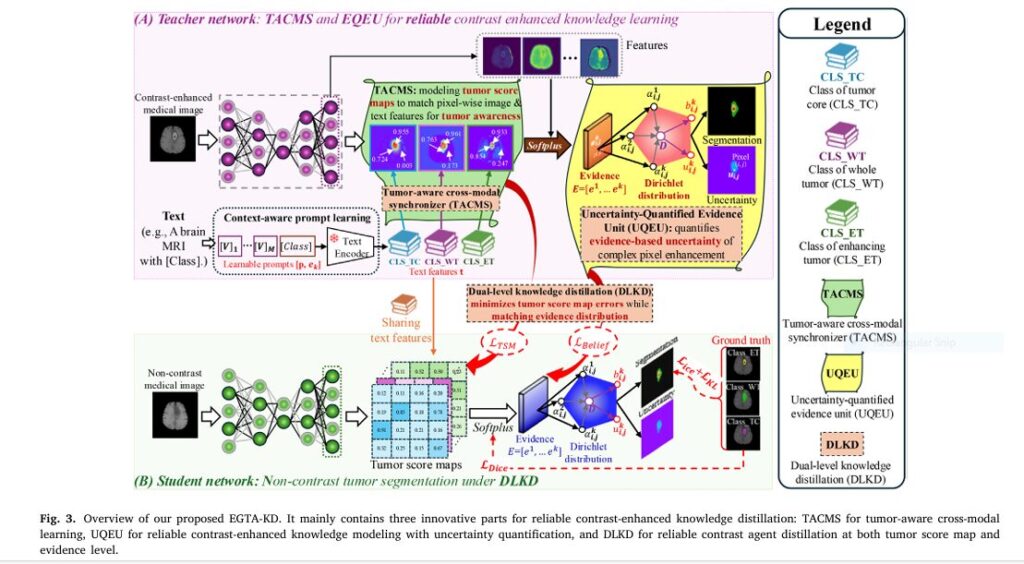
Medical AI transforming tumor segmentation with EGTA-KD technology

Revolutionary AI Breakthrough: Non-Contrast Tumor Segmentation Saves Lives & Avoids Deadly Risks

Imagine detecting deadly tumors without injecting risky contrast agents. A revolutionary AI framework called EGTA-KD is making this possible, achieving near-perfect segmentation (90.8% accuracy) on non-contrast scans while eliminating allergic reactions and kidney damage linked to traditional methods. This isn’t futuristic hype – it’s validated across brain, liver, and kidney tumors in major clinical datasets. The Deadly Cost of Current

Revolutionary AI Breakthrough: Non-Contrast Tumor Segmentation Saves Lives & Avoids Deadly Risks Read More »

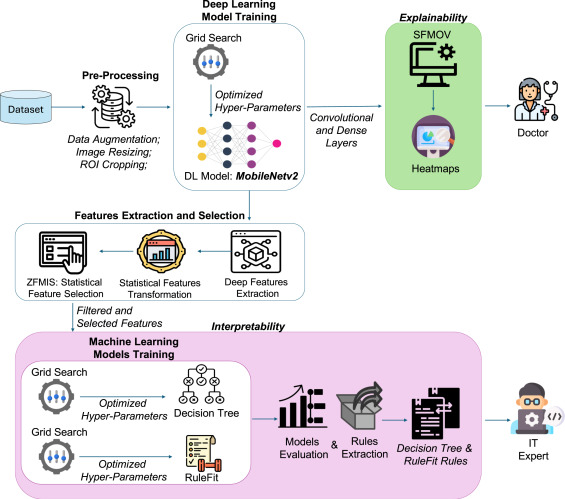
SVIS-RULEX SFMOV heatmap overlay on a chest X-ray: Red/Orange areas highlight regions of high statistical significance (e.g., mean intensity, skewness, entropy) corresponding to COVID-19 lung opacities, validated by radiologists. Blue areas show less relevant tissue

3 Breakthroughs & 1 Warning: How Explainable AI SVIS-RULEX is Revolutionizing Medical Imaging (Finally!)

For years, artificial intelligence (AI) has promised to revolutionize medical diagnosis, particularly in analyzing complex medical images like X-rays, MRIs, and ultrasounds. Deep learning models consistently achieve superhuman accuracy in spotting tumors, infections, and subtle pathologies. Yet, a critical roadblock remains: the “black box” problem. How does the AI really make its decision? Without transparency, doctors hesitate to

3 Breakthroughs & 1 Warning: How Explainable AI SVIS-RULEX is Revolutionizing Medical Imaging (Finally!) Read More »

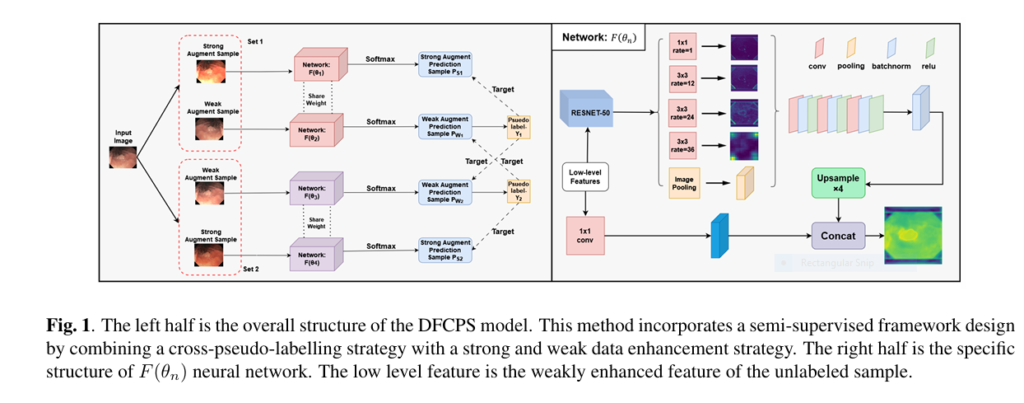
DFCPS AI model accurately segmenting gastrointestinal polyps in endoscopic imagery with minimal labeled data.

Revolutionizing Healthcare: How DFCPS’ Breakthrough Semi-Supervised Learning Slashes Medical Image Segmentation Costs by 90%

Medical imaging—CT scans, MRIs, and X-rays—generates vast amounts of data critical for diagnosing diseases like cancer, cardiovascular conditions, and gastrointestinal disorders. However, manual analysis is time-consuming, error-prone, and costly , leaving clinicians overwhelmed. Enter Deep Feature Collaborative Pseudo Supervision (DFCPS) , a groundbreaking semi-supervised learning model poised to transform medical image segmentation. In this article,

Revolutionizing Healthcare: How DFCPS’ Breakthrough Semi-Supervised Learning Slashes Medical Image Segmentation Costs by 90% Read More »

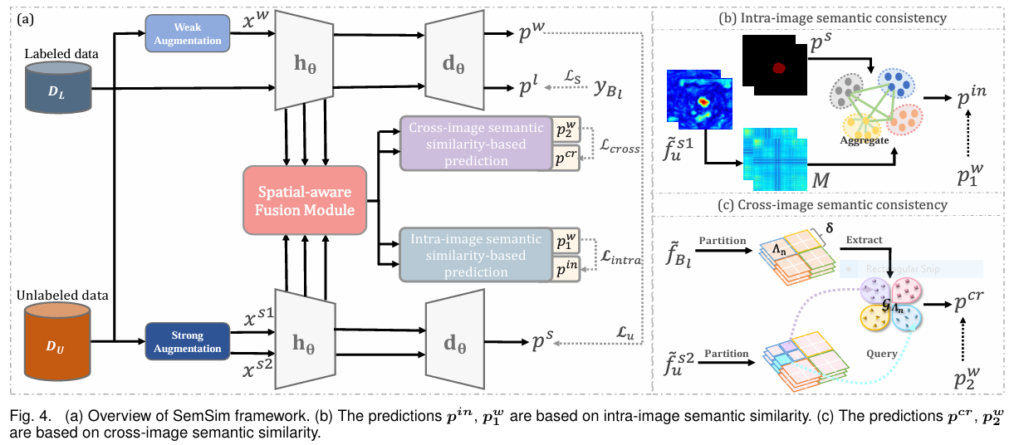
Revolutionizing Medical Image Segmentation: SemSim’s Semantic Breakthrough

Medical image segmentation is the cornerstone of modern diagnostics and treatment planning. From pinpointing tumor boundaries to mapping cardiac structures, its precision directly impacts patient outcomes. Yet, a critical bottleneck persists: the massive annotation burden. Manual labeling demands hours of expert time per scan, creating a severe shortage of labeled data that throttles AI’s potential. Enter semi-supervised learning

Revolutionizing Medical Image Segmentation: SemSim’s Semantic Breakthrough Read More »

Fig. 1. The overall framework of our multi-teacher distillation method.

Adaptive Multi-Teacher Knowledge Distillation for Segmentation

Medical image segmentation is a cornerstone of modern diagnostics, enabling precise identification of tumors, organs, and anomalies in MRI and CT scans. However, challenges like limited data, privacy concerns, and the computational complexity of deep learning models hinder their real-world adoption. Enter adaptive multi-teacher knowledge distillation—a groundbreaking approach that balances accuracy, efficiency, and privacy. In this

Adaptive Multi-Teacher Knowledge Distillation for Segmentation Read More »

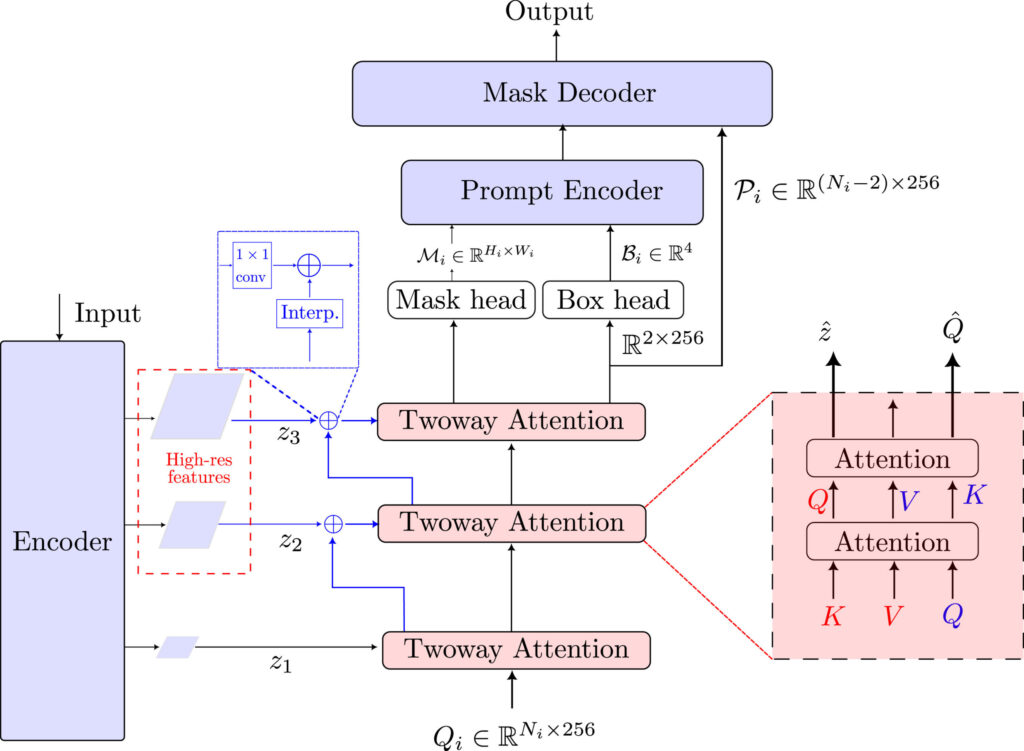
Sam2Rad architecture The Sam2Rad architecture incorporates a (hierarchical) two-way attention module to predict prompts for queried objects. Each object/class is represented by learnable queries . The Prompt Predictor Network (PPN) predicts bounding box coordinates of the target object , an intermediate mask prompt , and high-dimensional prompt embeddings . The prompt embeddings can represent various prompts suitable for the task, such as several point prompts or high-level semantic information. The predicted prompts (i.e., , , & ) are then fed to SAM’s mask decoder to generate the final segmentation mask. PPN also supports multi-class medical image segmentation by using class-specific queries .

Sam2Rad: Revolutionizing Medical Image Segmentation with AI-Powered Automation

Medical imaging has long been a cornerstone of modern healthcare, enabling clinicians to diagnose, treat, and monitor a wide range of conditions. However, the manual segmentation of structures in medical images remains a time-consuming and expertise-intensive task. With the advent of deep learning and foundation models like the Segment Anything Model (SAM), there is growing

Sam2Rad: Revolutionizing Medical Image Segmentation with AI-Powered Automation Read More »

3DL-Net’s three-stage architecture: preliminary segmentation, multi-scale context extraction, and dendritic refinement for precise medical image analysis.

Revolutionizing Medical Image Segmentation with 3DL-Net: A Breakthrough in Global–Local Feature Representation

Medical image segmentation is a cornerstone of modern healthcare, enabling precise delineation of anatomical structures and pathological regions. From aiding accurate clinical assessments to facilitating disease diagnosis and treatment planning, its applications span across various imaging modalities such as CT scans, MRIs, and ultrasounds. However, achieving precise and efficient segmentation remains a formidable challenge due

Revolutionizing Medical Image Segmentation with 3DL-Net: A Breakthrough in Global–Local Feature Representation Read More »

Advances in Attention Mechanisms for Medical Image Segmentation: A Comprehensive Guide

Medical image segmentation is a cornerstone of modern healthcare, enabling precise diagnosis and treatment planning through advanced imaging technologies. As deep learning continues to evolve, attention mechanisms have emerged as a game-changer in enhancing the accuracy and efficiency of medical image segmentation. This article delves into the latest advancements in attention mechanisms, drawing insights from

Advances in Attention Mechanisms for Medical Image Segmentation: A Comprehensive Guide Read More »

Follow by Email
Tiktok