Semi-Supervised Learning

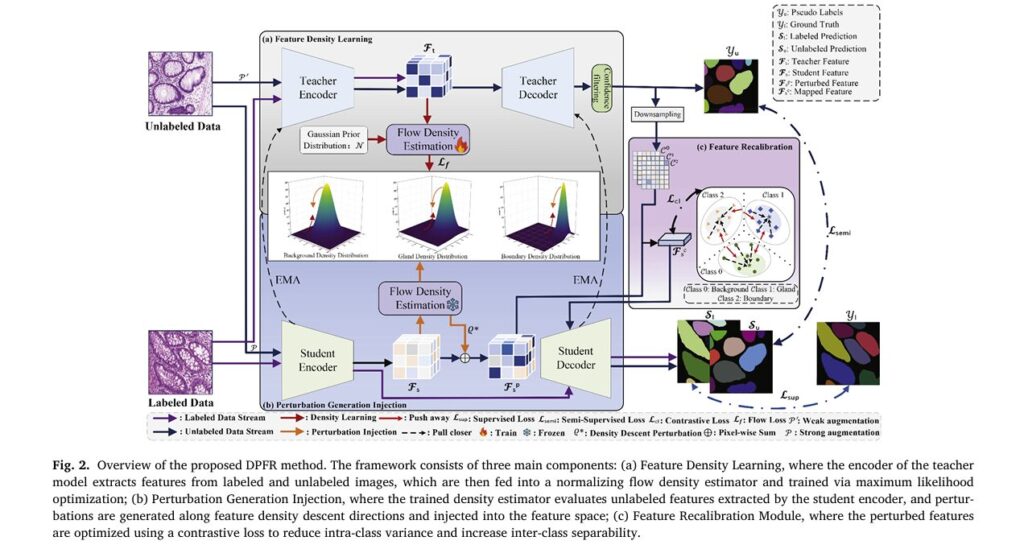
U-Mamba2-SSL: The Groundbreaking AI Framework Revolutionizing Tooth & Pulp Segmentation in CBCT Scans

U-Mamba2-SSL: The Groundbreaking AI Framework Revolutionizing Tooth & Pulp Segmentation in CBCT Scans

Introduction: Why Automated Tooth Segmentation is the Next Frontier in Dental Diagnostics Imagine a world where a dentist can instantly visualize the intricate 3D structure of every tooth and pulp canal in a patient’s jaw—without spending hours manually tracing each contour on a Cone-Beam Computed Tomography (CBCT) scan. This isn’t science fiction. It’s the reality […]

U-Mamba2-SSL: The Groundbreaking AI Framework Revolutionizing Tooth & Pulp Segmentation in CBCT Scans Read More »

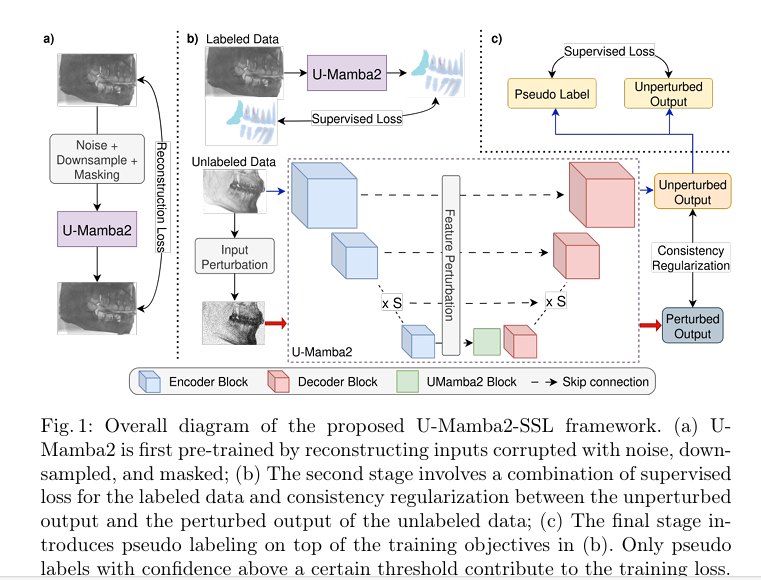
CLASS-M model outperforms existing methods in ccRCC classification with adaptive stain separation and pseudo-labeling.

1 Breakthrough vs. 1 Major Flaw: CLASS-M Revolutionizes Cancer Detection in Histopathology

In the rapidly evolving field of medical imaging, artificial intelligence (AI) is transforming how we detect and diagnose diseases like cancer. A groundbreaking new study introduces CLASS-M, a semi-supervised deep learning model that achieves 95.35% accuracy in classifying clear cell renal cell carcinoma (ccRCC) — outperforming all current state-of-the-art models. But while this innovation marks

1 Breakthrough vs. 1 Major Flaw: CLASS-M Revolutionizes Cancer Detection in Histopathology Read More »

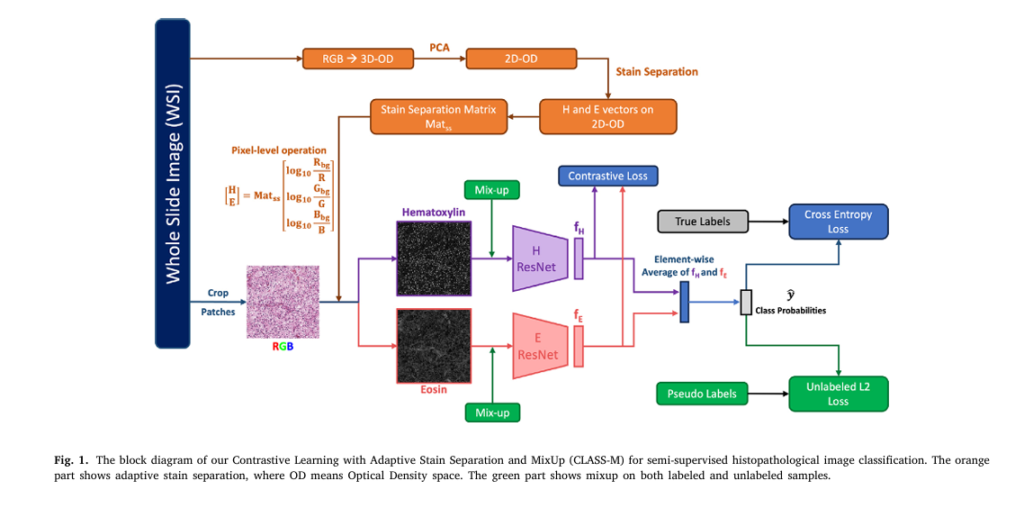
Infographic showing AI-powered cardiac strain estimation using distance maps and memory networks, compared to traditional methods in MRI analysis.

7 Revolutionary Breakthroughs in Cardiac Motion Analysis: How a New AI Model Outperforms Old Methods (And Why It Matters)

Heart disease remains the leading cause of death worldwide, yet diagnosing early-stage cardiac dysfunction is still surprisingly inaccurate and inconsistent. Traditional methods for measuring myocardial strain—like echocardiography and manual MRI tracking—are time-consuming, subjective, and prone to error. But what if artificial intelligence could change that? A groundbreaking new study published in Computers in Biology and

7 Revolutionary Breakthroughs in Cardiac Motion Analysis: How a New AI Model Outperforms Old Methods (And Why It Matters) Read More »

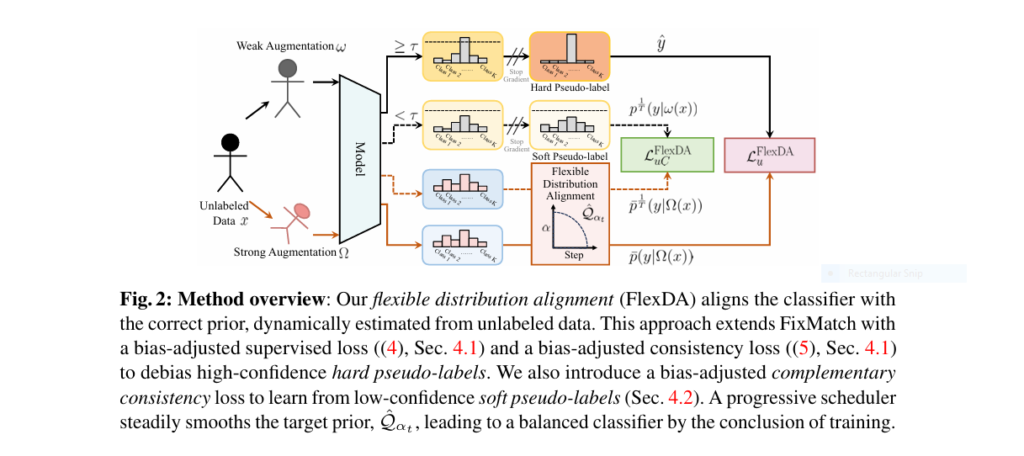
Diagram illustrating the Flexible Distribution Alignment (FlexDA) and ADELLO framework for long-tailed semi-supervised learning

7 Powerful Problems and Solutions: Overcoming and Transforming Long-Tailed Semi-Supervised Learning with FlexDA & ADELLO

In the fast-evolving world of artificial intelligence and machine learning, one of the most pressing challenges is handling long-tailed data distributions in semi-supervised learning (SSL). While traditional SSL methods assume balanced class distributions, real-world datasets often follow a long-tailed pattern—where a few classes dominate, and many others are underrepresented. This imbalance leads to biased models,

7 Powerful Problems and Solutions: Overcoming and Transforming Long-Tailed Semi-Supervised Learning with FlexDA & ADELLO Read More »

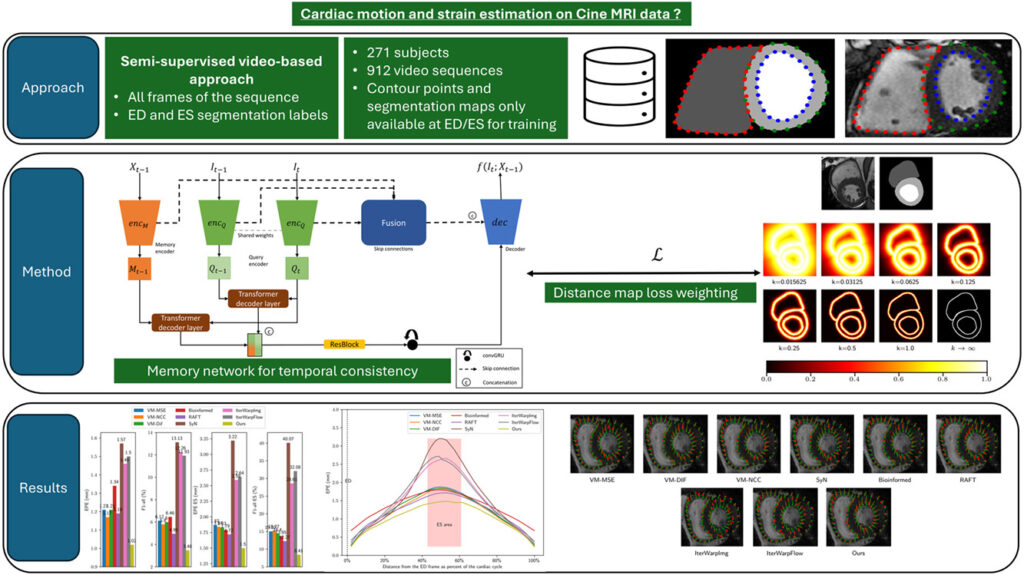
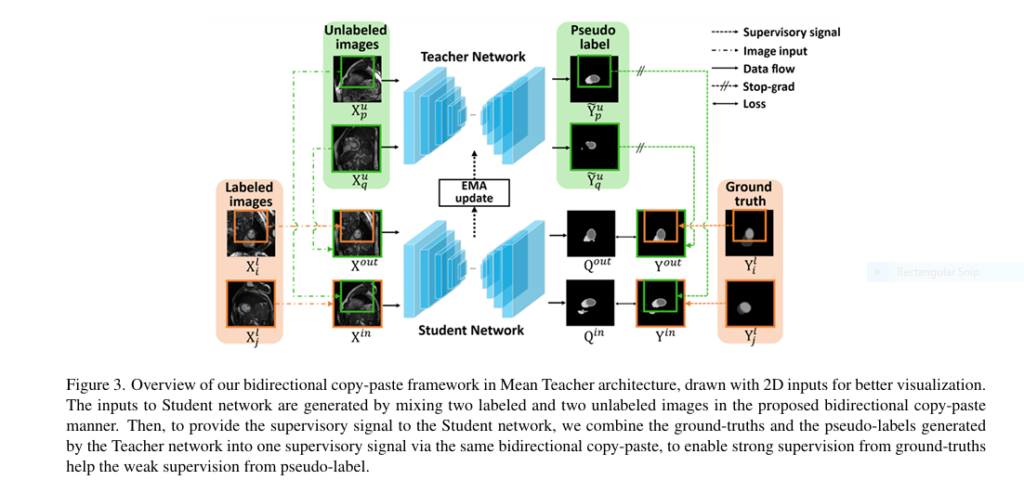
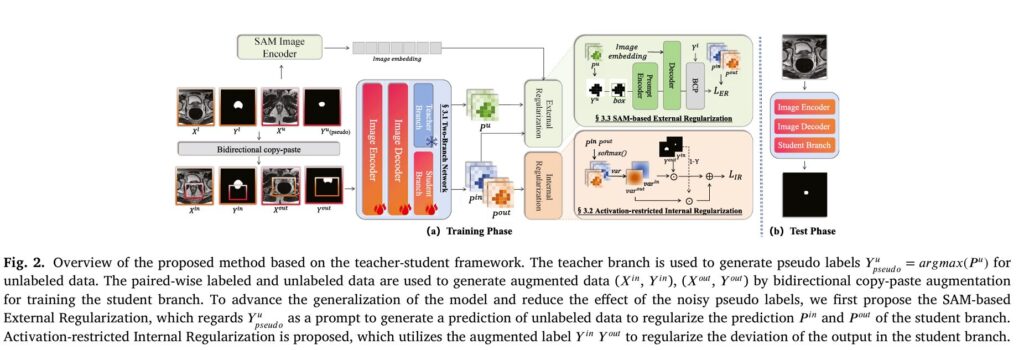
Medical AI using bidirectional copy-paste technique in semi-supervised segmentation

Bidirectional Copy-Paste Revolutionizes Semi-Supervised Medical Image Segmentation (21% Dice Improvement Achieved, but Challenges Remain)

Introduction: A Breakthrough in Medical Imaging with BCP In the ever-evolving field of medical imaging, precision and efficiency are paramount. The ability to accurately segment anatomical structures from CT or MRI scans is crucial for diagnosis, treatment planning, and research. However, the process of manually labeling these images is both time-consuming and expensive. Enter semi-supervised

Bidirectional Copy-Paste Revolutionizes Semi-Supervised Medical Image Segmentation (21% Dice Improvement Achieved, but Challenges Remain) Read More »

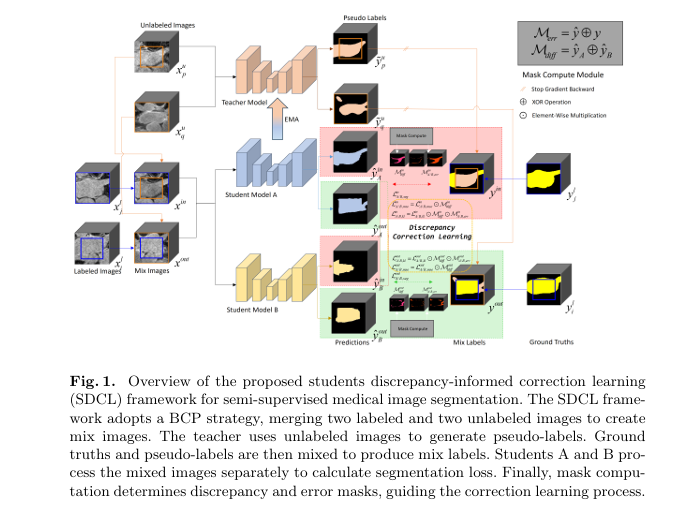
SDCL Framework for Semi-Supervised Medical Image Segmentation

5 Revolutionary Advancements in Medical Image Segmentation: How SDCL Outperforms Existing Methods (With Math Explained)

Introduction: The Evolution of Medical Image Segmentation Medical image segmentation plays a pivotal role in diagnostics, treatment planning, and clinical research. As technology advances, the demand for accurate, efficient, and scalable segmentation methods has never been higher. However, the field faces a significant challenge: limited labeled data . Annotating medical images is time-consuming, expensive, and

5 Revolutionary Advancements in Medical Image Segmentation: How SDCL Outperforms Existing Methods (With Math Explained) Read More »

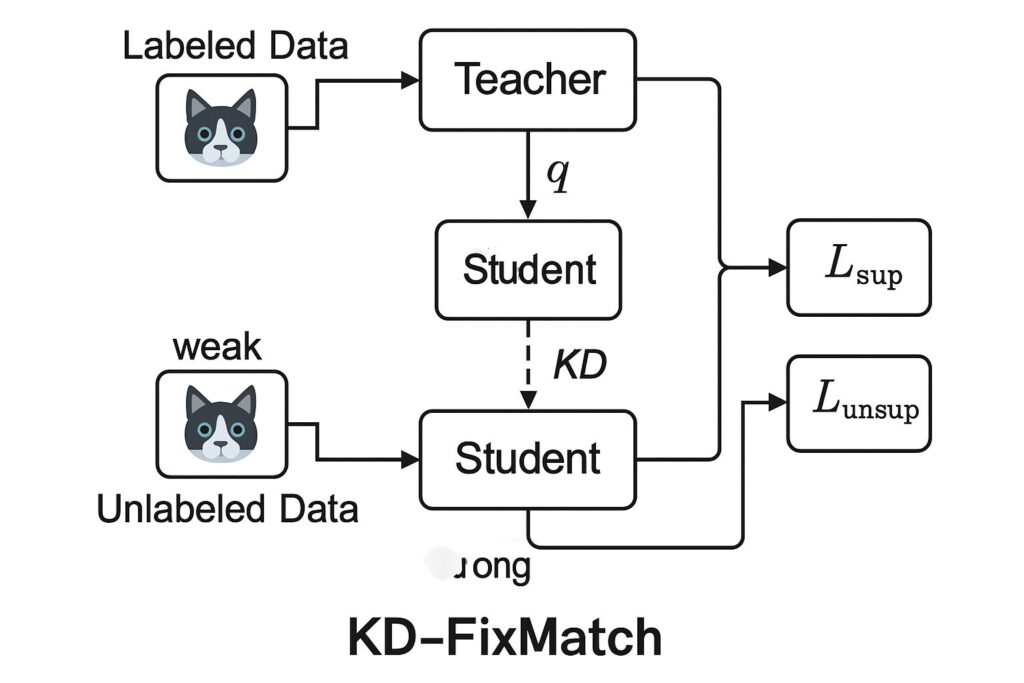
KD-FixMatch vs FixMatch accuracy comparison graph showing significant gains across datasets.

Unlock 5.7% Higher Accuracy: How KD-FixMatch Crushes Noisy Labels in Semi-Supervised Learning (And Why FixMatch Falls Short)

Imagine training cutting-edge AI models with only fractions of the labeled data you thought you needed. This isn’t fantasy—it’s the promise of Semi-Supervised Learning (SSL). But a hidden enemy sabotages results: noisy pseudo-labels. Traditional methods like FixMatch stumble early when imperfect teacher models flood training with errors. The consequence? Stunted performance, wasted compute, and missed opportunities. Enter KD-FixMatch—a revolutionary approach

Unlock 5.7% Higher Accuracy: How KD-FixMatch Crushes Noisy Labels in Semi-Supervised Learning (And Why FixMatch Falls Short) Read More »

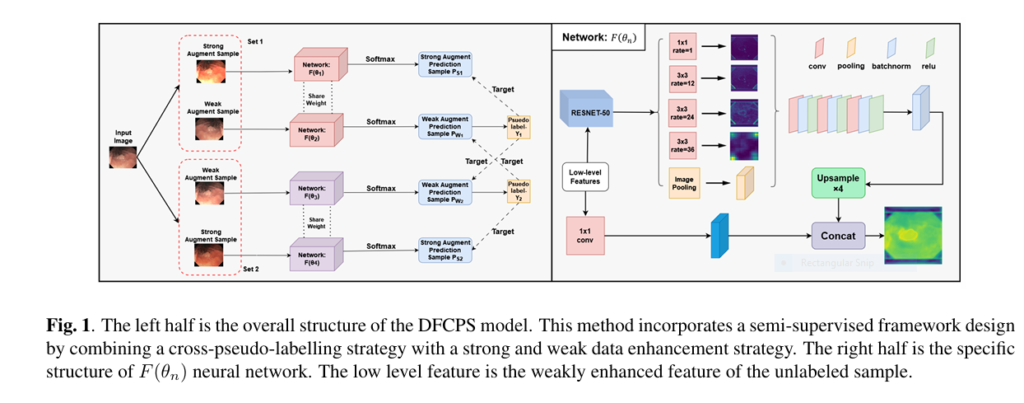
DFCPS AI model accurately segmenting gastrointestinal polyps in endoscopic imagery with minimal labeled data.

Revolutionizing Healthcare: How DFCPS’ Breakthrough Semi-Supervised Learning Slashes Medical Image Segmentation Costs by 90%

Medical imaging—CT scans, MRIs, and X-rays—generates vast amounts of data critical for diagnosing diseases like cancer, cardiovascular conditions, and gastrointestinal disorders. However, manual analysis is time-consuming, error-prone, and costly , leaving clinicians overwhelmed. Enter Deep Feature Collaborative Pseudo Supervision (DFCPS) , a groundbreaking semi-supervised learning model poised to transform medical image segmentation. In this article,

Revolutionizing Healthcare: How DFCPS’ Breakthrough Semi-Supervised Learning Slashes Medical Image Segmentation Costs by 90% Read More »

1 Breakthrough Fix: Unbiased, Low-Variance Pseudo-Labels Skyrocket Semi-Supervised Learning Results (CIFAR10/100 Proof!)

Struggling with noisy, unreliable pseudo-labels crippling your semi-supervised learning (SSL) models? Discover the lightweight, plug-and-play Channel-Based Ensemble (CBE) method proven to slash error rates by up to 8.72% on CIFAR10 with minimal compute overhead. This isn’t just another tweak – it’s a fundamental fix for biased, high-variance predictions. Keywords: Semi-Supervised Learning, Pseudo-Labels, Channel-Ensemble, Unbiased Low-Variance, FixMatch Enhancement,

1 Breakthrough Fix: Unbiased, Low-Variance Pseudo-Labels Skyrocket Semi-Supervised Learning Results (CIFAR10/100 Proof!) Read More »

Discover Rare Objects with AnomalyMatch AI

Imagine finding a single unique galaxy among 100 million images—a cosmic needle in a haystack. This daunting task faces astronomers daily. But what if an AI could pinpoint these rarities while slashing human review time by 90%? Enter AnomalyMatch, the breakthrough framework transforming anomaly detection in astronomy, medical imaging, industrial inspection, and beyond. The Anomaly Detection Crisis

Discover Rare Objects with AnomalyMatch AI Read More »

Follow by Email
Tiktok