Vision Transformer

D-Net: How Dynamic Large Kernels and Feature Fusion Are Redefining Medical Image Segmentation

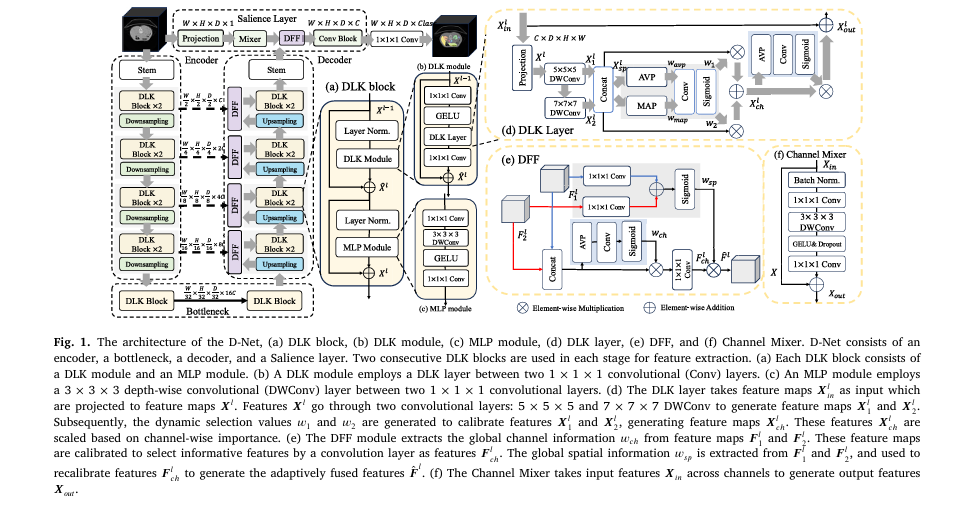
D-Net: How Dynamic Large Kernels and Feature Fusion Are Redefining Medical Image Segmentation | AI Systems Research AISystems Research Machine Learning Medical AI About Medical Imaging · Biomedical Signal Processing and Control 113 (2026) 108837 · 16 min read D-Net: How Dynamic Large Kernels and Smarter Feature Fusion Are Changing the Way AI Sees Inside […]

D-Net: How Dynamic Large Kernels and Feature Fusion Are Redefining Medical Image Segmentation Read More »

D-Net: A New Frontier in AI-Powered Medical Image Segmentation

D-Net: A New Frontier in AI-Powered Medical Image Segmentation

Introduction: The Critical Role of Precision in Medical Imaging In the high-stakes world of modern medicine, a clear picture can mean the difference between life and death. Medical imaging—through modalities like CT, MRI, and ultrasound—provides a non-invasive window into the human body, allowing clinicians to diagnose diseases, plan treatments, and monitor patient progress. However, the

D-Net: A New Frontier in AI-Powered Medical Image Segmentation Read More »

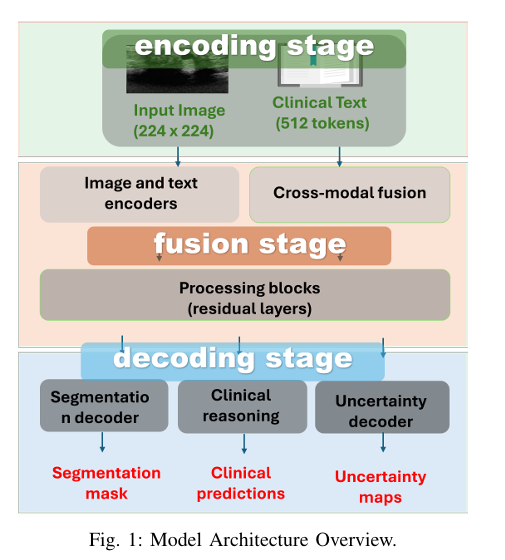
Med-CTX model architecture for explainable breast cancer ultrasound segmentation using clinical reports and BI-RADS integration

Med-CTX: Revolutionizing Breast Cancer Ultrasound Segmentation with Multimodal Transformers

Breast cancer remains one of the most prevalent cancers worldwide, with early and accurate diagnosis being crucial for effective treatment. Medical imaging, particularly ultrasound, plays a vital role in lesion detection and characterization. However, despite advances in artificial intelligence (AI), many deep learning models used for breast cancer ultrasound segmentation still function as “black boxes,”

Med-CTX: Revolutionizing Breast Cancer Ultrasound Segmentation with Multimodal Transformers Read More »

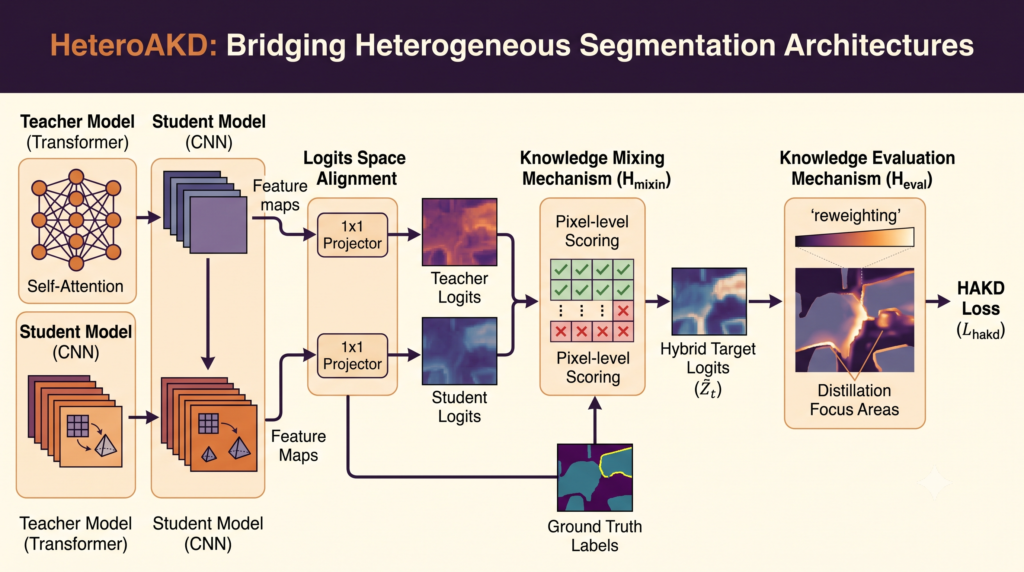
Visual comparison of knowledge distillation methods: HeteroAKD outperforms traditional approaches in semantic segmentation by leveraging cross-architecture knowledge from CNNs and Transformers

7 Shocking Truths About Heterogeneous Knowledge Distillation: The Breakthrough That’s Transforming Semantic Segmentation

Why Heterogeneous Knowledge Distillation Is the Future of Semantic Segmentation In the rapidly evolving world of deep learning, semantic segmentation has become a cornerstone for applications ranging from autonomous driving to medical imaging. However, deploying large, high-performing models in real-world scenarios is often impractical due to computational and memory constraints. Enter knowledge distillation (KD) —

7 Shocking Truths About Heterogeneous Knowledge Distillation: The Breakthrough That’s Transforming Semantic Segmentation Read More »

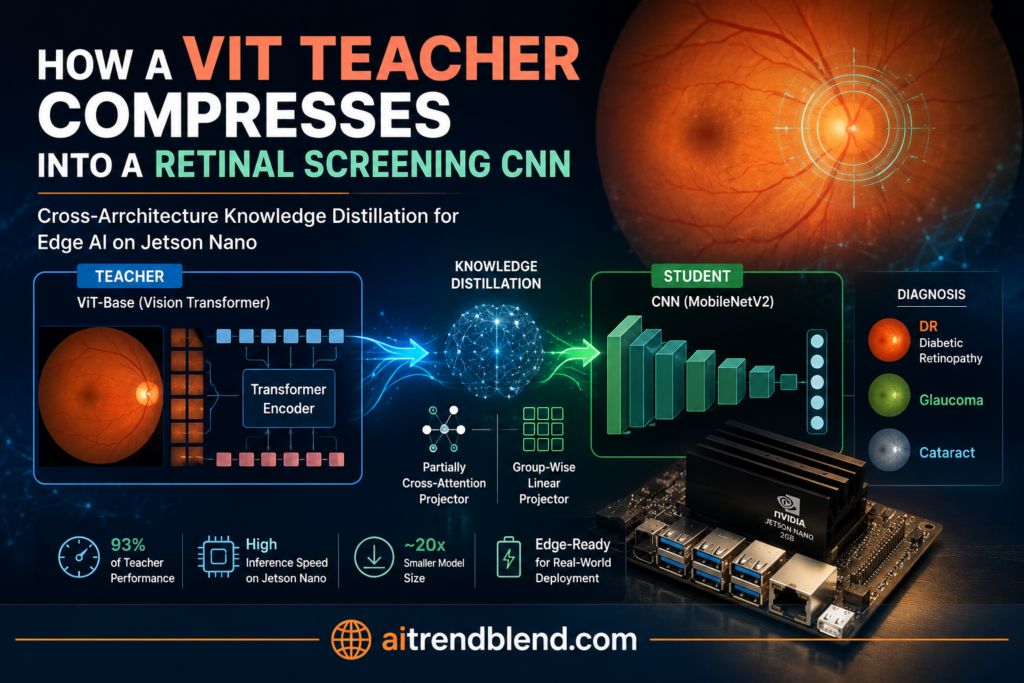
97% Smaller, 93% as Accurate: Revolutionizing Retinal Disease Detection on Edge Devices

Retinal diseases like Diabetic Retinopathy (DR), Glaucoma, and Cataracts cause irreversible vision loss if undetected early. Tragically, 80% of cases occur in low-resource regions lacking diagnostic tools. But a breakthrough from Columbia University flips the script: a pocket-sized AI system that detects retinal anomalies with 93% of expert-level accuracy while using 97.4% fewer computational resources. This isn’t just innovation—it’s a lifeline for

97% Smaller, 93% as Accurate: Revolutionizing Retinal Disease Detection on Edge Devices Read More »

Follow by Email
Tiktok