Knowledge Distillation

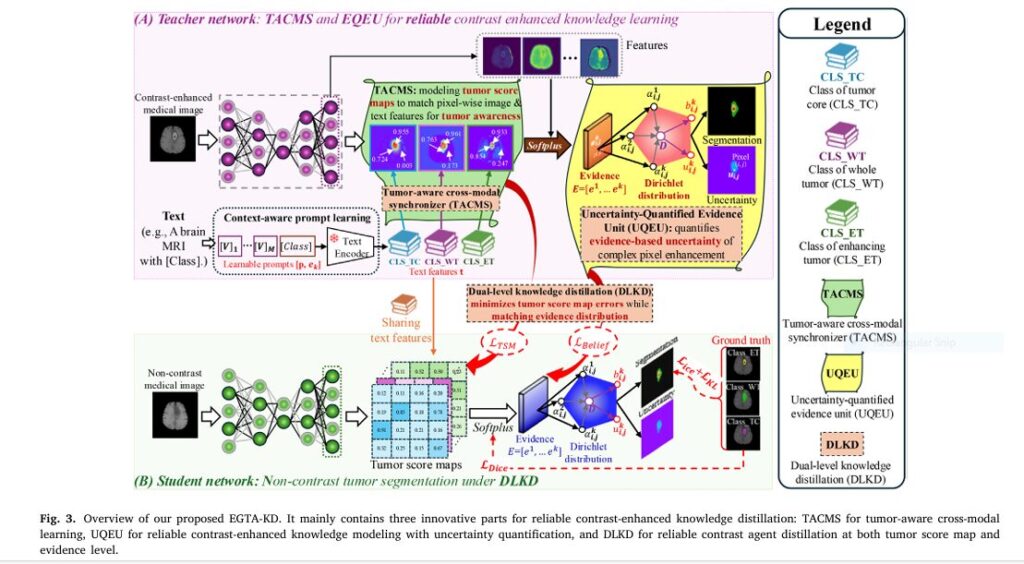
Medical AI transforming tumor segmentation with EGTA-KD technology

Revolutionary AI Breakthrough: Non-Contrast Tumor Segmentation Saves Lives & Avoids Deadly Risks

Imagine detecting deadly tumors without injecting risky contrast agents. A revolutionary AI framework called EGTA-KD is making this possible, achieving near-perfect segmentation (90.8% accuracy) on non-contrast scans while eliminating allergic reactions and kidney damage linked to traditional methods. This isn’t futuristic hype – it’s validated across brain, liver, and kidney tumors in major clinical datasets. The Deadly Cost of Current […]
Revolutionary AI Breakthrough: Non-Contrast Tumor Segmentation Saves Lives & Avoids Deadly Risks Read More »

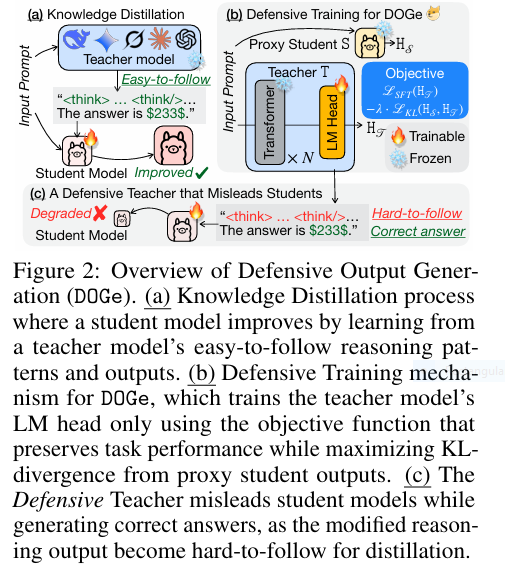
A futuristic illustration of a digital shield protecting an AI model, symbolizing the advanced security provided by DOGe for Large Language Models.

7 Revolutionary Ways DOGe Is Transforming LARGE LANGUAGE MODEL (LLM) Security (And What You’re Missing!)

In the ever-evolving world of artificial intelligence, Large Language Models (LLMs) have become the backbone of innovation. From chatbots to content generation tools, these models power some of the most sophisticated applications in use today. However, with great power comes great vulnerability — especially when it comes to model imitation via knowledge distillation (KD) .

7 Revolutionary Ways DOGe Is Transforming LARGE LANGUAGE MODEL (LLM) Security (And What You’re Missing!) Read More »

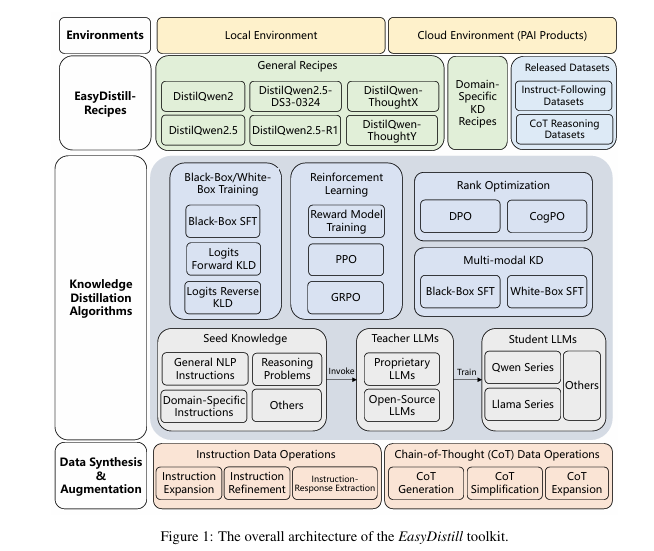
A visual representation of the EasyDistill toolkit revolutionizing knowledge distillation in large language models.

7 Revolutionary Ways EasyDistill is Changing LLM Knowledge Distillation (And Why You Should Care!)

Introduction: The Future of LLM Optimization Starts Here Artificial Intelligence (AI) has transformed how we interact with technology, especially through Large Language Models (LLMs) . These powerful systems have redefined natural language processing (NLP), enabling machines to understand and generate human-like text. However, as impressive as these models are, they come with significant challenges—high computational

7 Revolutionary Ways EasyDistill is Changing LLM Knowledge Distillation (And Why You Should Care!) Read More »

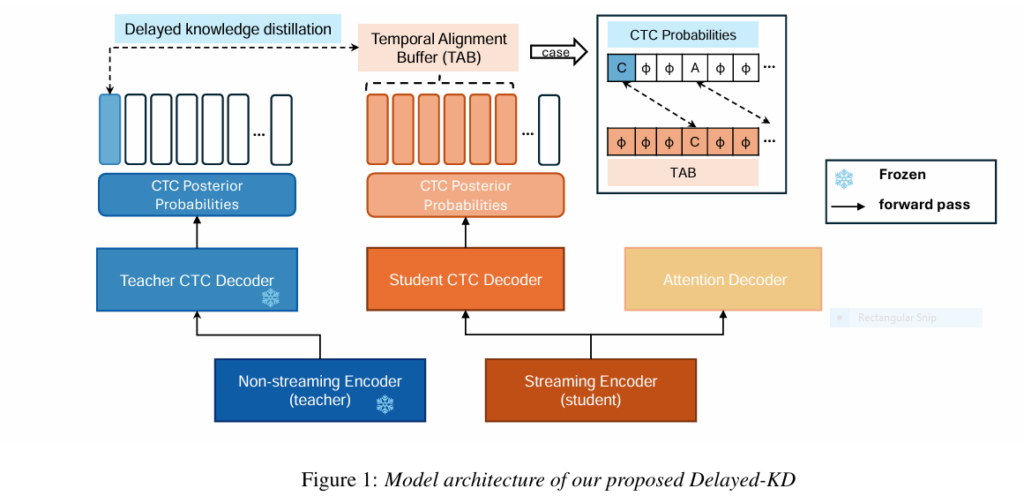
Delayed-KD model architecture diagram showing non-streaming teacher model and streaming student model alignment

Delayed-KD: A Powerful Breakthrough in Low-Latency Streaming ASR (With a 9.4% CER Reduction)

In an era where real-time communication and instant data processing are becoming the norm, streaming automatic speech recognition (ASR) has emerged as a cornerstone technology across industries—from customer service chatbots to live captioning in video conferencing platforms. However, despite significant advancements, streaming ASR still faces two major challenges: accuracy degradation due to small chunk sizes

Delayed-KD: A Powerful Breakthrough in Low-Latency Streaming ASR (With a 9.4% CER Reduction) Read More »

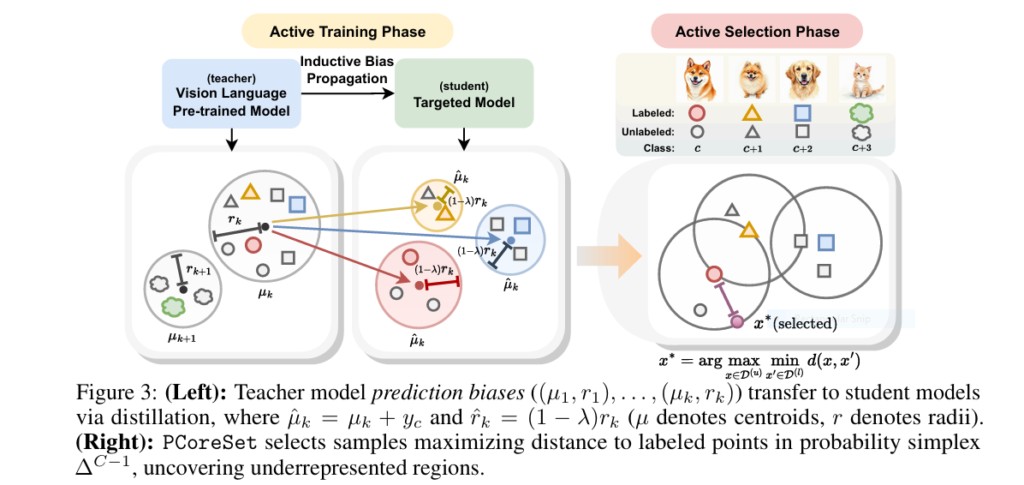
Vision-language model distilling knowledge to a compact AI, reducing training costs by 90% with ActiveKD and PCoreSet

ActiveKD & PCoreSet: 5 Revolutionary Steps to Slash AI Training Costs by 90% (Without Sacrificing Accuracy!)

The $100 Billion Problem: AI’s Annotation Nightmare Training AI models is expensive, slow, and painfully data-hungry. In specialized fields like healthcare or satellite imaging, labeling a single image can cost $50–$500. For a 1,000-class dataset like ImageNet? Millions. But what if you could: Meet ActiveKD and PCoreSet—a breakthrough framework from KAIST and VUNO Inc. that’s turning active learning (AL) and knowledge

ActiveKD & PCoreSet: 5 Revolutionary Steps to Slash AI Training Costs by 90% (Without Sacrificing Accuracy!) Read More »

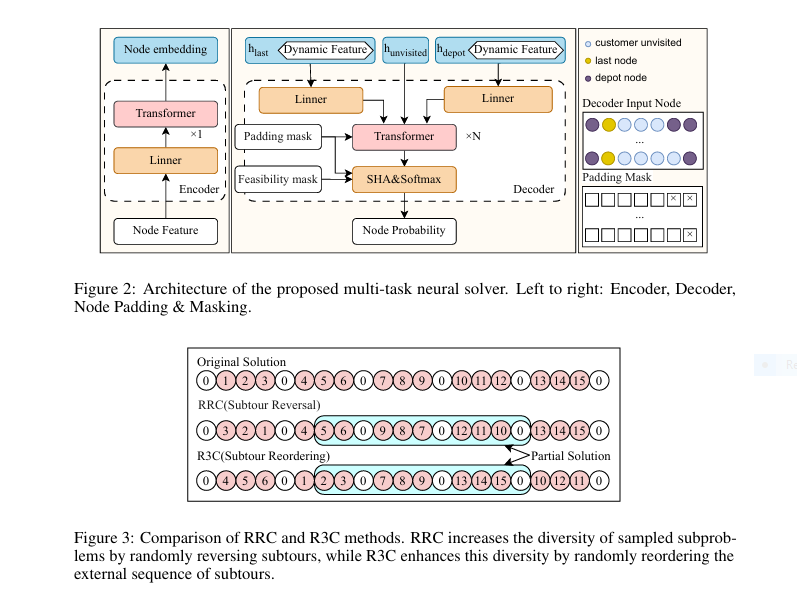
MTL-KD AI model dramatically reducing complex vehicle route distances on a global logistics map, showcasing revolutionary optimization.

MTL-KD: 5 Breakthroughs That Shatter Old Limits in AI Vehicle Routing (But Reveal New Challenges)

The quest for the perfect delivery route, efficient garbage collection circuit, or life-saving emergency response path has plagued businesses and cities for decades. Traditional Vehicle Routing Problem (VRP) solvers often buckle under real-world complexity and scale, demanding expert tuning and struggling with massive datasets. But a seismic shift is occurring. Groundbreaking AI research titled “MTL-KD: Multi-Task

MTL-KD: 5 Breakthroughs That Shatter Old Limits in AI Vehicle Routing (But Reveal New Challenges) Read More »

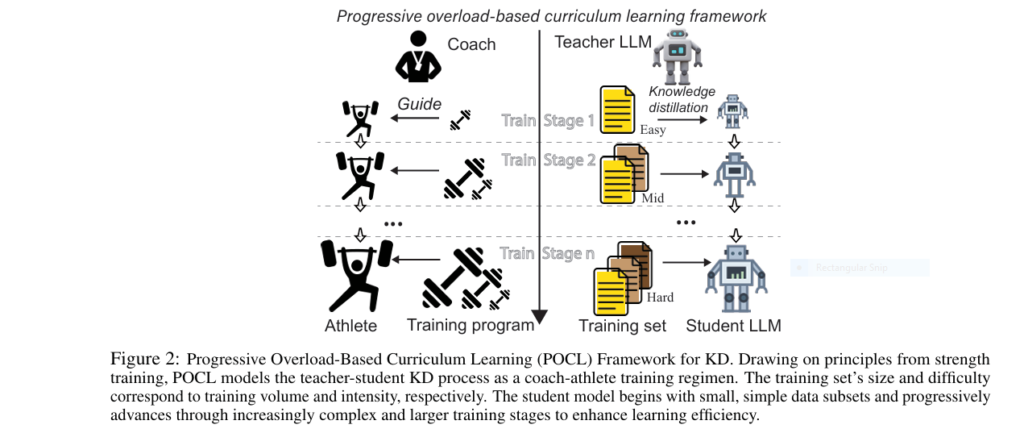
POCL Framework: 2.5X Faster LLMs Distillation Without Collapse

Unlock 2.5X Better LLMs: How Progressive Overload Training Crushes Catastrophic Forgetting

The Painful Reality of Shrinking Giant LLMs Large language models (LLMs) like GPT-4o and Claude 3.5 revolutionized AI—but their massive size makes deployment a nightmare. Imagine slashing compute costs by 90% while retaining 97% of performance. That’s the promise of Knowledge Distillation (KD), where a compact “student” model learns from a “teacher” LLM. Yet traditional KD

Unlock 2.5X Better LLMs: How Progressive Overload Training Crushes Catastrophic Forgetting Read More »

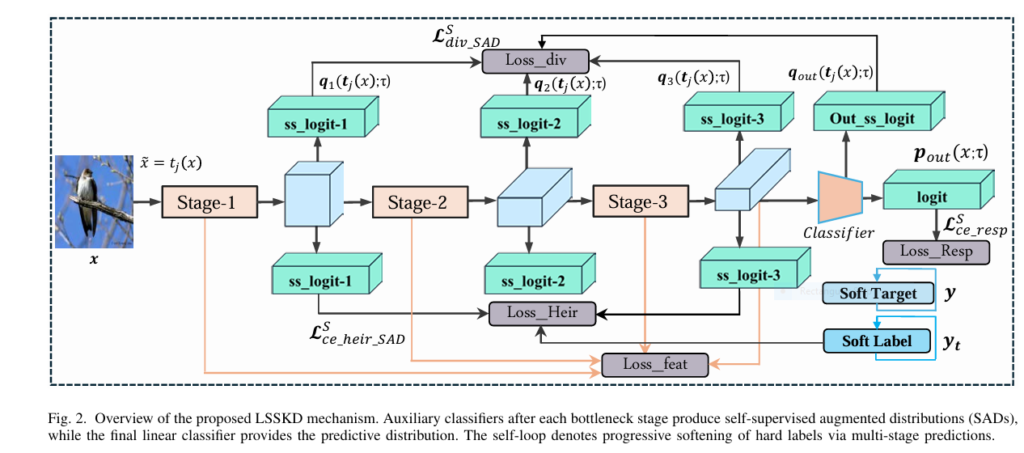
Diagram illustrating the Layered Self‑Supervised Knowledge Distillation (LSSKD) framework, showing auxiliary classifiers enhancing student model performance on edge devices.

7 Incredible Upsides and Downsides of Layered Self‑Supervised Knowledge Distillation (LSSKD) for Edge AI

As deep learning continues its meteoric rise in computer vision and multimodal sensing, deploying high‑performance models on resource‑constrained edge devices remains a major hurdle. Enter Layered Self‑Supervised Knowledge Distillation (LSSKD)—an innovative framework that leverages self‑distillation across multiple network stages to produce compact, high‑accuracy student models without relying on massive pre‑trained teachers. In this article, we’ll

7 Incredible Upsides and Downsides of Layered Self‑Supervised Knowledge Distillation (LSSKD) for Edge AI Read More »

97% Smaller, 93% as Accurate: Revolutionizing Retinal Disease Detection on Edge Devices

Retinal diseases like Diabetic Retinopathy (DR), Glaucoma, and Cataracts cause irreversible vision loss if undetected early. Tragically, 80% of cases occur in low-resource regions lacking diagnostic tools. But a breakthrough from Columbia University flips the script: a pocket-sized AI system that detects retinal anomalies with 93% of expert-level accuracy while using 97.4% fewer computational resources. This isn’t just innovation—it’s a lifeline for

97% Smaller, 93% as Accurate: Revolutionizing Retinal Disease Detection on Edge Devices Read More »

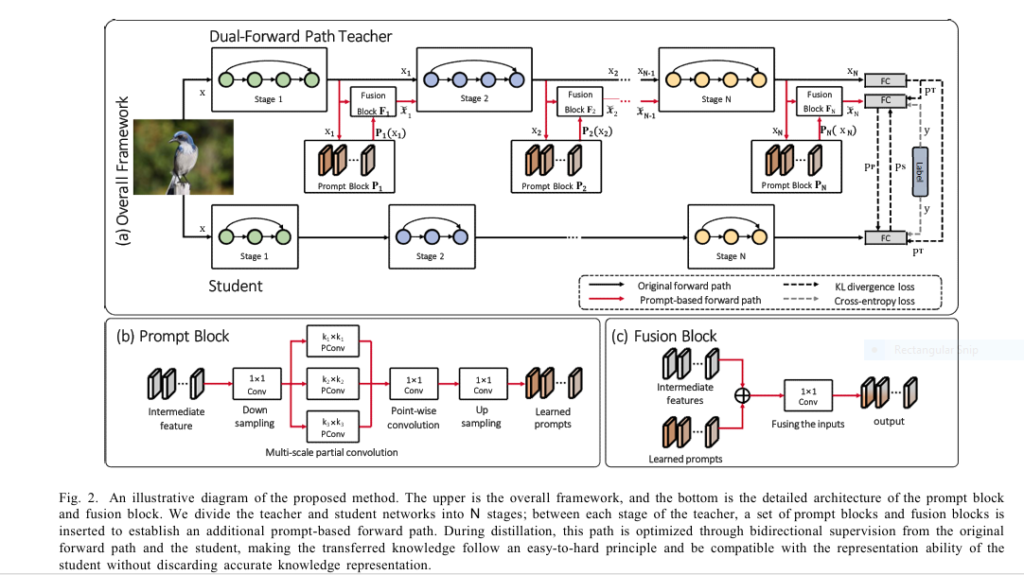
Visual diagram showing a large teacher model guiding a smaller student model via two distinct knowledge Distillation pathways, symbolizing Dual-Forward Path Distillation.

5 Breakthroughs in Dual-Forward DFPT-KD: Crush the Capacity Gap & Boost Tiny AI Models

Imagine training a brilliant professor (a large AI model) to teach complex physics to a middle school student (a tiny, efficient model). The professor’s expertise is vast, but their explanations are too advanced, leaving the student confused and unable to grasp the fundamentals. This is the “capacity gap problem” – the Achilles’ heel of traditional Knowledge Distillation

5 Breakthroughs in Dual-Forward DFPT-KD: Crush the Capacity Gap & Boost Tiny AI Models Read More »

Follow by Email
Tiktok