Adnan Saeed

Adnan Saeed is a deep learning researcher working on medical image analysis, with a focus on multimodal architectures, graph neural networks, and evidential deep learning for clinical imaging tasks. His peer reviewed research has appeared in journals across machine learning and biomedical signal processing. At AI Trend Blend he turns recent papers into clear, practical explainers, with an emphasis on what a method actually does and where it holds up, written for readers who want depth without the hype.

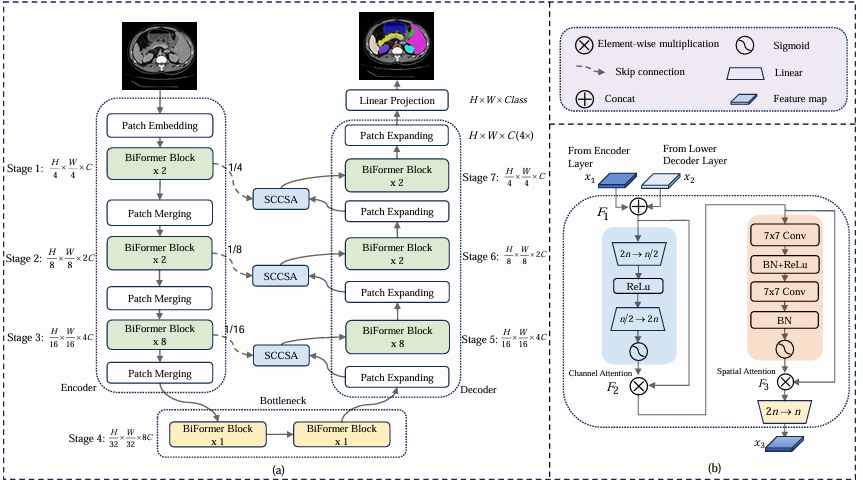
BRAU-Net++: The Hybrid CNN-Transformer That Rethinks Sparse Attention for Medical Image Segmentation.

BRAU-Net++: U-Shaped Hybrid CNN-Transformer Network for Medical Image Segmentation

Researchers at Chongqing University of Technology built a u-shaped encoder-decoder that fuses dynamic sparse attention from BiFormer with a redesigned channel-spatial skip connection — outperforming TransUNet by 4.49% DSC and Swin-Unet by 3.34% DSC on the Synapse multi-organ benchmark while…

BRAU-Net++: U-Shaped Hybrid CNN-Transformer Network for Medical Image Segmentation Read More »

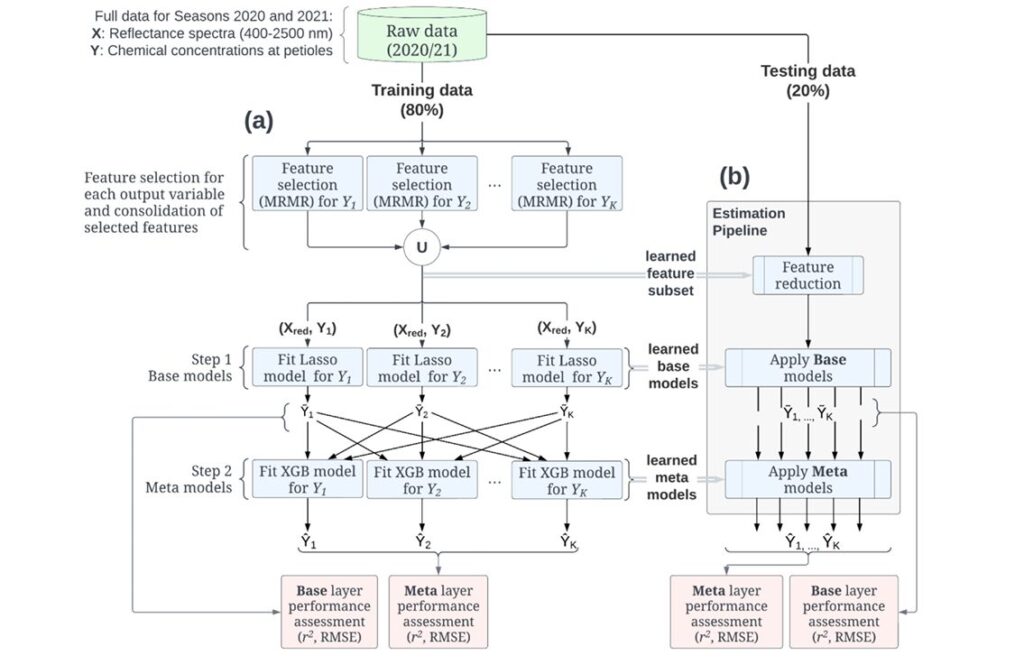
stacked-lasso-xgb-nirs-potato-nutrients.

Stacked Regression for Potato Nutrient Estimation from NIRS: Lasso + XGBoost Pipeline Explained

A team at Dalhousie University built a two-layer machine learning pipeline — MRMR feature selection, Lasso base models, and XGBoost meta-learners — that simultaneously estimates twelve macro- and micronutrient concentrations in potato plants from a single vis-NIR spectral scan, cutting…

Stacked Regression for Potato Nutrient Estimation from NIRS: Lasso + XGBoost Pipeline Explained Read More »

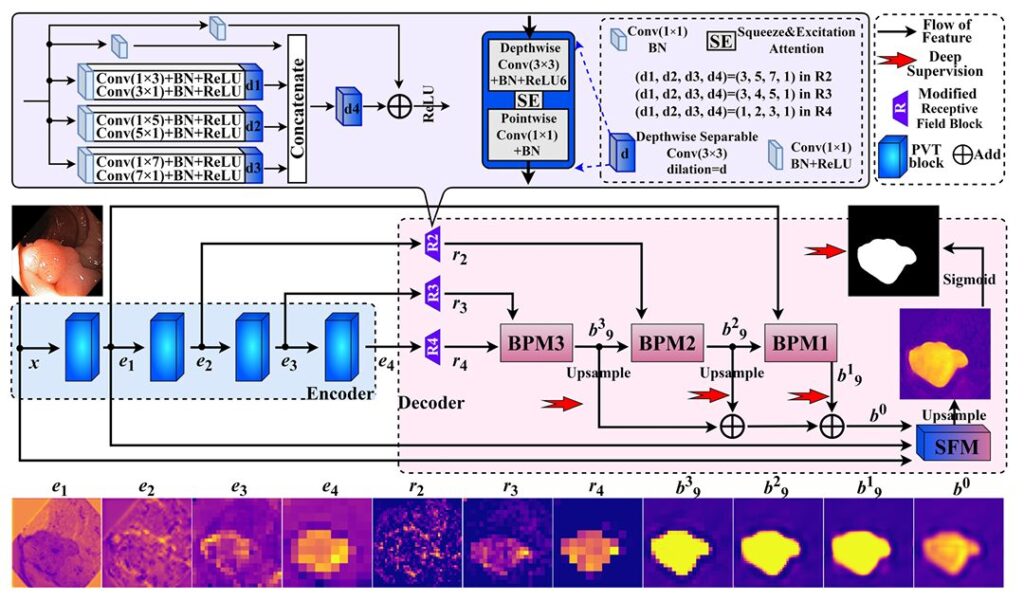
MSBP-Net: The Lightweight Polyp Detector.

MSBP-Net: The Lightweight Polyp Detector That Learned to See Boundaries the Way Surgeons Do

Researchers at Sichuan University of Science and Engineering built a network that fuses reverse attention, multi-scale criss-cross self-attention, and a Laplacian edge filter borrowed from classical image processing to delineate colorectal polyp boundaries with a precision and speed that most…

MSBP-Net: The Lightweight Polyp Detector That Learned to See Boundaries the Way Surgeons Do Read More »

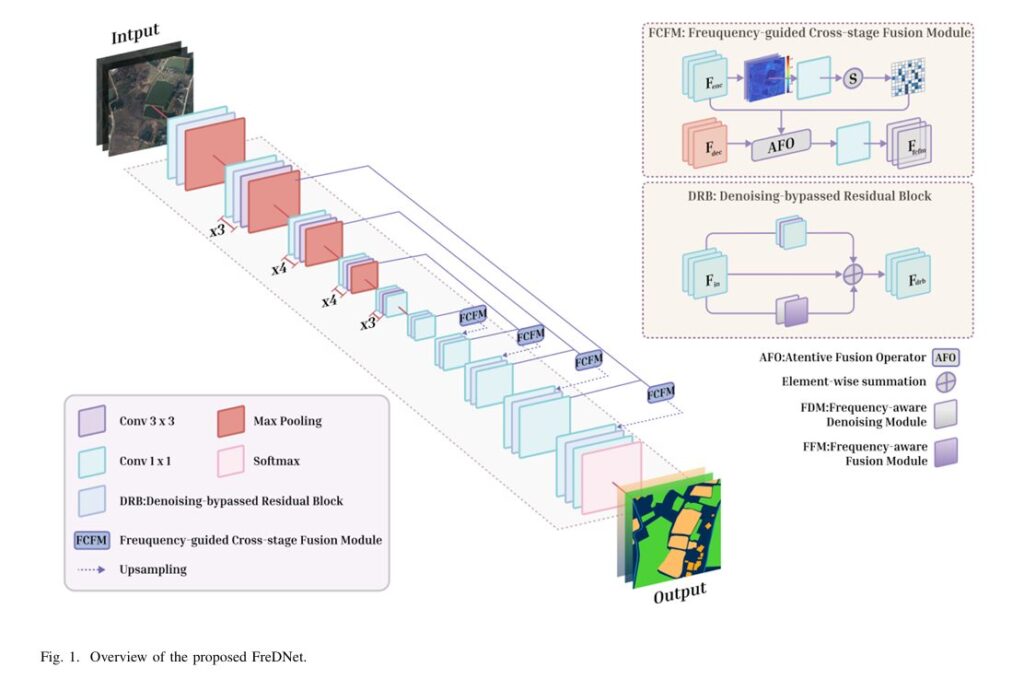
Overview of the proposed FreDNet.

FreDNet: The Remote Sensing Segmenter That Learned to Hear the Image, Not Just See It

Researchers at Hohai University built a network that treats high-frequency spectral components — the sharp edges, fine contours, and subtle discontinuities that standard convolutions quietly destroy — as first-class semantic cues rather than noise to be filtered away, and the…

FreDNet: The Remote Sensing Segmenter That Learned to Hear the Image, Not Just See It Read More »

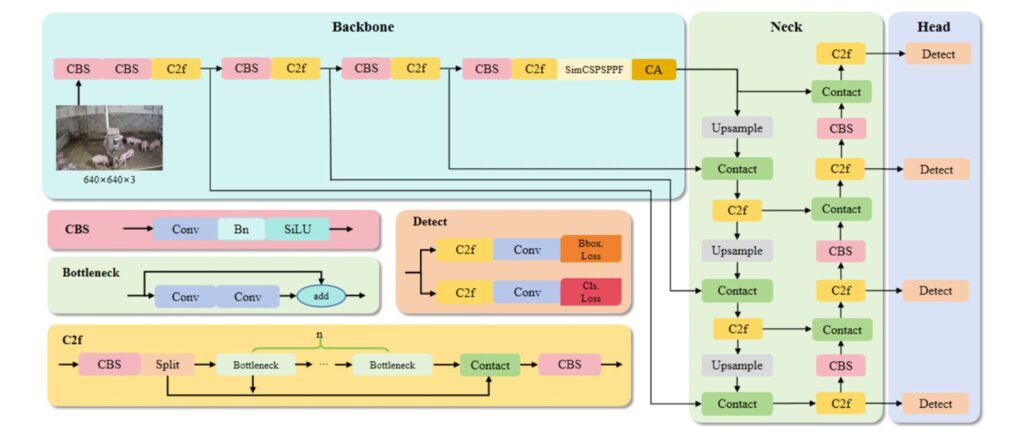
AI Reads Pig Body Temperature From Two Meters Away USING YOLOv8-PT

Watching for Fever: AI Reads Pig Body Temperature From Two Meters Away USING YOLOv8-PT

Infrared thermography promised non-contact temperature monitoring for livestock — but crowded pens, overlapping animals, and mismatched camera angles made it nearly impossible to read individual pigs reliably. A new fusion pipeline from Zhejiang University closes that gap with 0.40 °C…

Watching for Fever: AI Reads Pig Body Temperature From Two Meters Away USING YOLOv8-PT Read More »

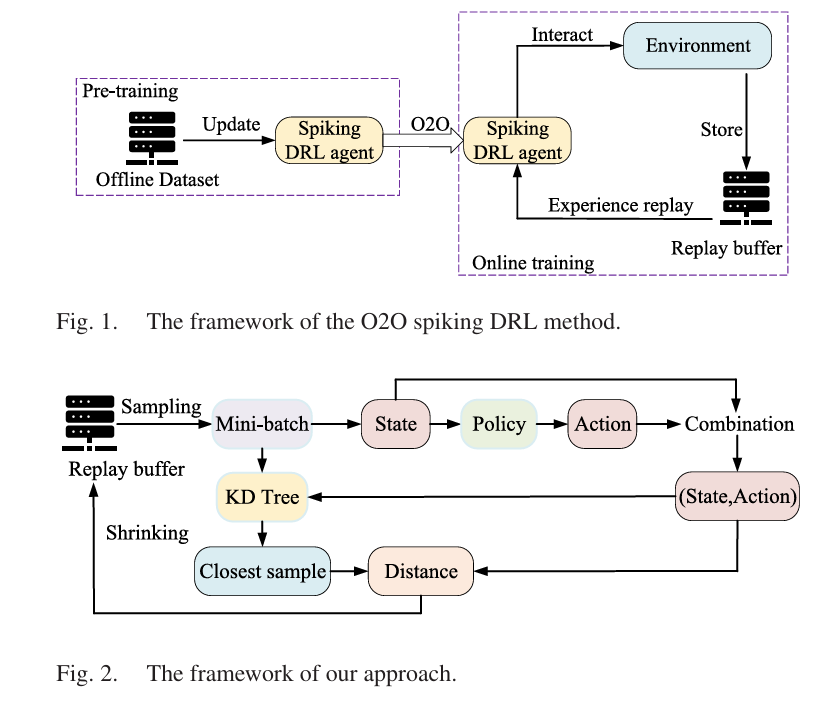
Spiking Deep Reinforcement Learning framework

The Crippling Tradeoff That Held Spiking Deep Reinforcement Learning Back for Years — And How a Dynamic Replay Buffer Finally Shatters It

Researchers at City University of Hong Kong built a plug-and-play resilient experience replay framework that lets spiking DRL methods run at ultra-low simulation durations without the catastrophic performance collapse everyone had learned to accept.

The Crippling Tradeoff That Held Spiking Deep Reinforcement Learning Back for Years — And How a Dynamic Replay Buffer Finally Shatters It Read More »

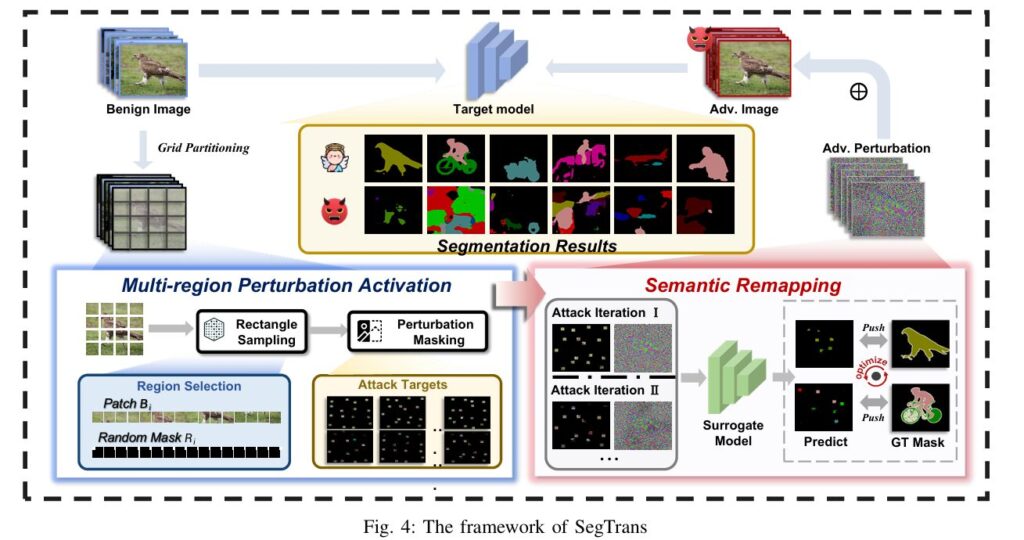
The framework of SegTrans.

SegTrans: The Transfer Attack That Finally Broke Segmentation Models (Without Extra Compute)

Segmentation models correct each other’s mistakes through a “tight coupling” phenomenon – which makes them brutally hard to fool in a black‑box setting. Researchers discovered that by destroying global semantic integrity and remapping local features, transfer attack success jumps by…

SegTrans: The Transfer Attack That Finally Broke Segmentation Models (Without Extra Compute) Read More »

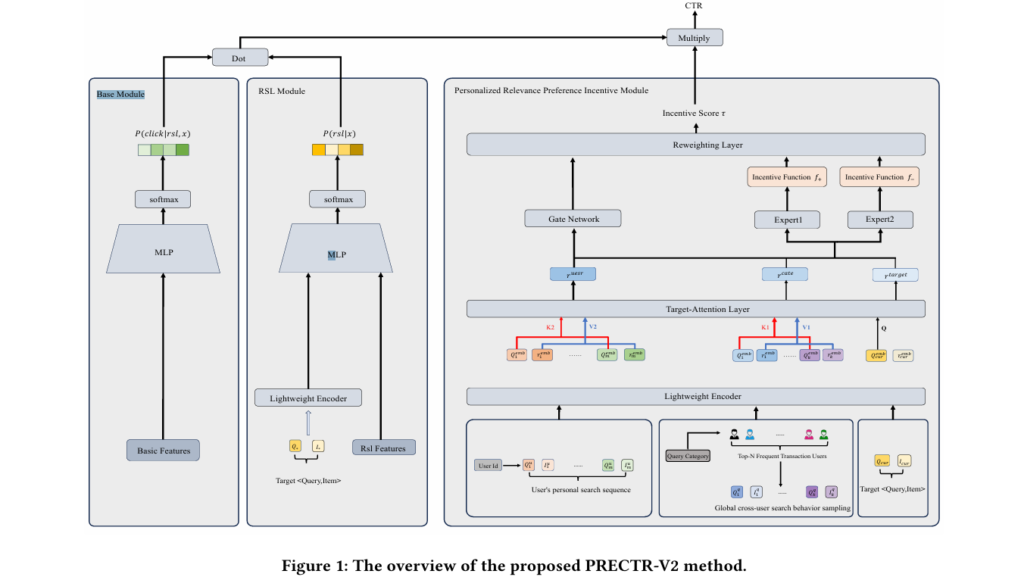
PRECTR-V2: How Alibaba Solved Cold-Start, Exposure Bias, and a Frozen Encoder — All in One Unified Search Ranking Framework.

PRECTR-V2: How Alibaba Solved Cold-Start, Exposure Bias, and Frozen Encoders in One Unified Search Ranking Framework

Engineers at Alibaba’s Xianyu platform built three interlocking improvements on top of their prior unified relevance-CTR model, ultimately achieving a 1.39% lift in per-capita orders and a 3.18% GMV increase in live A/B testing.

PRECTR-V2: How Alibaba Solved Cold-Start, Exposure Bias, and Frozen Encoders in One Unified Search Ranking Framework Read More »