Adnan Saeed

Adnan Saeed is a deep learning researcher working on medical image analysis, with a focus on multimodal architectures, graph neural networks, and evidential deep learning for clinical imaging tasks. His peer reviewed research has appeared in journals across machine learning and biomedical signal processing. At AI Trend Blend he turns recent papers into clear, practical explainers, with an emphasis on what a method actually does and where it holds up, written for readers who want depth without the hype.

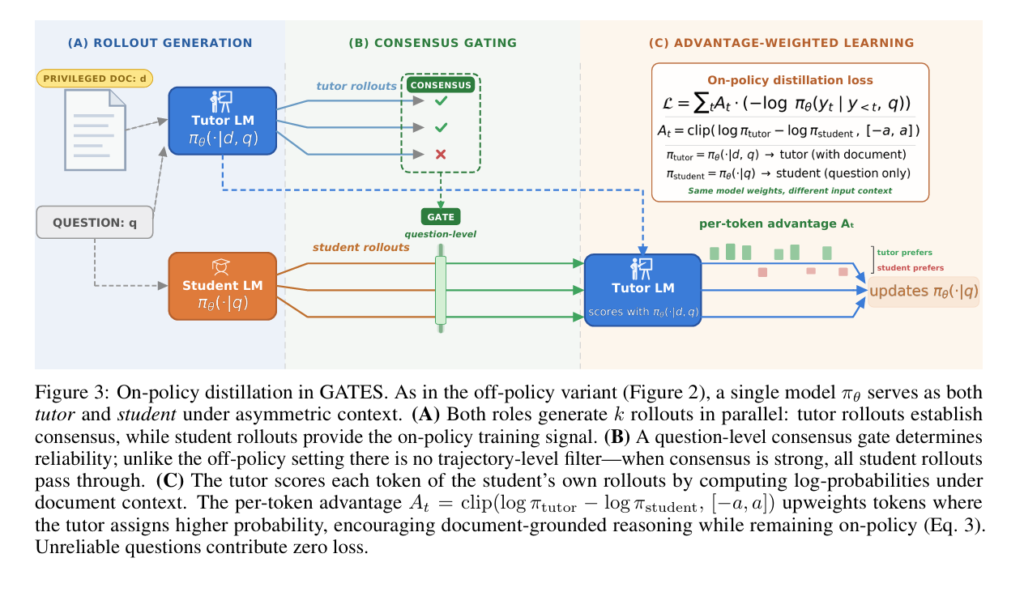
GATES: How Consensus Gating Fixed the Broken Promise of Self-Distillation in Language Models.

GATES: How Consensus Gating Fixed the Broken Promise of Self-Distillation in Language Models

Researchers at the University of Maryland trained a model to teach itself — without any ground-truth labels, external graders, or verifiable rewards — by sampling multiple document-grounded reasoning traces and only distilling the ones its own internal jury agreed on.
GATES: How Consensus Gating Fixed the Broken Promise of Self-Distillation in Language Models Read More »

A New Framework That Teaches Multi-Agent Systems to Spot Unreliable Sensors.

When Drones Learn to Distrust: A New Framework That Teaches Multi-Agent Systems to Spot Unreliable Sensors

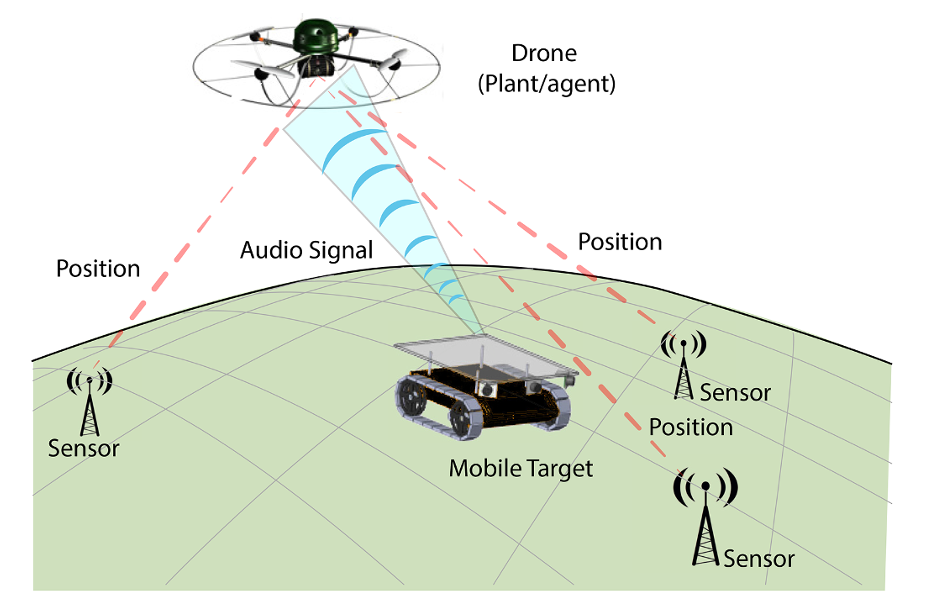
Researchers at the University of Calabria built a system that fuses opinion dynamics, consensus theory, and a borrowed trick from solar panel engineering to let networked agents decide—on their own, continuously—which sensors to believe and which to quietly ignore.

When Drones Learn to Distrust: A New Framework That Teaches Multi-Agent Systems to Spot Unreliable Sensors Read More »

The architecture of our Conditional GAN (c-GAN) framework for Stealthy Deception. The Generator (G) is conditioned on the Ground-Truth History (𝐻𝑟𝑒𝑎𝑙) to synthesize a visually similar but malicious Adversarial History (𝐻𝑎𝑑𝑣). The framework is trained via a multi-objective loss function, which includes: (1) an Adversarial Loss derived from a Critic (C) that distinguishes real from fake trajectories; (2) a Similarity Loss to enforce ste.

The Invisible Threat: How a Conditional GAN Learned to Fool Self-Driving Cars by Mimicking Human Driving

Researchers at Zhengzhou University discovered that the most dangerous attacks on autonomous vehicle prediction systems don’t look like attacks at all—they look like perfectly normal driving maneuvers, reconstructed from scratch by a generative model that understands motion better than the…

The Invisible Threat: How a Conditional GAN Learned to Fool Self-Driving Cars by Mimicking Human Driving Read More »

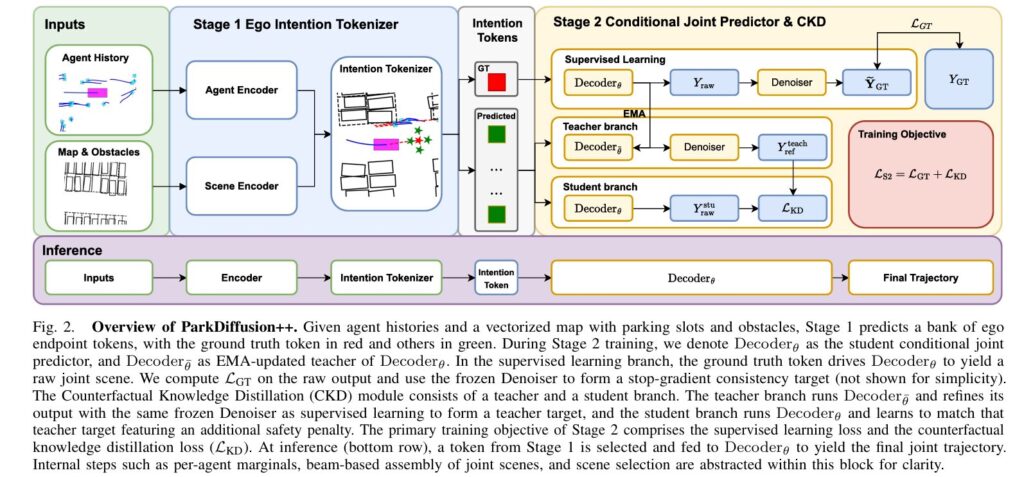
Overview of ParkDiffusion++.

ParkDiffusion++: The What-If Prediction Framework That Taught Parking Lots to Reason About Intentions

How a team from the University of Freiburg and CARIAD SE built a two-stage diffusion system that doesn’t just predict where vehicles will go—it asks “what if the ego vehicle chose differently?” and forecasts how every surrounding agent would react.

ParkDiffusion++: The What-If Prediction Framework That Taught Parking Lots to Reason About Intentions Read More »

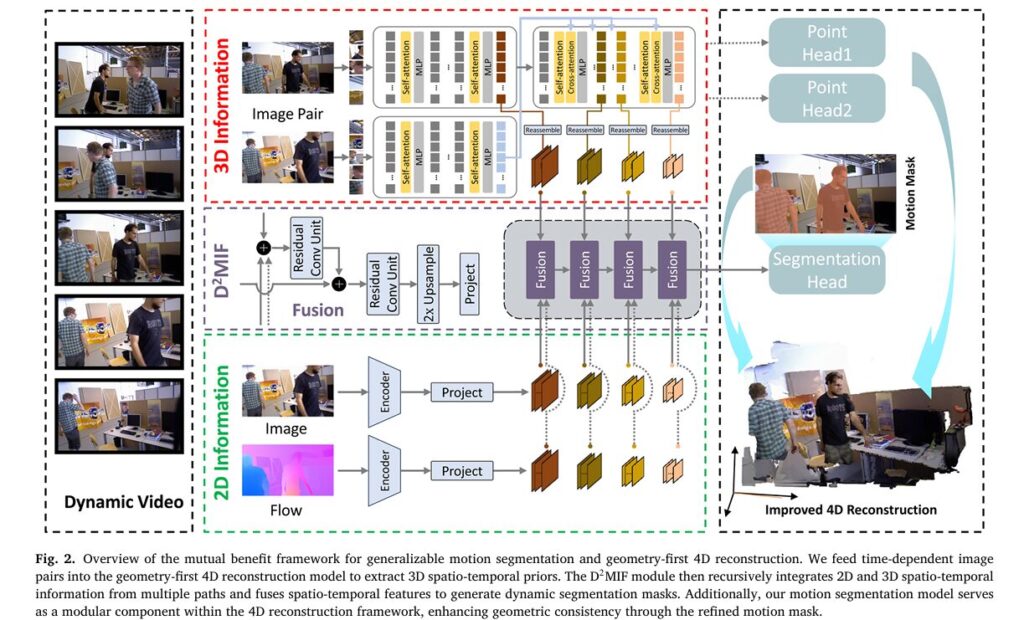
MuBe4D: A mutual benefit framework for generalizable motion segmentation and geometry-first 4D reconstruction

MuBe4D: The Mutual Benefit Framework That Finally United Motion Segmentation with 4D Reconstruction

How researchers at Wuhan University discovered that motion segmentation and 4D reconstruction have been holding each other back—and how teaching them to cooperate unlocked zero-shot generalization without retraining a single parameter.

MuBe4D: The Mutual Benefit Framework That Finally United Motion Segmentation with 4D Reconstruction Read More »

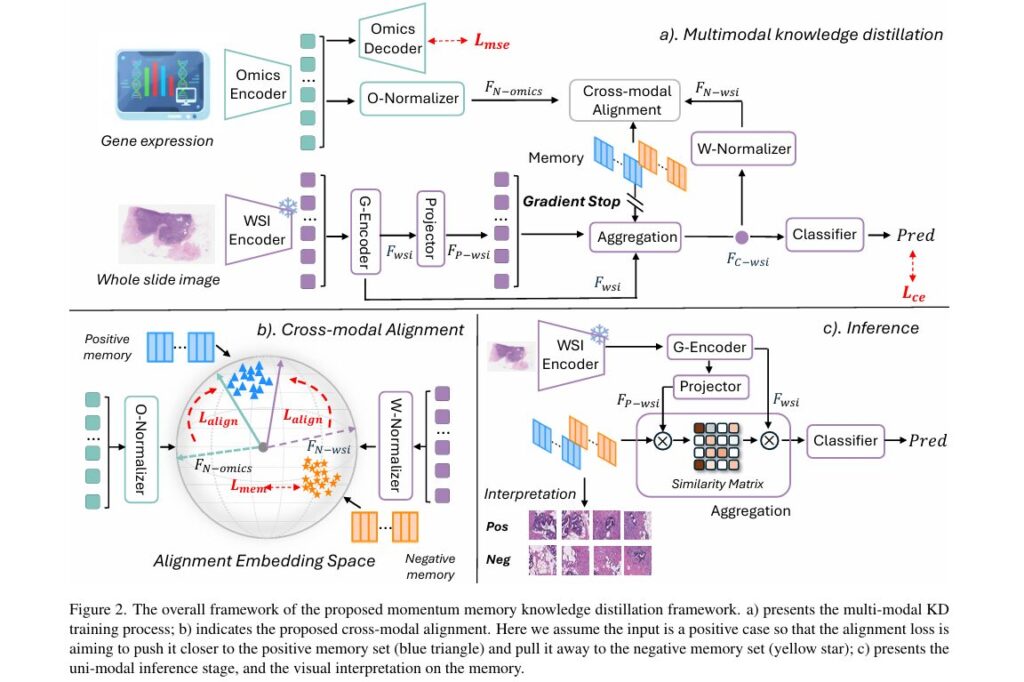
Overview of DSKD training.

DSKD: How Sense Dictionaries Are Finally Making Decoder LLMs Smarter Without Slowing Them Down

How researchers at RPI and IBM Research taught generative LLMs to understand word senses, synonyms, and antonyms during training—without adding a single extra step at inference time—and why it consistently beats standard knowledge distillation across five benchmarks.

DSKD: How Sense Dictionaries Are Finally Making Decoder LLMs Smarter Without Slowing Them Down Read More »

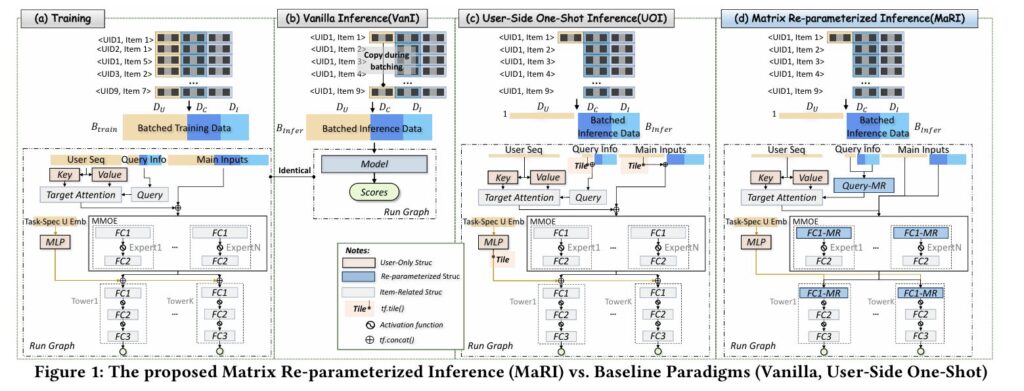
MaRI: The Structural Re-parameterization Breakthrough That Eliminated Redundant Computation in Kuaishou’s Ranking Models.

MaRI: How Kuaishou Solved the Hidden Redundancy Problem Plaguing Recommendation Models

How a team of researchers at Kuaishou discovered that the biggest bottleneck in recommendation inference wasn’t model size or hardware—it was a mathematical redundancy hiding in plain sight, and how they fixed it without retraining a single parameter.

MaRI: How Kuaishou Solved the Hidden Redundancy Problem Plaguing Recommendation Models Read More »

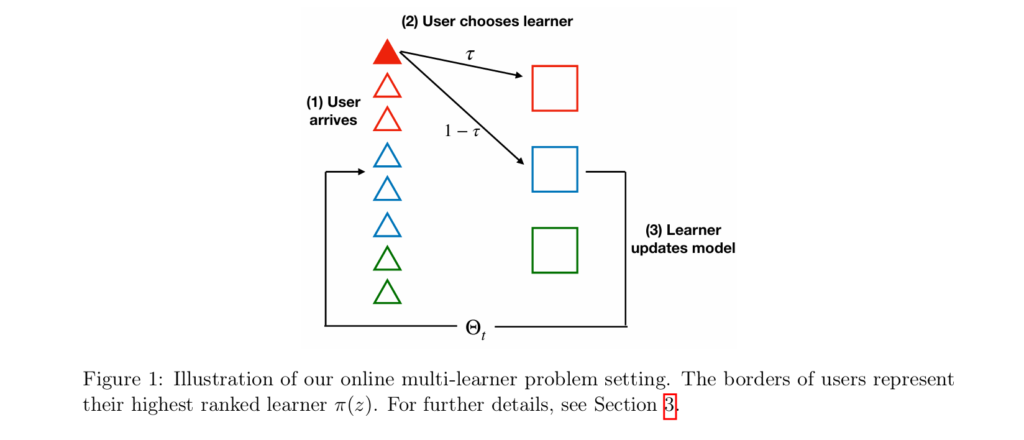
Dynamics of Learning under User Choice: Overspecialization and Peer-Model Probing.

How AI Platforms Get Trapped Serving Only Their Fans—and the peer-model PROBING Fix That Breaks the Cycle

Researchers from UW and Cornell prove that standard learning dynamics in competitive ML markets converge to disastrous equilibria where platforms serve only their existing fans, and introduce a knowledge-distillation-inspired fix that requires no retraining.

How AI Platforms Get Trapped Serving Only Their Fans—and the peer-model PROBING Fix That Breaks the Cycle Read More »