Adnan Saeed

Adnan Saeed is a deep learning researcher working on medical image analysis, with a focus on multimodal architectures, graph neural networks, and evidential deep learning for clinical imaging tasks. His peer reviewed research has appeared in journals across machine learning and biomedical signal processing. At AI Trend Blend he turns recent papers into clear, practical explainers, with an emphasis on what a method actually does and where it holds up, written for readers who want depth without the hype.

The FedDRLPD system architecture.

FedDRLPD: Deep Reinforcement Learning Defense Against Poisoning Attacks in Federated Learning

A novel defense framework that integrates Deep Q-Network algorithms with Mahalanobis distance-based maliciousness evaluation to dynamically select benign users, achieving up to 9% accuracy improvement over state-of-the-art approaches in non-IID federated learning environments.

FedDRLPD: Deep Reinforcement Learning Defense Against Poisoning Attacks in Federated Learning Read More »

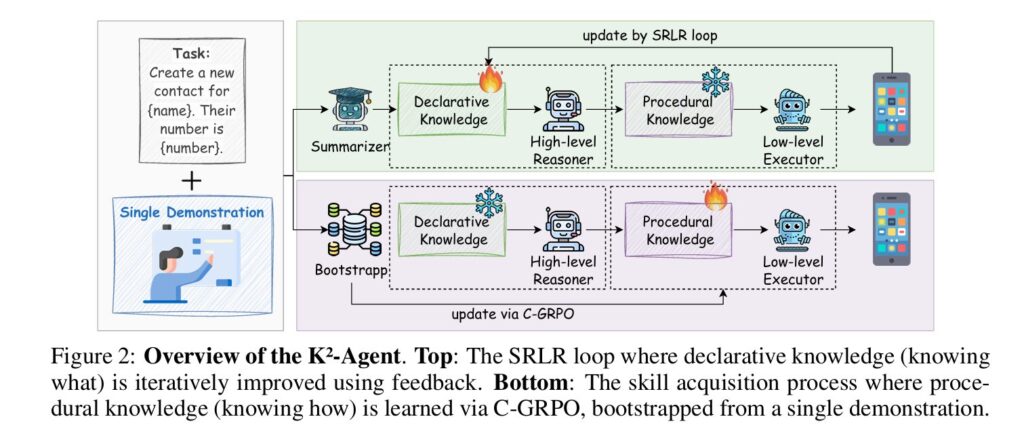
K2-Agent: The Cognitive Architecture That Taught AI to Think Like Humans About Mobile Tasks.

K2-Agent: Co-Evolving Know-What and Know-How for Hierarchical Mobile Device Control

A hierarchical framework separates “knowing what” from “knowing how” — enabling co-evolution of declarative planning knowledge and procedural execution skills for mobile device control, achieving 76.1% success rate on AndroidWorld using only raw screenshots.

K2-Agent: Co-Evolving Know-What and Know-How for Hierarchical Mobile Device Control Read More »

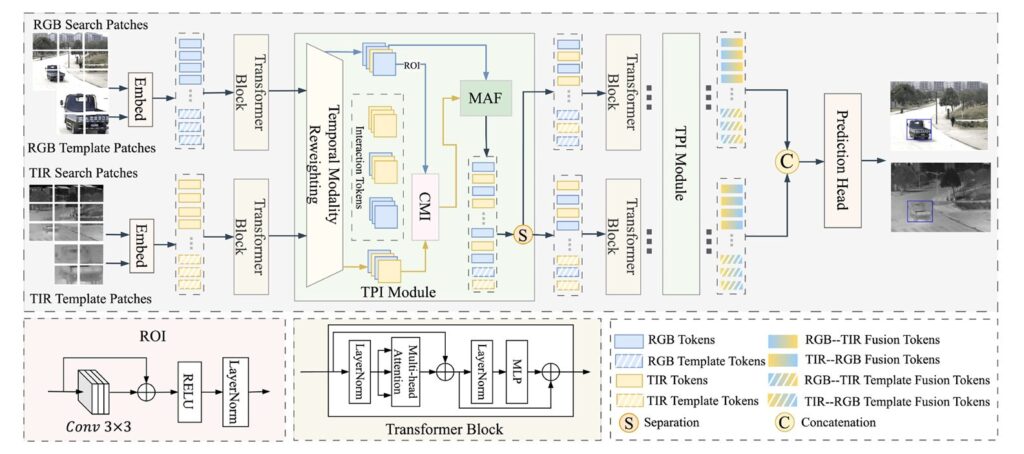
TPMRI Framework Architecture.

TPMRI: How Three-Stage Progressive Fusion Is Solving RGB-T Tracking’s Temporal Blindness

TPMRI introduces a three-stage progressive fusion framework that fixes RGB-T tracking’s most frustrating failures — temporal blindness and modality misalignment — through temporal modality reweighting, cross-modality semantic interaction, and adaptive global fusion.

TPMRI: How Three-Stage Progressive Fusion Is Solving RGB-T Tracking’s Temporal Blindness Read More »

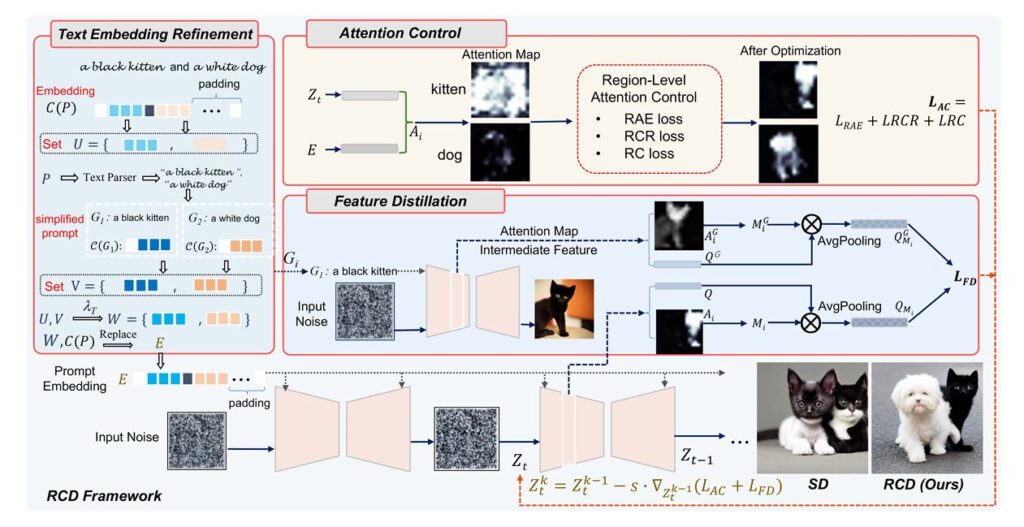
RCD framework addresses three critical bottlenecks in text-to-image generation.

RCD: How Three Simple Fixes Are Solving Stable Diffusion’s Biggest Problem

RCD introduces a training-free framework that fixes text-to-image diffusion models’ most frustrating failures — missing objects and mismatched attributes — through three elegant interventions: refining text embeddings, controlling attention dynamics, and distilling semantic features from simpler prompts.

RCD: How Three Simple Fixes Are Solving Stable Diffusion’s Biggest Problem Read More »

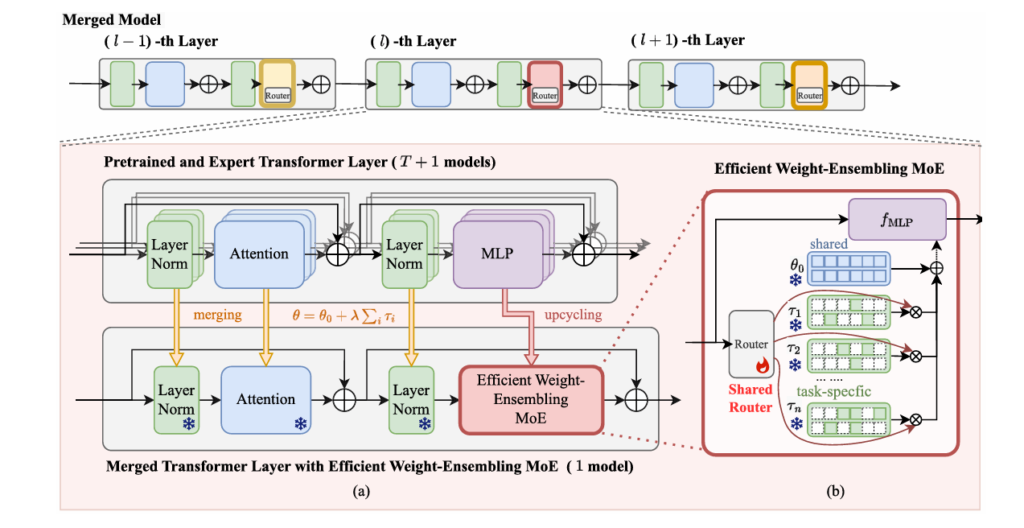
The WEMoE framework transforms critical MLP modules into dynamic mixture-of-experts structures while statically merging non-critical components. Input-dependent routing weights allow the model to adaptively blend task-specific knowledge, achieving superior multi-task performance over static merging methods.

WEMoE: How a Mixture-of-Experts Approach Is Solving the Multi-Task Model Merging Problem

WEMoE introduces a dynamic mixture-of-experts approach to multi-task model merging, transforming how we combine fine-tuned neural networks by routing inputs to task-specific experts rather than settling for one-size-fits-all parameter averages.

WEMoE: How a Mixture-of-Experts Approach Is Solving the Multi-Task Model Merging Problem Read More »

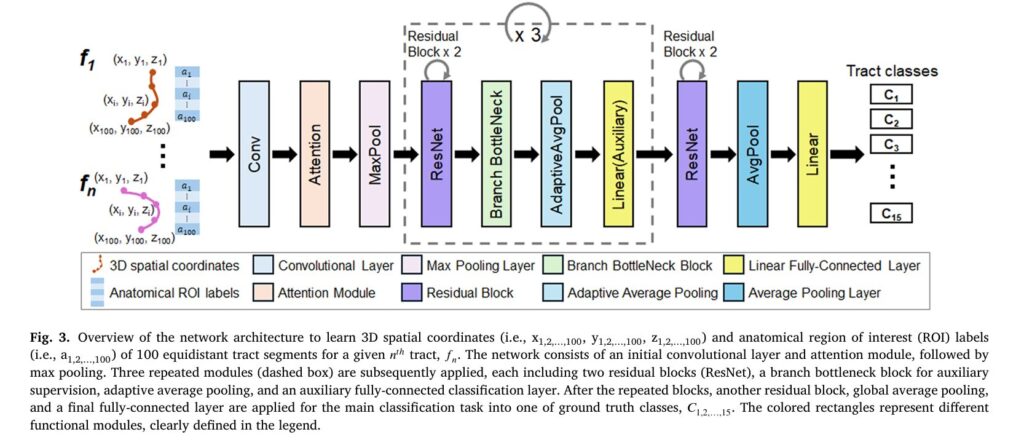
the proposed ESM-AnatTractNet model

ESM-AnatTractNet: Deep Learning for Eloquent White Matter Tractography in Pediatric Epilepsy Surgery

ESM-AnatTractNet integrates electrophysiological validation with anatomical context to accurately classify true positive white matter pathways — enabling safer pediatric epilepsy surgery through precise, non-invasive functional mapping.

ESM-AnatTractNet: Deep Learning for Eloquent White Matter Tractography in Pediatric Epilepsy Surgery Read More »