Adnan Saeed

Adnan Saeed is a deep learning researcher working on medical image analysis, with a focus on multimodal architectures, graph neural networks, and evidential deep learning for clinical imaging tasks. His peer reviewed research has appeared in journals across machine learning and biomedical signal processing. At AI Trend Blend he turns recent papers into clear, practical explainers, with an emphasis on what a method actually does and where it holds up, written for readers who want depth without the hype.

SARATR-X: Revolutionary Foundation Model Transforms SAR Target Recognition with Self-Supervised Learning

SARATR-X: Revolutionary Foundation Model Transforms SAR Target Recognition with Self-Supervised Learning

Imagine a technology that can see through clouds, darkness, and adverse weather conditions to identify vehicles, ships, and aircraft with remarkable precision. This is the power of Synthetic Aperture Radar (SAR), and now, researchers have developed SARATR-X—the first foundation model…
SARATR-X: Revolutionary Foundation Model Transforms SAR Target Recognition with Self-Supervised Learning Read More »

TRINet: How Advanced AI Is Revolutionizing Personalized Breast Cancer Risk Prediction

TRINet: How Advanced AI Is Revolutionizing Personalized Breast Cancer Risk Prediction

Breast cancer remains one of the most prevalent health concerns affecting women worldwide, yet early detection through personalized screening can dramatically improve outcomes. Traditional breast cancer screening protocols rely on generic, one-size-fits-all approaches that often result in either unnecessary anxiety…

TRINet: How Advanced AI Is Revolutionizing Personalized Breast Cancer Risk Prediction Read More »

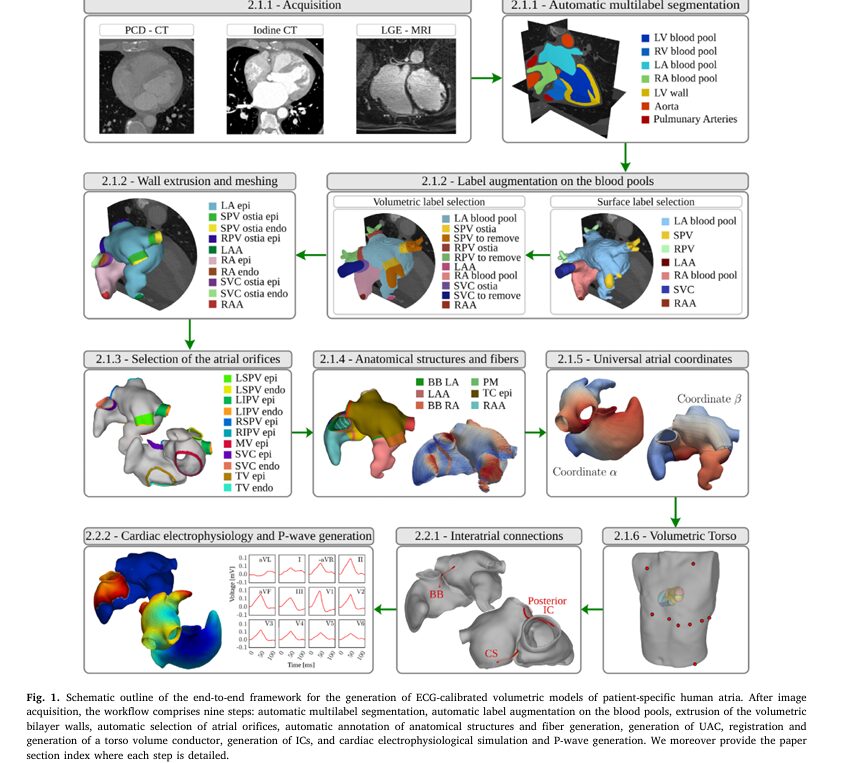
Creating Precision Cardiac Digital Twins: How Advanced Computational Models are Revolutionizing Atrial Electrophysiology Treatment

Creating Precision Cardiac Digital Twins: How Advanced Computational Models are Revolutionizing Atrial Electrophysiology Treatment

The human heart is an extraordinarily complex organ, and understanding its electrical behavior has long been one of medicine’s greatest challenges. For patients suffering from atrial fibrillation (AF) and other cardiac rhythm disorders, traditional treatment approaches rely heavily on trial-and-error…

Creating Precision Cardiac Digital Twins: How Advanced Computational Models are Revolutionizing Atrial Electrophysiology Treatment Read More »

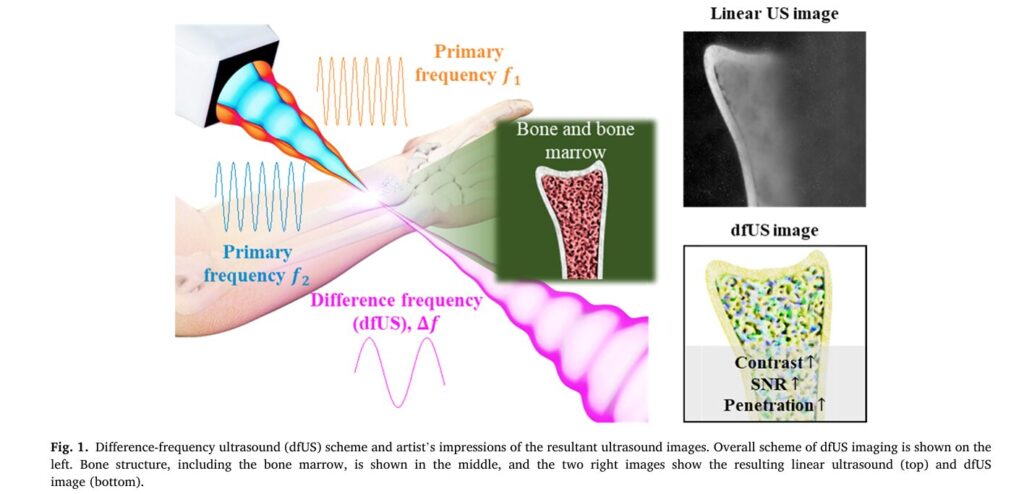
Revolutionizing Medical Imaging: How a Compact, Programmable Ultrasound Array Unlocks High-Contrast Elastography for Bones and Tumors

Revolutionizing Medical Imaging: How a Compact, Programmable Ultrasound Array Unlocks High-Contrast Elastography for Bones and Tumors

Imagine being able to see not just the shape and structure of your internal organs, but also feel their texture—distinguishing a soft, healthy liver from a hardened, diseased one; or identifying a malignant tumor nestled within bone, invisible to standard…

Revolutionizing Medical Imaging: How a Compact, Programmable Ultrasound Array Unlocks High-Contrast Elastography for Bones and Tumors Read More »

SurgeNetXL: Revolutionizing Surgical Computer Vision with Self-Supervised Learning

SurgeNetXL: Revolutionizing Surgical Computer Vision with Self-Supervised Learning

The operating room represents one of the most data-rich environments in modern medicine, yet surprisingly, computer vision technology has lagged behind other medical specialties. While pathology and radiology have embraced AI solutions at near-market deployment stages, surgical computer vision remains…

SurgeNetXL: Revolutionizing Surgical Computer Vision with Self-Supervised Learning Read More »

High-Accuracy Indoor Positioning Systems: Using Galois Field Cryptography and Hybrid Deep Learning

High-Accuracy Indoor Positioning Systems: Using Galois Field Cryptography and Hybrid Deep Learning

Indoor positioning systems (IPS) have emerged as a critical technology in the age of smart manufacturing, logistics, and enterprise solutions. Unlike GPS, which relies on satellite signals that cannot penetrate building structures, IPS provides accurate location tracking within enclosed environments.…

High-Accuracy Indoor Positioning Systems: Using Galois Field Cryptography and Hybrid Deep Learning Read More »