Adnan Saeed

Adnan Saeed is a deep learning researcher working on medical image analysis, with a focus on multimodal architectures, graph neural networks, and evidential deep learning for clinical imaging tasks. His peer reviewed research has appeared in journals across machine learning and biomedical signal processing. At AI Trend Blend he turns recent papers into clear, practical explainers, with an emphasis on what a method actually does and where it holds up, written for readers who want depth without the hype.

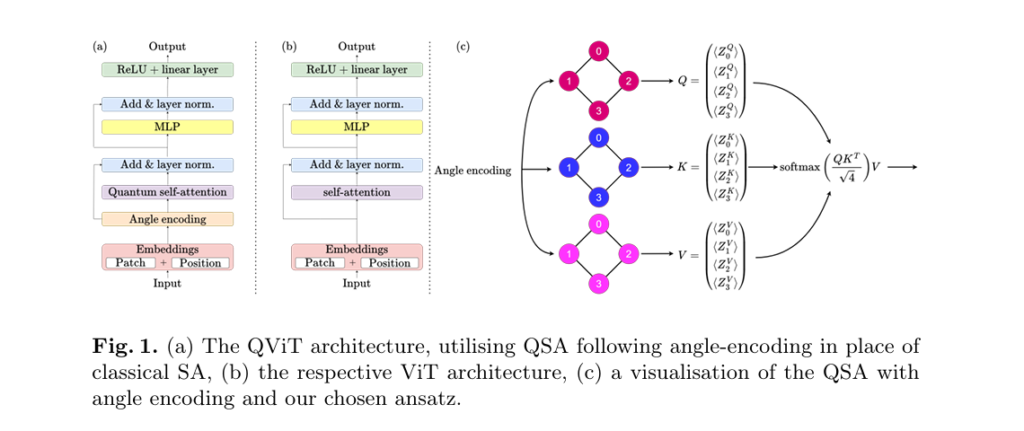
Diagram showing Quantum Vision Transformer (QViT) architecture with Quantum Self-Attention (QSA) replacing classical Self-Attention (SA) in a biomedical image classification model.

Quantum Self-Attention in Vision Transformers: A 99.99% More Efficient Path for Biomedical Image Classification

In the rapidly evolving field of biomedical image classification, deep learning models like Vision Transformers (ViTs) have set new performance benchmarks. However, their high computational cost and massive parameter counts—often in the millions—pose significant challenges for deployment in resource-constrained clinical…
Quantum Self-Attention in Vision Transformers: A 99.99% More Efficient Path for Biomedical Image Classification Read More »

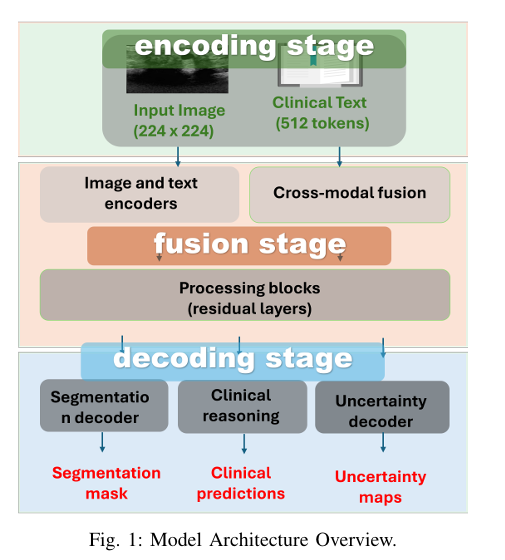
Med-CTX model architecture for explainable breast cancer ultrasound segmentation using clinical reports and BI-RADS integration

Med-CTX: Revolutionizing Breast Cancer Ultrasound Segmentation with Multimodal Transformers

Breast cancer remains one of the most prevalent cancers worldwide, with early and accurate diagnosis being crucial for effective treatment. Medical imaging, particularly ultrasound, plays a vital role in lesion detection and characterization. However, despite advances in artificial intelligence (AI),…

Med-CTX: Revolutionizing Breast Cancer Ultrasound Segmentation with Multimodal Transformers Read More »

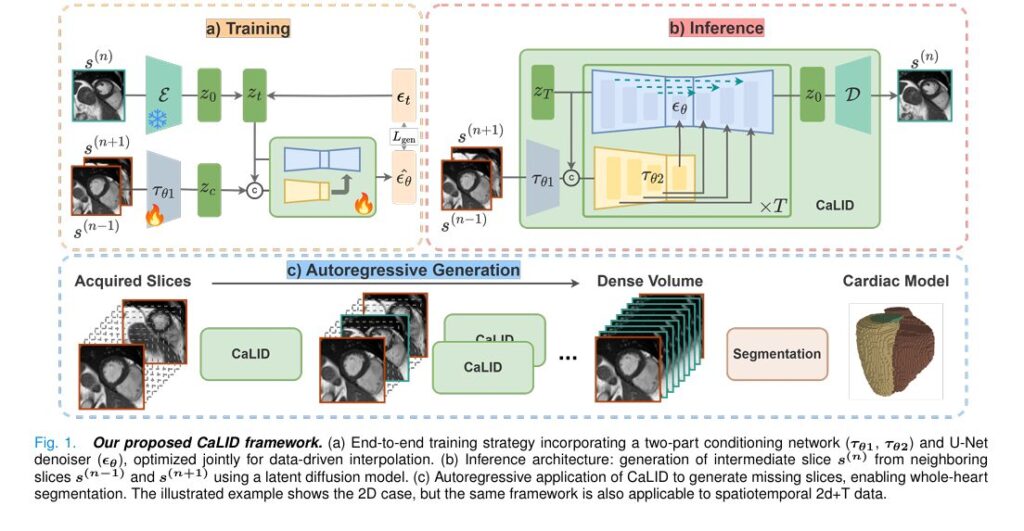
CaLID model for 3D Volume Reconstruction

Revolutionizing Cardiac MRI with Latent Interpolation Diffusion Models for Accurate 3D Volume Reconstruction

Cardiac Magnetic Resonance (CMR) imaging has become an indispensable tool in modern cardiology, providing clinicians with detailed anatomical and functional information about the heart. However, a significant limitation persists in clinical practice: the acquisition of only sparse 2D short-axis slices…

Revolutionizing Cardiac MRI with Latent Interpolation Diffusion Models for Accurate 3D Volume Reconstruction Read More »

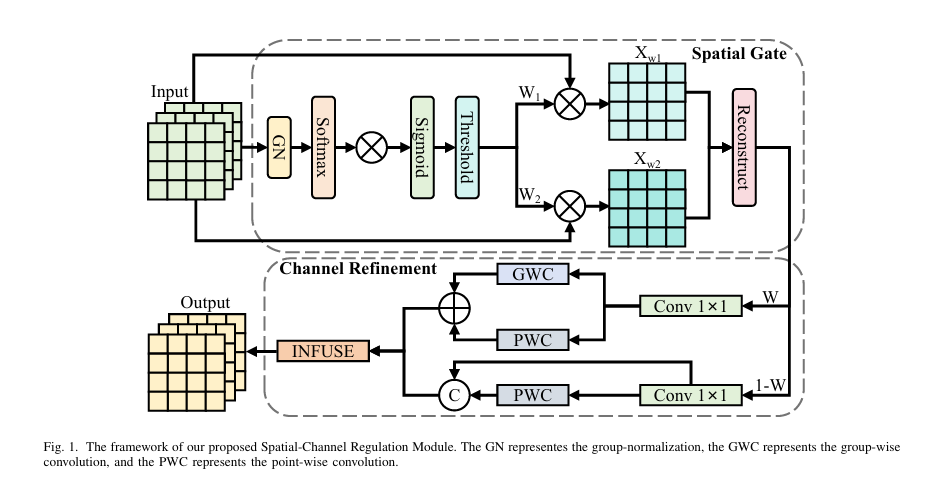
SCRNet: A breakthrough in medical ultrasound image segmentation

SCRNet: Spatial-Channel Regulation Network for Medical Ultrasound Image Segmentation

Medical ultrasound imaging is a cornerstone of modern diagnostics, offering real-time, non-invasive visualization of internal organs and pathologies such as breast and thyroid nodules. However, accurate medical ultrasound image segmentation remains a significant challenge due to low contrast, speckle noise,…

SCRNet: Spatial-Channel Regulation Network for Medical Ultrasound Image Segmentation Read More »

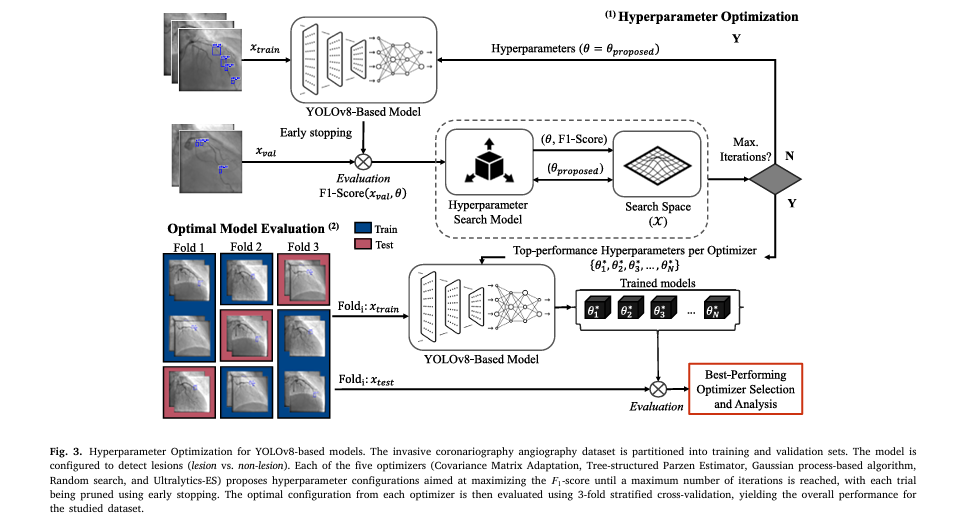
A medical AI system using YOLOv8 and hyperparameter optimization to detect coronary artery stenosis in invasive coronary angiography images.

Hyperparameter Optimization of YOLO Models for Invasive Coronary Angiography Lesion Detection

Cardiovascular diseases remain the leading cause of death worldwide, with coronary artery disease (CAD) at the forefront. Early and accurate detection of coronary stenosis—narrowing of the arteries supplying the heart—is critical for timely intervention and improved patient outcomes. While invasive…

Hyperparameter Optimization of YOLO Models for Invasive Coronary Angiography Lesion Detection Read More »

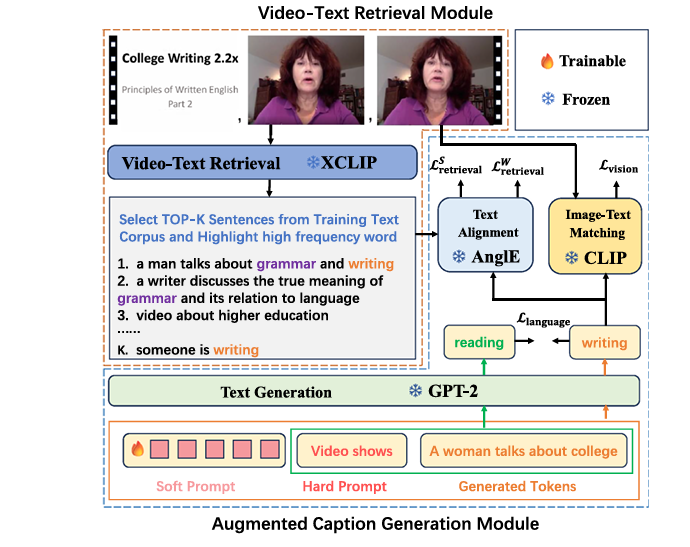
Discover RETTA: the first retrieval-enhanced test-time adaptation framework for zero-shot video captioning.

RETTA: Retrieval-Enhanced Test-Time Adaptation for Zero-Shot Video Captioning

In the rapidly evolving field of vision-language modeling, the ability to automatically generate accurate and contextually relevant descriptions of video content—known as video captioning—has become a cornerstone for applications ranging from assistive technology for the visually impaired to intelligent video…

RETTA: Retrieval-Enhanced Test-Time Adaptation for Zero-Shot Video Captioning Read More »

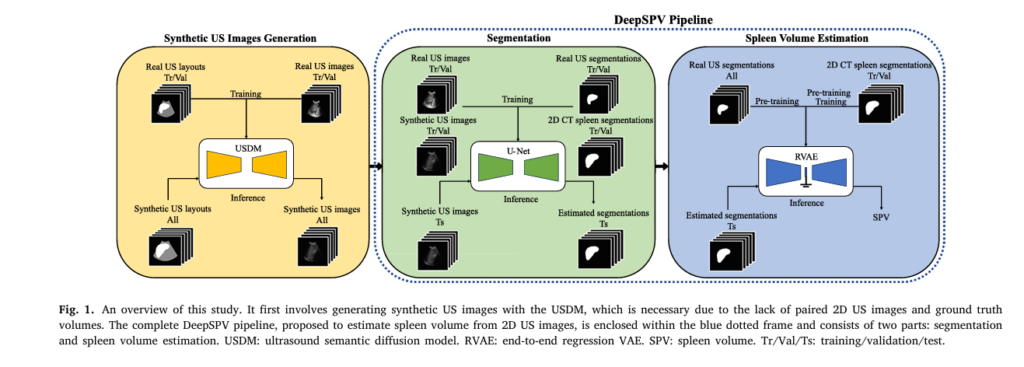
Discover DeepSPV—the first deep learning pipeline to estimate 3D spleen volume from 2D ultrasound

DeepSPV: Revolutionizing 3D Spleen Volume Estimation from 2D Ultrasound with AI

In the rapidly evolving field of medical imaging, accurate and non-invasive assessment of organ size is critical—especially when managing chronic conditions like sickle cell disease (SCD) and liver disorders, where splenomegaly (enlarged spleen) is a common clinical indicator. Traditionally, clinicians…

DeepSPV: Revolutionizing 3D Spleen Volume Estimation from 2D Ultrasound with AI Read More »