Adnan Saeed

Adnan Saeed is a deep learning researcher working on medical image analysis, with a focus on multimodal architectures, graph neural networks, and evidential deep learning for clinical imaging tasks. His peer reviewed research has appeared in journals across machine learning and biomedical signal processing. At AI Trend Blend he turns recent papers into clear, practical explainers, with an emphasis on what a method actually does and where it holds up, written for readers who want depth without the hype.

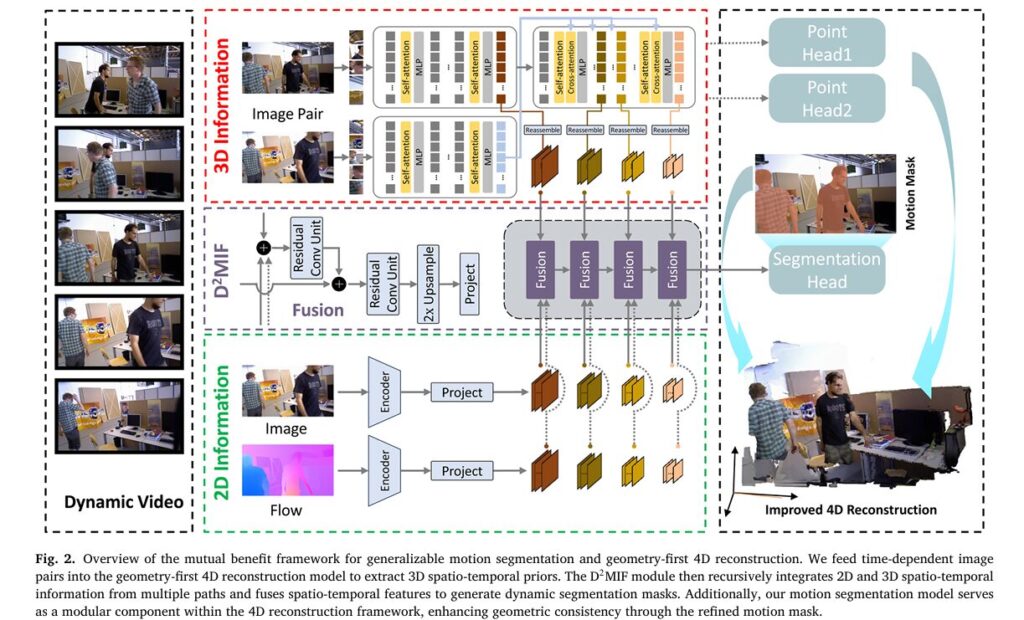
MuBe4D: A mutual benefit framework for generalizable motion segmentation and geometry-first 4D reconstruction

MuBe4D: The Mutual Benefit Framework That Finally United Motion Segmentation with 4D Reconstruction

MuBe4D: The Mutual Benefit Framework That Finally United Motion Segmentation with 4D Reconstruction | AI Systems Research AISecurity Research Machine Learning About Computer Vision · Information Fusion 133 (2026) 104252 · 16 min read MuBe4D: The Mutual Benefit Breakthrough That Finally Solved Motion Segmentation’s Chicken-and-Egg Problem How researchers at Wuhan University discovered that motion segmentation […]

MuBe4D: The Mutual Benefit Framework That Finally United Motion Segmentation with 4D Reconstruction Read More »

Overview of DSKD training.

DSKD: How Sense Dictionaries Are Finally Making Decoder LLMs Smarter Without Slowing Them Down

DSKD: How Sense Dictionaries Are Finally Making Decoder LLMs Smarter Without Slowing Them Down | AI Research AITrendBlend Machine Learning About Natural Language Processing · arXiv:2602.22351v1 [cs.CL] · 15 min read DSKD: The Lexical Knowledge Injection That Finally Works for Decoder Language Models How researchers at RPI and IBM Research taught generative LLMs to understand

DSKD: How Sense Dictionaries Are Finally Making Decoder LLMs Smarter Without Slowing Them Down Read More »

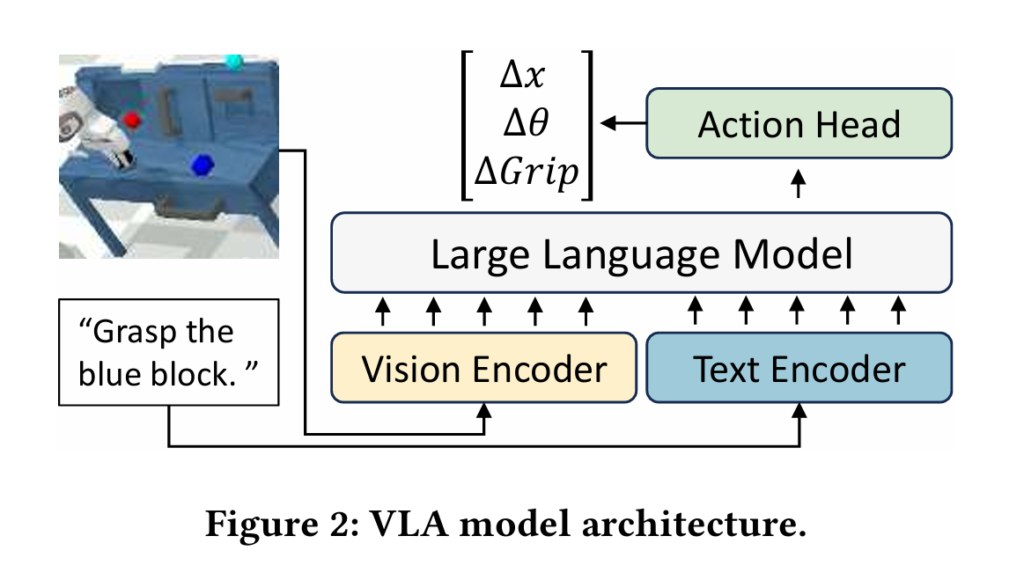
DySL-VLA: How Researchers Finally Taught Robots to Think Fast Without Thinking Less.

DySL-VLA: How Researchers Finally Taught Robots to Think Fast Without Thinking Less

DySL-VLA: How Researchers Finally Taught Robots to Think Fast Without Thinking Less | AI Systems Research AISecurity Research Machine Learning About Robot Learning · arXiv:2602.22896v2 [cs.RO] · 15 min read DySL-VLA: How Researchers Finally Taught Robots to Think Fast Without Thinking Less A team at Peking University discovered something that sounds almost too obvious once

DySL-VLA: How Researchers Finally Taught Robots to Think Fast Without Thinking Less Read More »

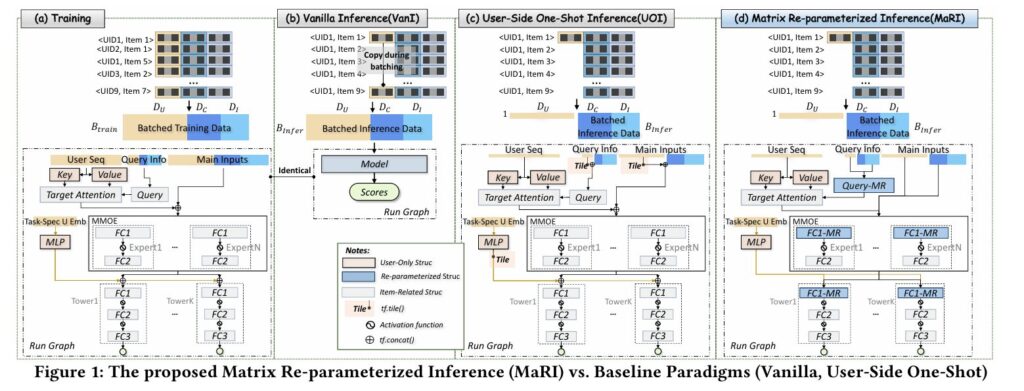
MaRI: The Structural Re-parameterization Breakthrough That Eliminated Redundant Computation in Kuaishou’s Ranking Models.

MaRI: How Kuaishou Solved the Hidden Redundancy Problem Plaguing Recommendation Models

MaRI: How Kuaishou Solved the Hidden Redundancy Problem Plaguing Recommendation Models | AI Systems Research AISecurity Research Machine Learning Cybersecurity About Recommendation Systems · arXiv:2602.23105v1 [cs.IR] · 14 min read MaRI: The Structural Re-parameterization Breakthrough That Eliminated Redundant Computation in Kuaishou’s Ranking Models How a team of researchers at Kuaishou discovered that the biggest bottleneck

MaRI: How Kuaishou Solved the Hidden Redundancy Problem Plaguing Recommendation Models Read More »

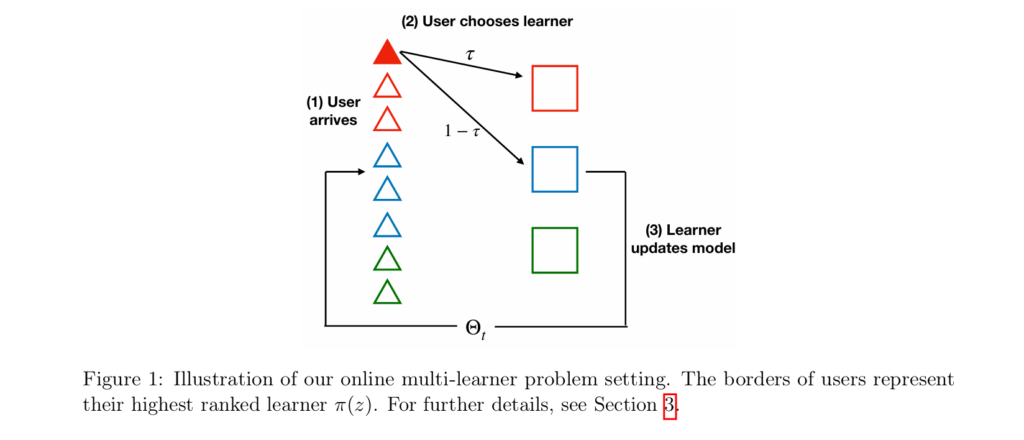
Dynamics of Learning under User Choice: Overspecialization and Peer-Model Probing.

How AI Platforms Get Trapped Serving Only Their Fans—and the peer-model PROBING Fix That Breaks the Cycle

How AI Platforms Get Trapped Serving Only Their Fans—and the Peer-Probing Fix That Breaks the Cycle | AI Systems Research AISecurity Research Machine Learning About Multi-Agent Learning · arXiv:2602.23565v1 [cs.LG] · 16 min read The Overspecialization Trap: Why Competing AI Platforms Inevitably Become Echo Chambers—and How Peer Probing Breaks the Cycle Researchers from UW and

How AI Platforms Get Trapped Serving Only Their Fans—and the peer-model PROBING Fix That Breaks the Cycle Read More »

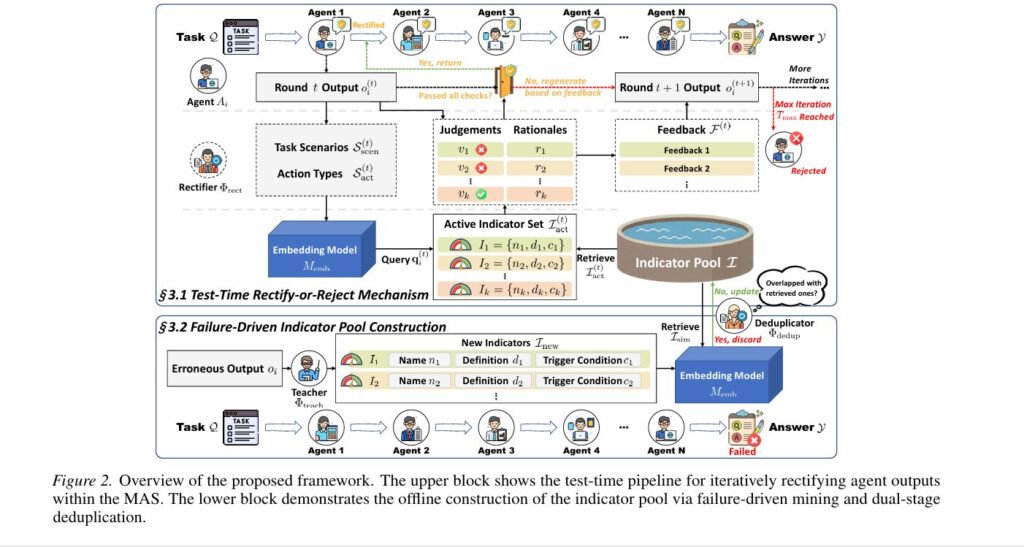
AgentDropoutV2: Test-Time Rectify-or-Reject Pruning for Multi-Agent Systems.

AgentDropoutV2: Test-Time Rectify-or-Reject Pruning for Multi-Agent Systems

AgentDropoutV2: Test-Time Rectify-or-Reject Pruning for Multi-Agent Systems | AI Security Research AISecurity Research Machine Learning About Multi-Agent Systems · arXiv:2602.23258v1 [cs.AI] · 16 min read AgentDropoutV2: Teaching Multi-Agent Systems to Self-Correct Through Test-Time Rectify-or-Reject Pruning A novel test-time framework that intercepts and iteratively rectifies erroneous agent outputs using retrieval-augmented adversarial indicators, achieving 6.3% accuracy improvement

AgentDropoutV2: Test-Time Rectify-or-Reject Pruning for Multi-Agent Systems Read More »

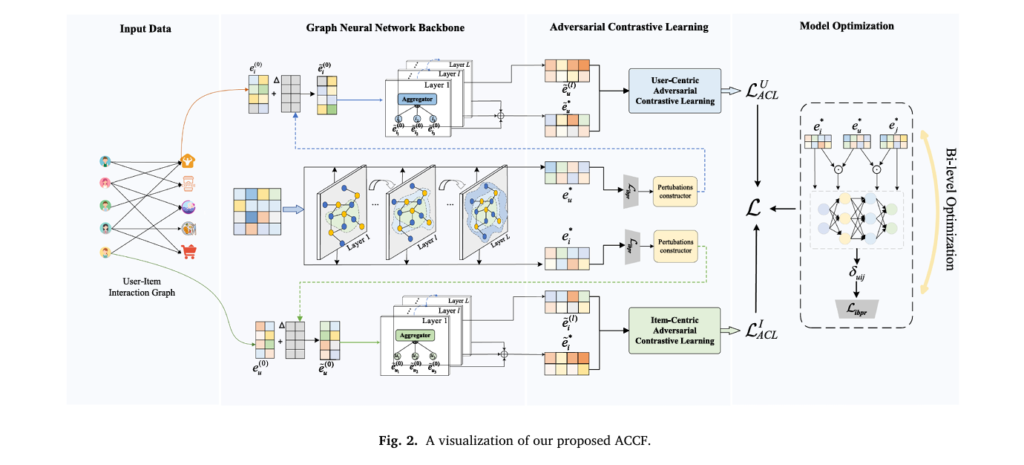
ACCF: Adversarial Contrastive Collaborative Filtering.

ACCF: Adversarial Contrastive Collaborative Filtering

ACCF: Adversarial Contrastive Collaborative Filtering | AI Security Research AISecurity Research Machine Learning About Recommender Systems · Knowledge-Based Systems 2026 · 14 min read ACCF: Teaching Recommender Systems to Learn from Adversity Through Contrastive Learning A novel training paradigm that integrates adversarial perturbations with instance-sensitive optimization to enhance robustness and generality in graph neural network-based

ACCF: Adversarial Contrastive Collaborative Filtering Read More »

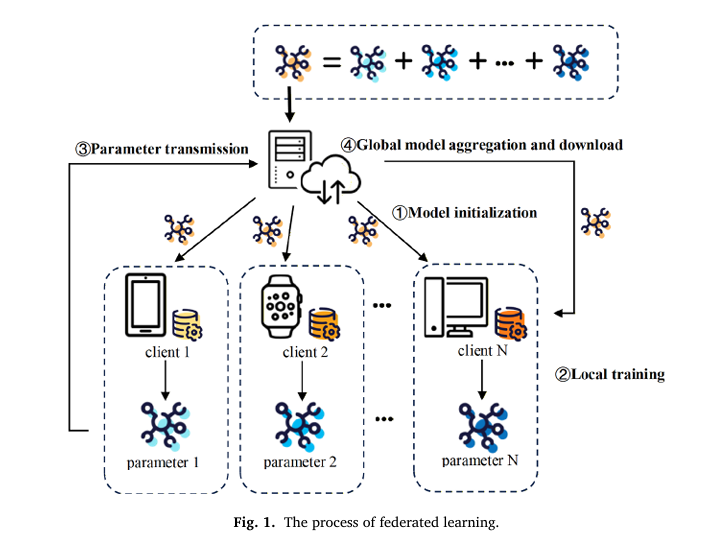
The FedDRLPD system architecture.

FedDRLPD: Deep Reinforcement Learning Defense Against Poisoning Attacks in Federated Learning

FedDRLPD: Deep Reinforcement Learning Defense Against Poisoning Attacks in Federated Learning | AI Security Research AISecurity Research Machine Learning About Federated Learning Security · Knowledge-Based Systems 2026 · 16 min read FedDRLPD: Teaching AI to Defend Itself Against Poisoning Attacks Through Deep Reinforcement Learning A novel defense framework that integrates Deep Q-Network algorithms with Mahalanobis

FedDRLPD: Deep Reinforcement Learning Defense Against Poisoning Attacks in Federated Learning Read More »

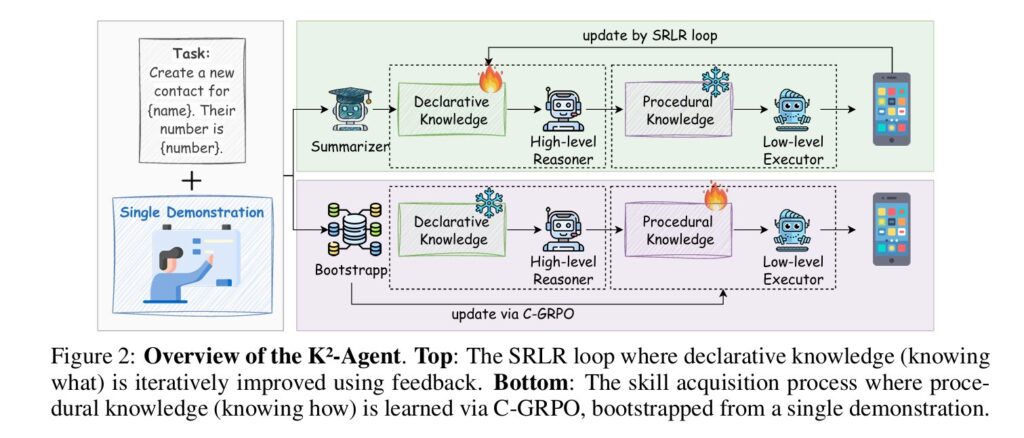
K2-Agent: The Cognitive Architecture That Taught AI to Think Like Humans About Mobile Tasks.

K2-Agent: Co-Evolving Know-What and Know-How for Hierarchical Mobile Device Control

K2-Agent: Co-Evolving Know-What and Know-How for Hierarchical Mobile Device Control | AI Security Research AISecurity Research Machine Learning About Agent Systems · ICLR 2026 · 18 min read K2-Agent: The Cognitive Architecture That Taught AI to Think Like Humans About Mobile Tasks A hierarchical framework separates “knowing what” from “knowing how” — enabling co-evolution of

K2-Agent: Co-Evolving Know-What and Know-How for Hierarchical Mobile Device Control Read More »

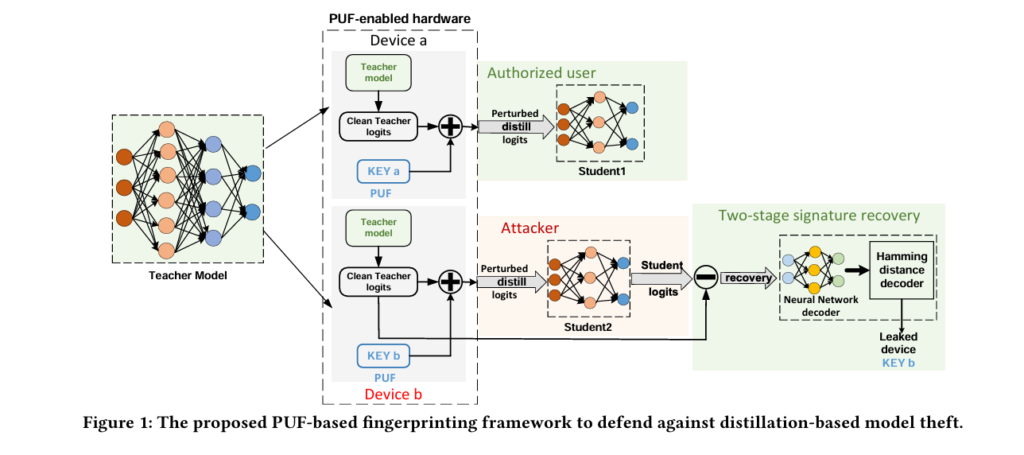
PDF: PUF-based DNN Fingerprinting for Knowledge Distillation Traceability.

PDF: PUF-based DNN Fingerprinting for Knowledge Distillation Traceability

PDF: PUF-based DNN Fingerprinting for Knowledge Distillation Traceability | AI Security Research Model Security · DAC 2026, Long Beach, CA · 15 min read The Hardware Fingerprint That Traces Stolen AI Models Back to Their Source A novel PUF-based framework embeds unclonable hardware signatures into teacher models during knowledge distillation, enabling post-theft traceability without architectural

PDF: PUF-based DNN Fingerprinting for Knowledge Distillation Traceability Read More »