Cybersecurity

Cybersecurity at the intersection of AI covers both how machine learning strengthens defense and how it opens new attack surfaces. We report on adversarial robustness, model and data security, and the practical risks that come with deploying AI in production, grounded in current research.

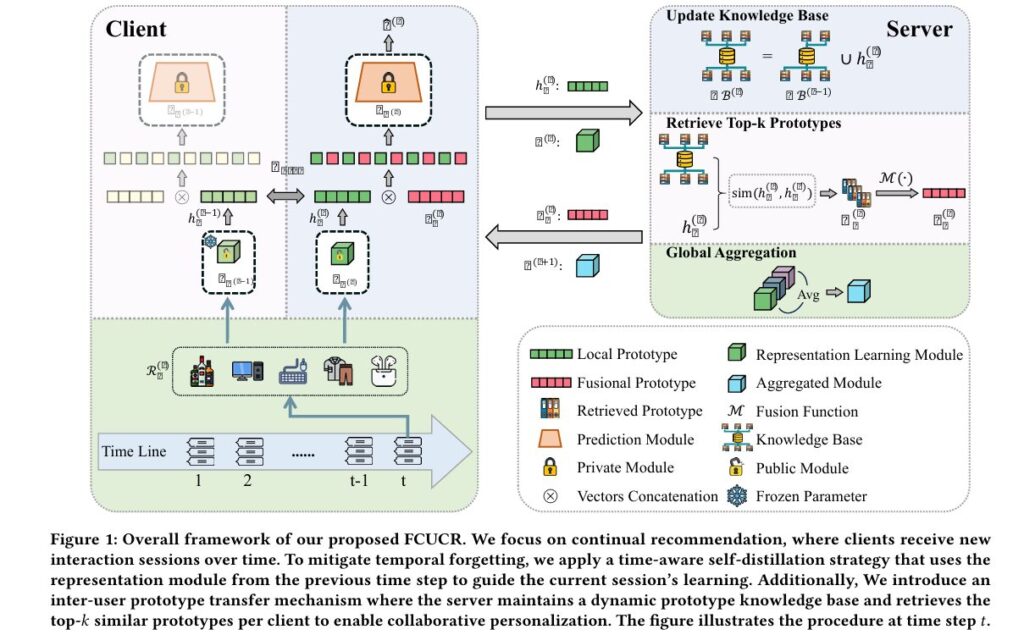
FCUCR: Federated Continual Recommendation That Remembers You Without Storing. Your Data.

FCUCR: Federated Continual Recommendation That Remembers You Without Storing Your Data

Researchers from Jilin University and the University of Technology Sydney built a federated continual recommendation framework that solves two problems nobody had tackled together: forgetting who you used to be, and not knowing enough about people like you — all…

FCUCR: Federated Continual Recommendation That Remembers You Without Storing Your Data Read More »

The architecture of our Conditional GAN (c-GAN) framework for Stealthy Deception. The Generator (G) is conditioned on the Ground-Truth History (𝐻𝑟𝑒𝑎𝑙) to synthesize a visually similar but malicious Adversarial History (𝐻𝑎𝑑𝑣). The framework is trained via a multi-objective loss function, which includes: (1) an Adversarial Loss derived from a Critic (C) that distinguishes real from fake trajectories; (2) a Similarity Loss to enforce ste.

The Invisible Threat: How a Conditional GAN Learned to Fool Self-Driving Cars by Mimicking Human Driving

Researchers at Zhengzhou University discovered that the most dangerous attacks on autonomous vehicle prediction systems don’t look like attacks at all—they look like perfectly normal driving maneuvers, reconstructed from scratch by a generative model that understands motion better than the…

The Invisible Threat: How a Conditional GAN Learned to Fool Self-Driving Cars by Mimicking Human Driving Read More »

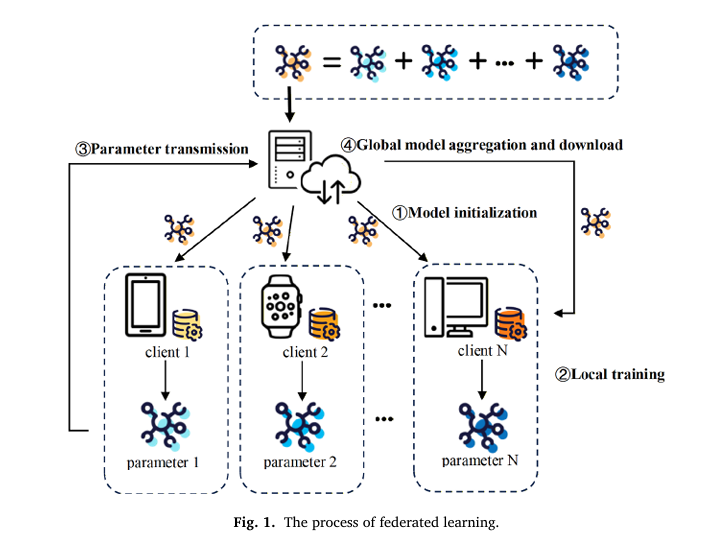
The FedDRLPD system architecture.

FedDRLPD: Deep Reinforcement Learning Defense Against Poisoning Attacks in Federated Learning

A novel defense framework that integrates Deep Q-Network algorithms with Mahalanobis distance-based maliciousness evaluation to dynamically select benign users, achieving up to 9% accuracy improvement over state-of-the-art approaches in non-IID federated learning environments.

FedDRLPD: Deep Reinforcement Learning Defense Against Poisoning Attacks in Federated Learning Read More »

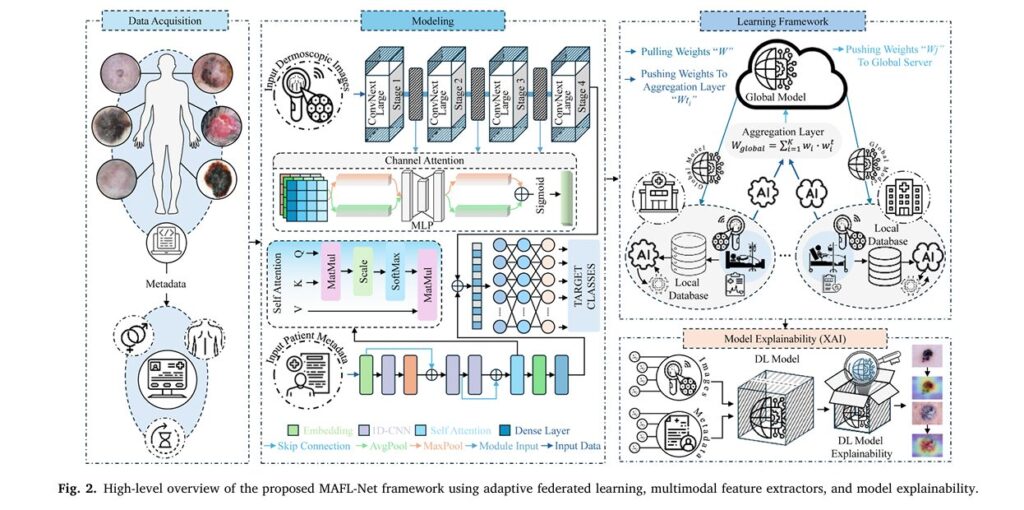
Skin Cancer Detection Model

Revolutionizing Skin Cancer Detection: How Multimodal AI and Federated Learning Are Transforming Dermatological Diagnostics

Skin cancer remains one of the most pervasive and life-threatening health conditions globally, with over 5 million new cases reported annually in the United States alone. Among the various types, malignant melanoma stands out as particularly alarming—accounting for approximately 4%…

Revolutionizing Skin Cancer Detection: How Multimodal AI and Federated Learning Are Transforming Dermatological Diagnostics Read More »