Reproducing Kernel Hilbert Space

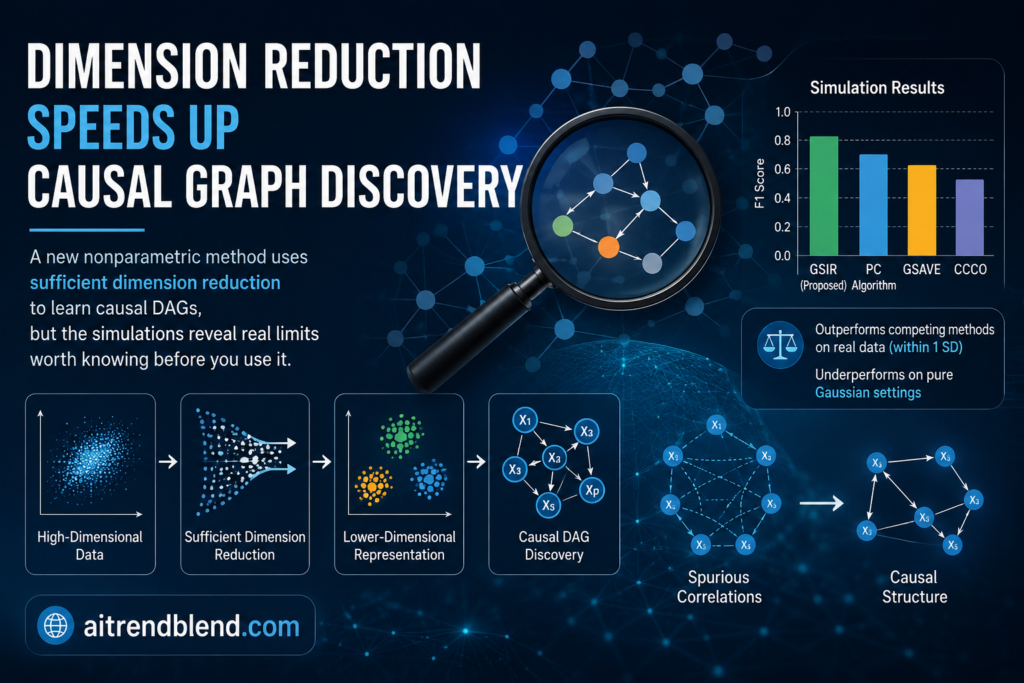
Dimension Reduction Speeds Up Causal Graph Discovery.

Dimension Reduction Speeds Up Causal Graph Discovery

Pillar 5, graph learning and probabilistic methods. Analysis by the aitrendblend editorial team. Reading time about 14 minutes. Causal Discovery Sufficient Dimension Reduction PC Algorithm Directed Acyclic Graphs Kernel Methods RKHS A directed acyclic graph, the kind of structure this method tries to recover from observational data alone. A biologist staring at a flow cytometry […]

Dimension Reduction Speeds Up Causal Graph Discovery Read More »
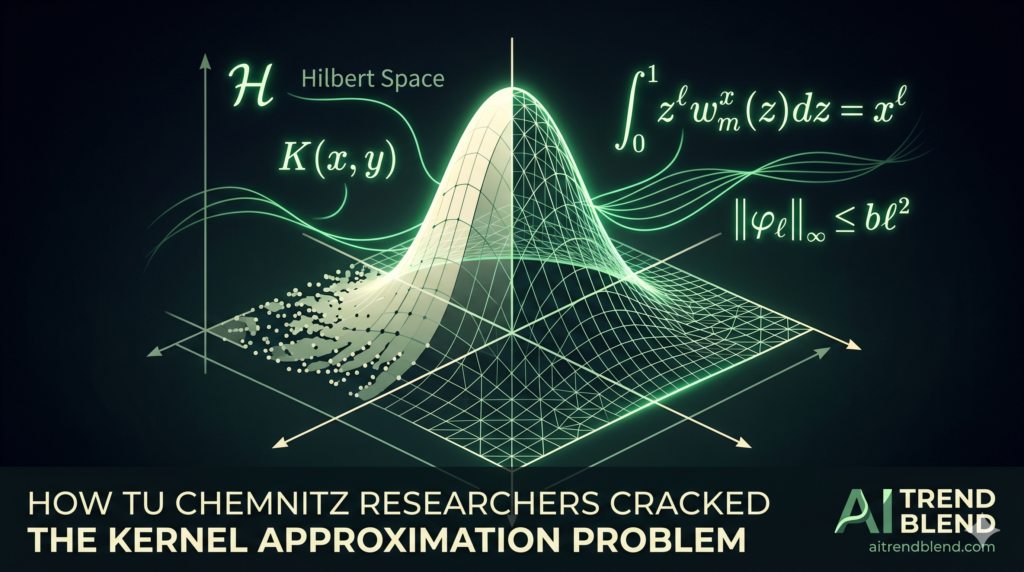
How Dommel and Pichler Finally Cracked the Kernel Approximation Problem That Was Holding Machine Learning Back.

How Dommel and Pichler Finally Cracked the Kernel Approximation Problem That Was Holding Machine Learning Back

How Dommel and Pichler Finally Cracked the Kernel Approximation Problem That Was Holding Machine Learning Back | AI Trend Blend AITrendBlend Machine Learning Cybersecurity Computer Vision About Statistical Learning · Journal of Machine Learning Research 26 (2025) 1–30 · 18 min read How Two Researchers from Chemnitz Quietly Fixed One of the Oldest Problems in

How Dommel and Pichler Finally Cracked the Kernel Approximation Problem That Was Holding Machine Learning Back Read More »

Funclust on ECG signals

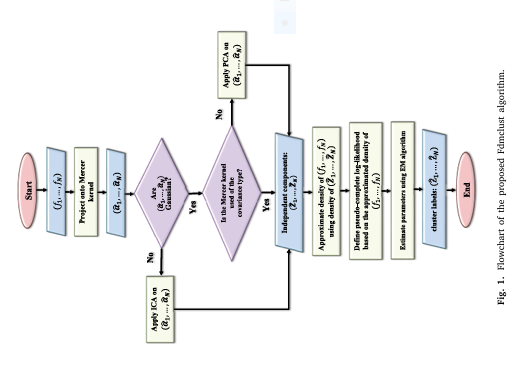
7 Revolutionary Advancements in Functional Data Clustering with Fdmclust (And What’s Holding It Back)

Introduction: The Evolution of Functional Data Clustering In the era of big data, functional data analysis (FDA) has emerged as a powerful tool for analyzing datasets where observations are curves, images, or other continuous functions. Traditional clustering techniques often fall short when applied to such high-dimensional, non-Euclidean data. This is where Fdmclust —a novel clustering

7 Revolutionary Advancements in Functional Data Clustering with Fdmclust (And What’s Holding It Back) Read More »