Adnan Saeed

Adnan Saeed is a deep learning researcher working on medical image analysis, with a focus on multimodal architectures, graph neural networks, and evidential deep learning for clinical imaging tasks. His peer reviewed research has appeared in journals across machine learning and biomedical signal processing. At AI Trend Blend he turns recent papers into clear, practical explainers, with an emphasis on what a method actually does and where it holds up, written for readers who want depth without the hype.

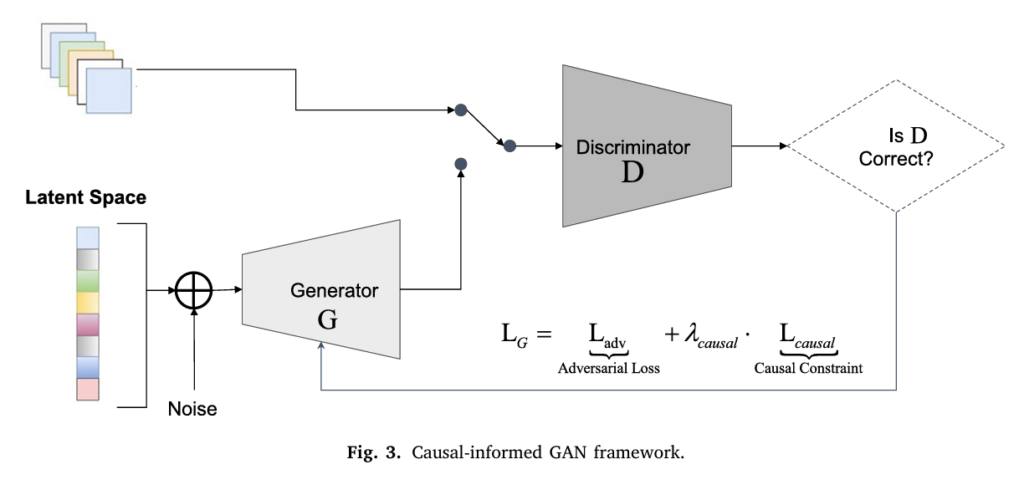
Causal-Informed GAN for Changeover Time Prediction in Customized Manufacturing.

Causal-Informed GAN for Changeover Time Prediction in Customized Manufacturing

A Carnegie Mellon team embedded causal inference directly into a Generative Adversarial Network to predict sequence-dependent changeover times for products the factory has never seen before — cutting production waste by up to 25% and finally making job-shop scheduling work…

Causal-Informed GAN for Changeover Time Prediction in Customized Manufacturing Read More »
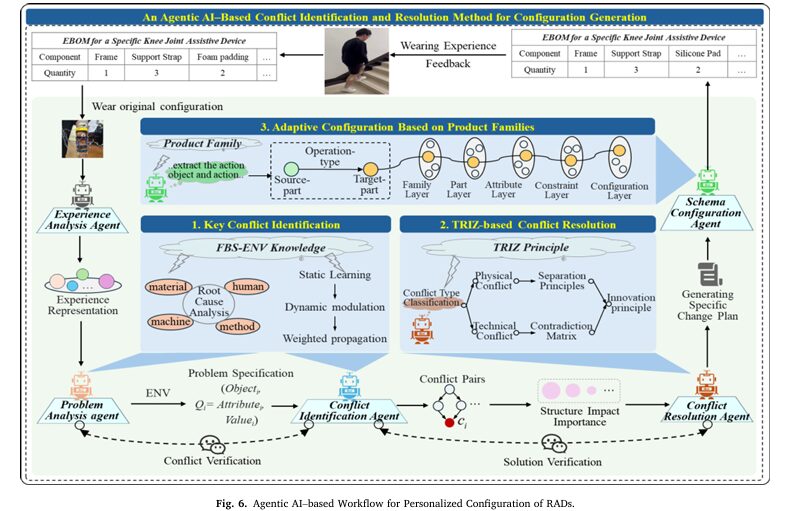
Agentic AI for Personalized Knee Braces: How sEMG, Facial Expressions, and LLMs Combine to Configure Rehab Devices

Donghua University’s five-agent AI system cross-checks muscle signals against facial expressions and verbal reports to configure personalized rehabilitation braces — catching cases where patients exaggerate, suppress, or simply can’t articulate their discomfort accurately. It achieves 0.88 parameter accuracy versus 0.13…

Agentic AI for Personalized Knee Braces: How sEMG, Facial Expressions, and LLMs Combine to Configure Rehab Devices Read More »

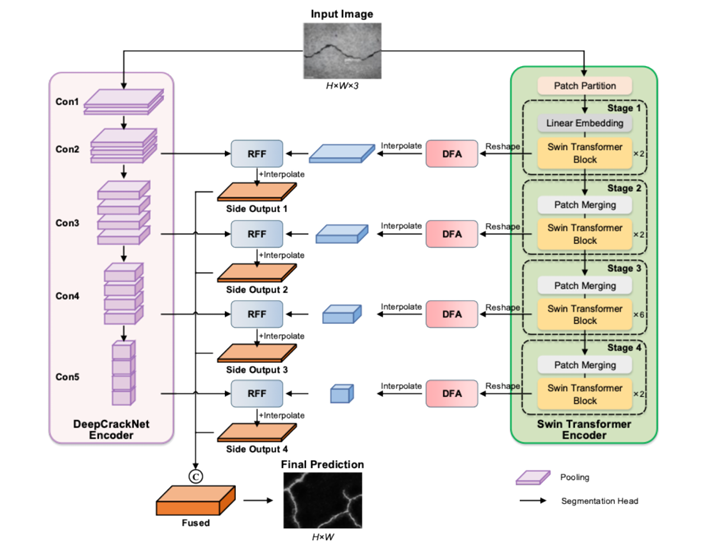
PARNet: Dual-Encoder Crack Detection with Dynamic Alignment and Residual Fusion.

PARNet: Dual-Encoder Crack Detection with Dynamic Alignment and Residual Fusion

Researchers at Shandong University and Stony Brook University built PARNet, a dual-encoder architecture that runs CNN and Transformer feature extraction in strict parallel, aligns their outputs with dynamic attention, and fuses them through residual connections — achieving the best accuracy,…

PARNet: Dual-Encoder Crack Detection with Dynamic Alignment and Residual Fusion Read More »

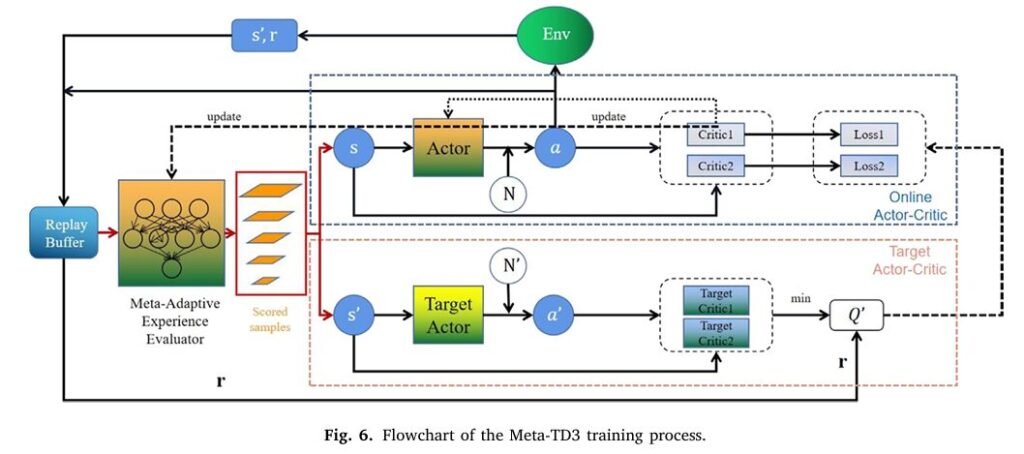
Meta-TD3: Meta-Learning-Guided Vibration Control with Adaptive Experience Replay.

Meta-TD3: Meta-Learning-Guided Vibration Control with Adaptive Experience Replay

Beihang University researchers solved one of deep reinforcement learning’s most persistent headaches — bad experience replay — by training a lightweight meta-network to score every stored transition before sampling, cutting TD3’s training time by 52.3%, reducing peak vibration by 65%,…

Meta-TD3: Meta-Learning-Guided Vibration Control with Adaptive Experience Replay Read More »

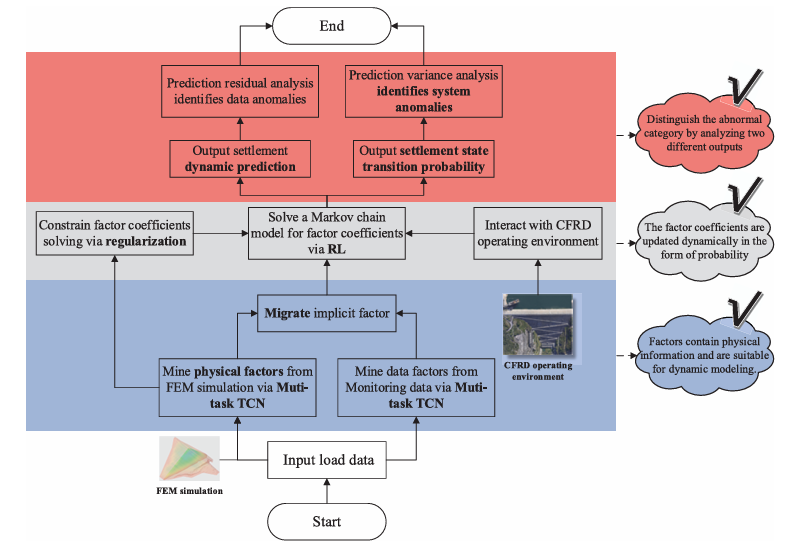
PD-TCN: Probabilistic Dynamic Model for High Concrete-Faced Rockfill Dam Settlement Prediction.

PD-TCN: Probabilistic Dynamic Model for High Concrete-Faced Rockfill Dam Settlement Prediction

Researchers at Hohai University designed a probabilistic dynamic temporal convolutional network that fuses finite element simulation physics with real-time reinforcement learning adaptation and Monte Carlo uncertainty quantification — achieving less than 5% relative error on the highest existing concrete-faced rockfill…

PD-TCN: Probabilistic Dynamic Model for High Concrete-Faced Rockfill Dam Settlement Prediction Read More »

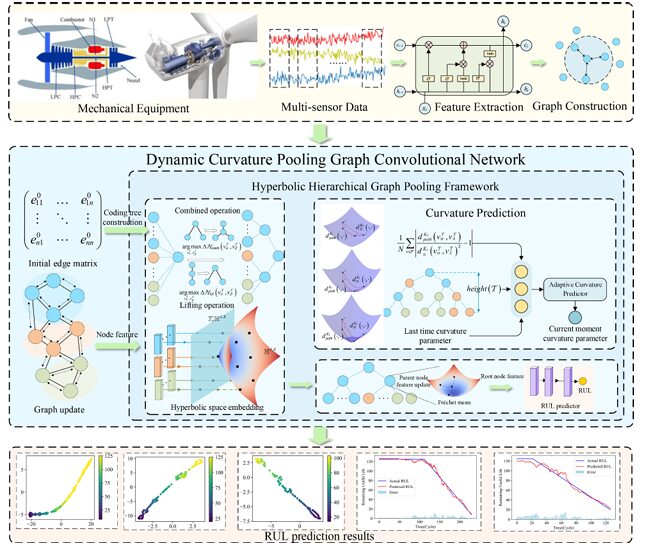
DCPGCN: Dynamic Curvature Pooling in Hyperbolic Space for Multi-Sensor RUL Prediction.

DCPGCN: Dynamic Curvature Pooling in Hyperbolic Space for Multi-Sensor RUL Prediction

A team at Chongqing University built a graph neural network that embeds multi-sensor degradation data into hyperbolic space — where the geometry naturally fits hierarchical structures — and dynamically adapts the curvature of that space during training to match the…

DCPGCN: Dynamic Curvature Pooling in Hyperbolic Space for Multi-Sensor RUL Prediction Read More »

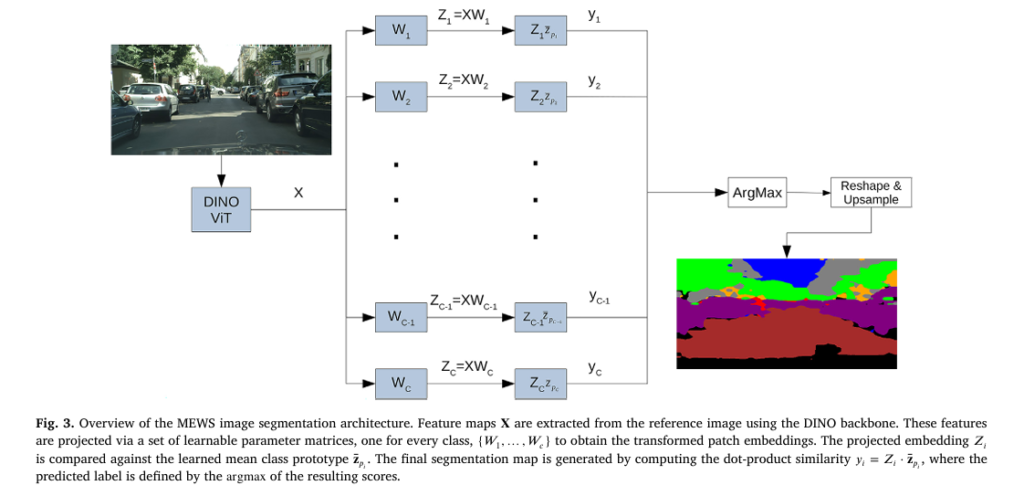
MEWS: Semantic Segmentation With Almost No Labels — A Few Pixels Per Class Is All You Need.

MEWS: Semantic Segmentation With Almost No Labels — A Few Pixels Per Class Is All You Need

Researchers at Aristotle University of Thessaloniki built a segmentation system that achieves 63.27% mIoU on Cityscapes — virtually matching fully supervised methods — using only sparse pixel annotations on a handful of training images. No dense masks. No text prompts.…

MEWS: Semantic Segmentation With Almost No Labels — A Few Pixels Per Class Is All You Need Read More »

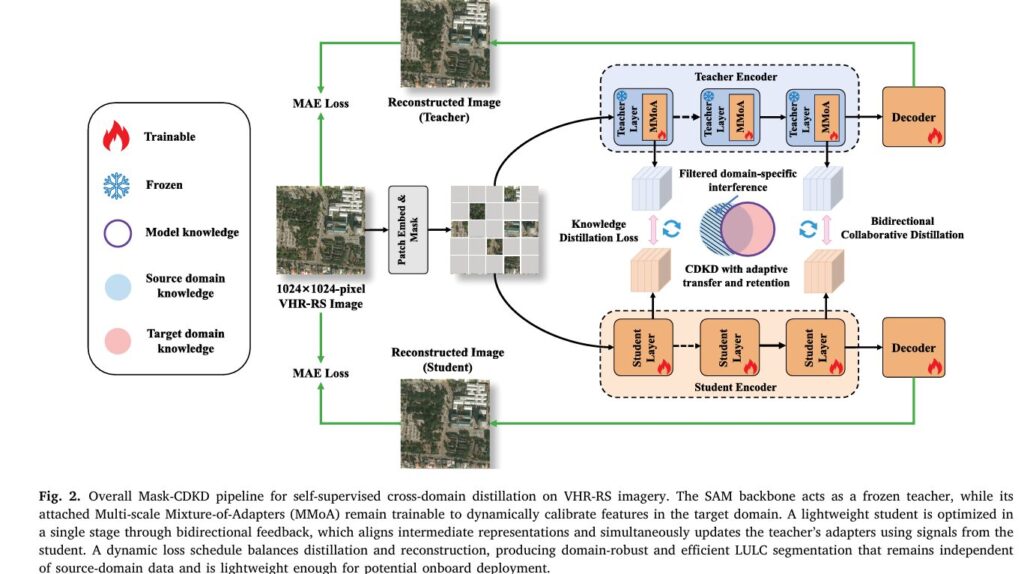
Mask-CDKD: Source-Free Knowledge Distillation from SAM for Satellite Onboard Land Cover Mapping.

Mask-CDKD: Source-Free Knowledge Distillation from SAM for Satellite Onboard Land Cover Mapping

Researchers at Wuhan University built a distillation framework that transfers SAM’s powerful visual priors to a compact student network using only unlabeled satellite imagery — no source data, no labels — and deployed the result live on an edge AI…

Mask-CDKD: Source-Free Knowledge Distillation from SAM for Satellite Onboard Land Cover Mapping Read More »

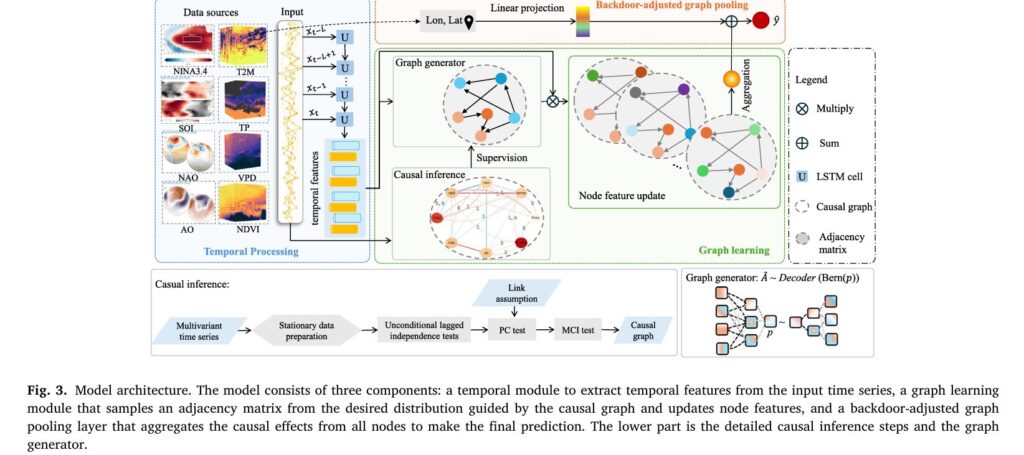
Causal Graph Neural Networks for Wildfire Forecasting Across Geographic Shifts.

Causal Graph Neural Networks for Wildfire Forecasting Across Geographic Shifts

Shan Zhao, Ioannis Prapas, and their colleagues at TU Munich and the National Observatory of Athens built a causally informed graph neural network that forecasts burned areas with 64% lower prediction variance and outperforms correlation-based baselines by 2–5 AUROC points…

Causal Graph Neural Networks for Wildfire Forecasting Across Geographic Shifts Read More »

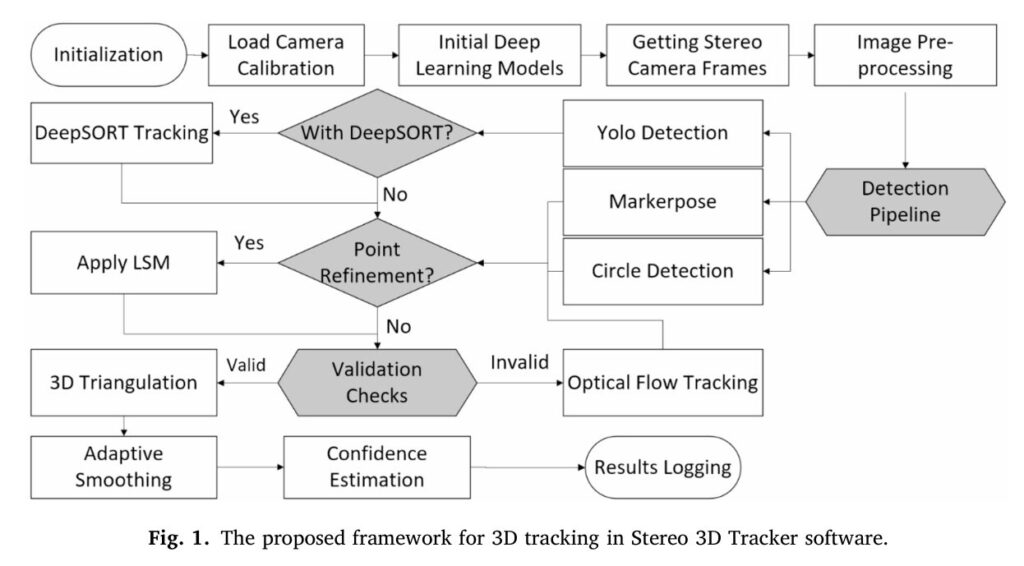
Stereo 3D Tracker: Real-Time 3D Point Tracking in Fisheye Stereo Photogrammetry.

Stereo 3D Tracker: Real-Time 3D Point Tracking in Fisheye Stereo Photogrammetry

A researcher at K.N. Toosi University built a hybrid classical-plus-deep-learning framework that tracks 3D points in fisheye stereo imagery with 0.03mm precision — comparable to VICON and OptiTrack systems costing $10,000–$100,000 — running at 60 FPS capture on a Jetson…

Stereo 3D Tracker: Real-Time 3D Point Tracking in Fisheye Stereo Photogrammetry Read More »