Adnan Saeed

Adnan Saeed is a deep learning researcher working on medical image analysis, with a focus on multimodal architectures, graph neural networks, and evidential deep learning for clinical imaging tasks. His peer reviewed research has appeared in journals across machine learning and biomedical signal processing. At AI Trend Blend he turns recent papers into clear, practical explainers, with an emphasis on what a method actually does and where it holds up, written for readers who want depth without the hype.

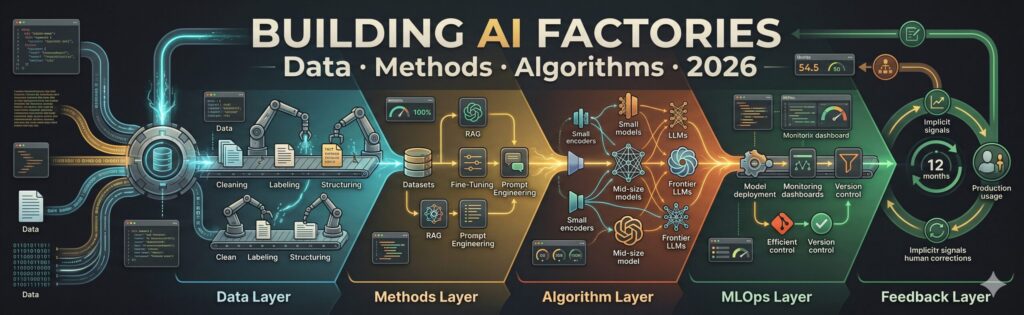
Building AI Factories: Data, Methods and Algorithms for Internal AI (2026 Guide).

Building AI Factories: Data, Methods and Algorithms for Internal AI (2026 Guide)

That answer is uncomfortable for teams that want to skip to the exciting bit — the models, the outputs, the demos. But it accurately describes how organizations that have built durable internal AI capabilities actually operate. The models are, increasingly,…

Building AI Factories: Data, Methods and Algorithms for Internal AI (2026 Guide) Read More »

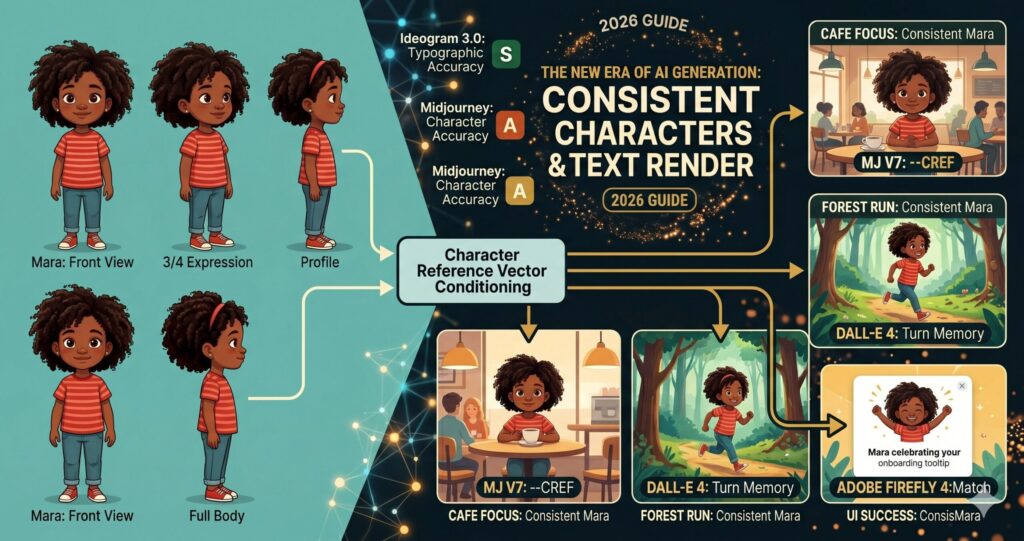
The New Era of Image Generation: Consistent Characters & Text That Renders (2026 Guide).

The New Era of Image Generation: Consistent Characters & Text That Renders (2026 Guide)

Two problems have frustrated AI image generators since the first public tools launched. The first: generate the same character twice and you get two different people. The second: ask a generator to put readable text in an image and you…

The New Era of Image Generation: Consistent Characters & Text That Renders (2026 Guide) Read More »

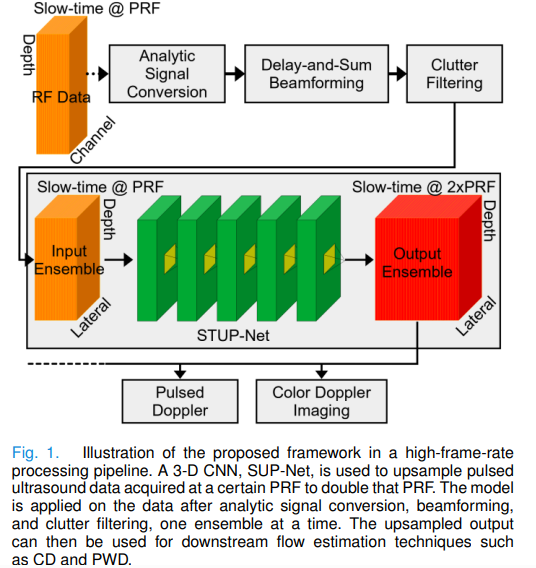
SUP-Net: Deep Learning Fixes Doppler Ultrasound Aliasing by Upsampling the Raw Signal

SUP-Net: Deep Learning Fixes Doppler Ultrasound Aliasing by Upsampling the Raw Signal

University of Waterloo researchers built SUP-Net, a 3D convolutional U-Net that fixes Doppler ultrasound’s fundamental speed limit by upsampling the raw slow-time signal — before any Doppler processing occurs — allowing color Doppler and pulse wave Doppler to work reliably…

SUP-Net: Deep Learning Fixes Doppler Ultrasound Aliasing by Upsampling the Raw Signal Read More »

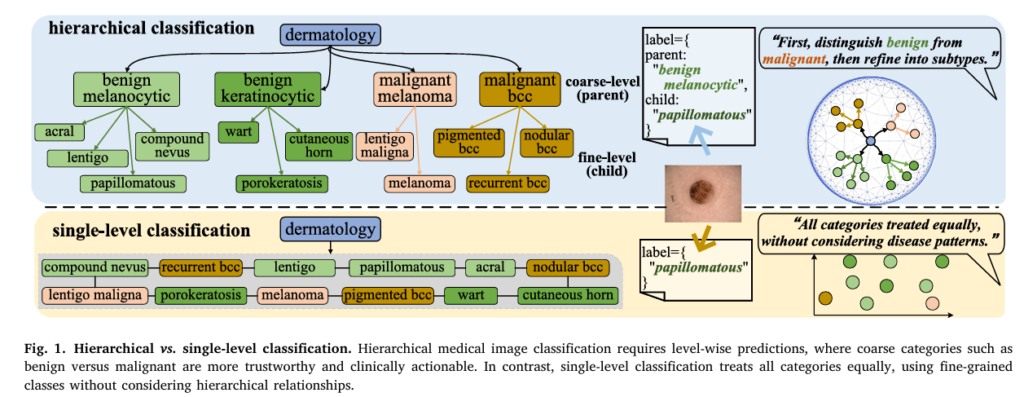
H2CL: Dual-Geometry Hyperbolic-Euclidean Image-Text Learning for Medical Hierarchical Classification.

H2CL: Dual-Geometry Hyperbolic-Euclidean Image-Text Learning for Medical Hierarchical Classification

A UNSW Sydney team built H²CL — a dual-geometry image-text framework that simultaneously operates in Euclidean and hyperbolic spaces, combining group contrastive learning with a hyperbolic entailment loss, to classify medical images across clinical taxonomies. The result: 7% accuracy gains…

H2CL: Dual-Geometry Hyperbolic-Euclidean Image-Text Learning for Medical Hierarchical Classification Read More »

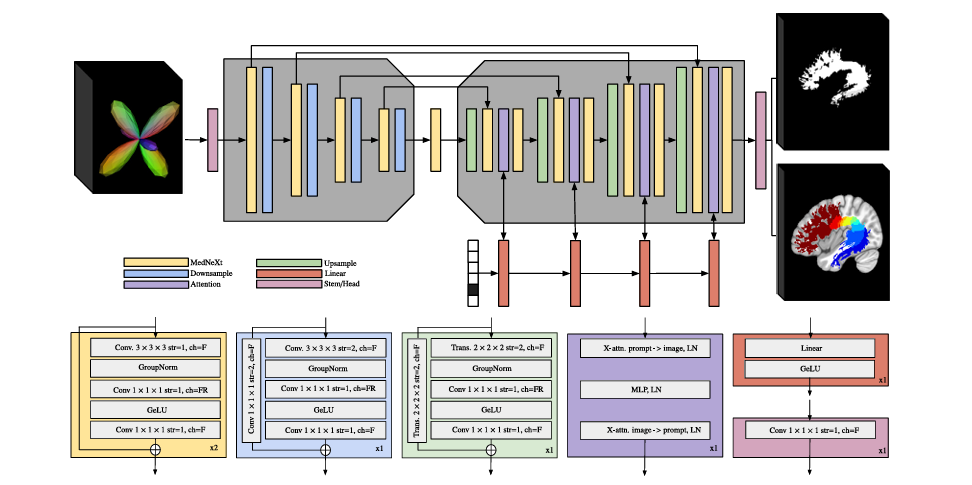
BundleParc: Tractography-Free White Matter Bundle Parcellation with MedNeXt + Cross-Attention

BundleParc: Tractography-Free White Matter Bundle Parcellation with MedNeXt + Cross-Attention

Researchers at Université de Sherbrooke built a prompt-conditioned MedNeXt encoder-decoder that reads fiber orientation maps and outputs anatomically consistent white matter parcellations in seconds — without generating a single streamline — outperforming all competing methods on reproducibility across healthy subjects,…

BundleParc: Tractography-Free White Matter Bundle Parcellation with MedNeXt + Cross-Attention Read More »

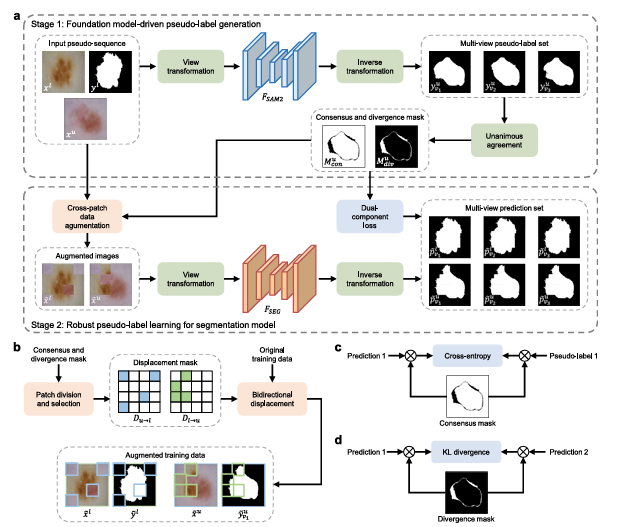
YoloSeg: One Labeled Image Is All You Need for Medical Image Segmentation.

YoloSeg: One Labeled Image Is All You Need for Medical Image Segmentation

A team at the Chinese Academy of Sciences built a framework that achieves segmentation accuracy within 3% of fully-supervised models across ten diverse medical datasets — using exactly one manually annotated image per task. SAM2 does the label propagation; a…

YoloSeg: One Labeled Image Is All You Need for Medical Image Segmentation Read More »

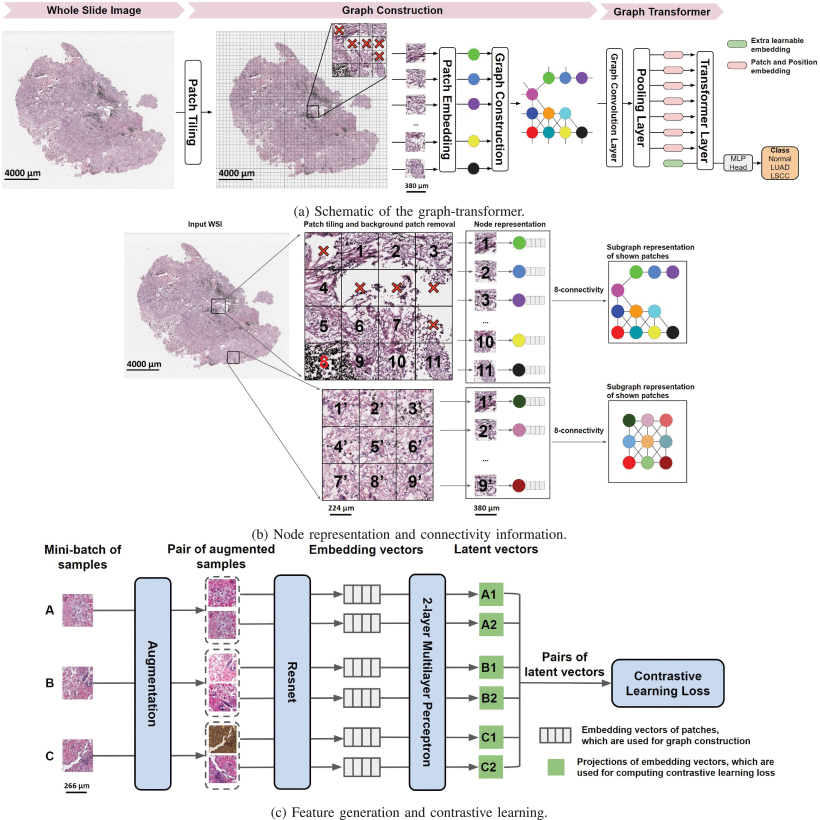
GTP: The Graph-Transformer That Reads Whole Slide Pathology Images Like a Pathologist

GTP: The Graph-Transformer That Reads Whole Slide Pathology Images Like a Pathologist

A team at Boston University built GTP — a Graph-Transformer for Pathology that fuses graph convolutional networks with vision transformers to classify gigapixel whole slide images of lung cancer at 91.2% accuracy, plus a novel GraphCAM technique that highlights exactly…

GTP: The Graph-Transformer That Reads Whole Slide Pathology Images Like a Pathologist Read More »

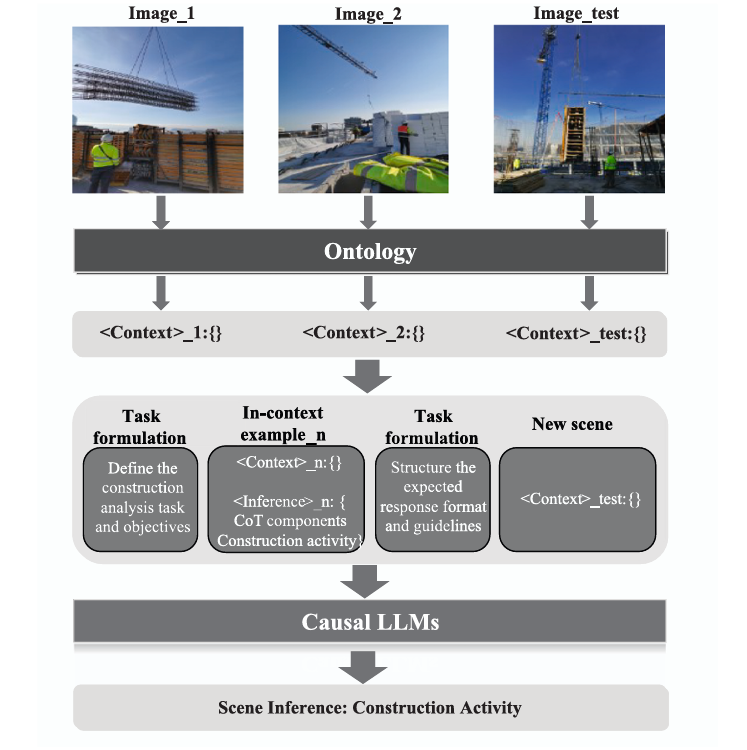
Ontology-Based LLM Prompting for Construction Activity Recognition: 73.68% Accuracy With No Training Data.

Ontology-Based LLM Prompting for Construction Activity Recognition: 73.68% Accuracy With No Training Data

Researchers at Technische Universität Berlin and Qingdao University of Technology achieved 73.68% construction activity recognition accuracy using pure prompting — no labeled training data, no fine-tuning, just a domain ontology, structured visual extraction, and carefully engineered in-context examples.

Ontology-Based LLM Prompting for Construction Activity Recognition: 73.68% Accuracy With No Training Data Read More »