Adnan Saeed

Adnan Saeed is a deep learning researcher working on medical image analysis, with a focus on multimodal architectures, graph neural networks, and evidential deep learning for clinical imaging tasks. His peer reviewed research has appeared in journals across machine learning and biomedical signal processing. At AI Trend Blend he turns recent papers into clear, practical explainers, with an emphasis on what a method actually does and where it holds up, written for readers who want depth without the hype.

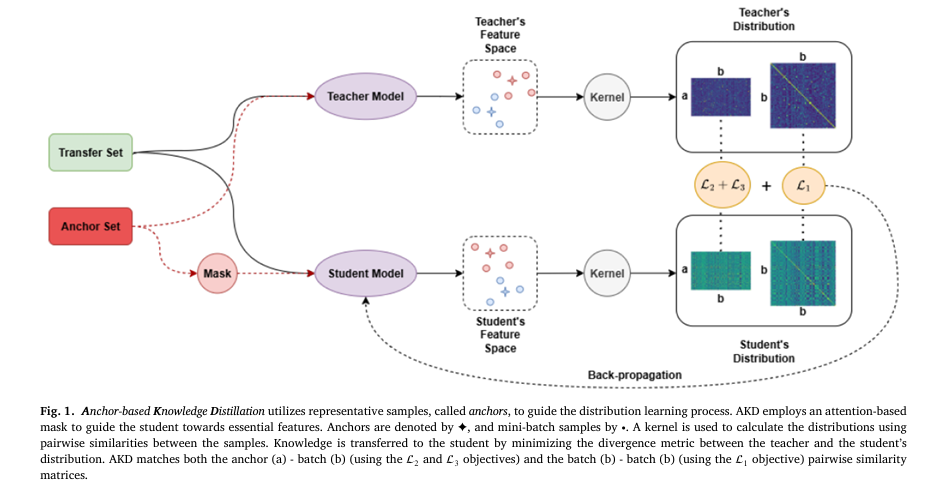
Anchor-Based Knowledge Distillation (AKD), a breakthrough in trustworthy AI for efficient model compression.

Anchor-Based Knowledge Distillation: A Trustworthy AI Approach for Efficient Model Compression

In the rapidly evolving field of artificial intelligence (AI), knowledge distillation (KD) has emerged as a cornerstone technique for compressing powerful, resource-intensive neural networks into smaller, more efficient models suitable for deployment on mobile and edge devices. However, traditional KD…
Anchor-Based Knowledge Distillation: A Trustworthy AI Approach for Efficient Model Compression Read More »

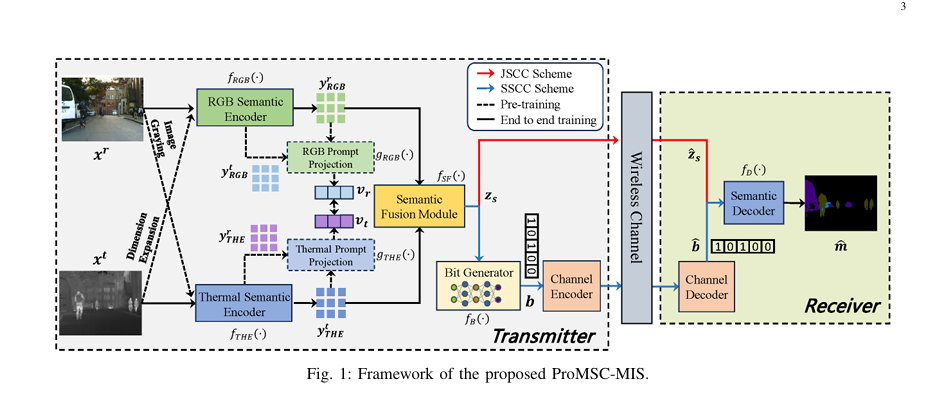
ProMSC-MIS: a revolutionary prompt-based multimodal semantic communication system for multi-spectral image segmentation.

ProMSC-MIS: Revolutionizing Multimodal Semantic Communication for Multi-Spectral Image Segmentation

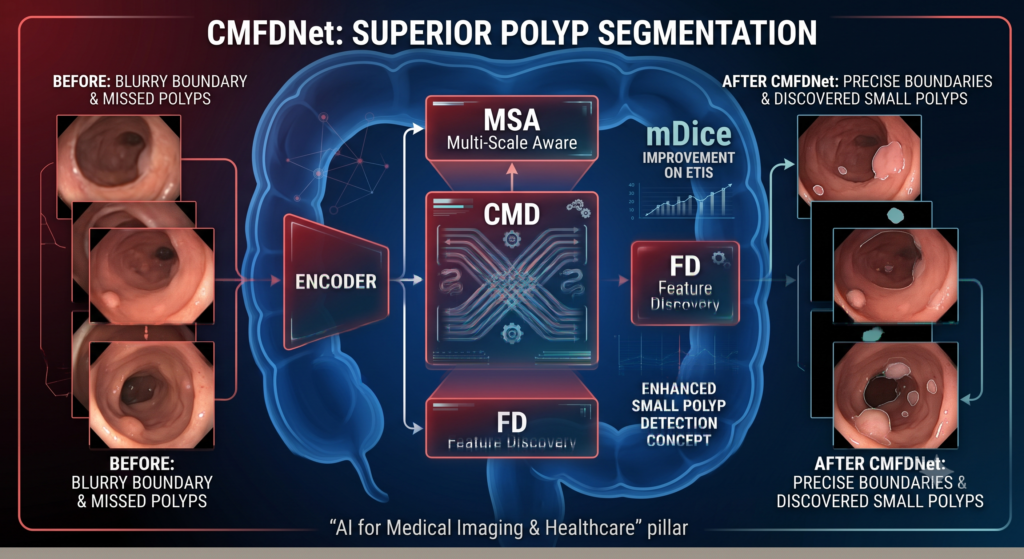
In the rapidly evolving landscape of artificial intelligence and wireless communication, a groundbreaking new framework—ProMSC-MIS (Prompt-based Multimodal Semantic Communication for Multi-Spectral Image Segmentation)—is setting a new benchmark in task-driven data transmission. Developed by Haoshuo Zhang, Yufei Bo, and Meixia Tao…

ProMSC-MIS: Revolutionizing Multimodal Semantic Communication for Multi-Spectral Image Segmentation Read More »

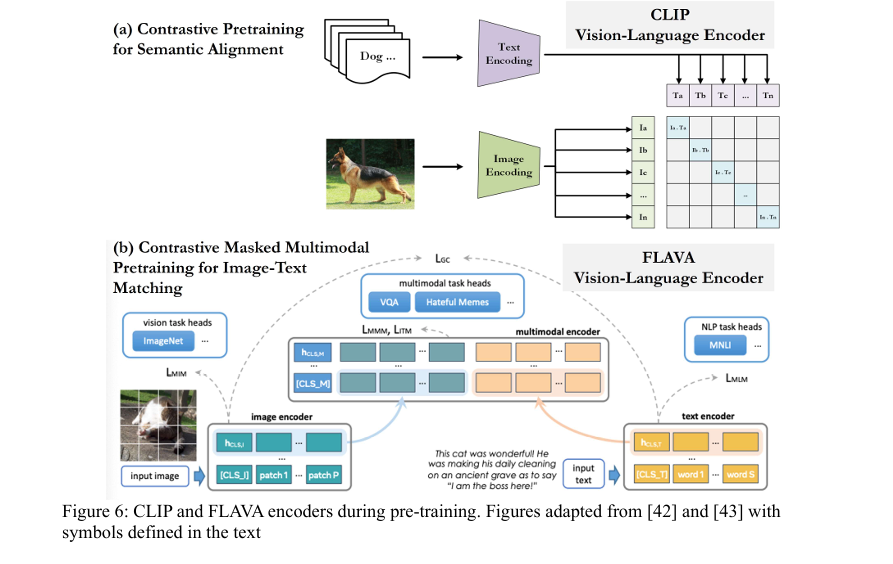
Illustration of a hybrid AI system linking microscope images of metal microstructures with expert textual assessments using vision-language models like CLIP, vision-language representations and FLAVA.

Customized Vision-Language Representations for Industrial Qualification: Bridging AI and Expert Knowledge in Additive Manufacturing

In the rapidly evolving world of additive manufacturing (AM), ensuring the quality and reliability of engineered materials is a critical bottleneck. Traditional qualification methods rely heavily on manual inspection and expert interpretation, leading to delays, inconsistencies, and scalability issues. A…

Customized Vision-Language Representations for Industrial Qualification: Bridging AI and Expert Knowledge in Additive Manufacturing Read More »

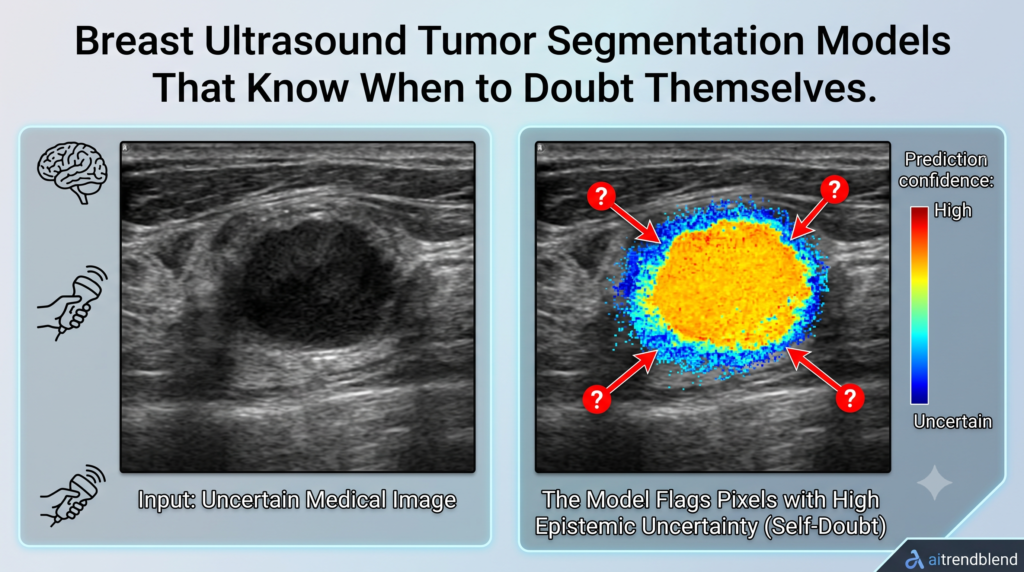
Towards Trustworthy Breast Tumor Segmentation in Ultrasound Using AI Uncertainty

This article explains a published research paper. It is not medical advice, diagnosis, or treatment guidance. The segmentation model discussed here is a research prototype, not an approved clinical device. Anyone with a health concern about a breast finding should…

Towards Trustworthy Breast Tumor Segmentation in Ultrasound Using AI Uncertainty Read More »

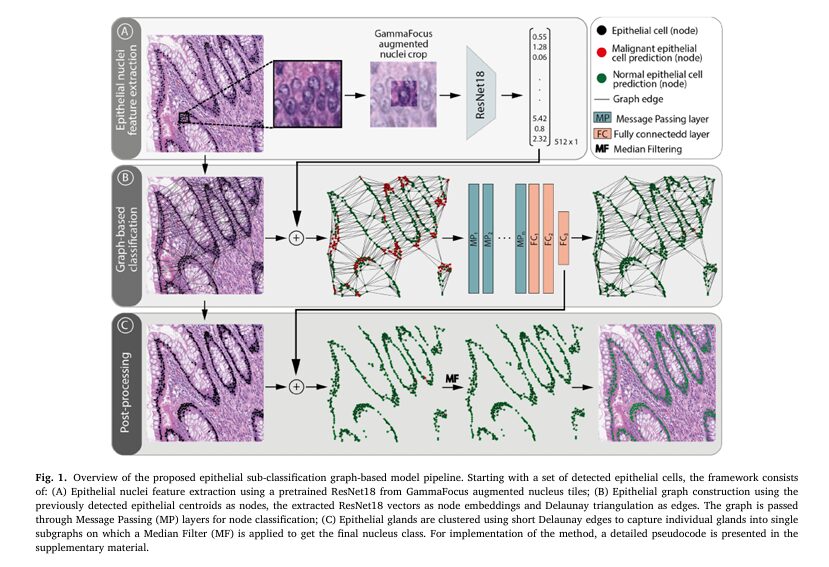
GREP model for cell classification

Revolutionizing Digital Pathology: A Deep Dive into GrEp for Superior Epithelial Cell Classification

The field of digital pathology is undergoing a transformation, with deep learning and artificial intelligence unlocking unprecedented opportunities for biomarker discovery and automated diagnostics. By analyzing high-resolution whole slide images (WSIs), these technologies promise to enhance the accuracy, speed, and…

Revolutionizing Digital Pathology: A Deep Dive into GrEp for Superior Epithelial Cell Classification Read More »

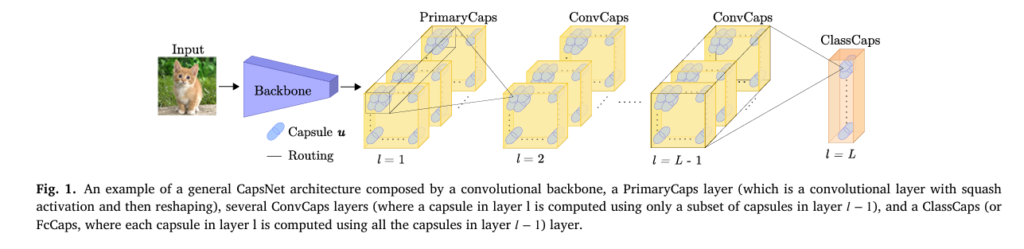
Diagram showing REM (Routing Entropy Minimization) applied to a Capsule Network, reducing unnecessary parse trees and focusing only on relevant object parts.

Capsule Networks Do Not Need to Model Everything: How REM Reduces Entropy for Smarter AI

In the fast-evolving world of deep learning, capsule networks (CapsNets) have emerged as a promising alternative to traditional convolutional neural networks (CNNs). Unlike CNNs, which lose spatial hierarchies due to pooling layers, CapsNets aim to preserve part-whole relationships through dynamic…

Capsule Networks Do Not Need to Model Everything: How REM Reduces Entropy for Smarter AI Read More »

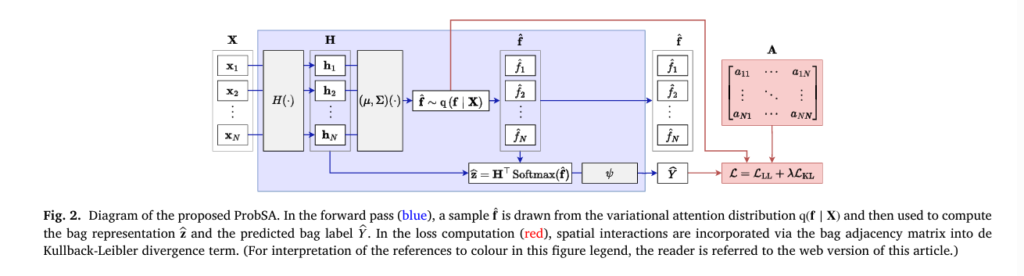
Illustration of probabilistic smooth attention in a deep learning model for medical image classification, showing uncertainty maps and attention heatmaps over patches of a whole slide image and CT scan slices.

Probabilistic Smooth Attention for Deep Multiple Instance Learning in Medical Imaging

In the rapidly evolving field of medical imaging, artificial intelligence (AI) is revolutionizing how diseases are detected and diagnosed. Among the most promising paradigms is Multiple Instance Learning (MIL), a machine learning framework that enables training on weakly labeled data—where…

Probabilistic Smooth Attention for Deep Multiple Instance Learning in Medical Imaging Read More »