Adnan Saeed

Adnan Saeed is a deep learning researcher working on medical image analysis, with a focus on multimodal architectures, graph neural networks, and evidential deep learning for clinical imaging tasks. His peer reviewed research has appeared in journals across machine learning and biomedical signal processing. At AI Trend Blend he turns recent papers into clear, practical explainers, with an emphasis on what a method actually does and where it holds up, written for readers who want depth without the hype.

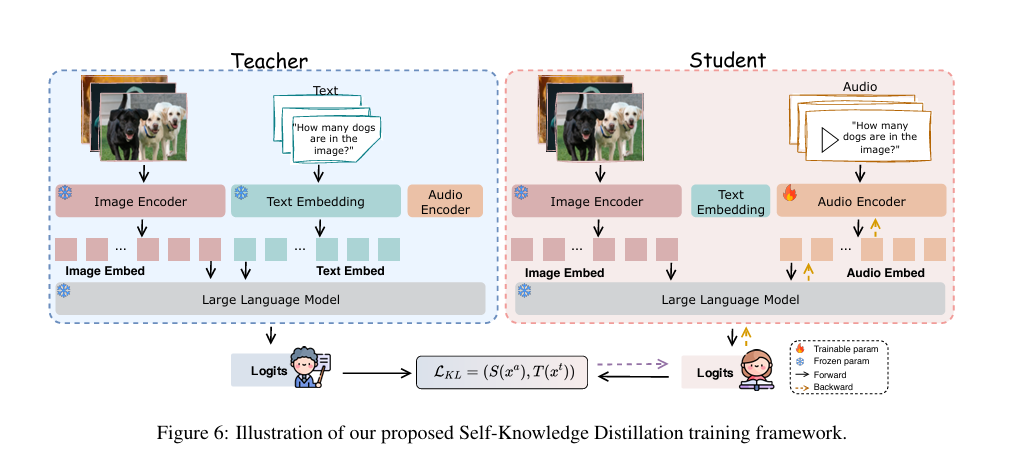
Self-Knowledge Distillation (Self-KD) enhances vision-audio capability in Omnimodal Large Language Models (OLLMs)

Enhancing Vision-Audio Capability in Omnimodal LLMs with Self-KD

Introduction: The Challenge of Audio-Vision Integration in Omnimodal LLMs Omnimodal Large Language Models (OLLMs) like GPT-4o and Megrez have revolutionized how AI interacts with the world by seamlessly processing text, images, and audio. However, a critical performance gap persists: OLLMs perform significantly better with vision-text inputs than with vision-audio inputs. For example, when asked “What’s […]

Enhancing Vision-Audio Capability in Omnimodal LLMs with Self-KD Read More »
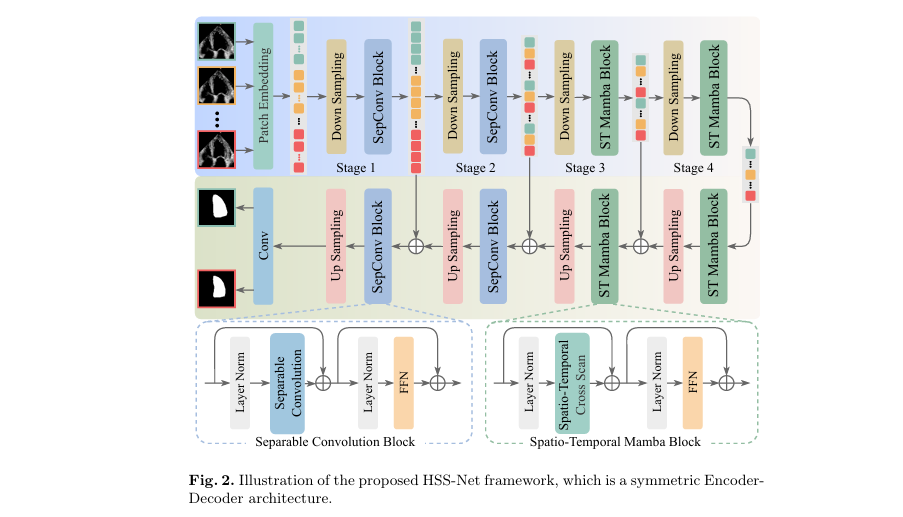
Diagram of HSS-Net architecture showing encoder-decoder structure with separable convolution and Mamba blocks for echocardiography video segmentation.

Hierarchical Spatio-temporal Segmentation Network (HSS-Net) for Accurate Ejection Fraction Estimation

Cardiovascular diseases remain the leading cause of death worldwide, making accurate and early diagnosis critical. Among the most vital metrics in cardiac assessment is the Ejection Fraction (EF)—a measure of how much blood the left ventricle pumps out with each contraction. Traditionally, EF is calculated using manual segmentation of echocardiography videos, a process that is

Hierarchical Spatio-temporal Segmentation Network (HSS-Net) for Accurate Ejection Fraction Estimation Read More »

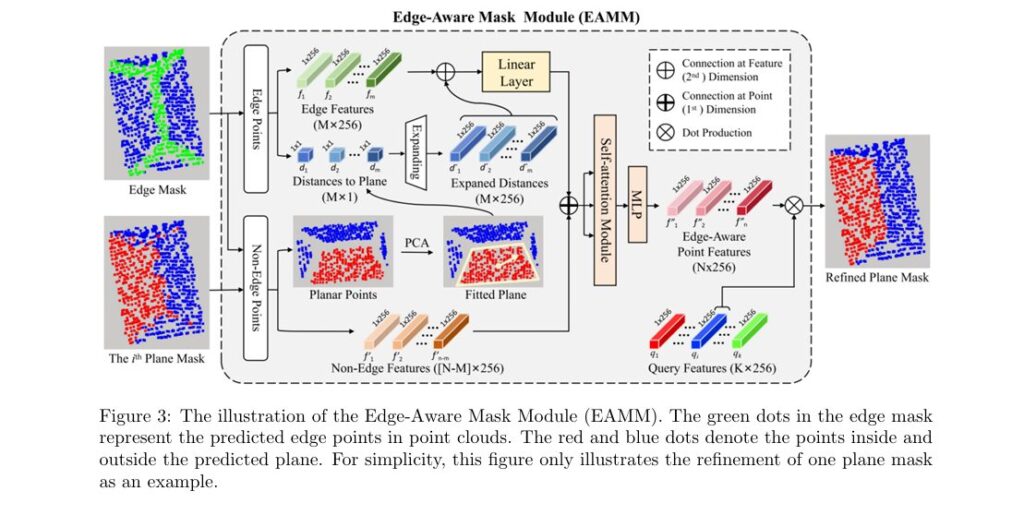
RoofSeg: An edge-aware transformer-based network for precise roof plane segmentation from LiDAR point clouds

RoofSeg Explained, End to End Roof Plane Segmentation From LiDAR

COMPUTER VISION & GEOSPATIAL AI · 14 MIN READ · Analysis by the aitrendblend editorial team RoofSeg airborne LiDAR roof plane segmentation edge-aware transformer PointNet++ 3D building reconstruction Turning a scatter of LiDAR points into a clean 3D model of a building roof sounds like a job for careful geometry, and for a long time

RoofSeg Explained, End to End Roof Plane Segmentation From LiDAR Read More »

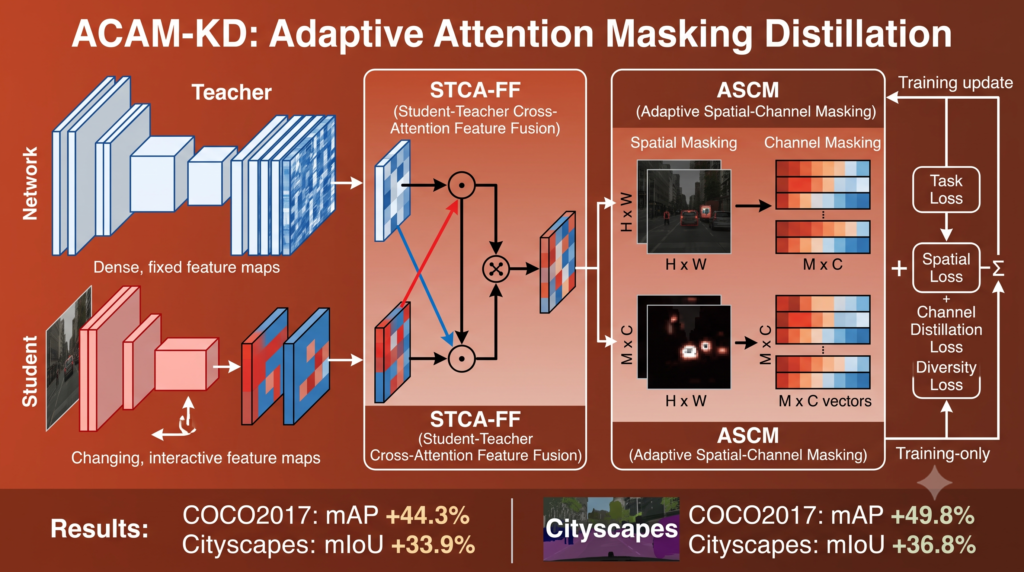
ACAM-KD Gives Student Networks A Say In Their Own Distillation.

ACAM-KD Gives Student Networks A Say In Their Own Distillation

Analysis by the aitrendblend editorial team · Knowledge Distillation and Model Compression · 14 min read Knowledge Distillation Object Detection Semantic Segmentation Cross Attention Model Compression A conceptual illustration of cooperative attention masking, not an original figure from the paper. Picture a graduate student reviewing security footage frame by frame, hunting for the moment a

ACAM-KD Gives Student Networks A Say In Their Own Distillation Read More »

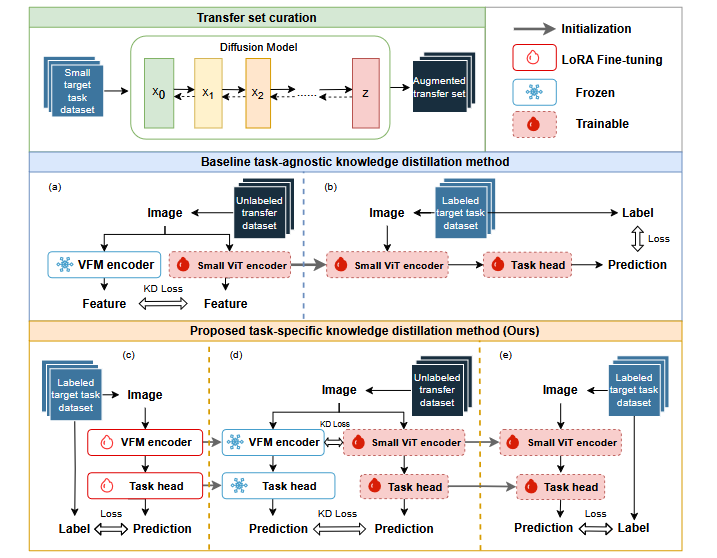
Task-Specific Knowledge Distillation in Medical Imaging: A Breakthrough for Efficient Segmentation.

Task-Specific Knowledge Distillation for Medical Image Segmentation

Knowledge Distillation Medical Image Segmentation • 15 min read Task-Specific KD Segment Anything LoRA ViT-Tiny Diffusion Data Data-Limited Learning Teaching a Tiny Model to Segment Like a Giant Overview. A large vision foundation model is first adapted to one medical task with LoRA, then it teaches a compact student through both its hidden features and

Task-Specific Knowledge Distillation for Medical Image Segmentation Read More »

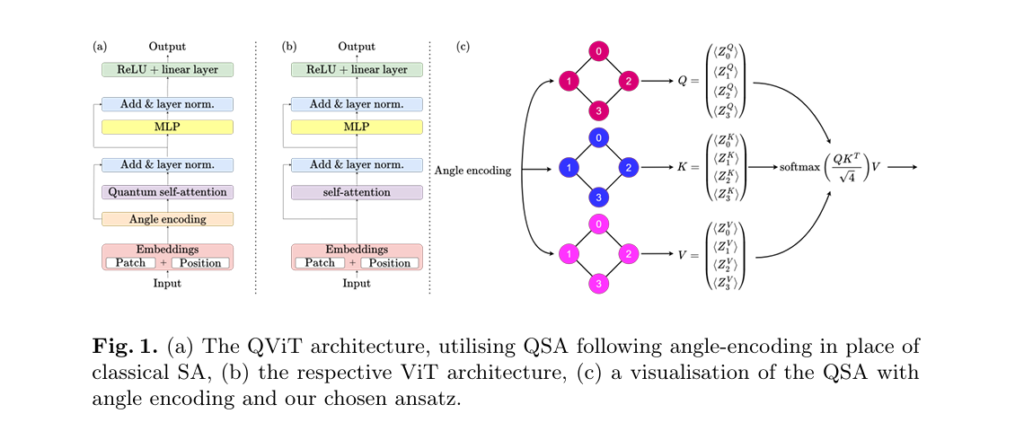
Diagram showing Quantum Vision Transformer (QViT) architecture with Quantum Self-Attention (QSA) replacing classical Self-Attention (SA) in a biomedical image classification model.

Quantum Self-Attention in Vision Transformers: A 99.99% More Efficient Path for Biomedical Image Classification

In the rapidly evolving field of biomedical image classification, deep learning models like Vision Transformers (ViTs) have set new performance benchmarks. However, their high computational cost and massive parameter counts—often in the millions—pose significant challenges for deployment in resource-constrained clinical environments. A groundbreaking new study titled “From O(n²) to O(n) Parameters: Quantum Self-Attention in Vision

Quantum Self-Attention in Vision Transformers: A 99.99% More Efficient Path for Biomedical Image Classification Read More »

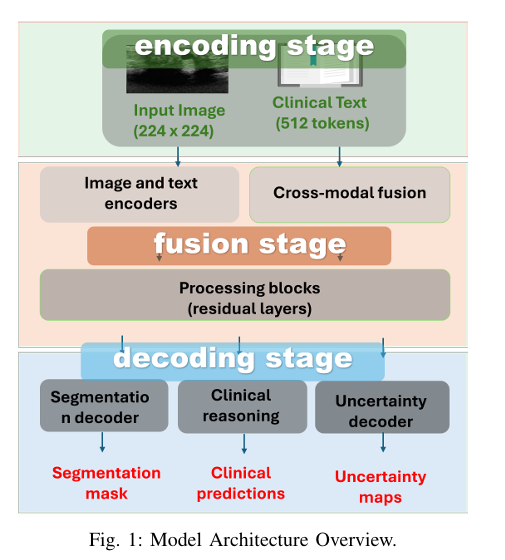
Med-CTX model architecture for explainable breast cancer ultrasound segmentation using clinical reports and BI-RADS integration

Med-CTX: Revolutionizing Breast Cancer Ultrasound Segmentation with Multimodal Transformers

Breast cancer remains one of the most prevalent cancers worldwide, with early and accurate diagnosis being crucial for effective treatment. Medical imaging, particularly ultrasound, plays a vital role in lesion detection and characterization. However, despite advances in artificial intelligence (AI), many deep learning models used for breast cancer ultrasound segmentation still function as “black boxes,”

Med-CTX: Revolutionizing Breast Cancer Ultrasound Segmentation with Multimodal Transformers Read More »

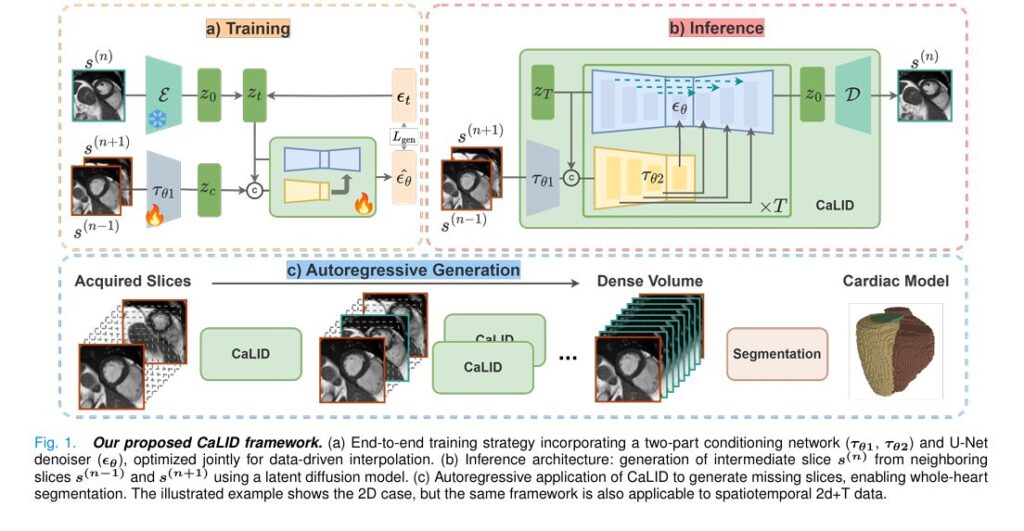
CaLID model for 3D Volume Reconstruction

Revolutionizing Cardiac MRI with Latent Interpolation Diffusion Models for Accurate 3D Volume Reconstruction

Introduction: The Challenge of Sparse Cardiac MRI Data Cardiac Magnetic Resonance (CMR) imaging has become an indispensable tool in modern cardiology, providing clinicians with detailed anatomical and functional information about the heart. However, a significant limitation persists in clinical practice: the acquisition of only sparse 2D short-axis slices with substantial inter-slice gaps (typically 8-10mm) rather than complete

Revolutionizing Cardiac MRI with Latent Interpolation Diffusion Models for Accurate 3D Volume Reconstruction Read More »

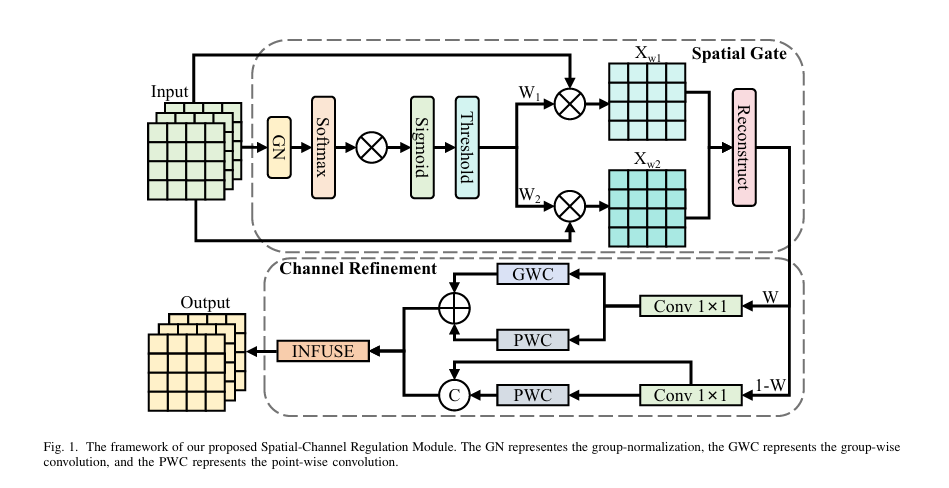
SCRNet: A breakthrough in medical ultrasound image segmentation

SCRNet: Spatial-Channel Regulation Network for Medical Ultrasound Image Segmentation

Medical ultrasound imaging is a cornerstone of modern diagnostics, offering real-time, non-invasive visualization of internal organs and pathologies such as breast and thyroid nodules. However, accurate medical ultrasound image segmentation remains a significant challenge due to low contrast, speckle noise, and blurred boundaries. Traditional deep learning models often struggle to balance local contextual details and

SCRNet: Spatial-Channel Regulation Network for Medical Ultrasound Image Segmentation Read More »

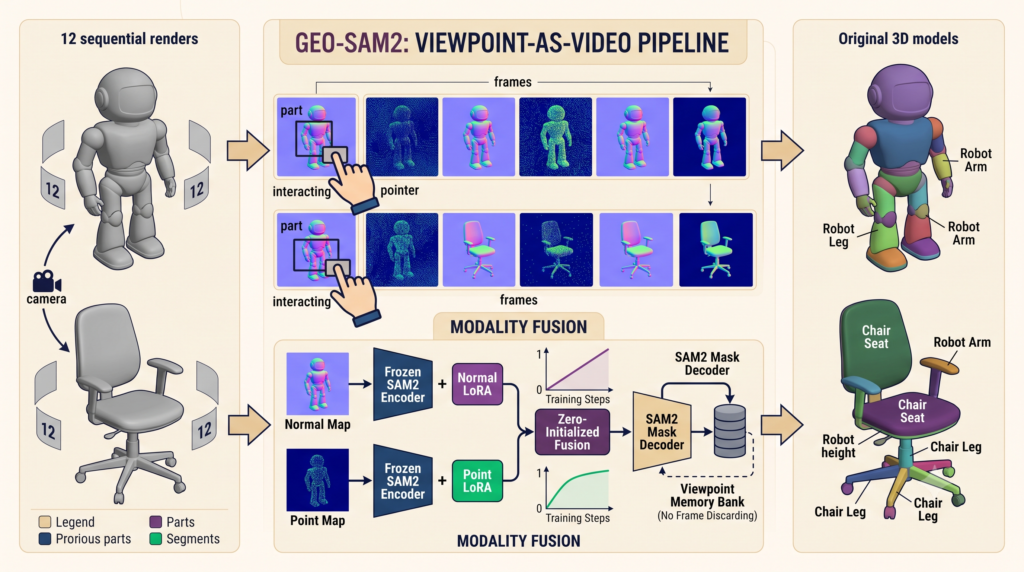
GeoSAM2 Turns SAM2 Into a 3D Part Segmentation Tool

GeoSAM2 Turns SAM2 Into a 3D Part Segmentation Tool

Analysis by the aitrendblend editorial team · Pillar: Vision transformers and attention · Source paper published August 2025 3D part segmentation SAM2 LoRA adaptation multi-view geometry foundation models GeoSAM2 treats twelve renders of a single 3D object as if they were frames of a short video clip. SAM2 was built to watch a video and

GeoSAM2 Turns SAM2 Into a 3D Part Segmentation Tool Read More »