Adnan Saeed

Adnan Saeed is a deep learning researcher working on medical image analysis, with a focus on multimodal architectures, graph neural networks, and evidential deep learning for clinical imaging tasks. His peer reviewed research has appeared in journals across machine learning and biomedical signal processing. At AI Trend Blend he turns recent papers into clear, practical explainers, with an emphasis on what a method actually does and where it holds up, written for readers who want depth without the hype.

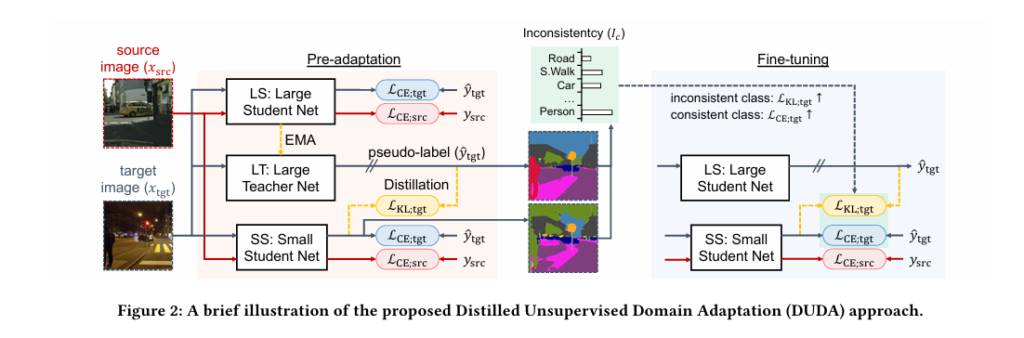
Visual diagram of DUDA’s three-network framework showing large teacher, auxiliary student, and lightweight student for unsupervised domain adaptation in semantic segmentation.

7 Shocking Secrets Behind DUDA: The Ultimate Breakthrough (and Why Most Lightweight Models Fail)

In the fast-evolving world of AI-powered visual understanding, lightweight semantic segmentation is the holy grail for real-time applications like autonomous driving, robotics, and augmented reality. But here’s the harsh truth: most lightweight models fail miserably when deployed in new environments due to domain shift—a phenomenon caused by differences in lighting, weather, camera sensors, and scene […]
7 Shocking Secrets Behind DUDA: The Ultimate Breakthrough (and Why Most Lightweight Models Fail) Read More »

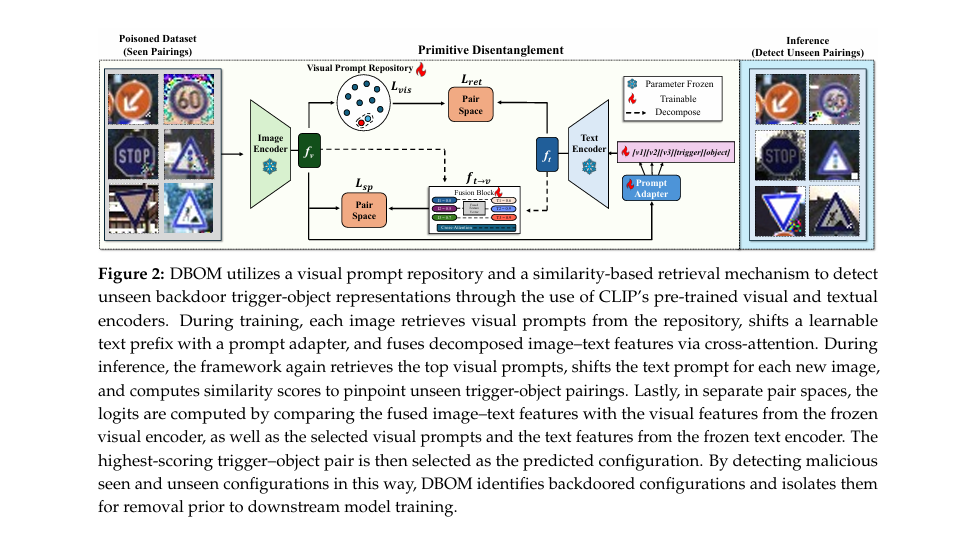
DBOM Defense framework in action: AI-powered system detecting hidden backdoor triggers in traffic signs using disentangled modeling and zero-shot learning

7 Shocking AI Vulnerabilities Exposed—How DBOM Defense Turns the Tables with 98% Accuracy

In the rapidly evolving world of artificial intelligence, security threats are growing faster than defenses—and one of the most insidious dangers is the backdoor attack. These hidden exploits allow hackers to manipulate AI models from within, often without detection until it’s too late. But now, a groundbreaking new framework called DBOM Defense (Disentangled Backdoor-Object Modeling)

7 Shocking AI Vulnerabilities Exposed—How DBOM Defense Turns the Tables with 98% Accuracy Read More »

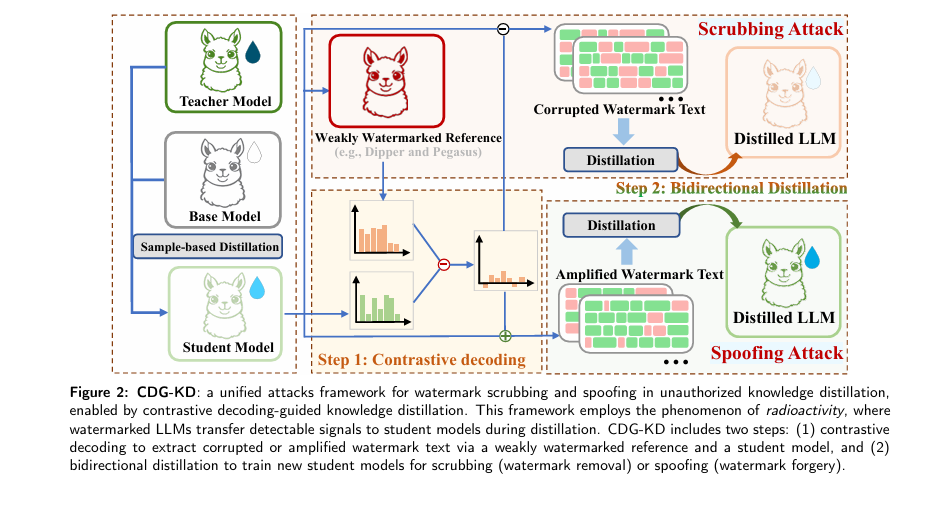
Diagram showing a hacker exploiting watermark radioactivity in a large language model through knowledge distillation, bypassing both ownership verification and safety filter

Knowledge Distillation Can Forge and Erase LLM Watermarks

Knowledge Distillation AI Security 9 min read Analysis by the aitrendblend editorial team Picture a company that ships a heavily guarded chatbot with an invisible watermark stitched into every reply, confident that any leaked or resold output can be traced back to its own servers. Now picture a small team, working with a modest GPU

Knowledge Distillation Can Forge and Erase LLM Watermarks Read More »

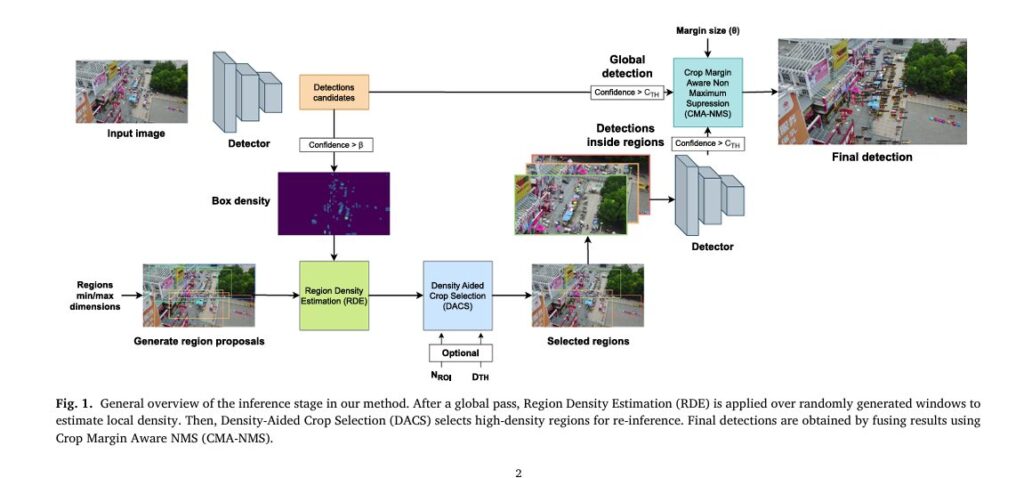
DAHI framework for small object detection

7 Revolutionary Breakthroughs in Small Object Detection: The DAHI Framework

Detecting tiny vehicles in drone footage. Spotting distant pedestrians in smart city surveillance. Identifying miniature components on a factory floor. These are the critical challenges facing modern computer vision—where small object detection (SOD) isn’t just a technical hurdle, but a make-or-break factor for safety, automation, and intelligence. Despite decades of progress, most deep learning models

7 Revolutionary Breakthroughs in Small Object Detection: The DAHI Framework Read More »

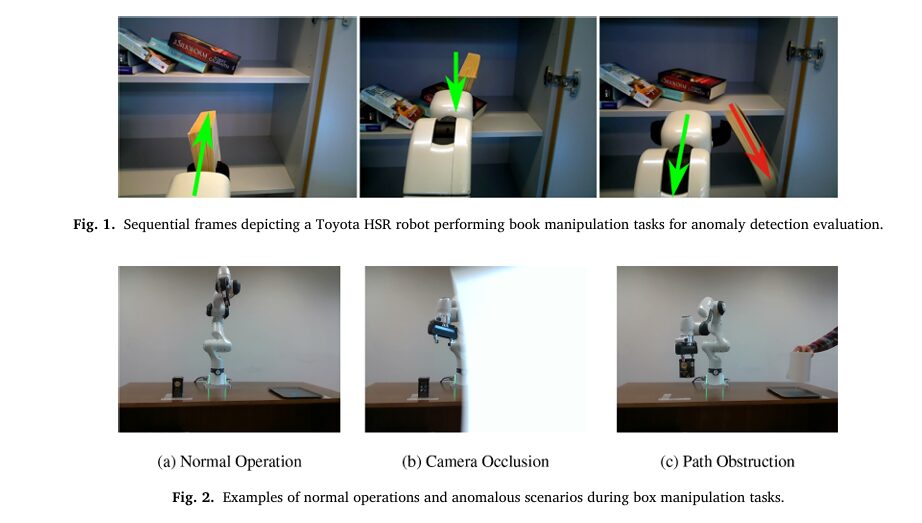
Revolutionary One-Class Classifier Fusion

15× Faster & Smarter: The Revolutionary One-Class Classifier Fusion That Outperforms (And What Slows Others Down)

In the high-stakes world of AI-driven security, robotics, and industrial automation, detecting anomalies in real time is no longer optional—it’s essential. Yet, traditional anomaly detection systems often fall short: they’re either too slow to react or too rigid to adapt to complex, evolving data patterns. Enter a groundbreaking new approach that’s changing the game: Locally

15× Faster & Smarter: The Revolutionary One-Class Classifier Fusion That Outperforms (And What Slows Others Down) Read More »

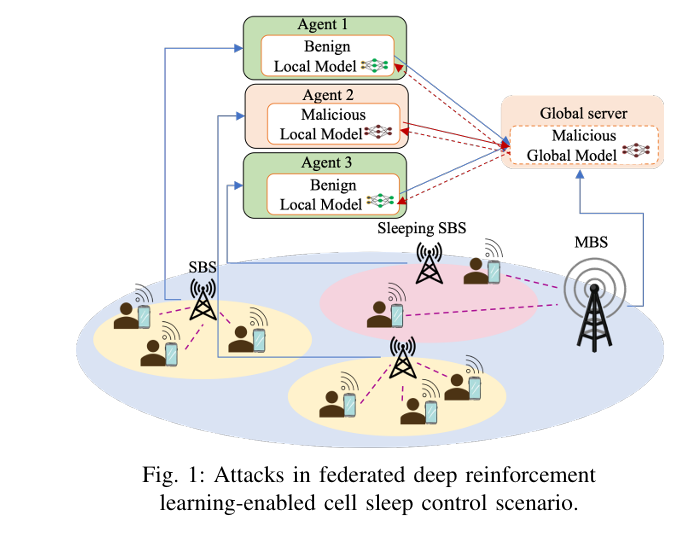
Federated Learning Attacks

7 Shocking Federated Learning Attacks That Could Destroy Your Network

In the race toward smarter, more efficient 5G and 6G wireless networks, federated learning (FL) has emerged as a revolutionary technology—promising privacy, scalability, and real-time intelligence without compromising user data. But as networks grow smarter, so do the threats lurking beneath the surface. What if we told you that just 7% of compromised base stations

7 Shocking Federated Learning Attacks That Could Destroy Your Network Read More »

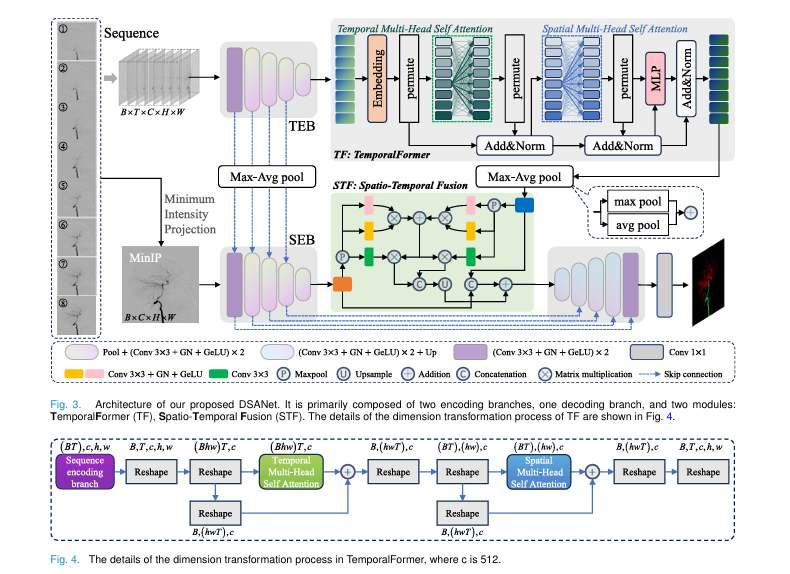
Proposed DSCA NET for image Segmentation

DSANET Uses Full DSA Sequences to Segment Cerebral Arteries

Analysis by the aitrendblend editorial team · AI for Medical Imaging and Healthcare · 16 min read DSA sequence segmentation cerebral artery spatio-temporal network TemporalFormer medical imaging dataset cerebrovascular disease A digital subtraction angiography scan of the brain does not arrive as one picture. It arrives as a short film, a dozen or more frames

DSANET Uses Full DSA Sequences to Segment Cerebral Arteries Read More »

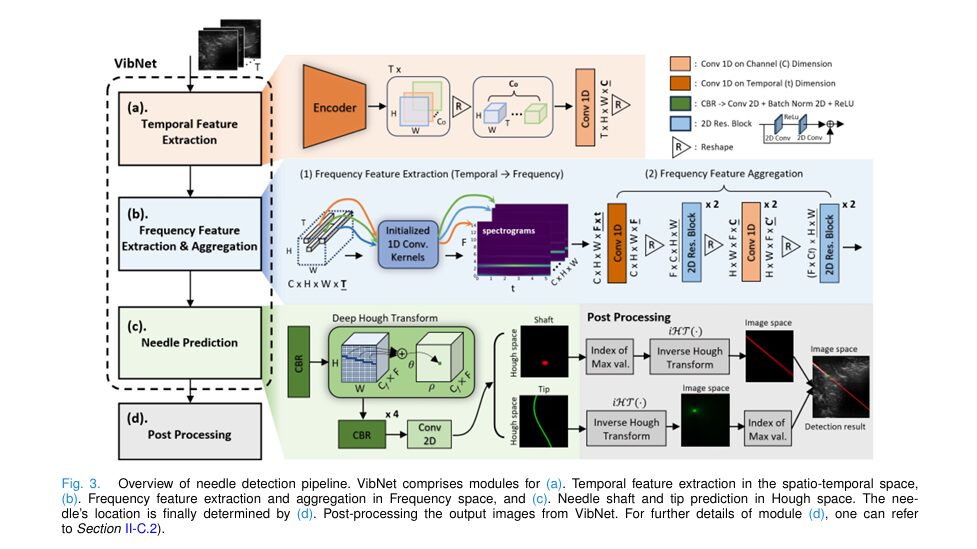
VibNet system detecting a nearly invisible needle in ultrasound using vibration-based deep learning. A red line highlights the predicted needle shaft and tip overlay on a grayscale ultrasound image

7 Revolutionary VibNet Breakthrough Detects Invisible Needles in Ultrasound – But Is It Too Good to Be True?

In the high-stakes world of ultrasound-guided medical procedures, one challenge has haunted clinicians for decades: the needle that disappears. Whether due to poor visibility, tissue artifacts, or suboptimal probe angles, losing sight of a needle tip can lead to serious complications. Now, a groundbreaking new AI system called VibNet is turning the tables—using subtle vibrations

7 Revolutionary VibNet Breakthrough Detects Invisible Needles in Ultrasound – But Is It Too Good to Be True? Read More »

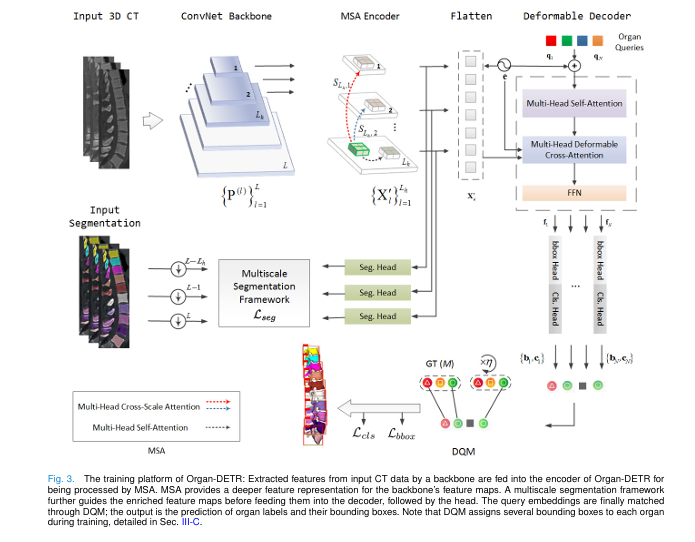
rgan-DETR model detecting liver and postcava in 3D Organ Detection CT scan with bounding boxes, outperforming traditional methods.

Revolutionary Breakthroughs in 3D Organ Detection: How Organ-DETR Outperforms Old Methods (+10.6 mAP Gain!)

In the rapidly evolving world of medical imaging, accurate and fast 3D organ detection is no longer a luxury—it’s a necessity. From early cancer diagnosis to surgical planning, the ability to precisely locate organs in Computed Tomography (CT) scans can mean the difference between life and death. Yet, despite decades of progress, existing methods still

Revolutionary Breakthroughs in 3D Organ Detection: How Organ-DETR Outperforms Old Methods (+10.6 mAP Gain!) Read More »

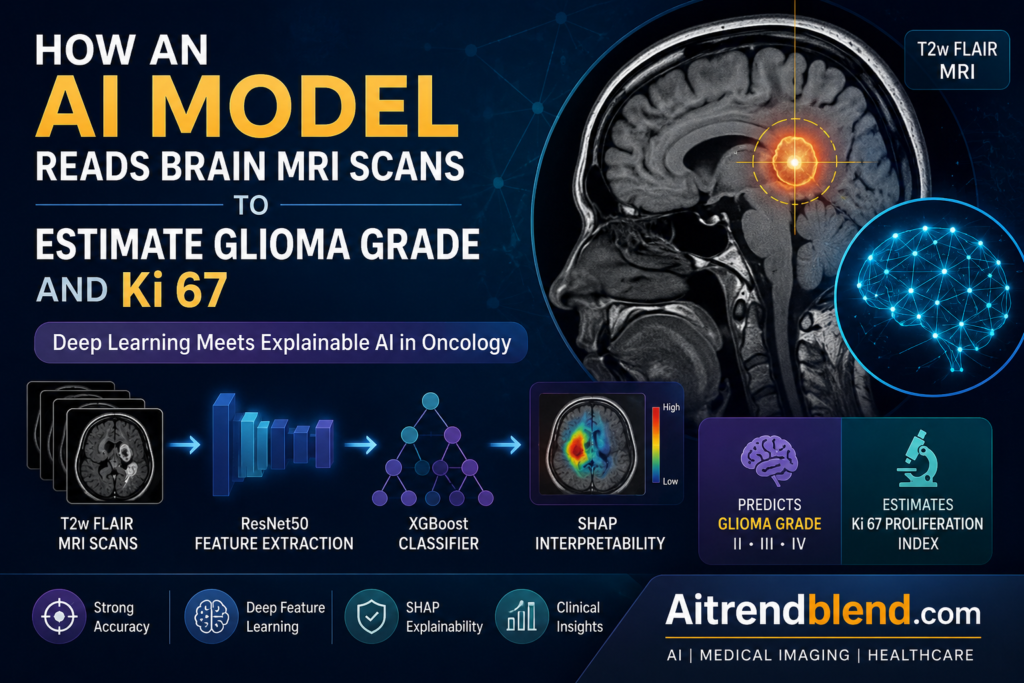
Brain MRI scan with glioma tumor region highlighted next to a SHAP feature importance chart used for Ki-67 prediction

How An AI Model Reads Brain MRI Scans To Estimate Glioma Grade And KI-67

Analysis by the aitrendblend editorial team · Medical imaging and healthcare · Reading time about 15 minutes Glioma grading Ki-67 biomarker MRI deep learning ResNet50 XGBoost SHAP Glioma grading and Ki-67 prediction from brain MRIA frozen ResNet50 turns each MRI slice into a feature vector, which an XGBoost model then reads to guess grade and

How An AI Model Reads Brain MRI Scans To Estimate Glioma Grade And KI-67 Read More »