Adnan Saeed

Adnan Saeed is a deep learning researcher working on medical image analysis, with a focus on multimodal architectures, graph neural networks, and evidential deep learning for clinical imaging tasks. His peer reviewed research has appeared in journals across machine learning and biomedical signal processing. At AI Trend Blend he turns recent papers into clear, practical explainers, with an emphasis on what a method actually does and where it holds up, written for readers who want depth without the hype.

A biopsy image of a complex wound analsis by AI, showing segmented tissue types like epidermis, dermis, and necrosis.

Revolutionizing Wound Care: How AI is Transforming Complex Wound Analysis

Chronic wounds affect millions of people worldwide, causing pain, disability, and staggering healthcare costs. According to the Wound Healing Society, over 6.5 million patients in the United States alone suffer from chronic wounds, with treatment expenses surpassing $25 billion annually. Despite advancements in medical technology, analyzing these complex wounds remains a significant challenge. Traditional methods […]

Revolutionizing Wound Care: How AI is Transforming Complex Wound Analysis Read More »

Diagram illustrating the overall study design and proposed Vision Transformer (ViT) framework for Keratitis Diagnosis using broad-beam, slit-beam, and blue-light anterior segment images.

Revolutionizing Keratitis Diagnosis: How Vision Transformers Are Transforming Eye Care

Infectious keratitis, a leading cause of corneal blindness, poses significant challenges for patients and healthcare providers. Misdiagnosis or delayed treatment can lead to irreversible vision loss, making early and accurate detection critical. Recent advancements in artificial intelligence (AI), particularly deep learning, have opened new doors for diagnosing bacterial and fungal keratitis with unprecedented precision. Among

Revolutionizing Keratitis Diagnosis: How Vision Transformers Are Transforming Eye Care Read More »

Sam2Rad architecture The Sam2Rad architecture incorporates a (hierarchical) two-way attention module to predict prompts for queried objects. Each object/class is represented by learnable queries . The Prompt Predictor Network (PPN) predicts bounding box coordinates of the target object , an intermediate mask prompt , and high-dimensional prompt embeddings . The prompt embeddings can represent various prompts suitable for the task, such as several point prompts or high-level semantic information. The predicted prompts (i.e., , , & ) are then fed to SAM’s mask decoder to generate the final segmentation mask. PPN also supports multi-class medical image segmentation by using class-specific queries .

Sam2Rad Explained: Teaching SAM2 to Prompt Itself on Ultrasound

AI FOR MEDICAL IMAGING AND HEALTHCARE · 15 MIN READ · Analysis by the aitrendblend editorial team· Sam2Rad Segment Anything Model SAM2 ultrasound prompt learning musculoskeletal imaging zero shot segmentation A bone outline traced automatically on an ultrasound frame. Image styling is illustrative of the pipeline described in the paper. Give the Segment Anything Model

Sam2Rad Explained: Teaching SAM2 to Prompt Itself on Ultrasound Read More »

3DL-Net’s three-stage architecture: preliminary segmentation, multi-scale context extraction, and dendritic refinement for precise medical image analysis.

Revolutionizing Medical Image Segmentation with 3DL-Net: A Breakthrough in Global–Local Feature Representation

Medical image segmentation is a cornerstone of modern healthcare, enabling precise delineation of anatomical structures and pathological regions. From aiding accurate clinical assessments to facilitating disease diagnosis and treatment planning, its applications span across various imaging modalities such as CT scans, MRIs, and ultrasounds. However, achieving precise and efficient segmentation remains a formidable challenge due

Revolutionizing Medical Image Segmentation with 3DL-Net: A Breakthrough in Global–Local Feature Representation Read More »

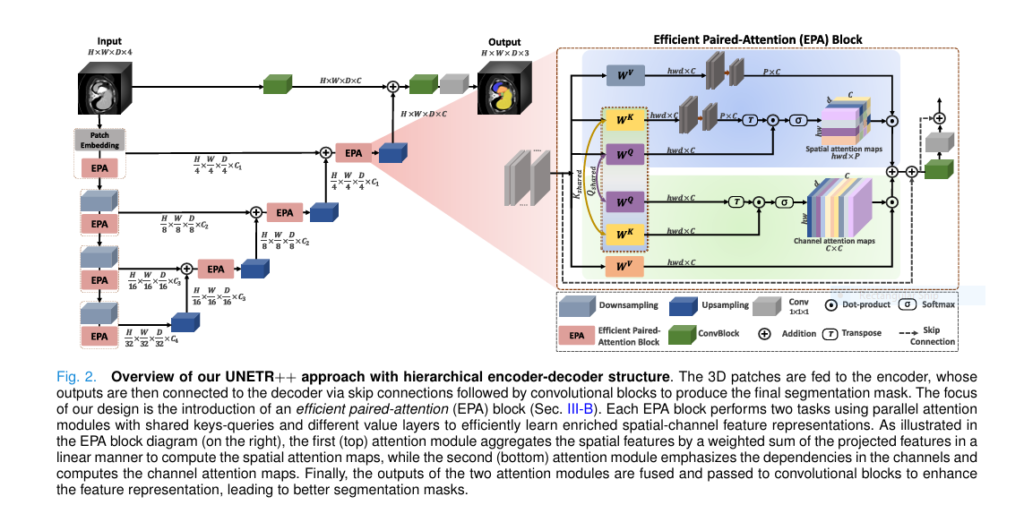
Advances in Attention Mechanisms for Medical Image Segmentation: A Comprehensive Guide

Medical image segmentation is a cornerstone of modern healthcare, enabling precise diagnosis and treatment planning through advanced imaging technologies. As deep learning continues to evolve, attention mechanisms have emerged as a game-changer in enhancing the accuracy and efficiency of medical image segmentation. This article delves into the latest advancements in attention mechanisms, drawing insights from

Advances in Attention Mechanisms for Medical Image Segmentation: A Comprehensive Guide Read More »

Medical Image Segmentation with Med-SA: Adapting SAM for Healthcare

Medical image segmentation is a cornerstone of modern healthcare diagnostics, enabling precise identification and analysis of organs, tissues, and abnormalities. However, traditional segmentation methods often struggle to generalize across diverse medical imaging modalities such as CT scans, MRI, ultrasound, and fundus images. Enter Med-SA , an innovative framework that adapts the powerful Segment Anything Model

Medical Image Segmentation with Med-SA: Adapting SAM for Healthcare Read More »

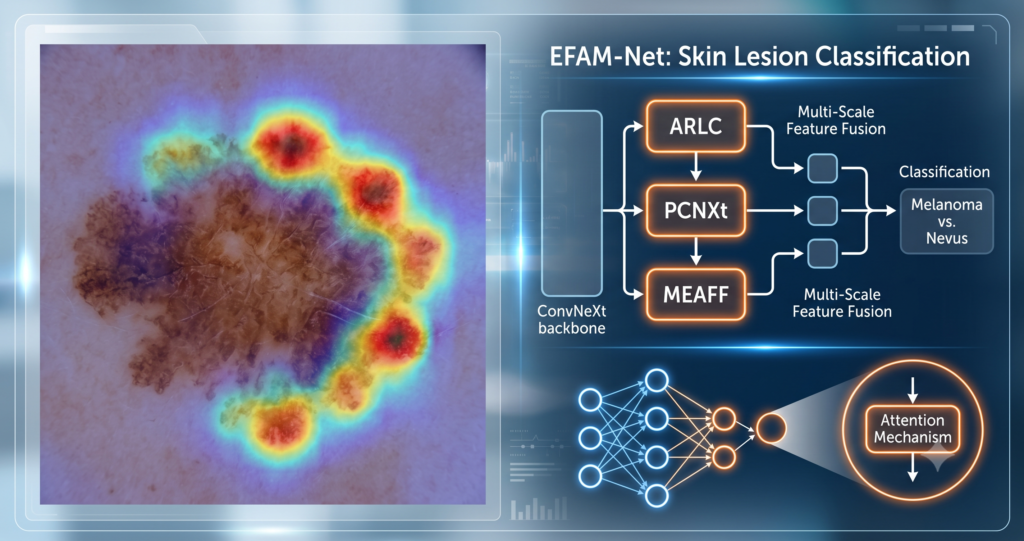
SILP: A Breakthrough in Skin Lesion Classification and Skin Cancer Detection

In today’s fast-paced medical landscape, early detection of skin cancer is more crucial than ever. With skin cancer cases on the rise due to increased ultraviolet exposure and environmental factors, accurate and efficient diagnostic tools are essential. Enter SILP – a novel system that leverages state-of-the-art machine learning techniques to enhance skin lesion classification. In

SILP: A Breakthrough in Skin Lesion Classification and Skin Cancer Detection Read More »

How to Protect Your Online Privacy

How to Protect Your Online Privacy: PTA Guidelines for Online Safety

In today’s connected world, online privacy is an important concern for individuals everywhere. As we increasingly rely on the internet for daily activities like banking, shopping, and social networking, it’s crucial to know how to protect your online privacy. The Pakistan Telecommunication Authority (PTA) offers valuable guidelines to help people stay safe in the digital

How to Protect Your Online Privacy: PTA Guidelines for Online Safety Read More »