Computer Vision

Computer vision is one of our deepest areas, covering how machines learn to see, segment, and reason about images and video. Articles here range from convolutional and transformer based architectures to dense prediction tasks like detection and segmentation, with regular coverage of medical imaging where reliable vision models carry real clinical weight. The emphasis stays on what makes a method work and where it breaks, backed by the original research.

DAIT: Distilling CLIP into Tiny Classifiers with an Adaptive Intermediate Teacher

DAIT: Distilling CLIP into Tiny Classifiers with an Adaptive Intermediate Teacher

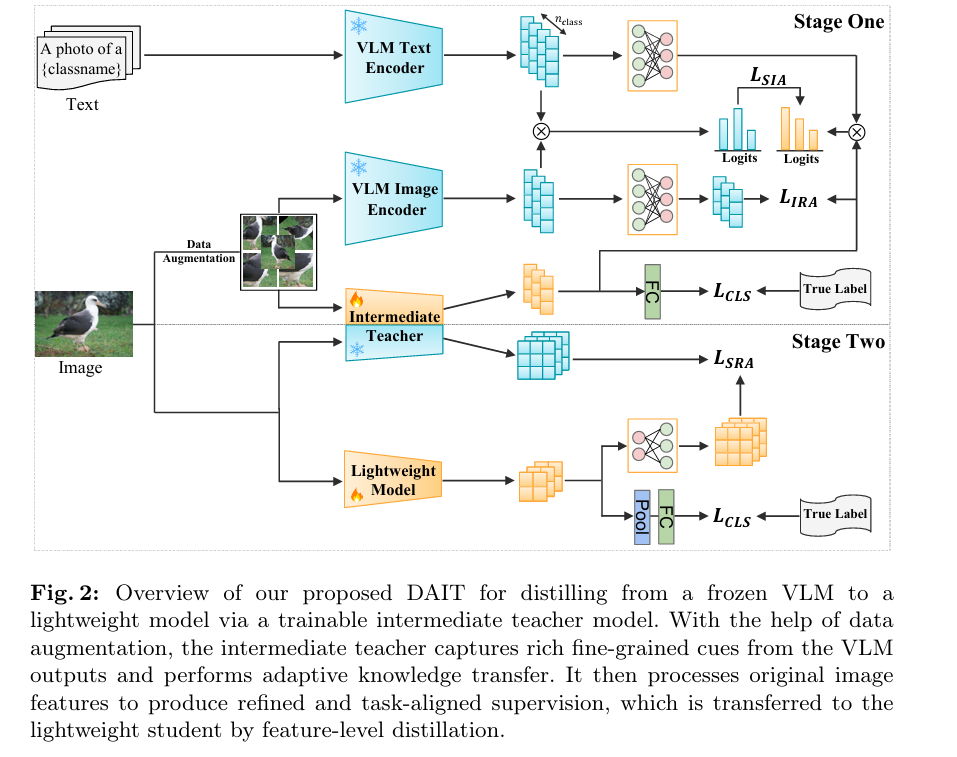
Researchers at Nanjing Normal University placed a trainable 10-million-parameter intermediary between a frozen 1.2-billion-parameter vision-language model and a tiny student classifier — solving the architectural mismatch, noise contamination, and unstable optimization that make direct VLM-to-lightweight distillation fail, and gaining +12.63%…

DAIT: Distilling CLIP into Tiny Classifiers with an Adaptive Intermediate Teacher Read More »
PCKD: Physically Motivated Knowledge Distillation for Blind Side-Scan Sonar Correction.

PCKD: Physically Motivated Knowledge Distillation for Blind Side-Scan Sonar Correction

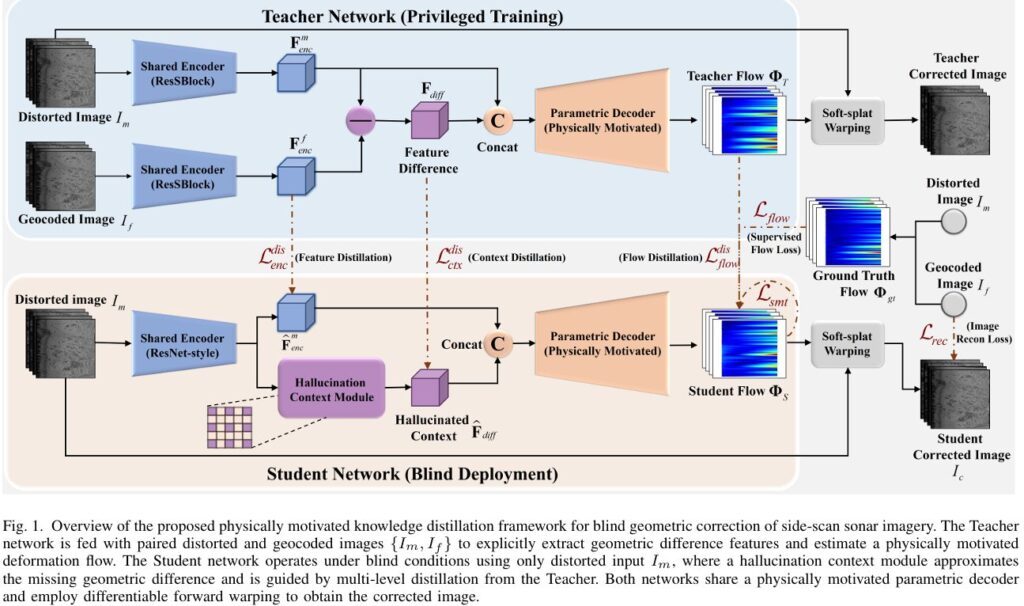
Researchers at Northwestern Polytechnical University and the University of Girona built a physically motivated knowledge distillation framework that corrects motion-induced geometric distortions in side-scan sonar images from a single distorted input — no GPS, no inertial sensors, no navigation data…

PCKD: Physically Motivated Knowledge Distillation for Blind Side-Scan Sonar Correction Read More »

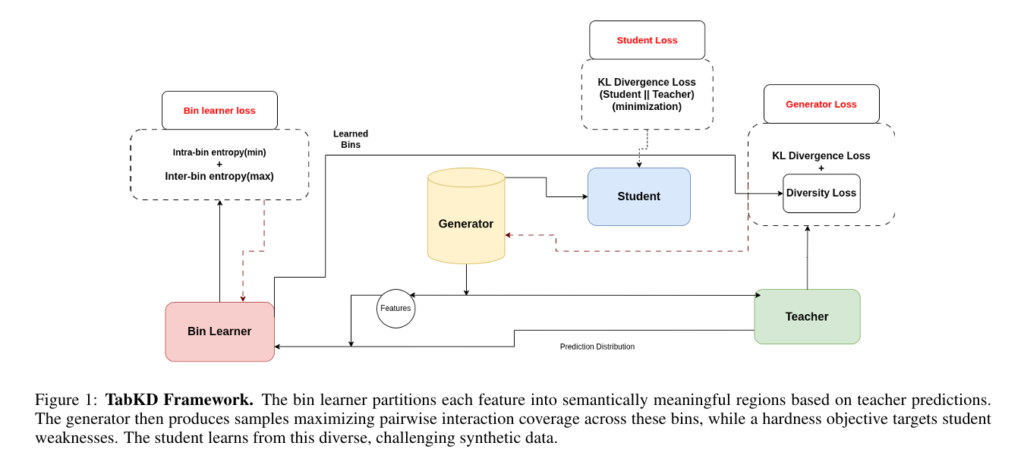
TabKD: Data-Free Knowledge Distillation for Tabular Models via Interaction Diversity.

TabKD: Data-Free Knowledge Distillation for Tabular Models via Interaction Diversity

Researchers at UT Arlington built a data-free knowledge distillation framework for tabular models that borrows a principle from software testing — systematically covering all pairs of feature interactions — and achieves the best student-teacher agreement in 14 of 16 benchmark…

TabKD: Data-Free Knowledge Distillation for Tabular Models via Interaction Diversity Read More »

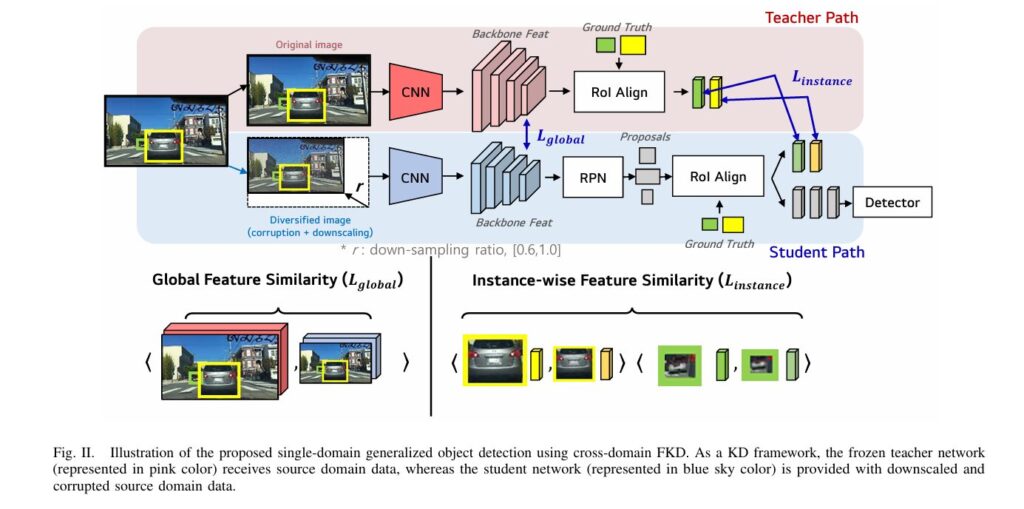
CD-FKD: Cross-Domain Feature Knowledge Distillation for Robust Object Detection

Researchers from LG Electronics, Naver, and GIST built a cross-domain feature knowledge distillation framework that makes object detectors trained exclusively on clear daytime footage work reliably across night, rain, dusk, and fog — outperforming DivAlign (CVPR 2024) by 2.8% mAP…

CD-FKD: Cross-Domain Feature Knowledge Distillation for Robust Object Detection Read More »

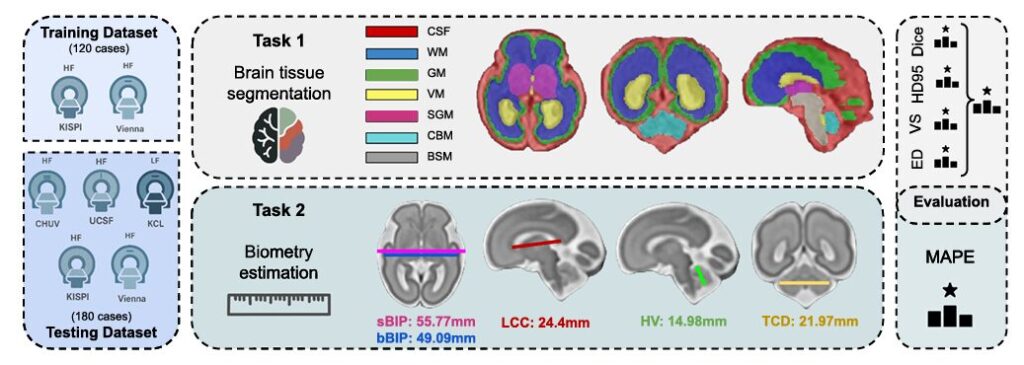
FeTA 2024: What 16 Teams Scanning Unborn Brains Taught Us About the Limits of AI Segmentation

FeTA 2024: What 16 Teams Scanning Unborn Brains Taught Us About the Limits of AI Segmentation

A multi-center challenge involving 300 fetal brain MRI scans, 16 competing AI systems, and one quietly unsettling discovery — that a simple gestational-age linear model beat most sophisticated neural networks at biometry prediction.

FeTA 2024: What 16 Teams Scanning Unborn Brains Taught Us About the Limits of AI Segmentation Read More »

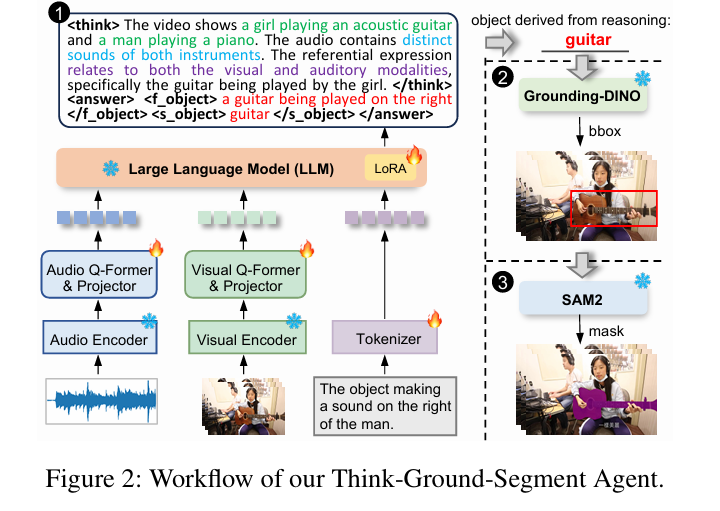
Think Before You Segment: How TGS-Agent Teaches AI to Reason About Sound Before Picking Up a Brush.

Think Before You Segment: How TGS-Agent Teaches AI to Reason About Sound Before Picking Up a Brush

A research team from MBZUAI and NUS built an agentic segmentation system that actually stops to figure out what it is looking for before drawing a single mask — and the results expose a deep flaw in how every prior…

Think Before You Segment: How TGS-Agent Teaches AI to Reason About Sound Before Picking Up a Brush Read More »

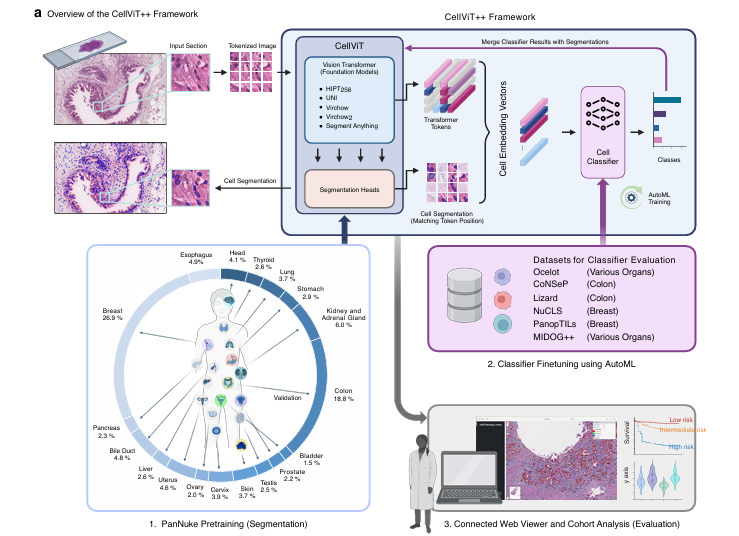
CellViT++: The AI That Learned to Read Cells Without a Pathologist’s Handbook.

CellViT++: The AI That Learned to Read Cells Without a Pathologist’s Handbook

Researchers at University Hospital Essen built a framework that segments and classifies cells in digital pathology slides with almost no training data — and, in one of its more striking tricks, generates its own labeled training datasets from fluorescent stainings,…

CellViT++: The AI That Learned to Read Cells Without a Pathologist’s Handbook Read More »

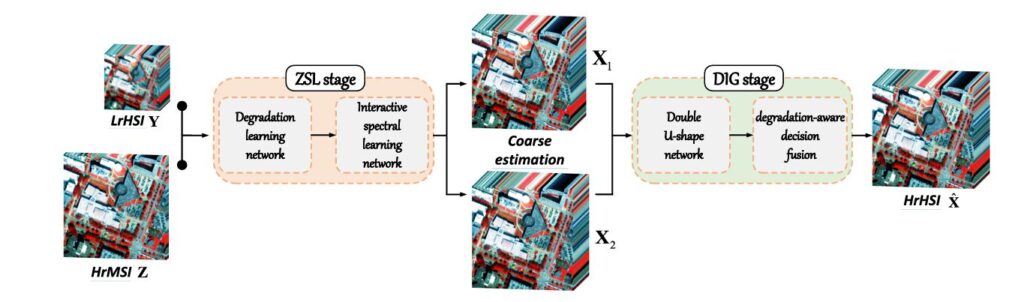
EDIP-Net: Enhanced Deep Image Prior for Unsupervised Hyperspectral Super-Resolution.

EDIP-Net: Enhanced Deep Image Prior for Unsupervised Hyperspectral Super-Resolution

Researchers at the Chinese Academy of Sciences identified a deceptively simple flaw in every DIP-based hyperspectral fusion method published before them — the random noise input — and replaced it with two scene-aware coarse estimations derived entirely from the observations…

EDIP-Net: Enhanced Deep Image Prior for Unsupervised Hyperspectral Super-Resolution Read More »