Computer Vision

Computer vision is one of our deepest areas, covering how machines learn to see, segment, and reason about images and video. Articles here range from convolutional and transformer based architectures to dense prediction tasks like detection and segmentation, with regular coverage of medical imaging where reliable vision models carry real clinical weight. The emphasis stays on what makes a method work and where it breaks, backed by the original research.

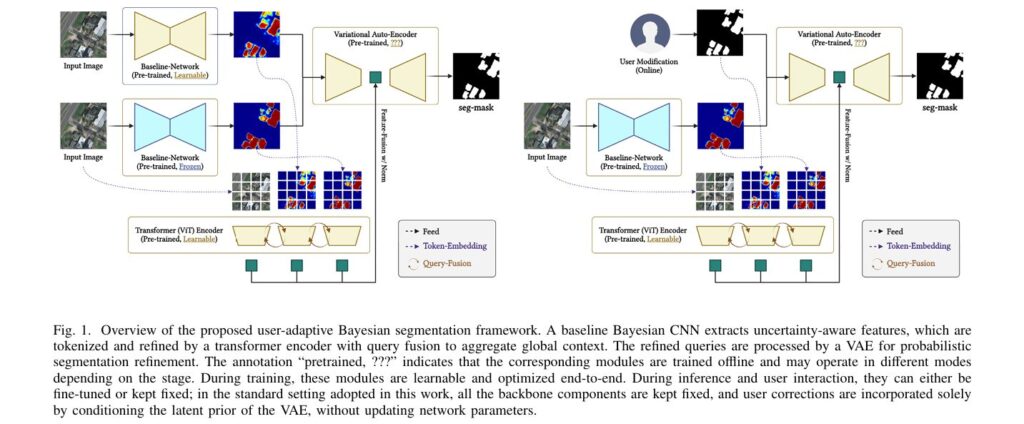
Bayesian Multiclass Segmentation Model.

A bayesian Segmentation Model That Flags Its Own Uncertain Pixels

Remote Sensing AI IEEE Transactions on Geoscience and Remote Sensing, Volume 64, 2026 22 minute read Bayesian CNN Remote Sensing Uncertainty Estimation VAE User Priors Transformer Query Fusion Interactive Segmentation Test Time Adaptation Land Cover Mapping DeepGlobe and LoveDA Picture an analyst scrolling through a fresh batch of satellite tiles after a flood. The land […]

A bayesian Segmentation Model That Flags Its Own Uncertain Pixels Read More »

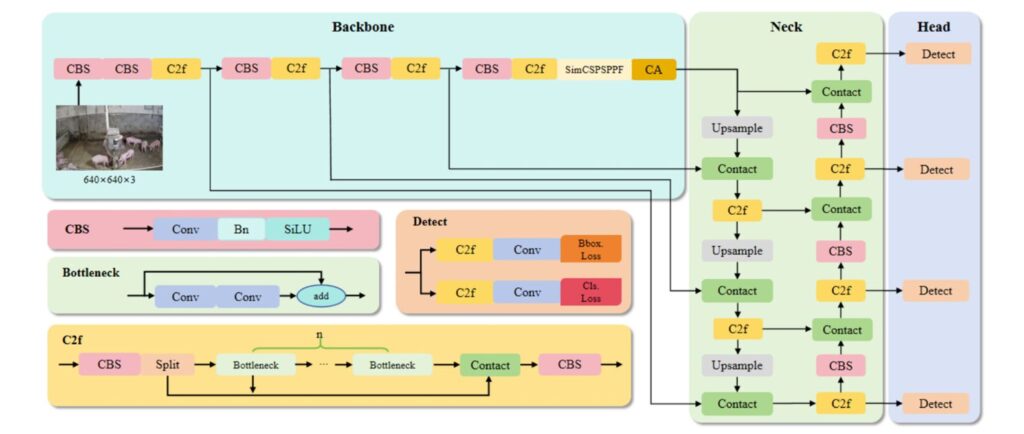
AI Reads Pig Body Temperature From Two Meters Away USING YOLOv8-PT

Watching for Fever: AI Reads Pig Body Temperature From Two Meters Away USING YOLOv8-PT

Watching for Fever: AI Reads Pig Body Temperature From Two Meters Away | AI in Agriculture PrecisionLivestock AI Animal Health AI Computer Vision About Precision Livestock Farming · Artificial Intelligence in Agriculture 16 (2026) 1–11 · 16 min read Watching for Fever: Inside the AI System That Reads Pig Body Temperature From Two Meters Away

Watching for Fever: AI Reads Pig Body Temperature From Two Meters Away USING YOLOv8-PT Read More »

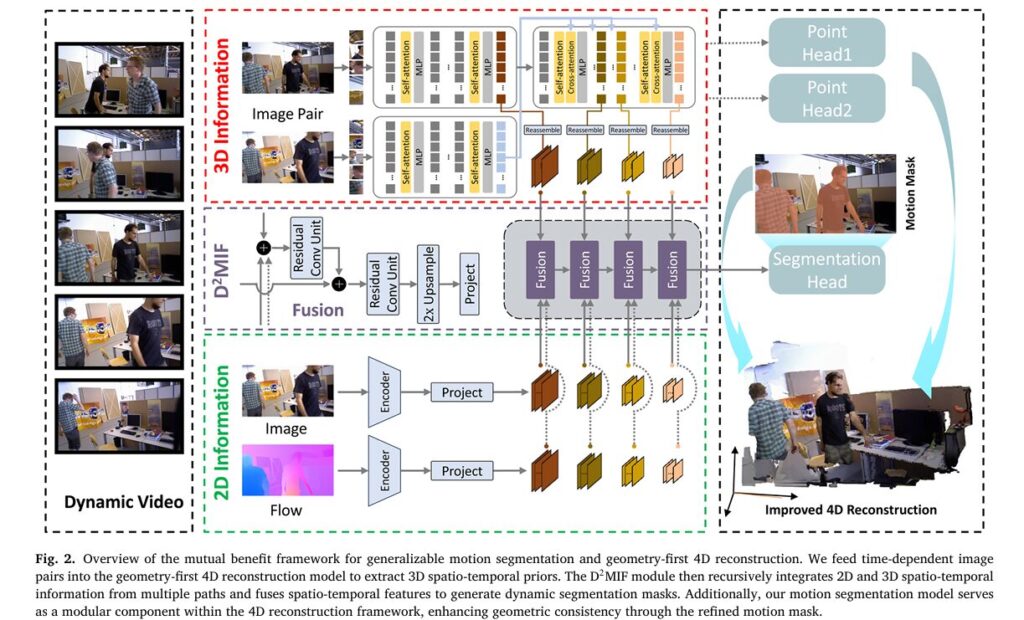
MuBe4D: A mutual benefit framework for generalizable motion segmentation and geometry-first 4D reconstruction

MuBe4D: The Mutual Benefit Framework That Finally United Motion Segmentation with 4D Reconstruction

MuBe4D: The Mutual Benefit Framework That Finally United Motion Segmentation with 4D Reconstruction | AI Systems Research AISecurity Research Machine Learning About Computer Vision · Information Fusion 133 (2026) 104252 · 16 min read MuBe4D: The Mutual Benefit Breakthrough That Finally Solved Motion Segmentation’s Chicken-and-Egg Problem How researchers at Wuhan University discovered that motion segmentation

MuBe4D: The Mutual Benefit Framework That Finally United Motion Segmentation with 4D Reconstruction Read More »

MSFT-Net: Multimodal Sparse Fusion Transformer for Breast Tumor Classification Using US, SMI & Elastography

MSFT-Net: Multimodal Sparse Fusion Transformer for Breast Tumor Classification Using US, SMI & Elastography Medical Image Analysis · 2026 Vol. 110 · doi:10.1016/j.media.2026.103966 When Three Ultrasound Windows See What One Cannot:MSFT-Net and the Sparse Fusion of Breast Tumor Intelligence Multimodal Medical AI ~2,400 words · 11 min read Xu, Zhuang et al. — Shantou University

MSFT-Net: Multimodal Sparse Fusion Transformer for Breast Tumor Classification Using US, SMI & Elastography Read More »

Overview of proposed Slot-BERT model.

Slot-BERT: Revolutionary AI Breakthrough for Self-Supervised Surgical Video Analysis

Introduction: The Challenge of Understanding Complex Surgical Videos Modern surgical procedures generate vast amounts of video data that hold immense potential for training, quality assessment, and AI-assisted decision-making. Yet, one persistent challenge has plagued computer vision researchers: how can machines automatically identify and track surgical instruments and anatomical structures without human-labeled data? Traditional supervised learning

Slot-BERT: Revolutionary AI Breakthrough for Self-Supervised Surgical Video Analysis Read More »

LLF-LUT++: Revolutionary Real-Time 4K Photo Enhancement Using Laplacian Pyramid Networks

LLF-LUT++: Revolutionary Real-Time 4K Photo Enhancement Using Laplacian Pyramid Networks

Introduction: The High-Resolution Enhancement Challenge Modern smartphone cameras capture stunning 48-megapixel images, yet transforming these raw captures into visually compelling photographs remains computationally demanding. Professional photographers spend hours manually adjusting tones, colors, and details using software like Photoshop or DaVinci Resolve—a luxury that real-time applications cannot afford. The artificial intelligence revolution has introduced learning-based photo

LLF-LUT++: Revolutionary Real-Time 4K Photo Enhancement Using Laplacian Pyramid Networks Read More »

Skin Cancer Detection Model

Revolutionizing Skin Cancer Detection: How Multimodal AI and Federated Learning Are Transforming Dermatological Diagnostics

Introduction: The Critical Need for Intelligent, Privacy-Preserving Skin Cancer Diagnosis Skin cancer remains one of the most pervasive and life-threatening health conditions globally, with over 5 million new cases reported annually in the United States alone. Among the various types, malignant melanoma stands out as particularly alarming—accounting for approximately 4% of global cancer-related deaths and

Revolutionizing Skin Cancer Detection: How Multimodal AI and Federated Learning Are Transforming Dermatological Diagnostics Read More »

TransXV2S-Net: Revolutionary AI Architecture Achieves 95.26% Accuracy in Skin Cancer Detection

TransXV2S-Net: Revolutionary AI Architecture Achieves 95.26% Accuracy in Skin Cancer Detection

Introduction: The Critical Need for Intelligent Skin Cancer Diagnostics Skin cancer represents one of the most pervasive and rapidly growing cancer types globally, with incidence rates continuing to climb across all demographics. The primary culprits—DNA damage from ultraviolet (UV) radiation, excessive tanning bed use, and uncontrolled cellular growth—have created a public health imperative for early

TransXV2S-Net: Revolutionary AI Architecture Achieves 95.26% Accuracy in Skin Cancer Detection Read More »

M2CR: Revolutionizing Primary Liver Cancer Diagnosis with AI-Powered Multimodal Analysis

M2CR: Revolutionizing Primary Liver Cancer Diagnosis with AI-Powered Multimodal Analysis

Primary liver cancer stands as the third leading cause of cancer-related deaths worldwide, claiming hundreds of thousands of lives annually. Despite advances in medical imaging, diagnosing the three distinct subtypes—hepatocellular carcinoma (HCC), intrahepatic cholangiocarcinoma (ICC), and the rare combined hepatocellular-cholangiocarcinoma (cHCC-CCA)—remains a complex challenge that demands both radiological expertise and comprehensive clinical assessment. A revolutionary

M2CR: Revolutionizing Primary Liver Cancer Diagnosis with AI-Powered Multimodal Analysis Read More »

KGMgT: Revolutionary AI-Powered Cardiac MRI Reconstruction Achieves 10× Faster Scanning with Diagnostic-Quality Imaging

KGMgT: Revolutionary AI-Powered Cardiac MRI Reconstruction Achieves 10× Faster Scanning with Diagnostic-Quality Imaging

Medical imaging stands at the threshold of a transformative era where artificial intelligence doesn’t merely assist radiologists—it fundamentally reimagines what’s possible in diagnostic speed and precision. Cardiac magnetic resonance imaging (CMR), long considered the gold standard for evaluating heart function, has been constrained by a persistent challenge: the trade-off between image quality and scan duration.

KGMgT: Revolutionary AI-Powered Cardiac MRI Reconstruction Achieves 10× Faster Scanning with Diagnostic-Quality Imaging Read More »