Computer Vision

Computer vision is one of our deepest areas, covering how machines learn to see, segment, and reason about images and video. Articles here range from convolutional and transformer based architectures to dense prediction tasks like detection and segmentation, with regular coverage of medical imaging where reliable vision models carry real clinical weight. The emphasis stays on what makes a method work and where it breaks, backed by the original research.

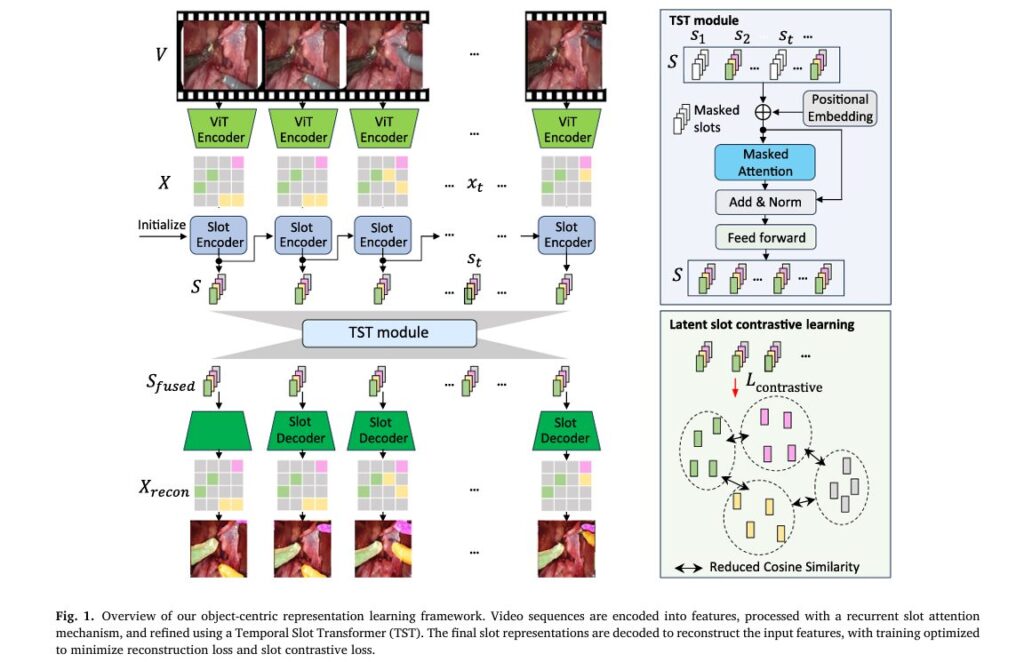
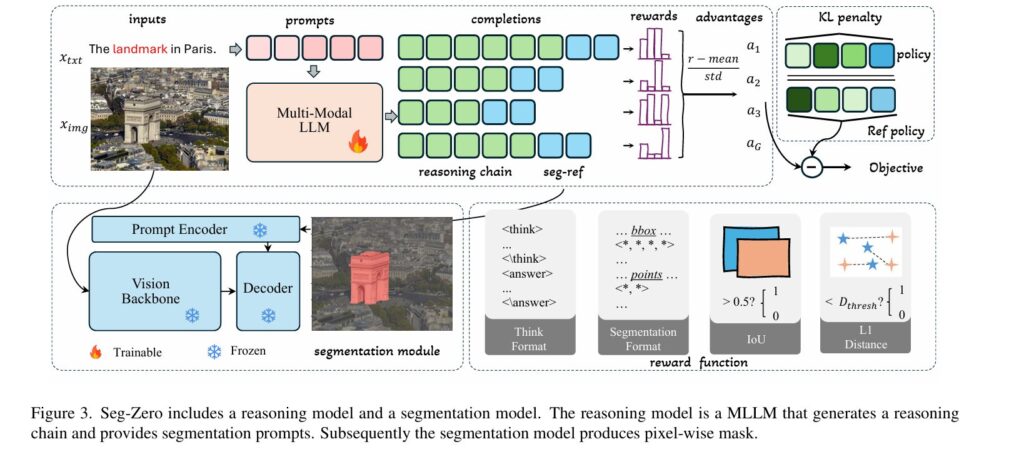
proposed Seg-Zero model

Seg-Zero Teaches Segmentation Models To Reason From Scratch

Analysis by the aitrendblend editorial team · Computer vision · Source paper published March 2025, revised May 2026 Reasoning Segmentation Reinforcement Learning GRPO Qwen2.5-VL SAM2 Ask a segmentation model to find “the player” in a photo of a baseball game and it has no idea what you mean unless someone already taught it what a […]

Seg-Zero Teaches Segmentation Models To Reason From Scratch Read More »

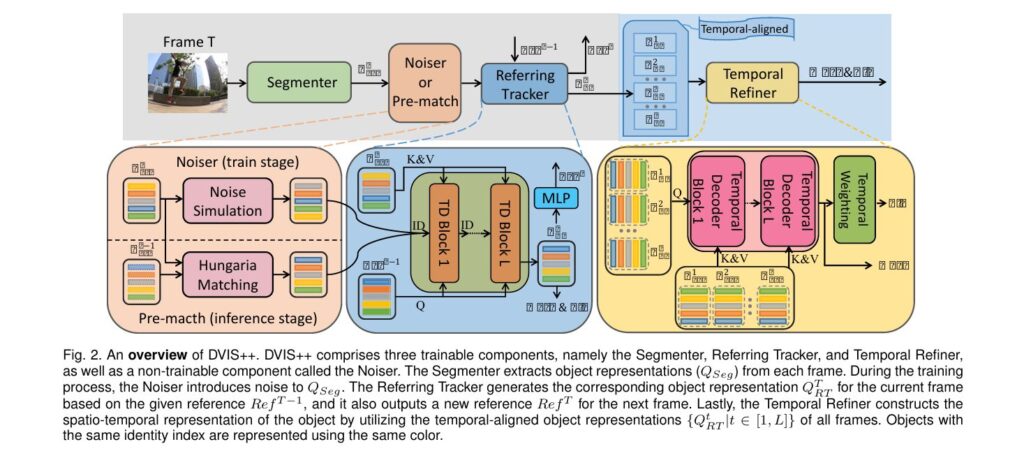
DVIS++: The Game-Changing Decoupled Framework Revolutionizing Universal Video Segmentation

Decoupled Video Segmentation Outperforms End To End Models

Analysis by the aitrendblend editorial team · Computer vision · Source paper published December 2023 Video Instance Segmentation Video Panoptic Segmentation Referring Tracker Temporal Refiner Open Vocabulary Three horses graze in tall grass, drifting in and out of each other’s silhouettes for nearly a hundred frames. This single clip from the OVIS validation set breaks

Decoupled Video Segmentation Outperforms End To End Models Read More »

Task-Specific Knowledge Distillation in Medical Imaging: A Breakthrough for Efficient Segmentation.

Task-Specific Knowledge Distillation for Medical Image Segmentation

Knowledge Distillation Medical Image Segmentation • 15 min read Task-Specific KD Segment Anything LoRA ViT-Tiny Diffusion Data Data-Limited Learning Teaching a Tiny Model to Segment Like a Giant Overview. A large vision foundation model is first adapted to one medical task with LoRA, then it teaches a compact student through both its hidden features and

Task-Specific Knowledge Distillation for Medical Image Segmentation Read More »

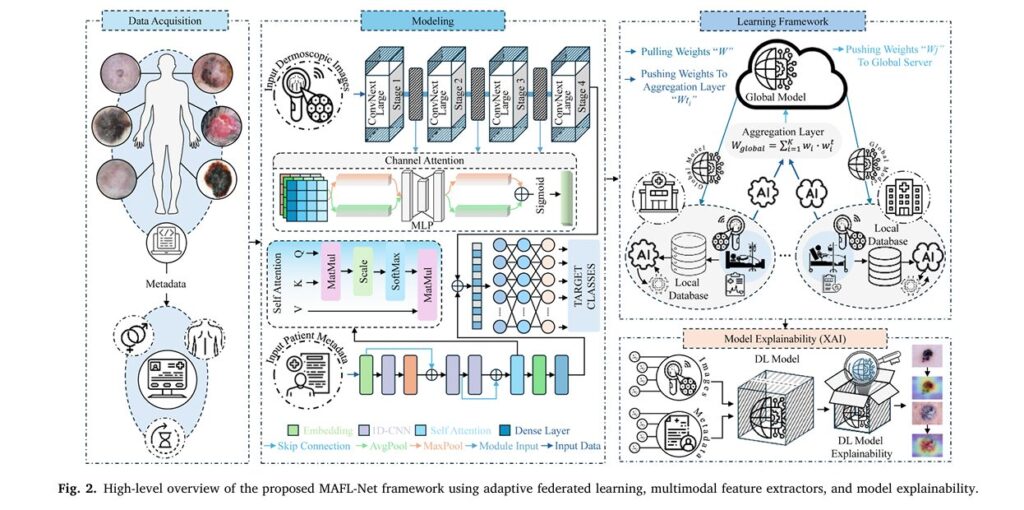
How EFAM-Net Reads Skin Lesions With ConvNeXt Attention Blocks

Analysis by the aitrendblend editorial team, filed under AI for Medical Imaging and Healthcare about a seventeen minute read Skin Lesion Classification ConvNeXt Attention Mechanisms Feature Fusion Dermatology AI A dermoscopic lesion image alongside the kind of attention heatmap EFAM-Net produces during classification A patient walks into a dermatology clinic with a mole that has

How EFAM-Net Reads Skin Lesions With ConvNeXt Attention Blocks Read More »

PLD: List Wise Knowledge Distillation with Plackett-Luce.

PLD: List Wise Knowledge Distillation with Plackett-Luce

Machine Learning › Knowledge Distillation › Paper Analysis Knowledge Distillation Plackett-Luce List Wise Ranking ListMLE Image Classification Paper Analysis Analysis by the aitrendblend editorial team · October 2025 · 13 min read · arXiv:2506.12542 aitrendblend.com · Knowledge Distillation PLD, List Wise Knowledge Distillation with the Plackett-Luce Model Almost every logit based distillation method shares an

PLD: List Wise Knowledge Distillation with Plackett-Luce Read More »

KD-FixMatch Fixes FixMatch's Noisy Early Pseudo Labels.

KD-FixMatch Fixes FixMatch’s Noisy Early Pseudo Labels

Knowledge Distillation Semi Supervised Learning 8 min read Analysis by the aitrendblend editorial team An outer network’s best guesses become the inner network’s head start, once they clear two separate filters. A retailer sorting product photos into defective and acceptable piles runs into a wall almost every computer vision team eventually hits. Good images are

KD-FixMatch Fixes FixMatch’s Noisy Early Pseudo Labels Read More »

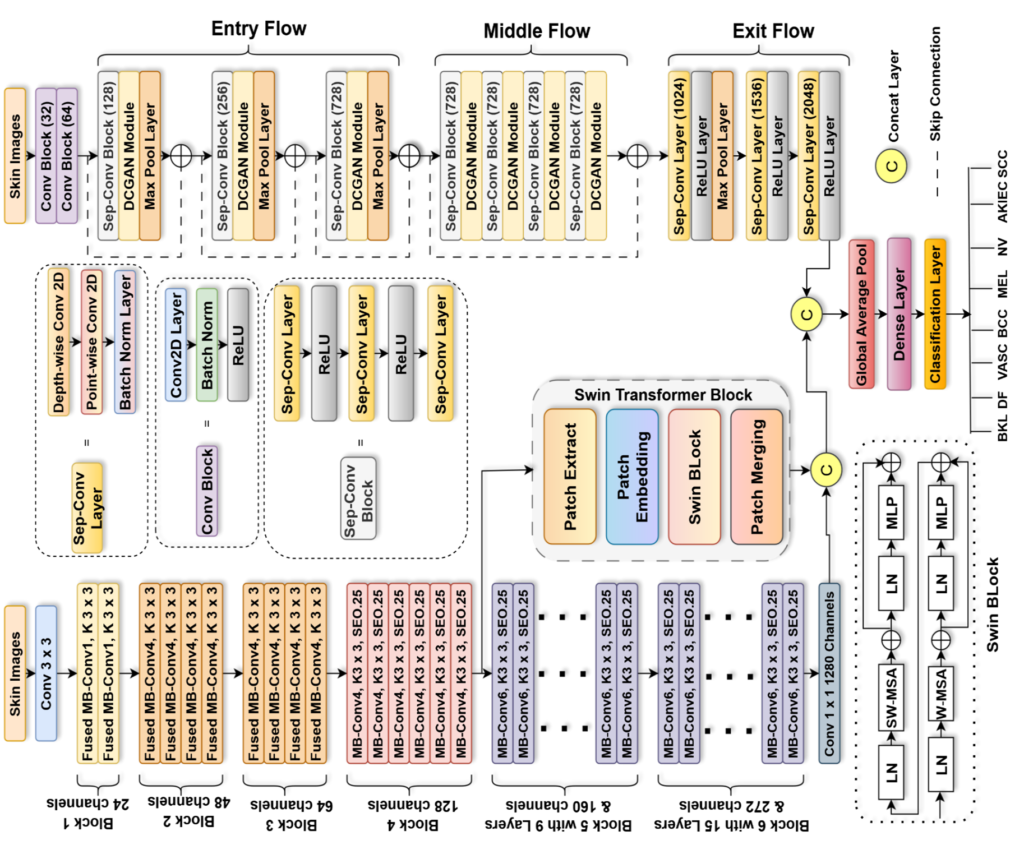
EG-VAN Explained, Dual Branch Attention for Skin Cancer Scans

EG-VAN Explained, Dual Branch Attention for Skin Cancer Scans

AI FOR MEDICAL IMAGING AND HEALTHCARE · 14 MIN READ · Analysis by the aitrendblend editorial team. skin cancer classification dual branch network EfficientNetV2S ResNet50 attention HAM10000 Grad-CAM A dermoscopic lesion moving through a dual branch classifier. Image styling is illustrative of the pipeline described in the paper. A dermatologist looking at a mole under

EG-VAN Explained, Dual Branch Attention for Skin Cancer Scans Read More »