Machine Learning

Machine learning sits at the core of everything we cover at AI Trend Blend. This section gathers our research breakdowns, method explainers, and practical analyses across supervised, self-supervised, and generative learning, with a steady focus on the ideas that actually move results rather than the noise around them. You will find work spanning optimization, model architectures, training dynamics, and the theory that explains why modern systems behave the way they do, written for readers who want depth without filler.

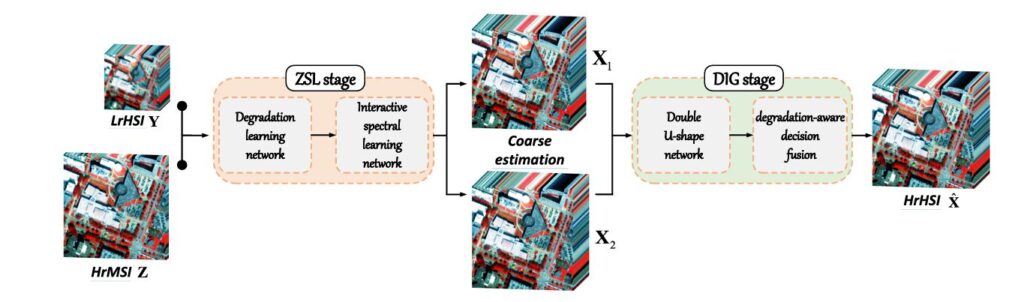
EDIP-Net: Enhanced Deep Image Prior for Unsupervised Hyperspectral Super-Resolution.

EDIP-Net: Enhanced Deep Image Prior for Unsupervised Hyperspectral Super-Resolution

Researchers at the Chinese Academy of Sciences identified a deceptively simple flaw in every DIP-based hyperspectral fusion method published before them — the random noise input — and replaced it with two scene-aware coarse estimations derived entirely from the observations…

EDIP-Net: Enhanced Deep Image Prior for Unsupervised Hyperspectral Super-Resolution Read More »
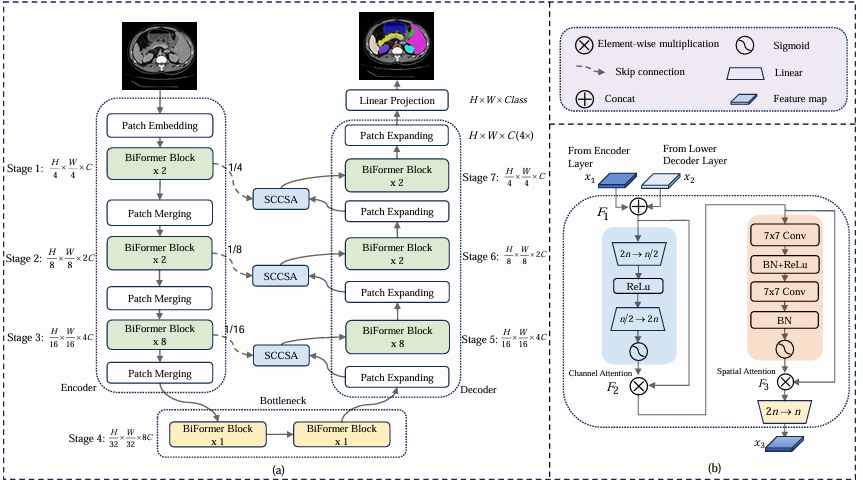
BRAU-Net++: The Hybrid CNN-Transformer That Rethinks Sparse Attention for Medical Image Segmentation.

BRAU-Net++: U-Shaped Hybrid CNN-Transformer Network for Medical Image Segmentation

Researchers at Chongqing University of Technology built a u-shaped encoder-decoder that fuses dynamic sparse attention from BiFormer with a redesigned channel-spatial skip connection — outperforming TransUNet by 4.49% DSC and Swin-Unet by 3.34% DSC on the Synapse multi-organ benchmark while…

BRAU-Net++: U-Shaped Hybrid CNN-Transformer Network for Medical Image Segmentation Read More »

stacked-lasso-xgb-nirs-potato-nutrients.

Stacked Regression for Potato Nutrient Estimation from NIRS: Lasso + XGBoost Pipeline Explained

A team at Dalhousie University built a two-layer machine learning pipeline — MRMR feature selection, Lasso base models, and XGBoost meta-learners — that simultaneously estimates twelve macro- and micronutrient concentrations in potato plants from a single vis-NIR spectral scan, cutting…

Stacked Regression for Potato Nutrient Estimation from NIRS: Lasso + XGBoost Pipeline Explained Read More »

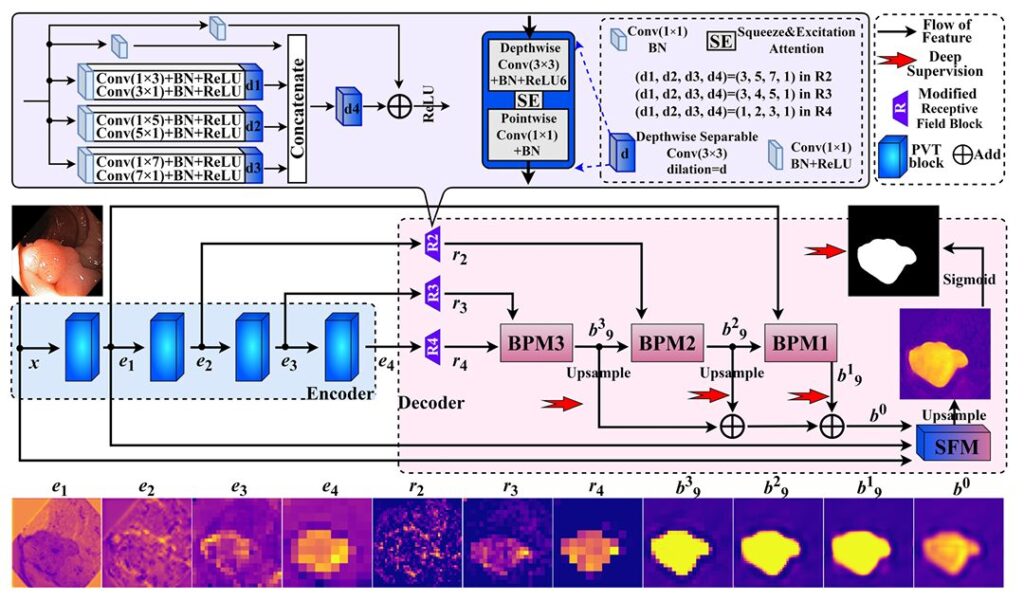
MSBP-Net: The Lightweight Polyp Detector.

MSBP-Net: The Lightweight Polyp Detector That Learned to See Boundaries the Way Surgeons Do

Researchers at Sichuan University of Science and Engineering built a network that fuses reverse attention, multi-scale criss-cross self-attention, and a Laplacian edge filter borrowed from classical image processing to delineate colorectal polyp boundaries with a precision and speed that most…

MSBP-Net: The Lightweight Polyp Detector That Learned to See Boundaries the Way Surgeons Do Read More »

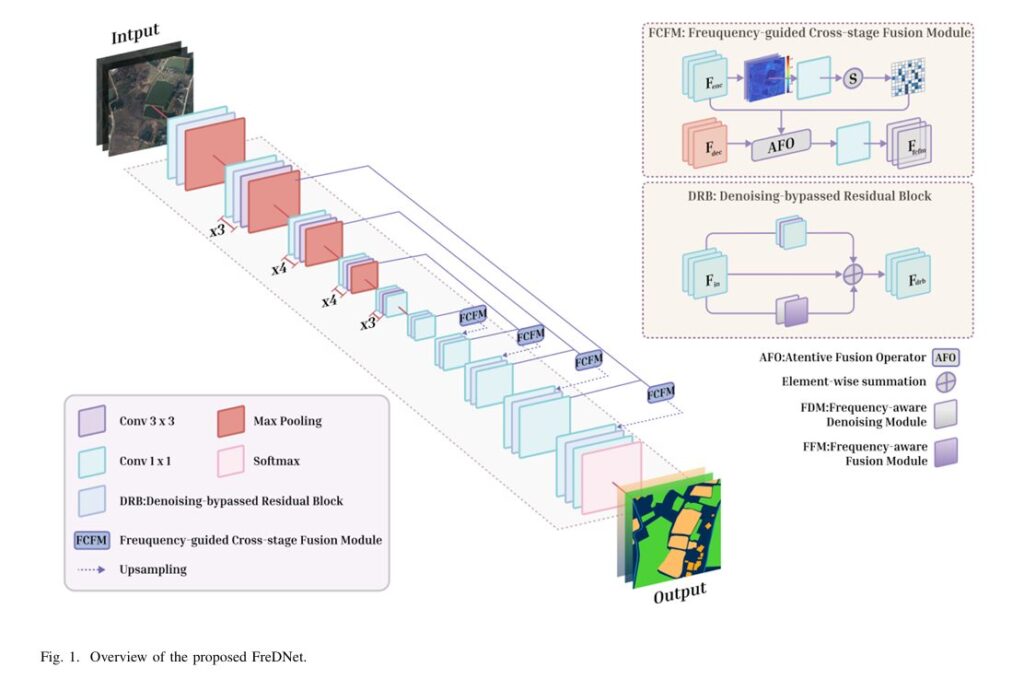
Overview of the proposed FreDNet.

FreDNet: The Remote Sensing Segmenter That Learned to Hear the Image, Not Just See It

Researchers at Hohai University built a network that treats high-frequency spectral components — the sharp edges, fine contours, and subtle discontinuities that standard convolutions quietly destroy — as first-class semantic cues rather than noise to be filtered away, and the…

FreDNet: The Remote Sensing Segmenter That Learned to Hear the Image, Not Just See It Read More »

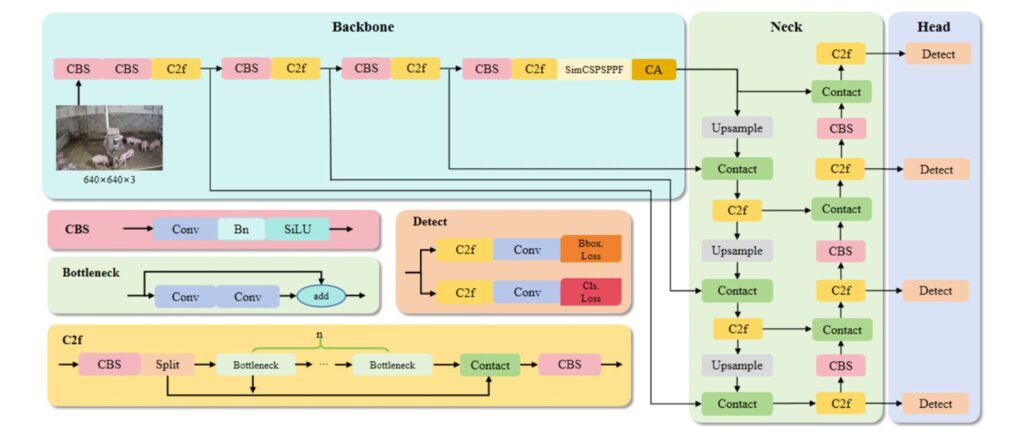
AI Reads Pig Body Temperature From Two Meters Away USING YOLOv8-PT

Watching for Fever: AI Reads Pig Body Temperature From Two Meters Away USING YOLOv8-PT

Infrared thermography promised non-contact temperature monitoring for livestock — but crowded pens, overlapping animals, and mismatched camera angles made it nearly impossible to read individual pigs reliably. A new fusion pipeline from Zhejiang University closes that gap with 0.40 °C…

Watching for Fever: AI Reads Pig Body Temperature From Two Meters Away USING YOLOv8-PT Read More »

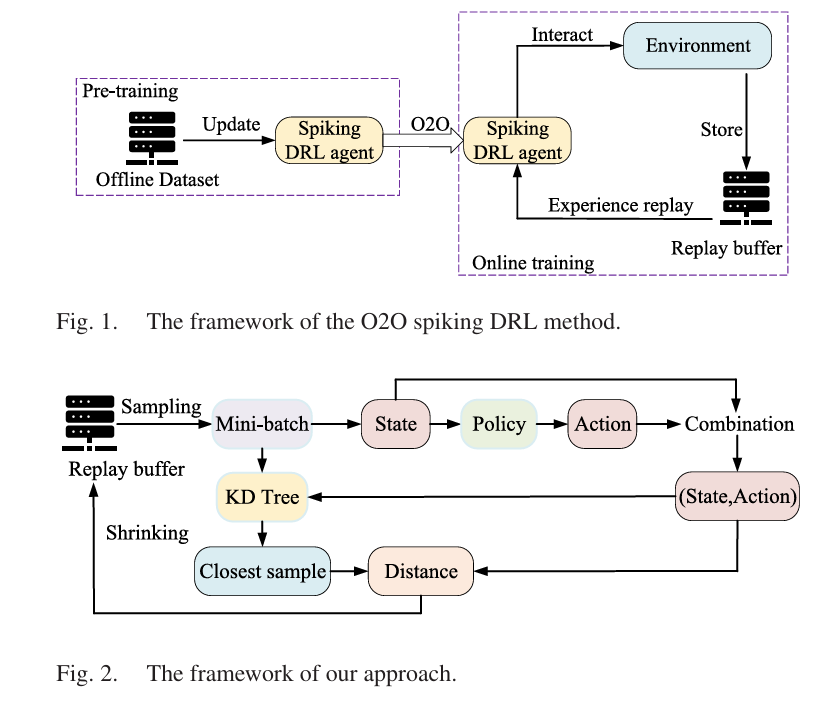
Spiking Deep Reinforcement Learning framework

The Crippling Tradeoff That Held Spiking Deep Reinforcement Learning Back for Years — And How a Dynamic Replay Buffer Finally Shatters It

Researchers at City University of Hong Kong built a plug-and-play resilient experience replay framework that lets spiking DRL methods run at ultra-low simulation durations without the catastrophic performance collapse everyone had learned to accept.

The Crippling Tradeoff That Held Spiking Deep Reinforcement Learning Back for Years — And How a Dynamic Replay Buffer Finally Shatters It Read More »