deep learning in healthcare

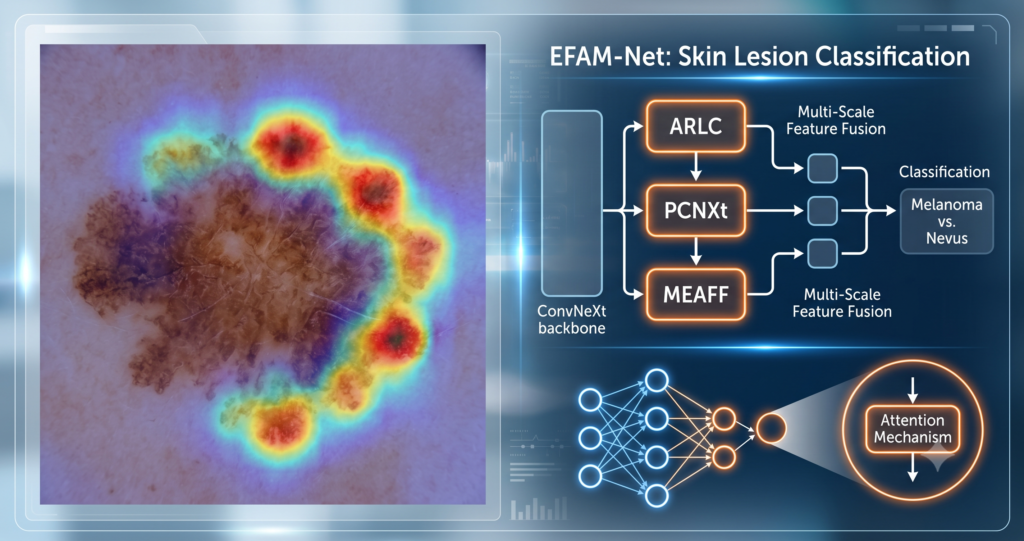
How EFAM-Net Reads Skin Lesions With ConvNeXt Attention Blocks

Analysis by the aitrendblend editorial team, filed under AI for Medical Imaging and Healthcare about a seventeen minute read Skin Lesion Classification ConvNeXt Attention Mechanisms Feature Fusion Dermatology AI A dermoscopic lesion image alongside the kind of attention heatmap EFAM-Net produces during classification A patient walks into a dermatology clinic with a mole that has […]

How EFAM-Net Reads Skin Lesions With ConvNeXt Attention Blocks Read More »
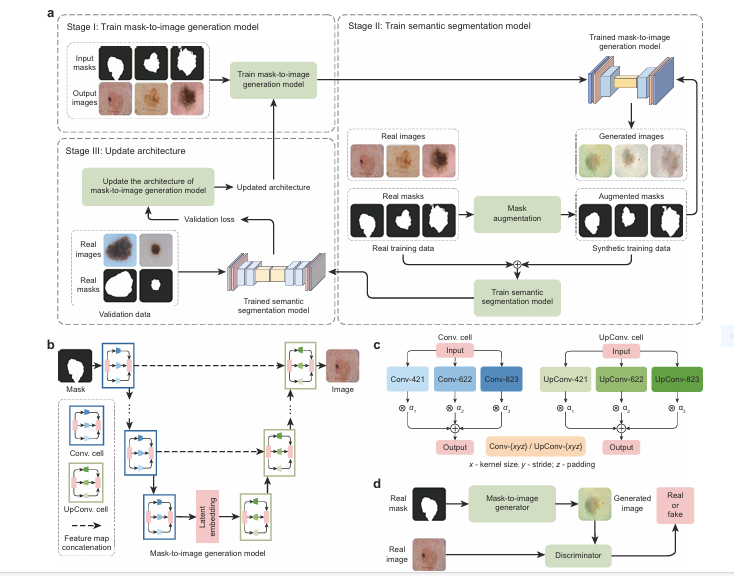
Diagram illustrating GenSeg’s multi-level optimization for ultra low-data medical image segmentation

GenSeg And Training Medical AI With Barely Any Data

Analysis by the aitrendblend editorial team · Technical review · 14 min read Medical Imaging Generative AI Data Efficiency Segmentation GenSeg trains a data generator and a segmentation model together, so the images it invents are shaped by what actually helps the segmentation model improve. Fifty images. That is all GenSeg needed to train a

GenSeg And Training Medical AI With Barely Any Data Read More »

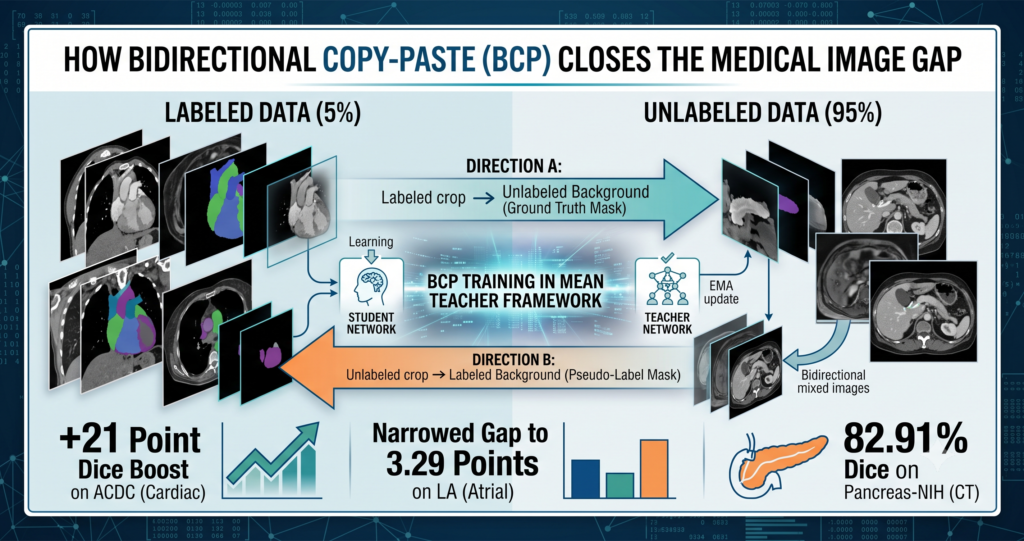
How Bidirectional Copy-Paste Closes the Labeled Unlabeled Gap

How Bidirectional Copy-Paste Closes the Labeled Unlabeled Gap

Analysis by the aitrendblend editorial team, filed under AI for Medical Imaging and Healthcare About a 17 minute read Semi Supervised Segmentation Mean Teacher Cardiac MRI Pancreatic CT Copy Paste Augmentation A copy paste blend between a labeled and an unlabeled scan, the core mechanism behind bidirectional copy paste segmentation A hospital research team has

How Bidirectional Copy-Paste Closes the Labeled Unlabeled Gap Read More »

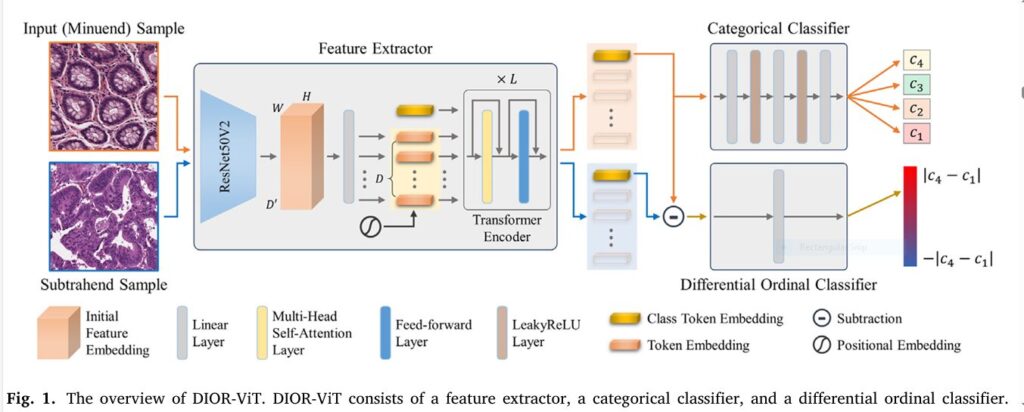
Diagram illustrating the DIOR-ViT architecture for differential ordinal classification in pathology images

DIOR-VIT: Vision Transformers Learn the Order of Cancer Grades

Analysis by the aitrendblend editorial team · 14 minute read Computational Pathology Vision Transformer Cancer Grading Ordinal Learning A pathologist looking at two biopsy slides rarely just labels each one and moves on. They also weigh how much worse one sample looks than the other, because that comparison shapes how urgently a patient needs treatment.

DIOR-VIT: Vision Transformers Learn the Order of Cancer Grades Read More »

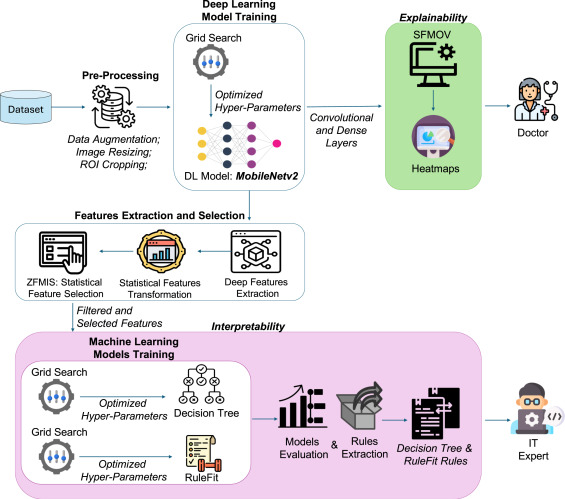
SVIS-RULEX SFMOV heatmap overlay on a chest X-ray: Red/Orange areas highlight regions of high statistical significance (e.g., mean intensity, skewness, entropy) corresponding to COVID-19 lung opacities, validated by radiologists. Blue areas show less relevant tissue

3 Breakthroughs & 1 Warning: How Explainable AI SVIS-RULEX is Revolutionizing Medical Imaging (Finally!)

For years, artificial intelligence (AI) has promised to revolutionize medical diagnosis, particularly in analyzing complex medical images like X-rays, MRIs, and ultrasounds. Deep learning models consistently achieve superhuman accuracy in spotting tumors, infections, and subtle pathologies. Yet, a critical roadblock remains: the “black box” problem. How does the AI really make its decision? Without transparency, doctors hesitate to

3 Breakthroughs & 1 Warning: How Explainable AI SVIS-RULEX is Revolutionizing Medical Imaging (Finally!) Read More »

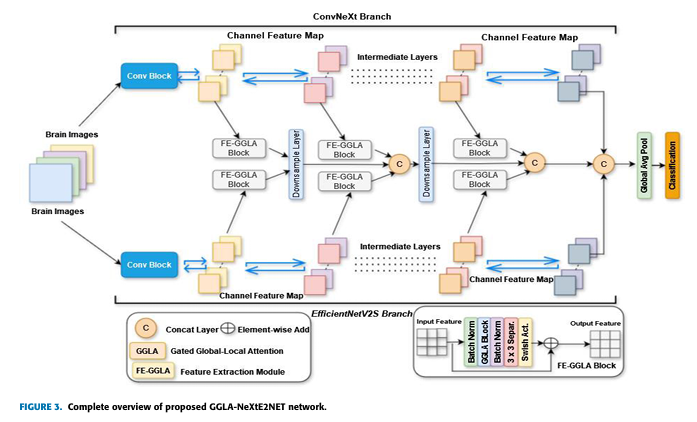
Complete overview of proposed GGLA-NeXtE2NET network.

GGLA-NeXtE2NET: Advanced Brain Tumor Recognition

The accurate and timely diagnosis of brain tumors is a critical challenge in modern medicine. Magnetic Resonance Imaging (MRI) is an essential non-invasive tool that provides detailed images of the brain’s internal structures, helping to identify the size, location, and type of tumors. However, the interpretation of these images can be complex due to the

GGLA-NeXtE2NET: Advanced Brain Tumor Recognition Read More »

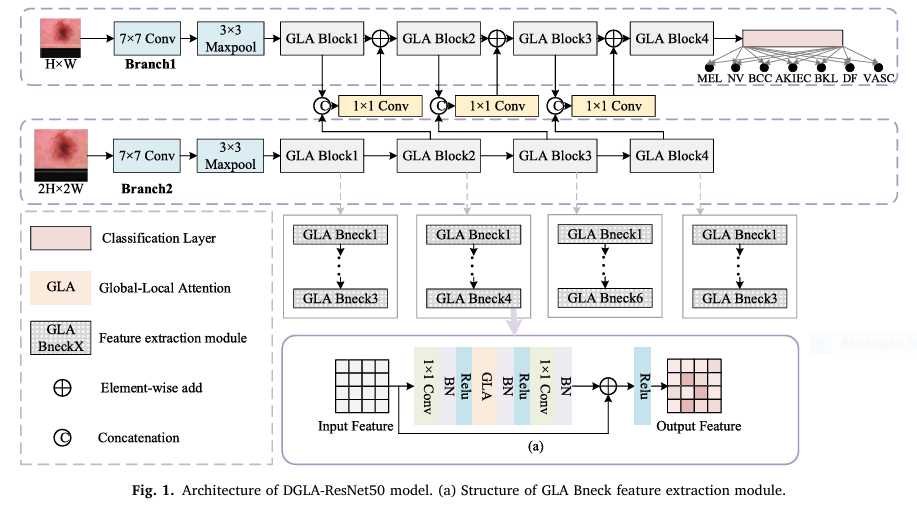
Architecture of DGLA-ResNet50 model. (a) Structure of GLA Bneck feature extraction module.

Enhancing Skin Lesion Detection Accuracy

Skin cancer continues to be one of the fastest-growing cancers worldwide, with early detection being critical for effective treatment. Traditional diagnostic methods rely heavily on dermatologists’ expertise and dermoscopy, a non-invasive skin imaging technique. However, the manual nature of dermoscopy makes the process time-consuming and subjective. To overcome these limitations, the research paper titled “Skin

Enhancing Skin Lesion Detection Accuracy Read More »

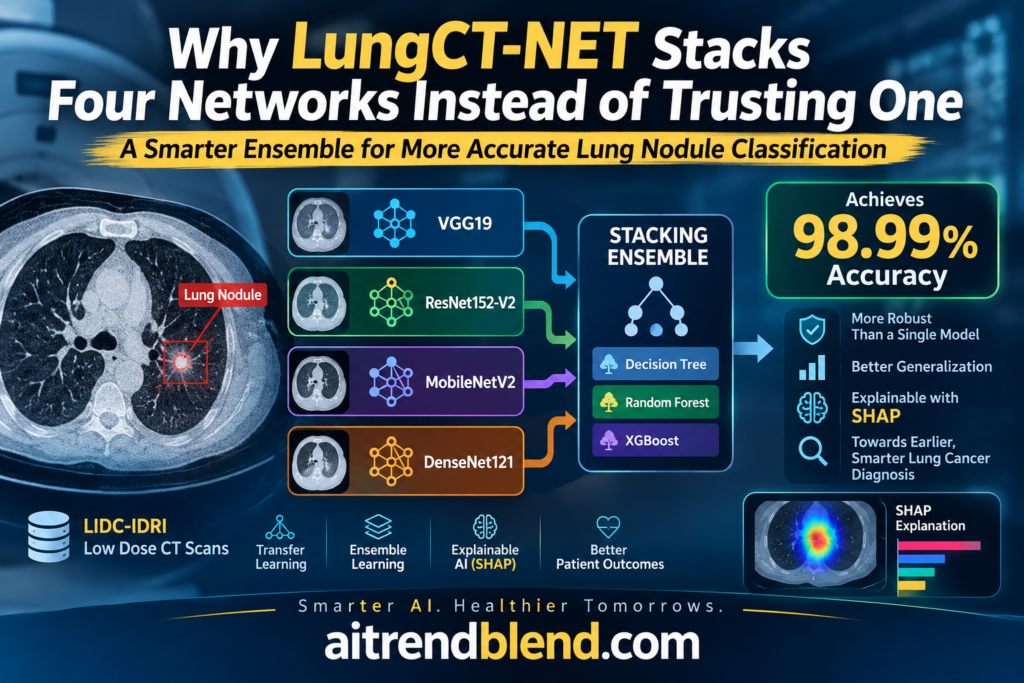
Why LungCT-NET Stacks Four Networks Instead of Trusting One

Why LungCT-NET Stacks Four Networks Instead of Trusting One

Analysis by the aitrendblend editorial team · 13 minute read Lung Cancer Transfer Learning Ensemble Learning Explainable AI Four different networks look at the same nodule and disagree slightly. That disagreement, it turns out, is useful. A single deep learning model asked to sort lung nodules into benign or malignant will usually get most of

Why LungCT-NET Stacks Four Networks Instead of Trusting One Read More »

3DL-Net’s three-stage architecture: preliminary segmentation, multi-scale context extraction, and dendritic refinement for precise medical image analysis.

Why 3DL-Net’s Dendritic Neurons Only Help When Paired With Its Pyramid Module

Analysis by the aitrendblend editorial team. Medical review pending, see. Ten minute read. Medical Imaging Segmentation Dendritic Learning Breast Ultrasound Ablation Study Segmentation masks from a breast ultrasound and a lung CT scan, the two imaging types 3DL-Net was tested on. A radiologist scrolling through a breast ultrasound exam is not looking for an average.

Why 3DL-Net’s Dendritic Neurons Only Help When Paired With Its Pyramid Module Read More »