Adnan Saeed

Adnan Saeed is a deep learning researcher working on medical image analysis, with a focus on multimodal architectures, graph neural networks, and evidential deep learning for clinical imaging tasks. His peer reviewed research has appeared in journals across machine learning and biomedical signal processing. At AI Trend Blend he turns recent papers into clear, practical explainers, with an emphasis on what a method actually does and where it holds up, written for readers who want depth without the hype.

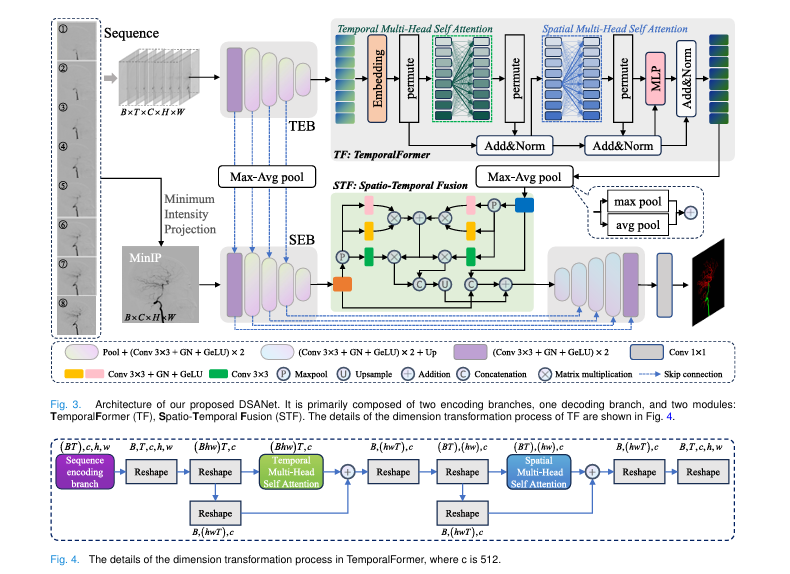
Proposed DSCA NET for image Segmentation

DSANET Uses Full DSA Sequences to Segment Cerebral Arteries

Cerebrovascular diseases, stroke, moyamoya disease, and cerebral aneurysms among them, remain a major cause of death and disability, and diagnosing them accurately depends on understanding the geometry of the cerebral arteries. Digital subtraction angiography, often shortened to DSA, is the…

DSANET Uses Full DSA Sequences to Segment Cerebral Arteries Read More »

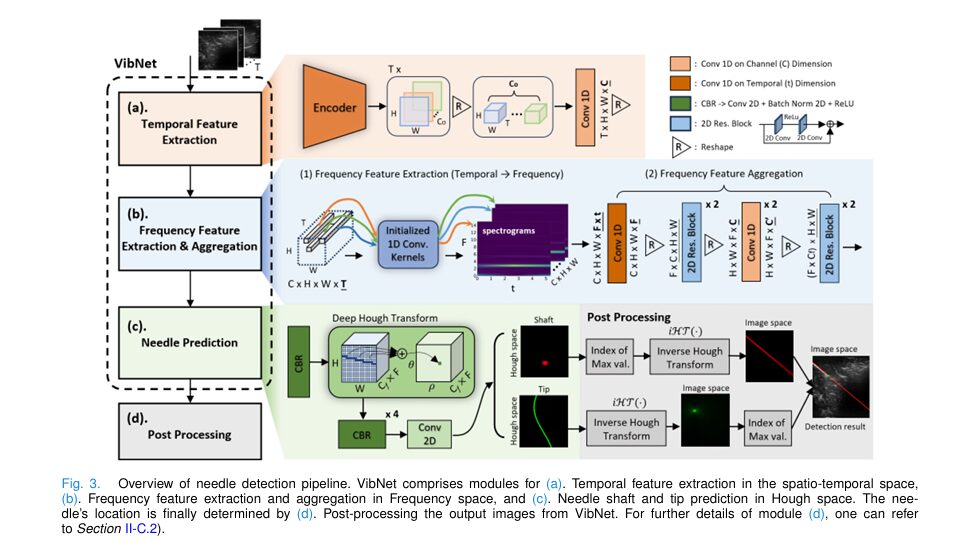
VibNet system detecting a nearly invisible needle in ultrasound using vibration-based deep learning. A red line highlights the predicted needle shaft and tip overlay on a grayscale ultrasound image

7 Revolutionary VibNet Breakthrough Detects Invisible Needles in Ultrasound – But Is It Too Good to Be True?

In the high-stakes world of ultrasound-guided medical procedures, one challenge has haunted clinicians for decades: the needle that disappears. Whether due to poor visibility, tissue artifacts, or suboptimal probe angles, losing sight of a needle tip can lead to serious…

7 Revolutionary VibNet Breakthrough Detects Invisible Needles in Ultrasound – But Is It Too Good to Be True? Read More »

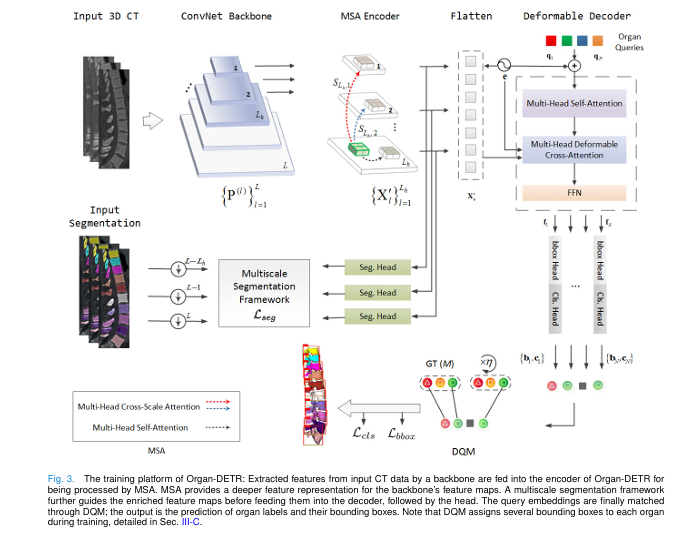
rgan-DETR model detecting liver and postcava in 3D Organ Detection CT scan with bounding boxes, outperforming traditional methods.

Revolutionary Breakthroughs in 3D Organ Detection: How Organ-DETR Outperforms Old Methods (+10.6 mAP Gain!)

In the rapidly evolving world of medical imaging, accurate and fast 3D organ detection is no longer a luxury—it’s a necessity. From early cancer diagnosis to surgical planning, the ability to precisely locate organs in Computed Tomography (CT) scans can…

Revolutionary Breakthroughs in 3D Organ Detection: How Organ-DETR Outperforms Old Methods (+10.6 mAP Gain!) Read More »

knowledge distillation model for medical diagnosis

Incremental Learning for Medical AI — How Knowledge Distillation Stops Prostate MRI Models from Forgetting

Anyone who has worked on deep learning in healthcare quickly discovers that the academic benchmark setting — one big dataset, one train-test split, one model — rarely survives contact with the real world. Hospital systems accumulate data incrementally. Different sites…

Incremental Learning for Medical AI — How Knowledge Distillation Stops Prostate MRI Models from Forgetting Read More »