Adnan Saeed

Adnan Saeed is a deep learning researcher working on medical image analysis, with a focus on multimodal architectures, graph neural networks, and evidential deep learning for clinical imaging tasks. His peer reviewed research has appeared in journals across machine learning and biomedical signal processing. At AI Trend Blend he turns recent papers into clear, practical explainers, with an emphasis on what a method actually does and where it holds up, written for readers who want depth without the hype.

HERON: Real-Time AI Motion Correction Revolutionizes Fetal Diffusion MRI

HERON: Real-Time AI Motion Correction Revolutionizes Fetal Diffusion MRI

Introduction: The Challenge of Motion in Fetal Brain Imaging Fetal diffusion MRI (dMRI) is a powerful tool for unlocking the mysteries of early human brain development. By mapping water molecule movement, it provides unparalleled insights into white matter maturation, neural connectivity, and microstructural changes during gestation—critical for diagnosing conditions like agenesis of the corpus callosum […]

HERON: Real-Time AI Motion Correction Revolutionizes Fetal Diffusion MRI Read More »
BrainDx AI Framework for Brain Tumor Diagnosis

Revolutionizing Brain Tumor Diagnosis: How the BrainDx AI Framework is Setting a New Standard in Medical Imaging

In the high-stakes world of neuro-oncology, time is not just a factor—it’s a lifeline. The journey from an initial MRI scan to a definitive brain tumor diagnosis has long been fraught with delays, human error, and the immense cognitive load placed on radiologists who must interpret complex, often subtle, variations in medical imagery. This critical

Revolutionizing Brain Tumor Diagnosis: How the BrainDx AI Framework is Setting a New Standard in Medical Imaging Read More »

D-Net: A New Frontier in AI-Powered Medical Image Segmentation

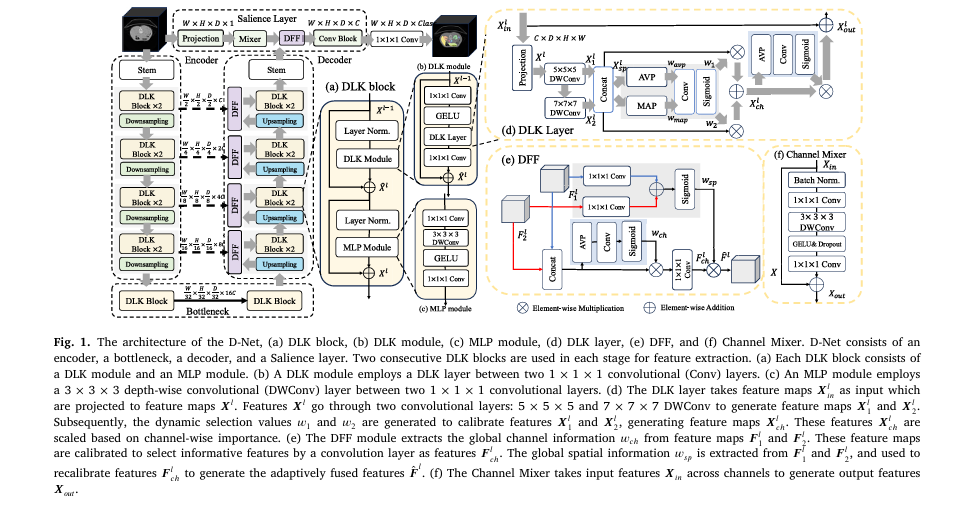
D-Net Pairs Dynamic Large Kernels With a Pixel Level Salience Layer

Medical Imaging Biomedical Signal Processing and Control, Volume 113, 2026 23 minute read Volumetric Segmentation Dynamic Large Kernel Vision Transformer CT and MRI Organ Segmentation Tumor Segmentation Feature Fusion Receptive Field D-Net This article describes a peer reviewed computer science paper about an automatic image segmentation research tool. It reports benchmark results on public research

D-Net Pairs Dynamic Large Kernels With a Pixel Level Salience Layer Read More »

stochastic-interconnected-systems deep learning inverse-optimal-control

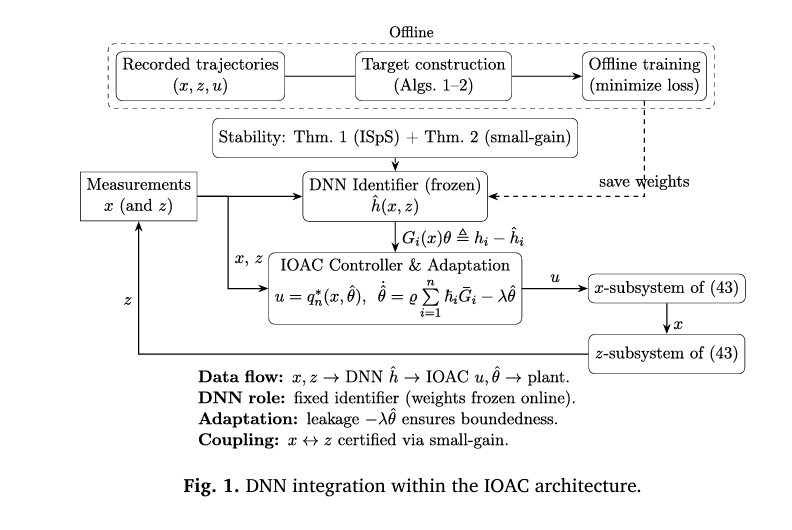
Stabilizing Uncertain Stochastic Systems: A Deep Learning Approach to Inverse Optimal Control

Introduction: The Challenge of Controlling Complex, Uncertain Systems Modern engineering systems—from autonomous vehicles to industrial robotics—are increasingly modeled as stochastic interconnected nonlinear systems. These systems are subject to unpredictable disturbances, unmodeled dynamics, and parameter uncertainties that can severely compromise stability and performance. Traditional control methods often fall short when faced with such complexities, especially when

Stabilizing Uncertain Stochastic Systems: A Deep Learning Approach to Inverse Optimal Control Read More »

Latent Space Reconstruction is Revolutionizing Medical Imaging

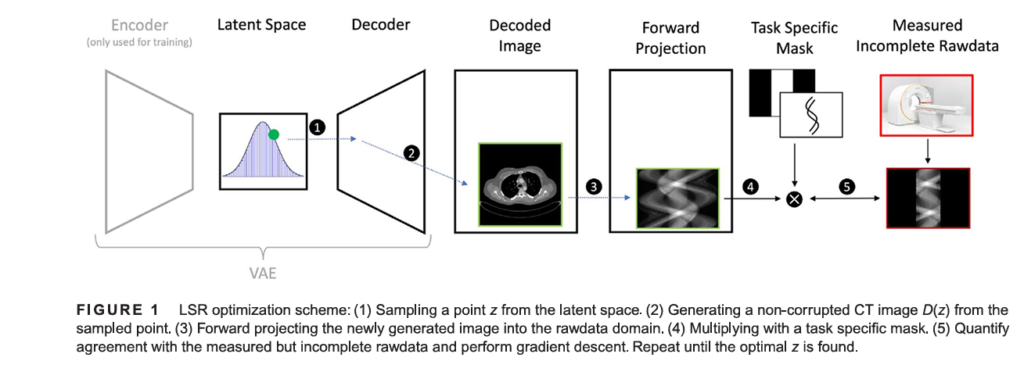
Unlocking Clearer CT Scans: How Latent Space Reconstruction is Revolutionizing Medical Imaging

In the high-stakes world of medical diagnostics, a single artifact in a CT scan can obscure critical details, leading to misdiagnosis or delayed treatment. For decades, radiologists have battled with image distortions caused by missing or corrupted data—problems like metal implants creating streaks or patient anatomy extending beyond the scanner’s field of view. While traditional

Unlocking Clearer CT Scans: How Latent Space Reconstruction is Revolutionizing Medical Imaging Read More »

harp-next-lidar-segmentation-network-real-time-autonomous-vehicles

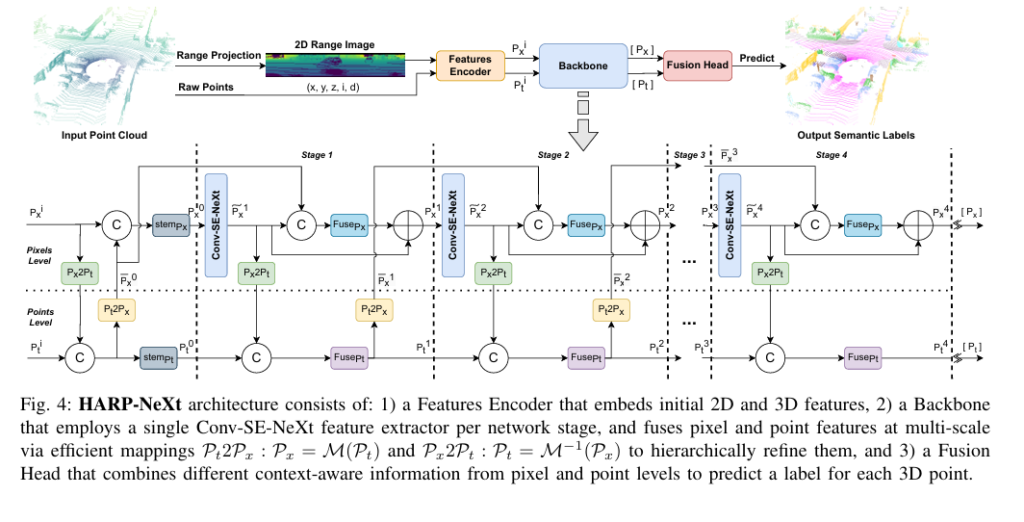
HARP-NeXt Fuses Range Images and Points for Fast LiDAR Segmentation

Analysis by the aitrendblend editorial team · Robotics and Autonomous Systems · 15 min read LiDAR segmentation range point fusion Conv-SE-NeXt embedded inference Jetson AGX Orin autonomous vehicles A self driving car does not get to pause and think. Every LiDAR sweep has to be turned into a labeled map of cars, pedestrians, curbs, and

HARP-NeXt Fuses Range Images and Points for Fast LiDAR Segmentation Read More »

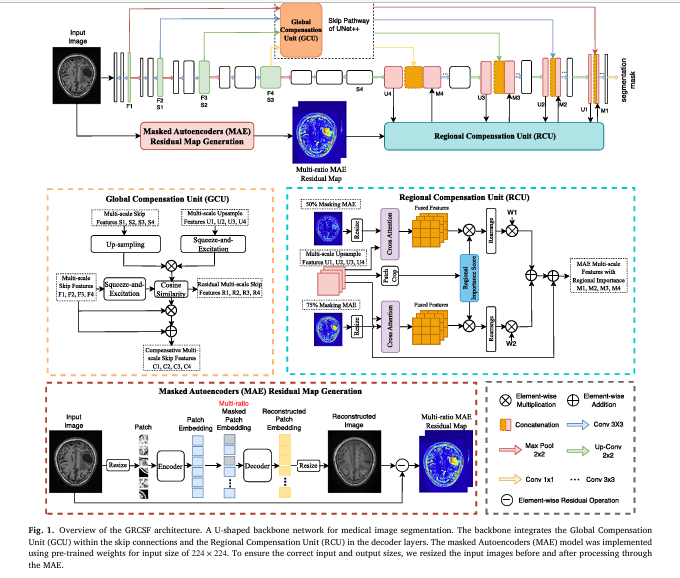
GRCSF’s Dual-Feature Compensation Framework Achieves State-of-the-Art Lesion Segmentation

How GRCSF Compensates for Lost Detail in Medical Lesion Segmentation

Analysis by the aitrendblend editorial team. Source paper, Wang, Chen, Yang and Kim, Pattern Recognition, 2026. lesion segmentation stroke imaging lung tumor CT coronary calcium scoring self supervised learning masked autoencoders A radiologist studying a T1 weighted brain scan after a stroke is often hunting for a patch of tissue that looks almost exactly like

How GRCSF Compensates for Lost Detail in Medical Lesion Segmentation Read More »

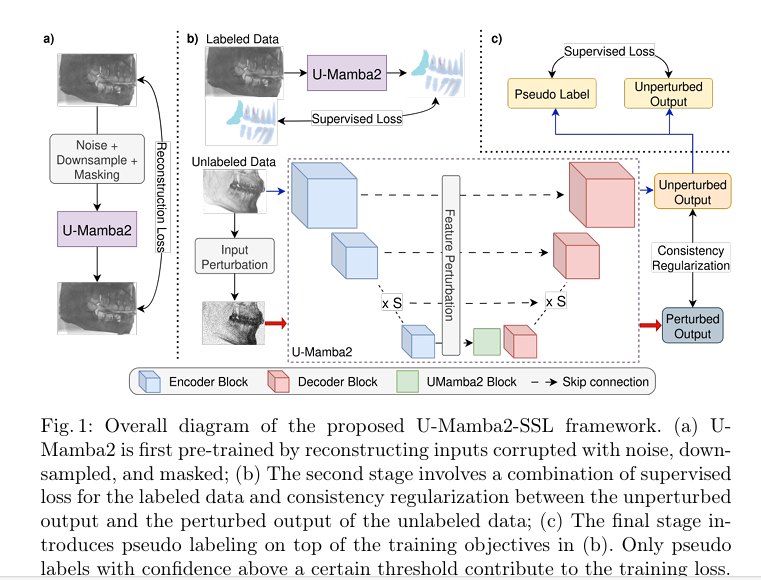
U-Mamba2-SSL: The Groundbreaking AI Framework Revolutionizing Tooth & Pulp Segmentation in CBCT Scans

U-Mamba2-SSL Segments Teeth and Pulp From Unlabeled CBCT

Analysis by the aitrendblend editorial team, based on the published paper and an independent read of its claims. Not a substitute for advice from a licensed dentist or clinician. Medical Imaging AI CBCT Segmentation Semi Supervised Learning Dental AI State Space Models Picture a hospital archive full of cone beam CT scans of people’s jaws,

U-Mamba2-SSL Segments Teeth and Pulp From Unlabeled CBCT Read More »

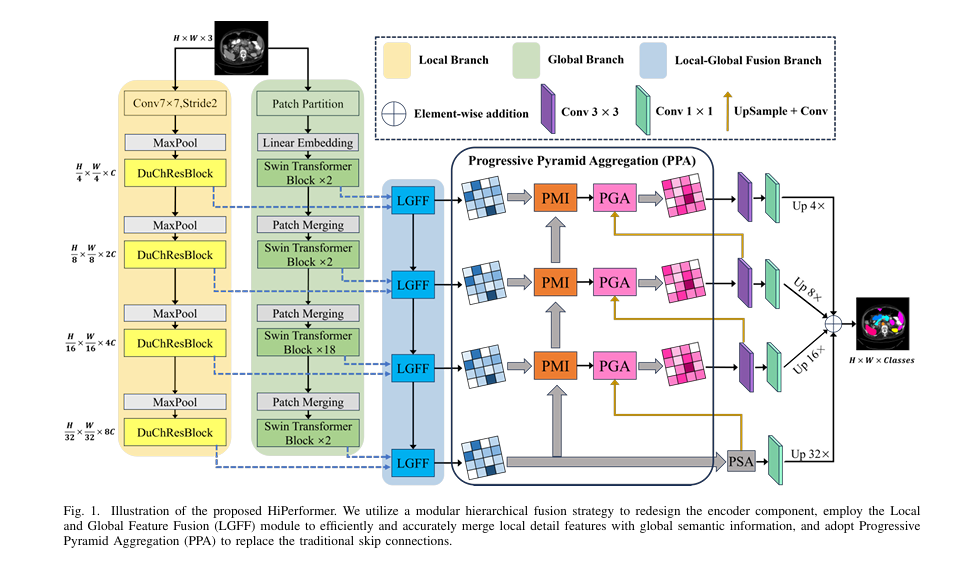
HiPerformer: A New Benchmark in Medical Image Segmentation with Modular Hierarchical Fusion

HiPerformer: A New Benchmark in Medical Image Segmentation with Modular Hierarchical Fusion

Introduction: The Critical Need for Precision in Medical Imaging In the high-stakes world of medical diagnostics, a pixel can make all the difference. Precise image segmentation—the process of outlining and identifying specific organs, tissues, or lesions in a medical scan—is the cornerstone of modern diagnosis and treatment planning. It allows clinicians to accurately assess tumor

HiPerformer: A New Benchmark in Medical Image Segmentation with Modular Hierarchical Fusion Read More »

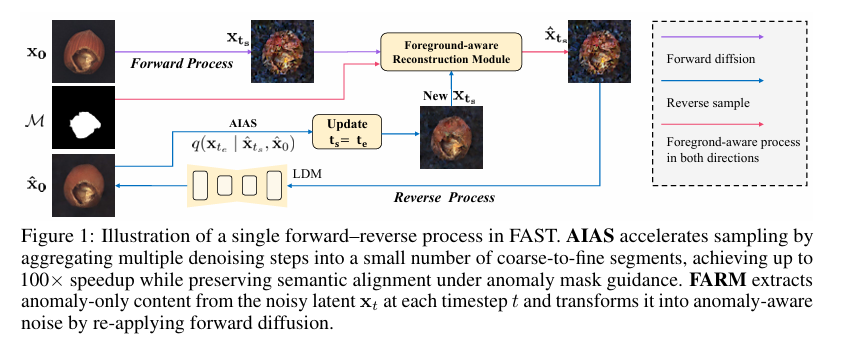
FAST: Revolutionary AI Framework Accelerates Industrial Anomaly Detection

FAST: Revolutionary AI Framework Accelerates Industrial Anomaly Detection by 100x

Key Takeaway: Researchers have developed FAST (Foreground-aware Diffusion Framework), a revolutionary AI system that accelerates industrial anomaly detection by 100 times while achieving 76.72% mIoU accuracy on manufacturing quality control tasks. This breakthrough addresses critical challenges in industrial automation by enabling real-time, pixel-level defect detection with unprecedented efficiency. Introduction: The Critical Need for Intelligent Quality Control In today’s hyper-competitive manufacturing

FAST: Revolutionary AI Framework Accelerates Industrial Anomaly Detection by 100x Read More »