Engineering AI

Artificial intelligence is bringing unprecedented precision to the physical world. This category explores the powerful intersection of machine learning and traditional engineering disciplines ⚙️. Dive into cutting-edge research on how neural networks and predictive algorithms are revolutionizing civil, mechanical, electrical, and aerospace engineering. From optimizing aerodynamic designs and predicting structural fatigue to accelerating material science discovery, stay updated on the algorithmic tools that are building the future.

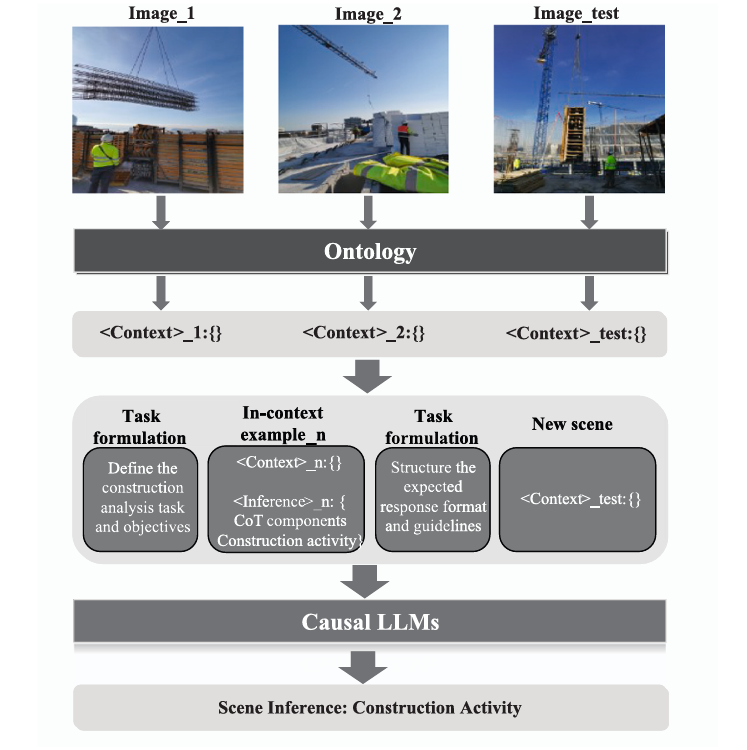
Ontology-Based LLM Prompting for Construction Activity Recognition: 73.68% Accuracy With No Training Data.

Ontology-Based LLM Prompting for Construction Activity Recognition: 73.68% Accuracy With No Training Data

Researchers at Technische Universität Berlin and Qingdao University of Technology achieved 73.68% construction activity recognition accuracy using pure prompting — no labeled training data, no fine-tuning, just a domain ontology, structured visual extraction, and carefully engineered in-context examples.

Ontology-Based LLM Prompting for Construction Activity Recognition: 73.68% Accuracy With No Training Data Read More »

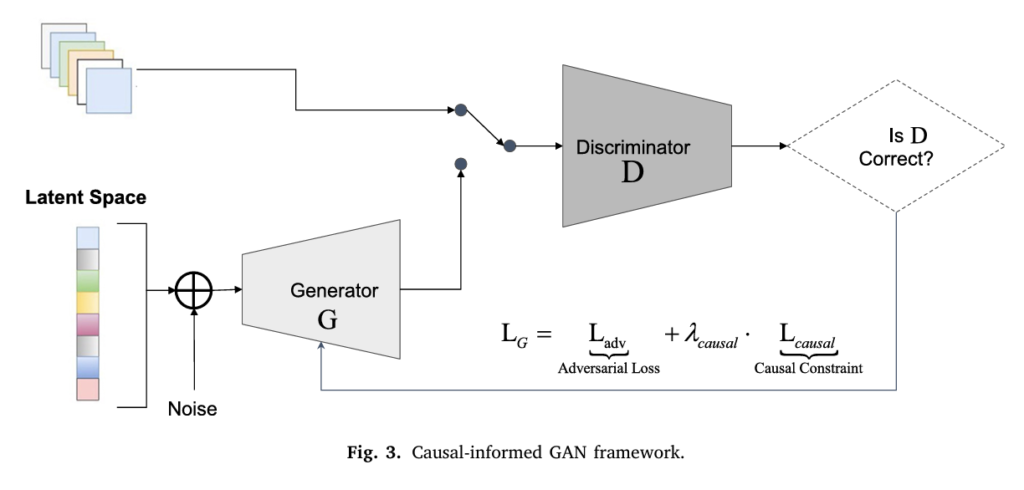
Causal-Informed GAN for Changeover Time Prediction in Customized Manufacturing.

Causal-Informed GAN for Changeover Time Prediction in Customized Manufacturing

A Carnegie Mellon team embedded causal inference directly into a Generative Adversarial Network to predict sequence-dependent changeover times for products the factory has never seen before — cutting production waste by up to 25% and finally making job-shop scheduling work…

Causal-Informed GAN for Changeover Time Prediction in Customized Manufacturing Read More »

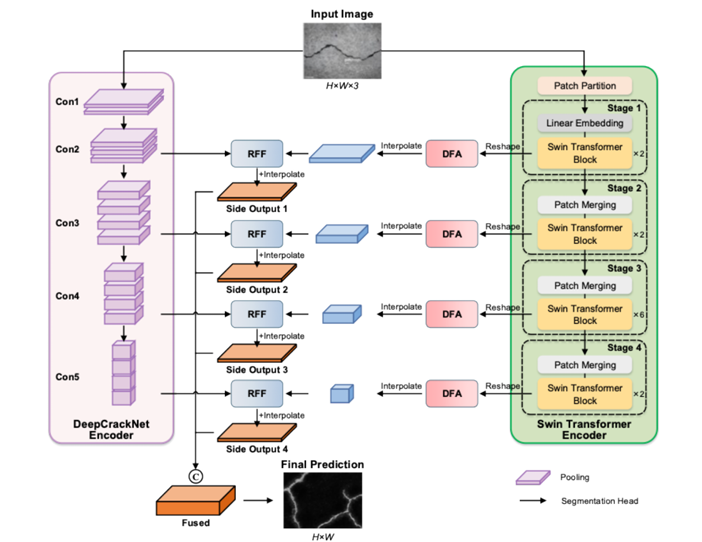
PARNet: Dual-Encoder Crack Detection with Dynamic Alignment and Residual Fusion.

PARNet: Dual-Encoder Crack Detection with Dynamic Alignment and Residual Fusion

Researchers at Shandong University and Stony Brook University built PARNet, a dual-encoder architecture that runs CNN and Transformer feature extraction in strict parallel, aligns their outputs with dynamic attention, and fuses them through residual connections — achieving the best accuracy,…

PARNet: Dual-Encoder Crack Detection with Dynamic Alignment and Residual Fusion Read More »

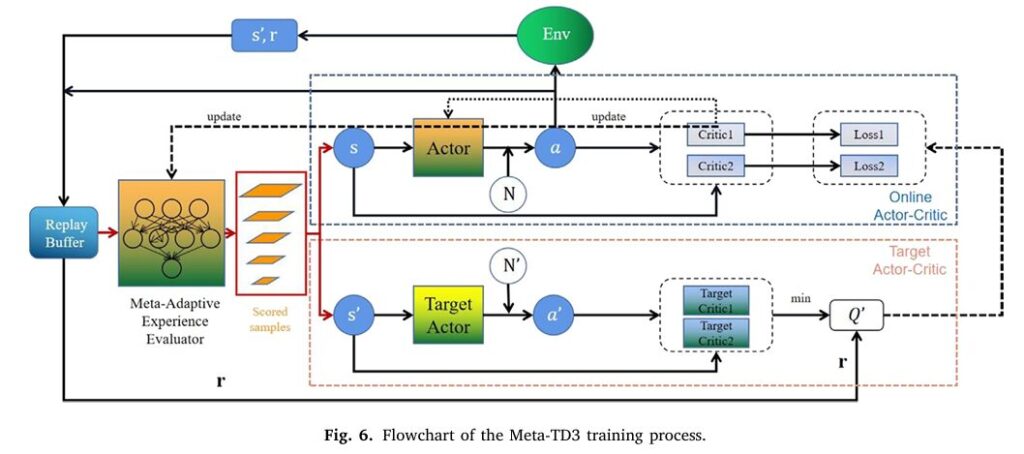
Meta-TD3: Meta-Learning-Guided Vibration Control with Adaptive Experience Replay.

Meta-TD3: Meta-Learning-Guided Vibration Control with Adaptive Experience Replay

Beihang University researchers solved one of deep reinforcement learning’s most persistent headaches — bad experience replay — by training a lightweight meta-network to score every stored transition before sampling, cutting TD3’s training time by 52.3%, reducing peak vibration by 65%,…

Meta-TD3: Meta-Learning-Guided Vibration Control with Adaptive Experience Replay Read More »

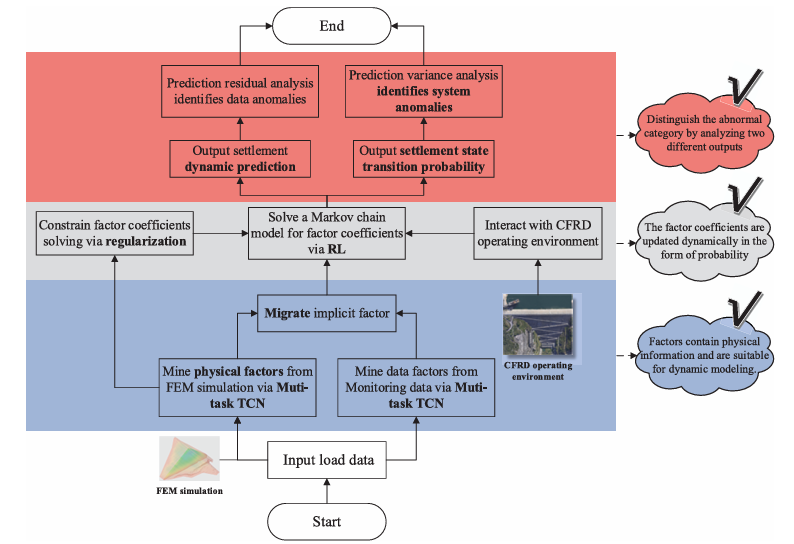
PD-TCN: Probabilistic Dynamic Model for High Concrete-Faced Rockfill Dam Settlement Prediction.

PD-TCN: Probabilistic Dynamic Model for High Concrete-Faced Rockfill Dam Settlement Prediction

Researchers at Hohai University designed a probabilistic dynamic temporal convolutional network that fuses finite element simulation physics with real-time reinforcement learning adaptation and Monte Carlo uncertainty quantification — achieving less than 5% relative error on the highest existing concrete-faced rockfill…

PD-TCN: Probabilistic Dynamic Model for High Concrete-Faced Rockfill Dam Settlement Prediction Read More »

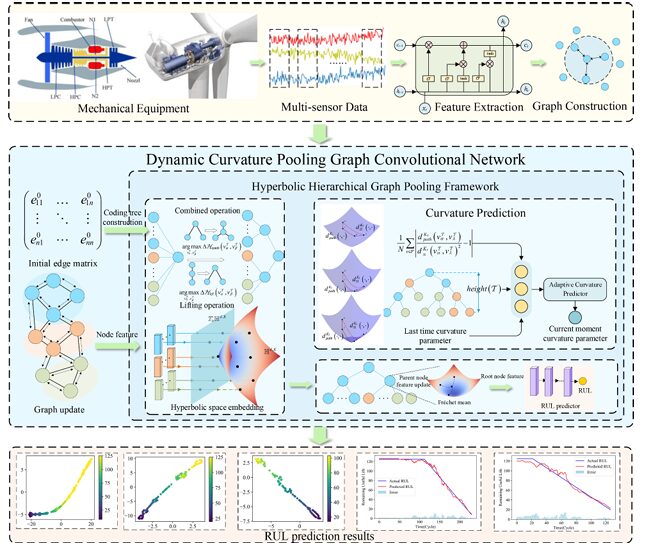
DCPGCN: Dynamic Curvature Pooling in Hyperbolic Space for Multi-Sensor RUL Prediction.

DCPGCN: Dynamic Curvature Pooling in Hyperbolic Space for Multi-Sensor RUL Prediction

A team at Chongqing University built a graph neural network that embeds multi-sensor degradation data into hyperbolic space — where the geometry naturally fits hierarchical structures — and dynamically adapts the curvature of that space during training to match the…

DCPGCN: Dynamic Curvature Pooling in Hyperbolic Space for Multi-Sensor RUL Prediction Read More »