Adnan Saeed

Adnan Saeed is a deep learning researcher working on medical image analysis, with a focus on multimodal architectures, graph neural networks, and evidential deep learning for clinical imaging tasks. His peer reviewed research has appeared in journals across machine learning and biomedical signal processing. At AI Trend Blend he turns recent papers into clear, practical explainers, with an emphasis on what a method actually does and where it holds up, written for readers who want depth without the hype.

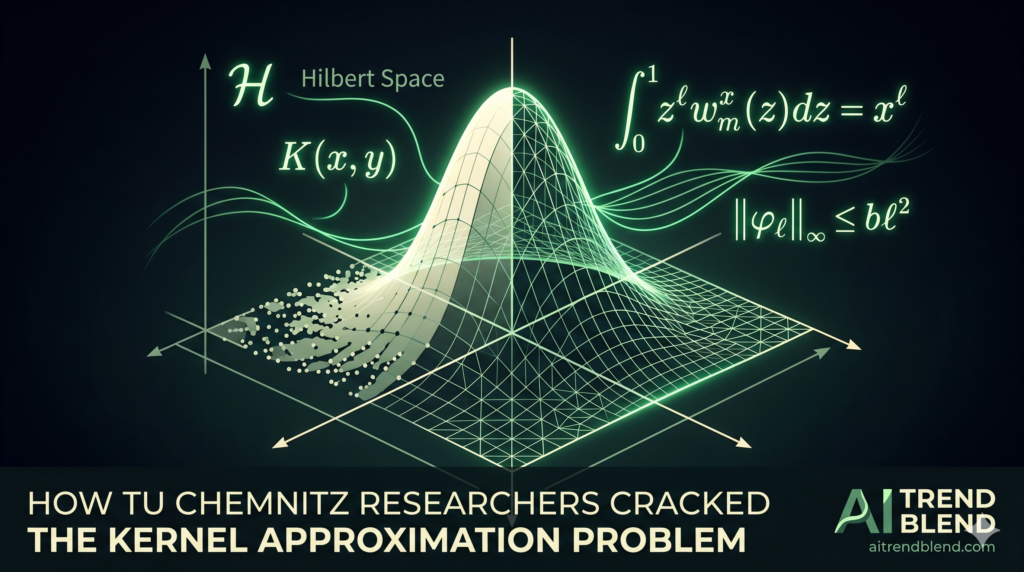
How Dommel and Pichler Finally Cracked the Kernel Approximation Problem That Was Holding Machine Learning Back.

How Dommel and Pichler Finally Cracked the Kernel Approximation Problem That Was Holding Machine Learning Back

Paul Dommel and Alois Pichler from TU Chemnitz developed a Taylor series based approach to approximate kernel functions in reproducing kernel Hilbert spaces. Their work produces the first non-exponential eigenfunction bounds ever recorded and opens the door to regularization parameters…
How Dommel and Pichler Finally Cracked the Kernel Approximation Problem That Was Holding Machine Learning Back Read More »

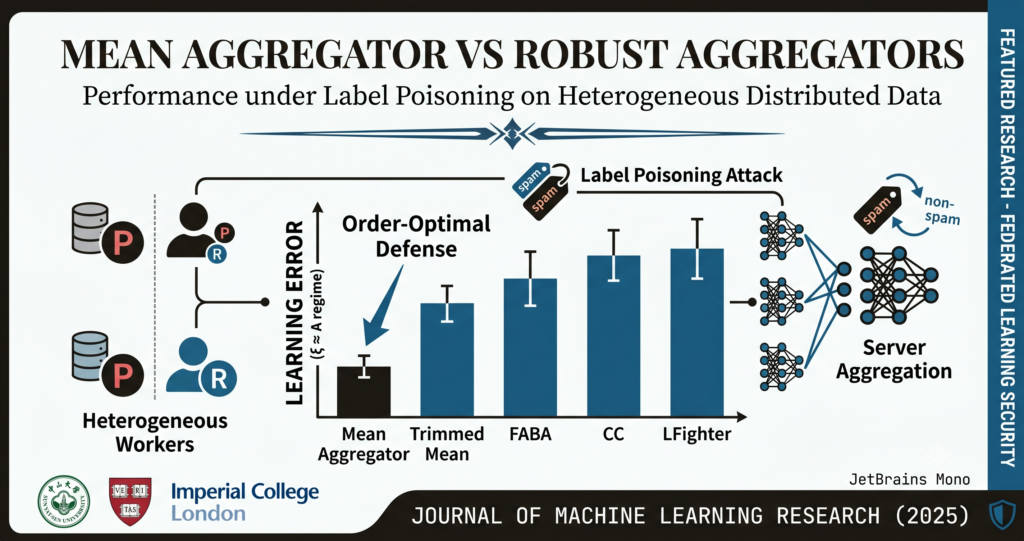
Mean Aggregator Beats Robust Aggregators Under Label Poisoning Attacks on Heterogeneous Data.

Mean Aggregator Beats Robust Aggregators Under Label Poisoning Attacks on Heterogeneous Data

A team from Sun Yat-Sen University, Harvard, and Imperial College London has flipped the conventional wisdom of Byzantine-robust distributed learning: when attacks are confined to label poisoning and data is heterogeneous enough, the plain old mean aggregator outperforms — and…

Mean Aggregator Beats Robust Aggregators Under Label Poisoning Attacks on Heterogeneous Data Read More »

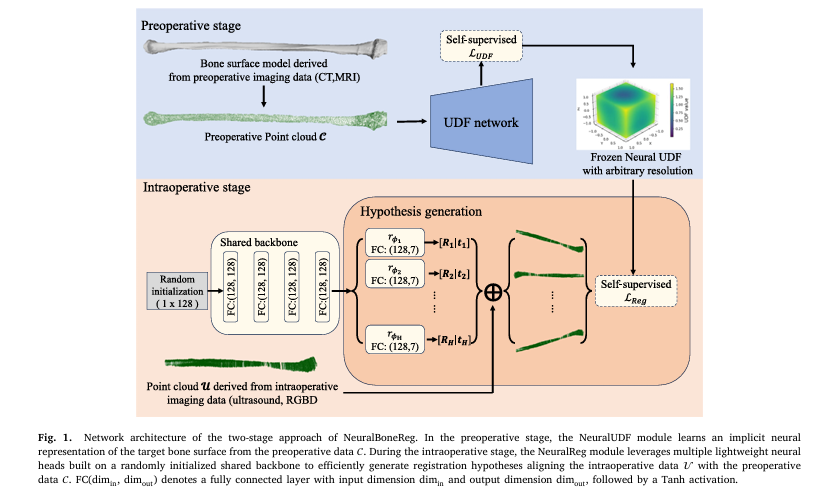
NeuralBoneReg Solved the Hardest Alignment Problem in Robotic Surgery Without a Single Labeled Training Example.

NeuralBoneReg: How a Self-Supervised Neural Framework Solved the Hardest Problem in Robotic Orthopedic Surgery

A team from Balgrist University Hospital and ETH Zurich built an instance-specific self-supervised framework that registers bone surfaces across imaging modalities by learning a continuous neural distance field from the preoperative scan and using thousands of neural hypothesis generation heads…

NeuralBoneReg: How a Self-Supervised Neural Framework Solved the Hardest Problem in Robotic Orthopedic Surgery Read More »

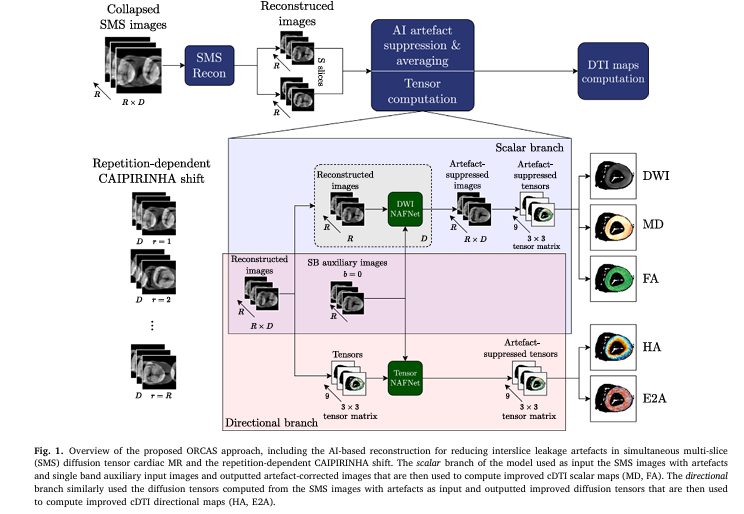
ORCAS Compressed a Two-Hour Heart Scan Into Seven Minutes — Without Losing What Matters.

ORCAS: How Variable CAIPIRINHA and Artefact-Aware AI Finally Made Whole-Heart Cardiac DTI Clinically Feasible

A team from Imperial College London, Royal Brompton Hospital, and TU Munich built a framework that combines variable CAIPIRINHA acquisition with artefact-aware dual-branch deep learning to achieve 18-fold acceleration in cardiac diffusion tensor imaging while cutting key biomarker errors by…

ORCAS: How Variable CAIPIRINHA and Artefact-Aware AI Finally Made Whole-Heart Cardiac DTI Clinically Feasible Read More »

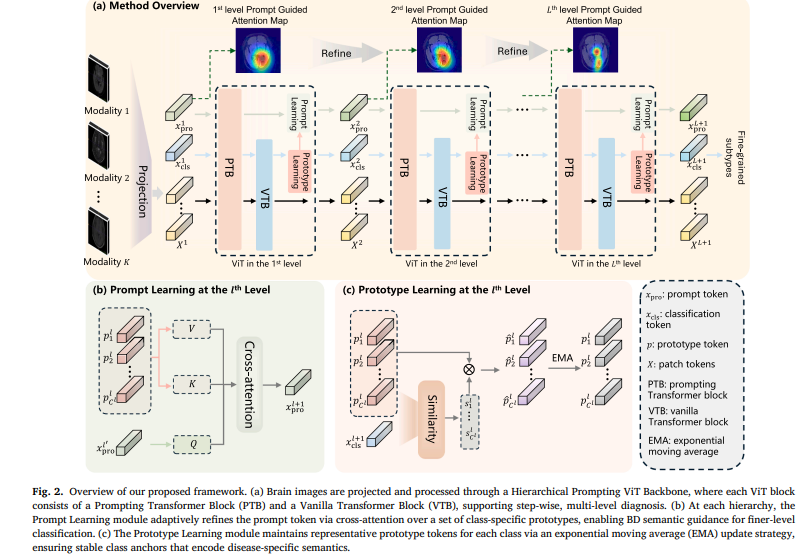
HP2L: How Hierarchical Prompt and Prototype Learning Finally Taught AI to Diagnose Brain Disorders Like a Radiologist.

HP2L: How Hierarchical Prompt and Prototype Learning Finally Taught AI to Diagnose Brain Disorders Like a Radiologist

A team from ShanghaiTech University, Henan Provincial People’s Hospital, and Shanghai United Imaging Intelligence built a hierarchical framework that classifies 23 brain disorders across three diagnostic levels, cuts the performance gap between coarse and fine-grained predictions to just 2%, and…

HP2L: How Hierarchical Prompt and Prototype Learning Finally Taught AI to Diagnose Brain Disorders Like a Radiologist Read More »

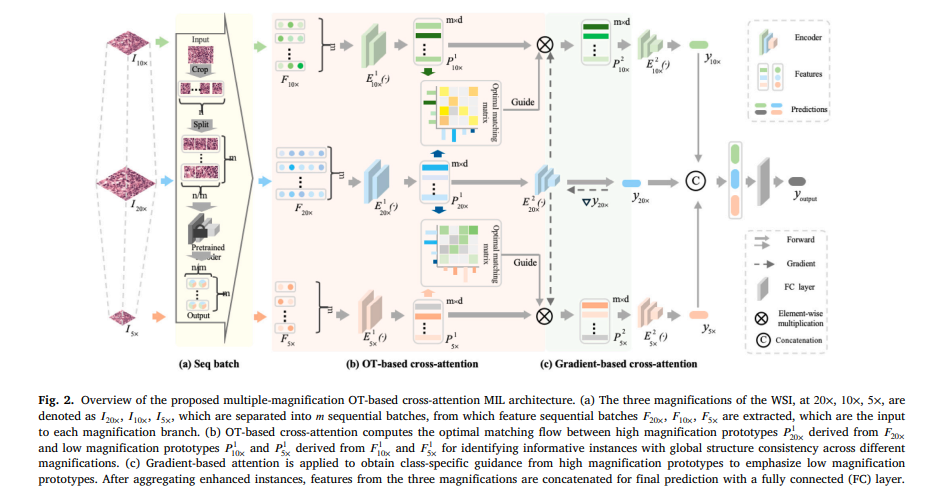
M2OTCA: How Multi-Magnification Optimal Transport Finally Made Whole Slide Image AI Work the Way Pathologists Think.

M2OTCA: How Multi-Magnification Optimal Transport Finally Made Whole Slide Image AI Work the Way Pathologists Think

A team from Wuhan University of Science and Technology, Xiamen University, and the University of New South Wales built a multiple-magnification MIL framework that uses optimal transport to match tissue features across magnification levels, outperforming every tested baseline across four…

M2OTCA: How Multi-Magnification Optimal Transport Finally Made Whole Slide Image AI Work the Way Pathologists Think Read More »