Image Segmentation

Image segmentation is the task of labeling an image at the pixel level, and it underpins much of modern medical imaging, autonomous perception, and scene understanding. Here we break down segmentation architectures, loss functions, and evaluation practices, with frequent attention to the medical settings where boundary accuracy and robustness matter most. Each piece traces the method back to its source research.

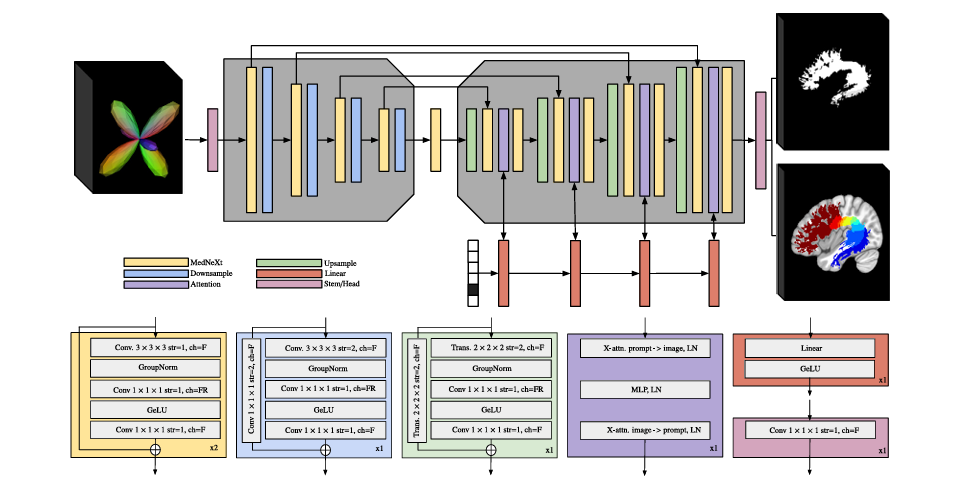
BundleParc: Tractography-Free White Matter Bundle Parcellation with MedNeXt + Cross-Attention

BundleParc: Tractography-Free White Matter Bundle Parcellation with MedNeXt + Cross-Attention

Researchers at Université de Sherbrooke built a prompt-conditioned MedNeXt encoder-decoder that reads fiber orientation maps and outputs anatomically consistent white matter parcellations in seconds — without generating a single streamline — outperforming all competing methods on reproducibility across healthy subjects,…
BundleParc: Tractography-Free White Matter Bundle Parcellation with MedNeXt + Cross-Attention Read More »

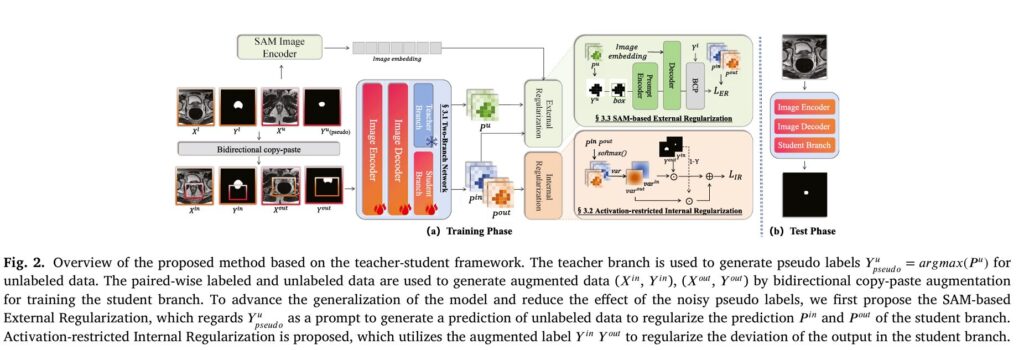
YoloSeg: One Labeled Image Is All You Need for Medical Image Segmentation.

YoloSeg: One Labeled Image Is All You Need for Medical Image Segmentation

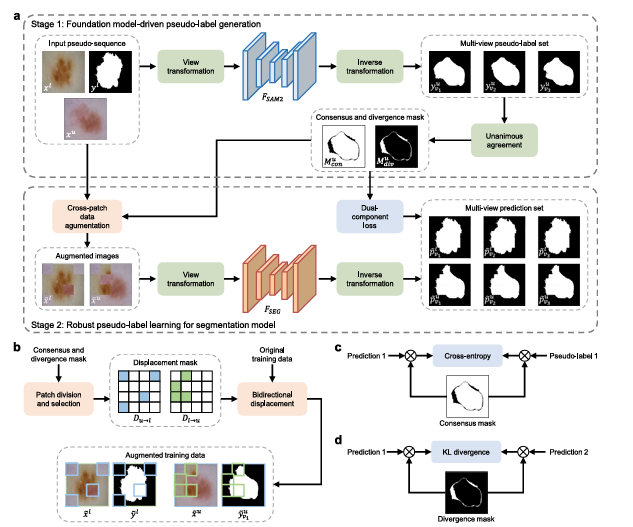
A team at the Chinese Academy of Sciences built a framework that achieves segmentation accuracy within 3% of fully-supervised models across ten diverse medical datasets — using exactly one manually annotated image per task. SAM2 does the label propagation; a…

YoloSeg: One Labeled Image Is All You Need for Medical Image Segmentation Read More »

MEWS: Semantic Segmentation With Almost No Labels — A Few Pixels Per Class Is All You Need.

MEWS: Semantic Segmentation With Almost No Labels — A Few Pixels Per Class Is All You Need

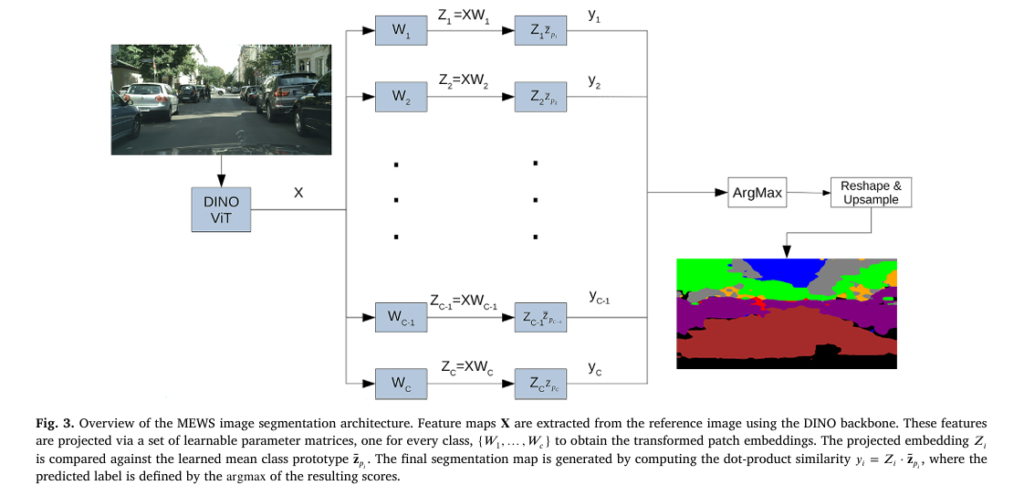
Researchers at Aristotle University of Thessaloniki built a segmentation system that achieves 63.27% mIoU on Cityscapes — virtually matching fully supervised methods — using only sparse pixel annotations on a handful of training images. No dense masks. No text prompts.…

MEWS: Semantic Segmentation With Almost No Labels — A Few Pixels Per Class Is All You Need Read More »

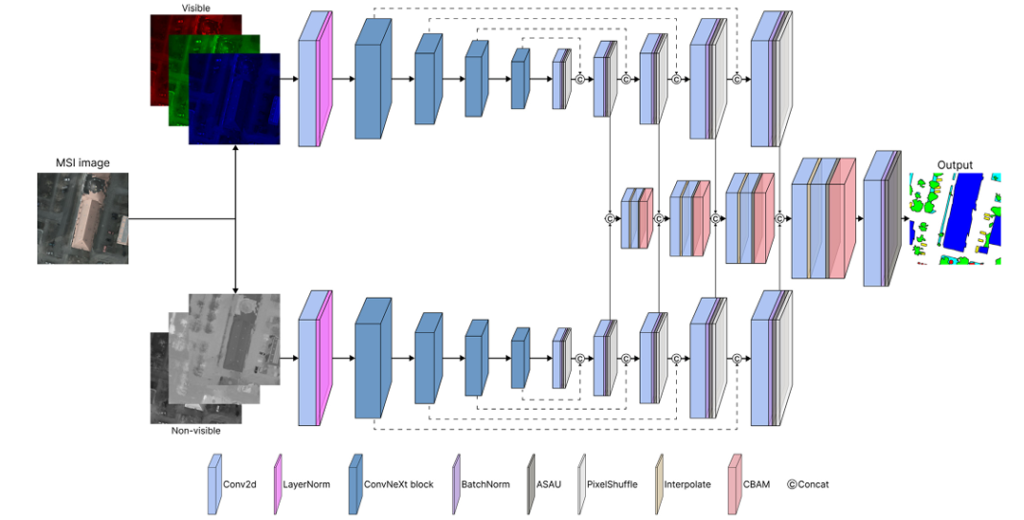
MeCSAFNet: Dual-Branch ConvNeXt for Multispectral Semantic Segmentation.

MeCSAFNet: Dual-Branch ConvNeXt for Multispectral Semantic Segmentation

Researchers at Universitat Autònoma de Barcelona built a dual-branch ConvNeXt network that separates visible and non-visible spectral information, fuses them with CBAM attention, and maps land cover at accuracy levels that leave U-Net, SegFormer, and DeepLabV3+ behind — without needing…

MeCSAFNet: Dual-Branch ConvNeXt for Multispectral Semantic Segmentation Read More »

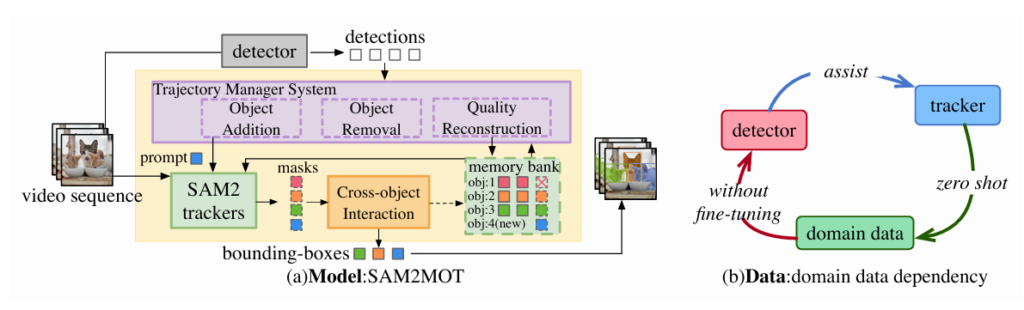
SAM2MOT: The Zero-Shot Tracking System That Replaced Detection-Association with Pure Segmentation

SAM2MOT: The Zero-Shot Tracking System That Replaced Detection-Association with Pure Segmentation

A team at Huawei Cloud rethought multi-object tracking from the ground up — replacing the classic detect-then-associate pipeline with SAM2-driven segmentation masks, cross-object interaction, and a trajectory management system that runs zero-shot on any scene without a single line of…

SAM2MOT: The Zero-Shot Tracking System That Replaced Detection-Association with Pure Segmentation Read More »

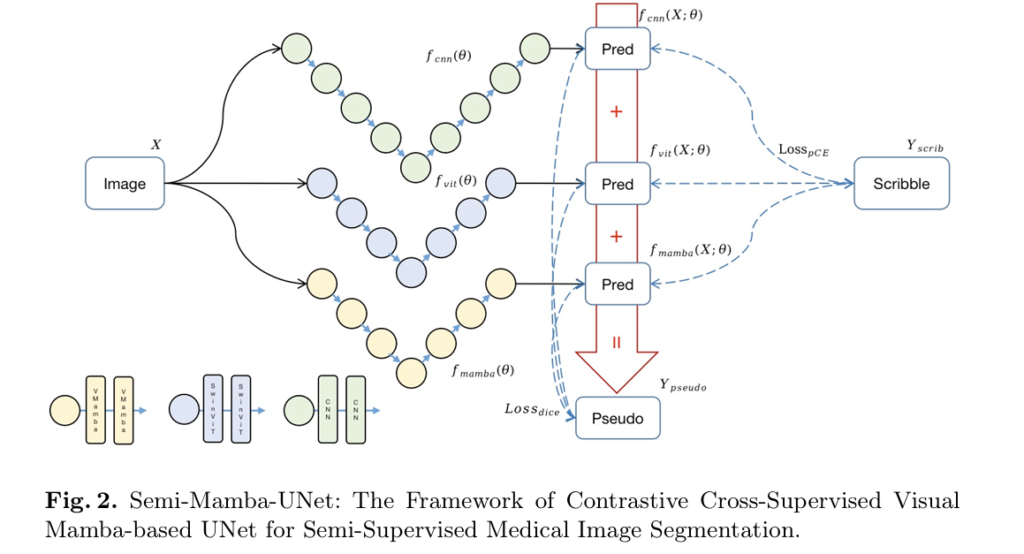
Weak-Mamba-UNet: How CNN, ViT, and Visual Mamba Collaborate to Segment Medical Images from Scribbles

Weak-Mamba-UNet: How CNN, ViT, and Visual Mamba Collaborate to Segment Medical Images from Scribbles

Ziyang Wang at Oxford and Chao Ma introduce Weak-Mamba-UNet: the first weakly-supervised framework that runs CNN, Vision Transformer, and Visual Mamba together under scribble supervision, letting each architecture’s strengths cover the others’ blind spots. On MRI cardiac segmentation, it achieves…

Weak-Mamba-UNet: How CNN, ViT, and Visual Mamba Collaborate to Segment Medical Images from Scribbles Read More »

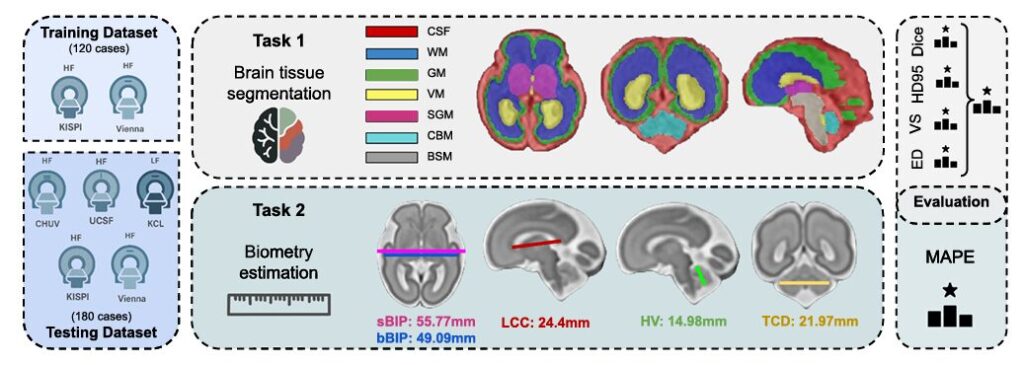
FeTA 2024: What 16 Teams Scanning Unborn Brains Taught Us About the Limits of AI Segmentation

FeTA 2024: What 16 Teams Scanning Unborn Brains Taught Us About the Limits of AI Segmentation

A multi-center challenge involving 300 fetal brain MRI scans, 16 competing AI systems, and one quietly unsettling discovery — that a simple gestational-age linear model beat most sophisticated neural networks at biometry prediction.

FeTA 2024: What 16 Teams Scanning Unborn Brains Taught Us About the Limits of AI Segmentation Read More »

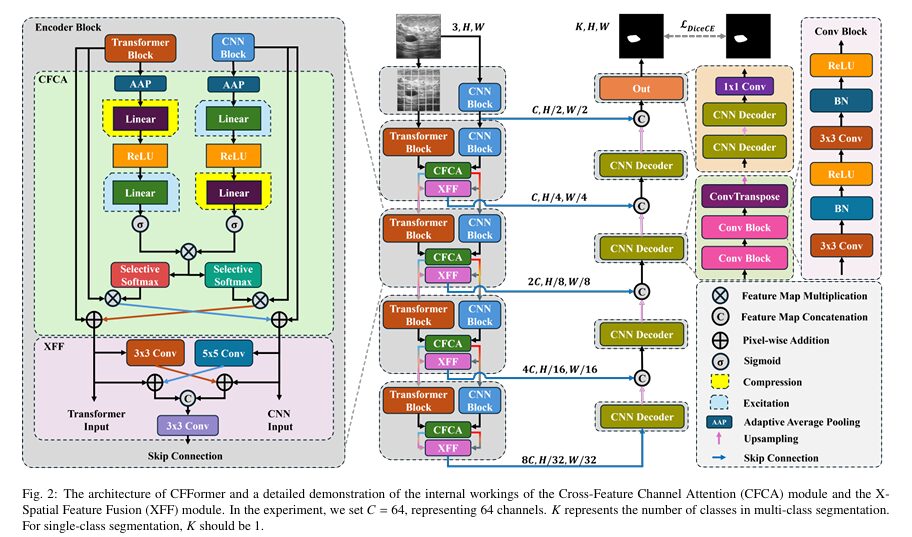
CFFormer: Cross CNN-Transformer Attention Model

CFFormer: How Cross CNN-Transformer Attention Finally Solves the Blurry Ultrasound Problem

Researchers at University of Nottingham Ningbo built a hybrid model that beats every state-of-the-art method across eight medical image datasets — not by stacking more layers or adding heavier attention, but by finally making CNN and Transformer encoders talk to…

CFFormer: How Cross CNN-Transformer Attention Finally Solves the Blurry Ultrasound Problem Read More »

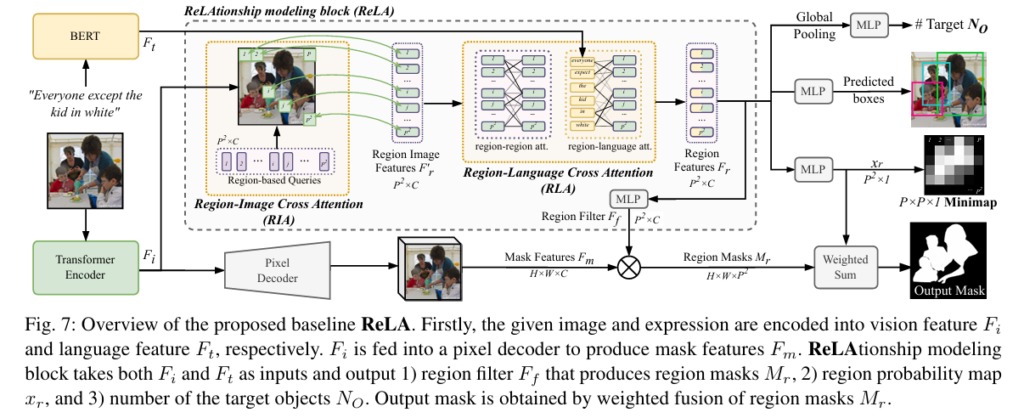
GREx: Why "All People" Breaks Every Referring Expression Model — And What NTU Did About It.

GREx: Why “All People” Breaks Every Referring Expression Model — And What NTU Did About It

A team from NTU and Fudan University identified a blind spot that has haunted referring expression AI for a decade: the assumption that every phrase points to exactly one object. Their fix is a new family of benchmarks, a 259K-expression…

GREx: Why “All People” Breaks Every Referring Expression Model — And What NTU Did About It Read More »