Medical AI

Medical AI brings together our reporting on machine learning for clinical and biomedical problems, from diagnosis and prognosis to medical image analysis and decision support. Because mistakes in this domain carry a human cost, we pay close attention to evaluation, calibration, uncertainty, and the gap between benchmark numbers and bedside reliability. Expect grounded explainers of recent research rather than uncritical product announcements.

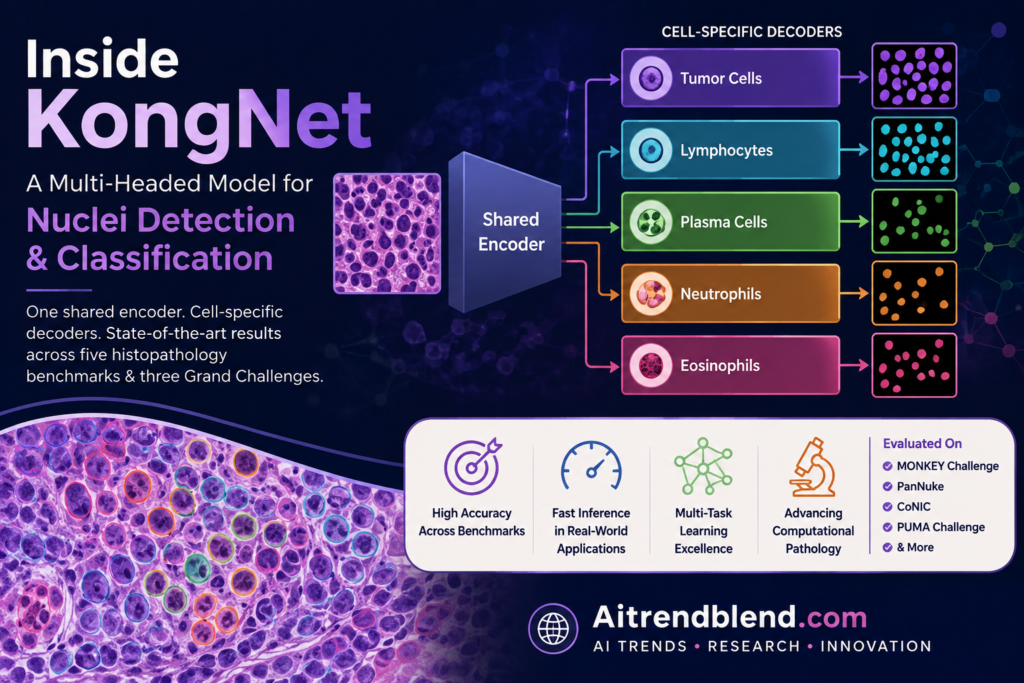
Inside KongNet A Multi Headed Model for Nuclei Detection

Inside KongNet A Multi Headed Model for Nuclei Detection

Analysis by the aitrendblend editorial team. Medical review. Source paper published in Medical Image Analysis, 2026. Digital Pathology Nuclei Detection Multi Task Learning MONKEY Challenge PanNuke A shared encoder feeding parallel, cell type specific decoders is the core idea behind KongNet. Source, Lv et al., Medical Image Analysis, 2026. Read this first This article explains […]

Inside KongNet A Multi Headed Model for Nuclei Detection Read More »
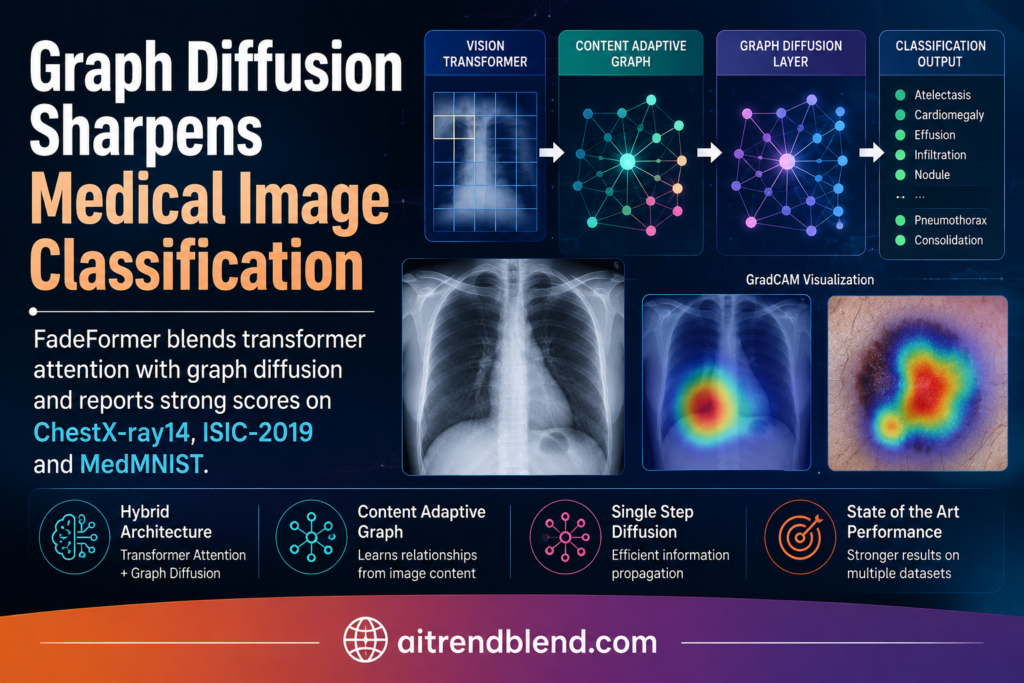
FadeFormer: Graph Diffusion Sharpens Medical Image Classification

FadeFormer: Graph Diffusion Sharpens Medical Image Classification

Analysis by the aitrendblend editorial team / Pillar 1, Medical Imaging and Diagnostic AI Vision Transformers Graph Diffusion Chest X-Ray Classification Skin Lesion Classification MedMNIST A FadeFormer layer fuses standard self attention with a learned graph diffusion process before every feed forward block. A radiologist scanning a chest film is not looking at one pixel

FadeFormer: Graph Diffusion Sharpens Medical Image Classification Read More »

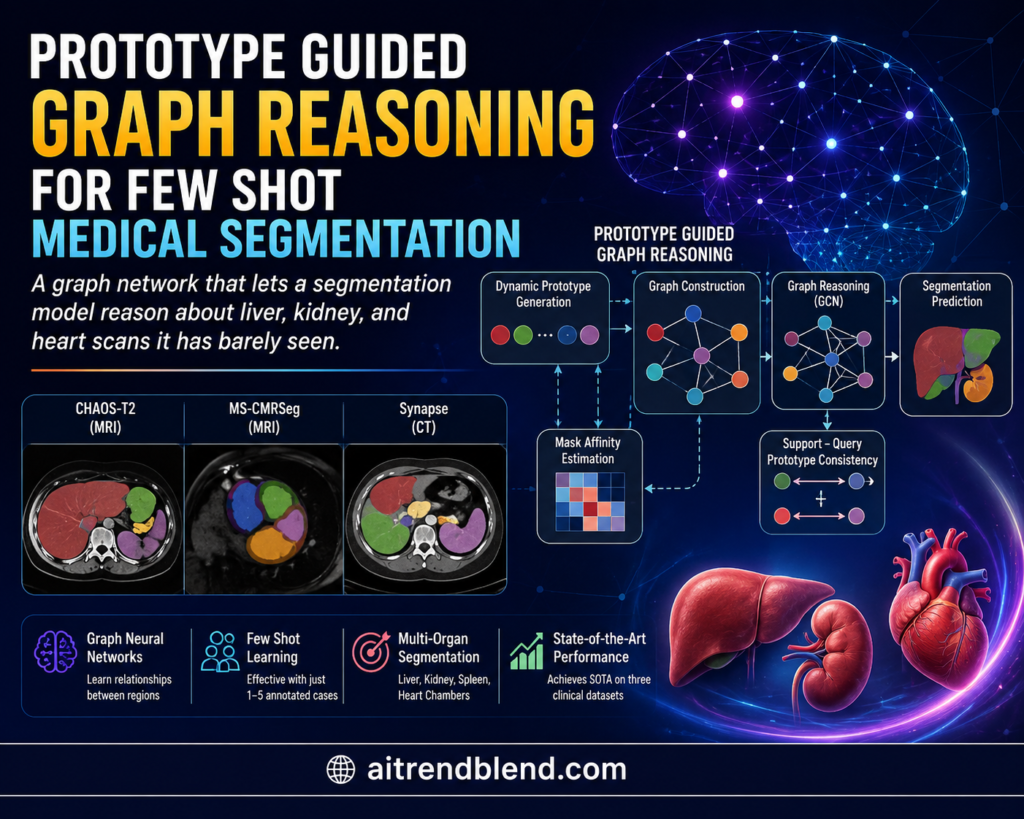
Prototype Guided Graph Reasoning for Few Shot Medical Segmentation

Prototype Guided Graph Reasoning for Few Shot Medical Segmentation

Analysis by the aitrendblend editorial team · Medical review· Pillar: AI for medical imaging and healthcare · Source paper published in IEEE Transactions on Medical Imaging, February 2025 Few Shot Segmentation Graph Convolutional Networks Medical Imaging MRI and CT Abdominal and Cardiac Organs A model trained to recognize a kidney in one hospital’s scans often

Prototype Guided Graph Reasoning for Few Shot Medical Segmentation Read More »

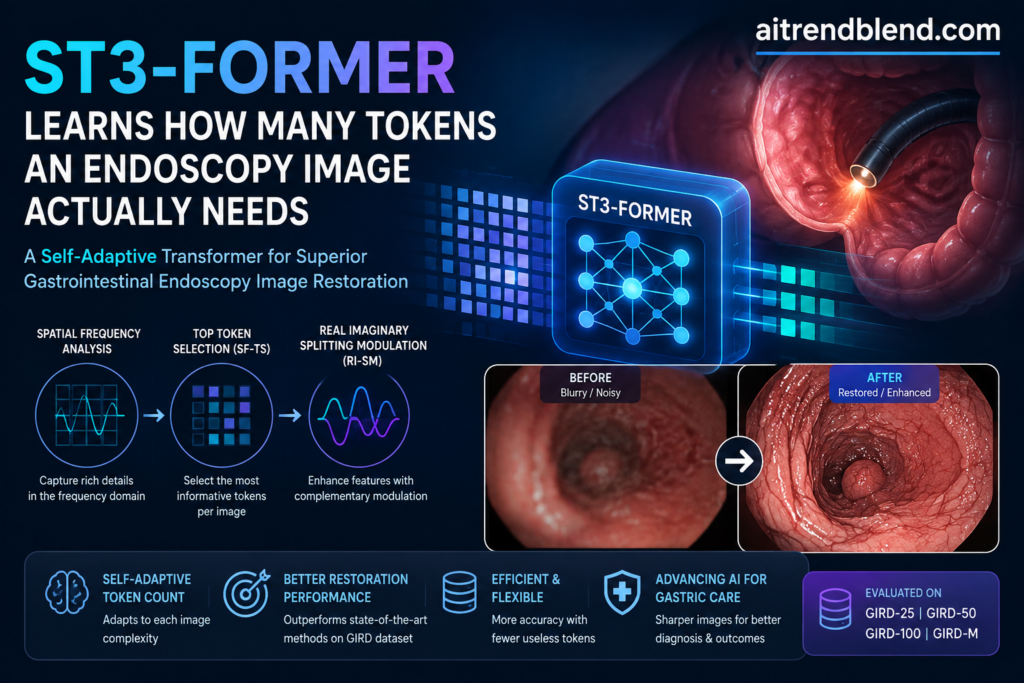
ST3-Former Learns How Many Tokens an Endoscopy Image Actually Needs

ST3-Former Learns How Many Tokens an Endoscopy Image Actually Needs

Analysis by the aitrendblend editorial team. Source paper, Huang, Chen, Lin, Yang, Zheng, Wu and Yang, Knowledge Based Systems, 2026. gastrointestinal endoscopy image restoration token selection transformer attention frequency domain GIRD benchmark Same endoscopic view, two versions. ST3-Former restores detail that noise and motion blur erase from gastrointestinal scans. An endoscopist steering a camera through

ST3-Former Learns How Many Tokens an Endoscopy Image Actually Needs Read More »

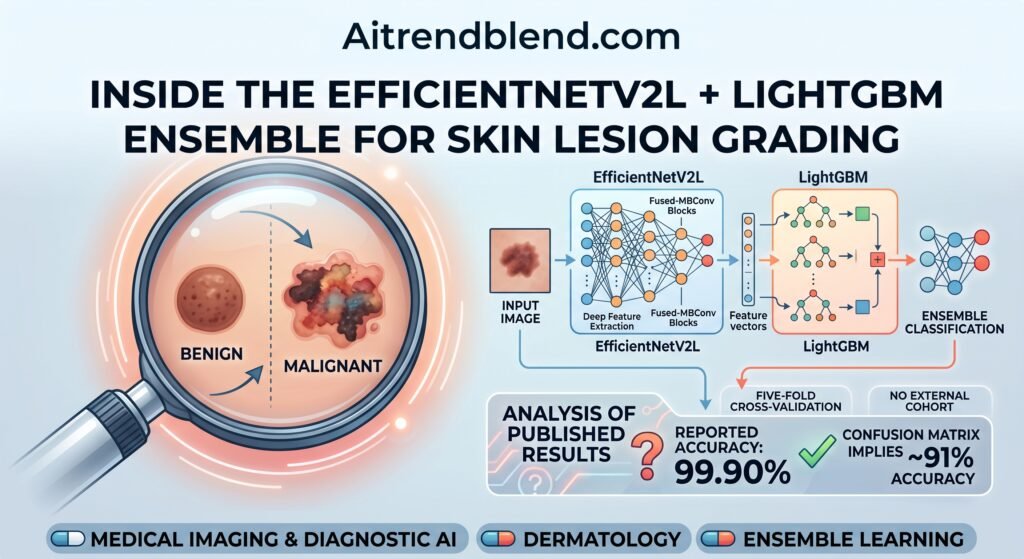
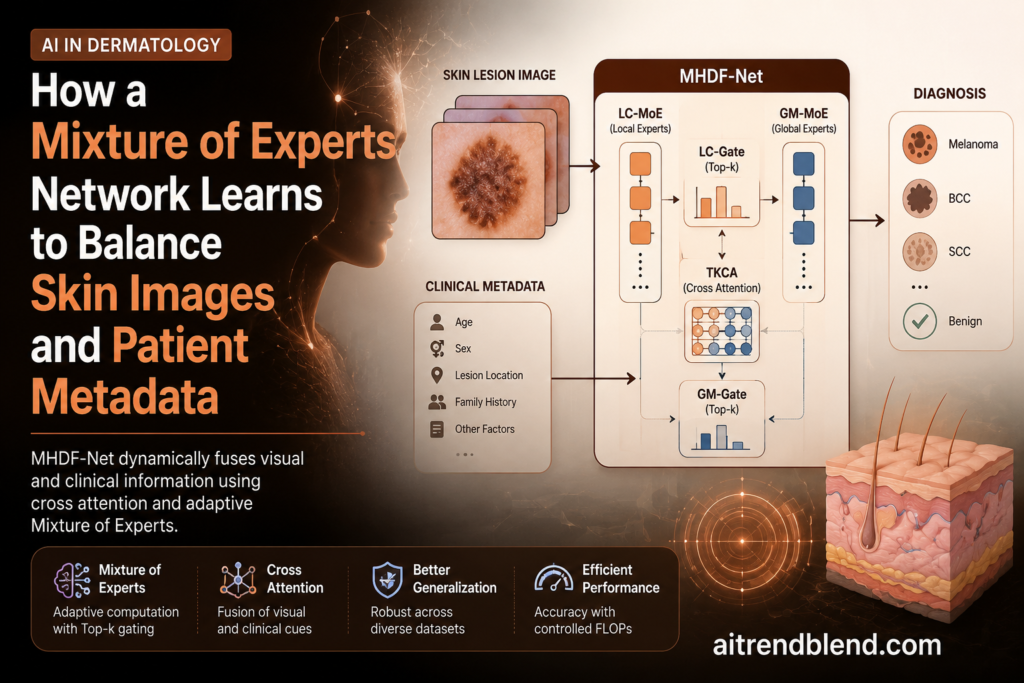
Inside the EfficientNetV2L LightGBM Ensemble for Skin Lesion Grading

Inside the EfficientNetV2L LightGBM Ensemble for Skin Lesion Grading

Medical imaging and diagnostic AI Dermatology Ensemble learning Analysis by the aitrendblend editorial team Benign and malignant dermoscopy samples similar to those used in the EfficientNetV2L LightGBM study. A dermatologist looking at a mole under a dermoscope has maybe ninety seconds before the next patient walks in. Fair skin, a family history, a spot that

Inside the EfficientNetV2L LightGBM Ensemble for Skin Lesion Grading Read More »

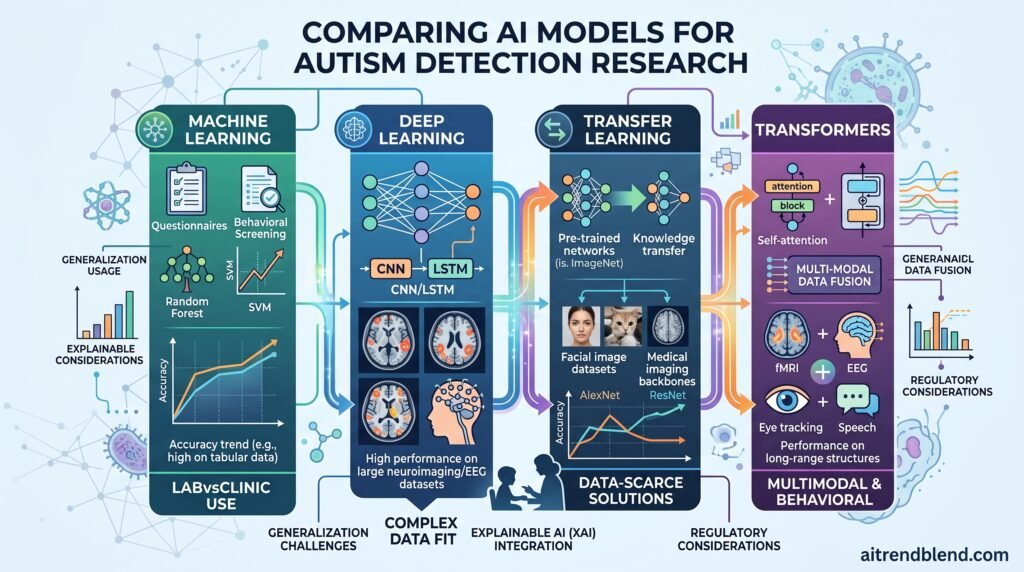
How AI Models Compare Across Autism Spectrum Disorder Detection Research

How AI Models Compare Across Autism Spectrum Disorder Detection Research

Analysis by the aitrendblend editorial team. Medical review. Based on a peer reviewed systematic review published in Computer Science Review. Healthcare AI Autism Research Machine Learning EEG and Neuroimaging Explainable AI Across 73 studies, researchers built autism spectrum disorder detection models on everything from brain scans to handwriting samples. The picture that emerges is less

How AI Models Compare Across Autism Spectrum Disorder Detection Research Read More »

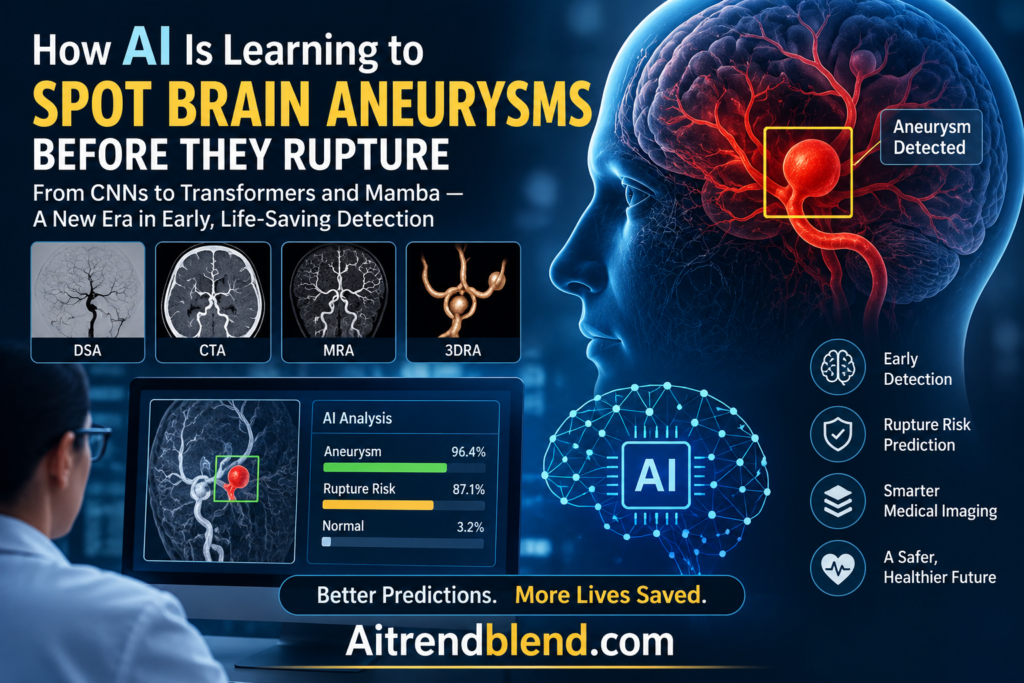
How AI Is Learning to Spot Brain Aneurysms Before They Rupture

How AI Is Learning to Spot Brain Aneurysms Before They Rupture

Analysis by the aitrendblend editorial team Medical imaging and diagnostic AI Neurovascular imaging Survey This article summarizes published research for informational purposes. It is not medical advice and should not be used to diagnose, evaluate, or make decisions about a brain aneurysm or any other medical condition. If you have concerns about your own health

How AI Is Learning to Spot Brain Aneurysms Before They Rupture Read More »

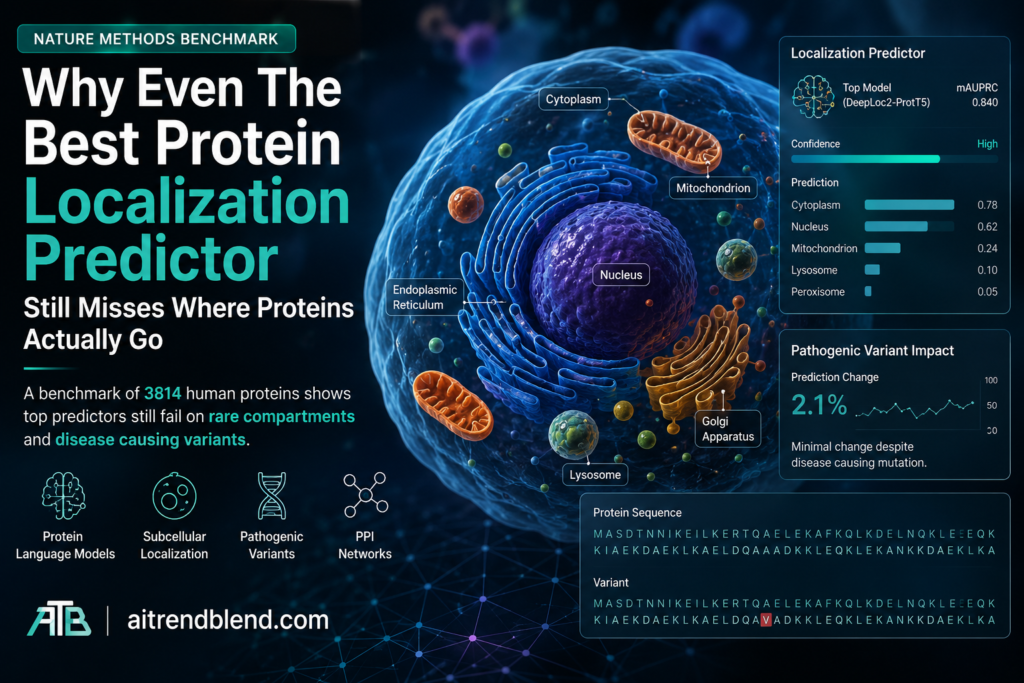
Why Even The Best Protein Localization Predictor Still Misses Where Proteins Actually Go

Why Even The Best Protein Localization Predictor Still Misses Where Proteins Actually Go

Analysis by the aitrendblend editorial team · Source: Nature Methods, Registered Report, DOI 10.1038/s41592-026-03142-6 · AI for medical imaging and healthcare subcellular localization protein language models multilabel classification pathogenic variants DeepLoc2 ProtT5 Where a protein ends up inside the cell is not a detail, it is often the whole story of what that protein does

Why Even The Best Protein Localization Predictor Still Misses Where Proteins Actually Go Read More »

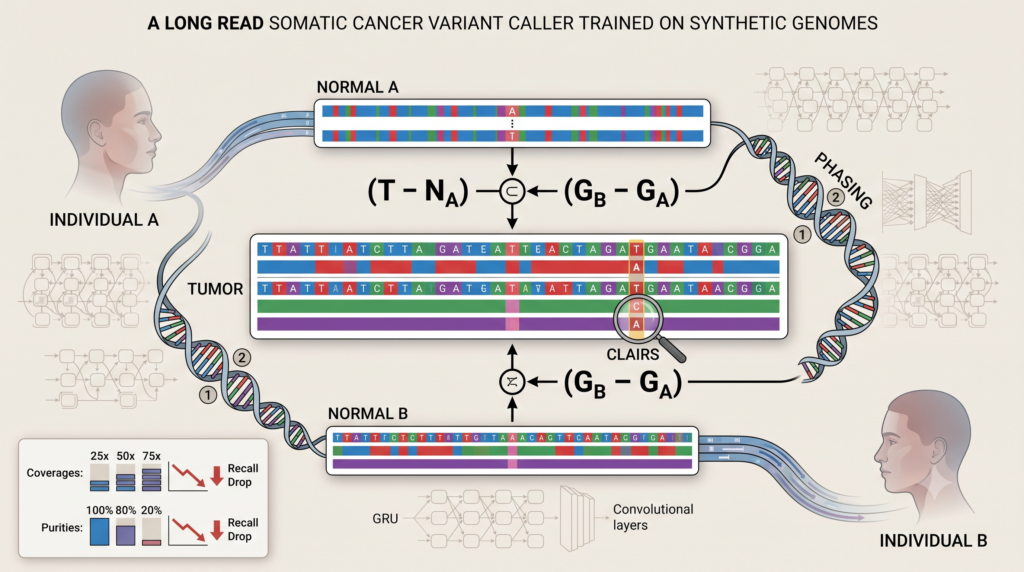
Meet ClairS: The Long-Read Somatic Variant Caller Trained Without Real Tumors

Meet ClairS: The Long-Read Somatic Variant Caller Trained Without Real Tumors

Analysis by the aitrendblend editorial team · Medical review · Source paper doi.org/10.1038/s41592-026-03152-4 Cancer Genomics Long Read Sequencing Somatic Variant Calling Nanopore Nature Methods Finding the mutation that only appears in the tumor track, and not in the matched normal, is the entire job of a somatic variant caller. Every somatic mutation caller needs real

Meet ClairS: The Long-Read Somatic Variant Caller Trained Without Real Tumors Read More »