Machine Learning

Machine learning sits at the core of everything we cover at AI Trend Blend. This section gathers our research breakdowns, method explainers, and practical analyses across supervised, self-supervised, and generative learning, with a steady focus on the ideas that actually move results rather than the noise around them. You will find work spanning optimization, model architectures, training dynamics, and the theory that explains why modern systems behave the way they do, written for readers who want depth without filler.

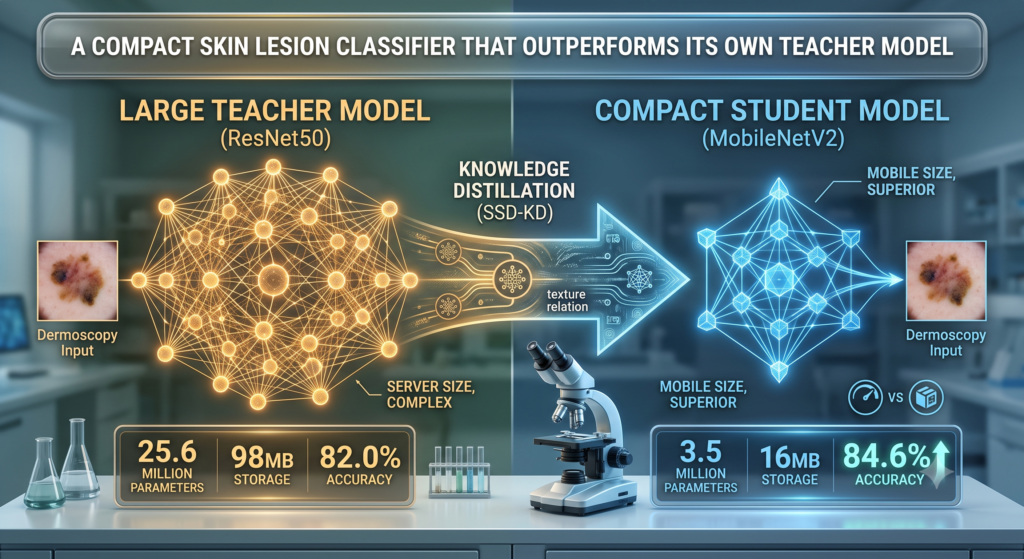
SSD-KD: A Compact Skin Lesion Classifier That Outperforms Its Own Teacher Model

SSD-KD: A Compact Skin Lesion Classifier That Outperforms Its Own Teacher Model

Skin cancer detection has become one of the clearer success stories for deep learning in medicine, with models trained on large dermoscopy image collections repeatedly matching or approaching dermatologist level accuracy on benchmark datasets. The catch is that the models…

SSD-KD: A Compact Skin Lesion Classifier That Outperforms Its Own Teacher Model Read More »

Infographic showing a smartwatch predicting energy expenditure for a person with type 1 diabetes using AI, with neural network layers and METs categories.

7 Revolutionary Breakthroughs in Diabetes Tech (Why Most Fail & How This AI Model Succeeds)

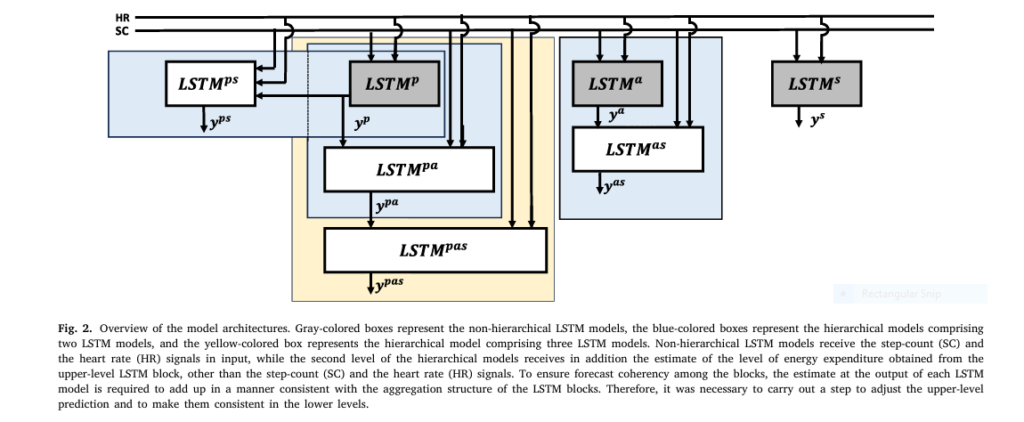
Living with type 1 diabetes (T1D) is like walking a metabolic tightrope. Every decision—what to eat, when to exercise, how much insulin to take—can send blood glucose levels soaring or crashing. Among the most unpredictable factors? Physical activity. Exercise dramatically…

7 Revolutionary Breakthroughs in Diabetes Tech (Why Most Fail & How This AI Model Succeeds) Read More »

7 Revolutionary Breakthroughs in Skin Cancer Detection: How a New AI Model Outperforms Experts (And Why Older Methods Fail)

7 Revolutionary Breakthroughs in Skin Cancer Detection: How a New AI Model Outperforms Experts (And Why Older Methods Fail)

Skin cancer is one of the most common—and most deadly—forms of cancer worldwide. If detected at an advanced stage, melanoma, the most fatal type, has a 10-year survival rate of less than 39%. But here’s the hopeful news: early detection…

7 Revolutionary Breakthroughs in Skin Cancer Detection: How a New AI Model Outperforms Experts (And Why Older Methods Fail) Read More »

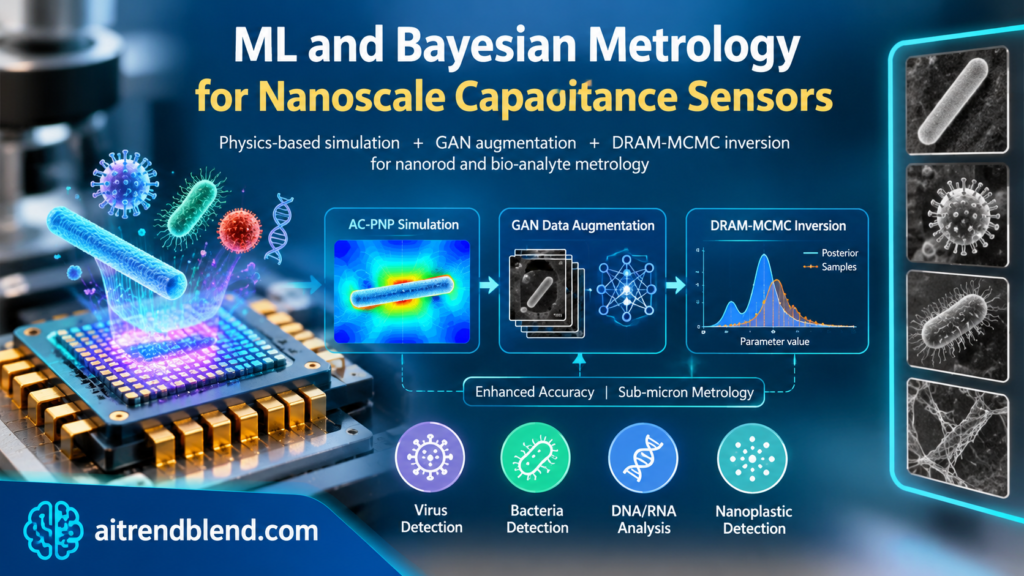
ML and Bayesian Metrology for Nanoscale Capacitance Sensors

ML and Bayesian Metrology for Nanoscale Capacitance Sensors

Inside a microfluidic chamber sealed atop a 90-nanometer CMOS biochip, an elongated nanoscale particle—a 300-nanometer nanoplastic fiber, a rod-shaped bacteriophage, or a double-stranded nucleic acid bundle—drifts in a 100-millimolar saline solution just 40 nanometers above a grid of gold-copper nanoelectrodes.…

ML and Bayesian Metrology for Nanoscale Capacitance Sensors Read More »