Remote Sensing AI

Machine learning for satellite and aerial imagery: hyperspectral and multispectral fusion, change detection, and multi-sensor pipelines. Coverage focuses on what makes these methods reliable when the sensors disagree and the scenes change.

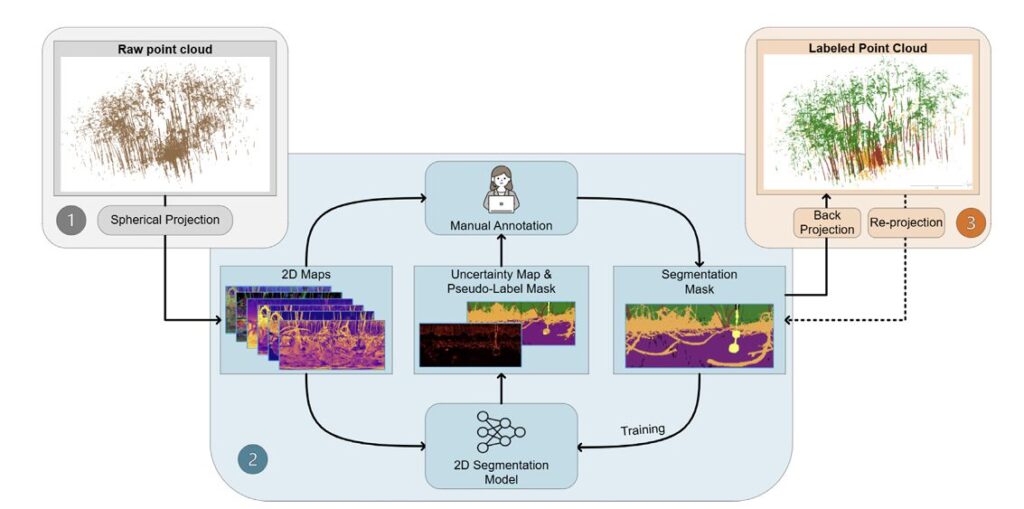
Through the Perspective of LiDAR: Uncertainty-Aware Annotation Pipeline for TLS Point Cloud Segmentation.

Through the Perspective of LiDAR: Uncertainty-Aware Annotation Pipeline for TLS Point Cloud Segmentation

Fei Zhang and colleagues at RIT built a semi-automated pipeline that projects millions of mangrove LiDAR points onto a 2D spherical canvas, trains an ensemble of segmentation networks, harvests uncertainty maps to guide human annotators, and then back-projects everything into…
Through the Perspective of LiDAR: Uncertainty-Aware Annotation Pipeline for TLS Point Cloud Segmentation Read More »

FGI-EMIT: The First Multispectral LiDAR Benchmark That Finally Takes Understory Trees Seriously.

FGI-EMIT: The First Multispectral LiDAR Benchmark That Finally Takes Understory Trees Seriously

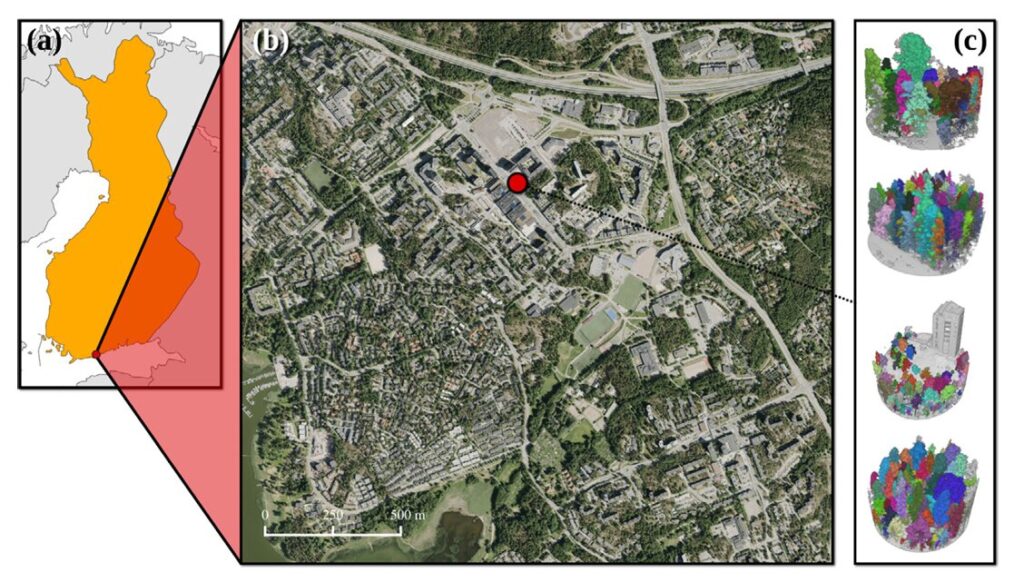
Lassi Ruoppa and colleagues at the Finnish Geospatial Research Institute introduce FGI-EMIT: 1,561 manually annotated boreal trees across three wavelengths, with a deliberate emphasis on the small, occluded understory trees that have defeated every benchmark before it. ForestFormer3D wins at…

FGI-EMIT: The First Multispectral LiDAR Benchmark That Finally Takes Understory Trees Seriously Read More »

CRGenNet: Cloud-Free Optical Image Generation Using SAR and Contaminated Optical Data.

CRGenNet: Cloud-Free Optical Image Generation Using SAR and Contaminated Optical Data

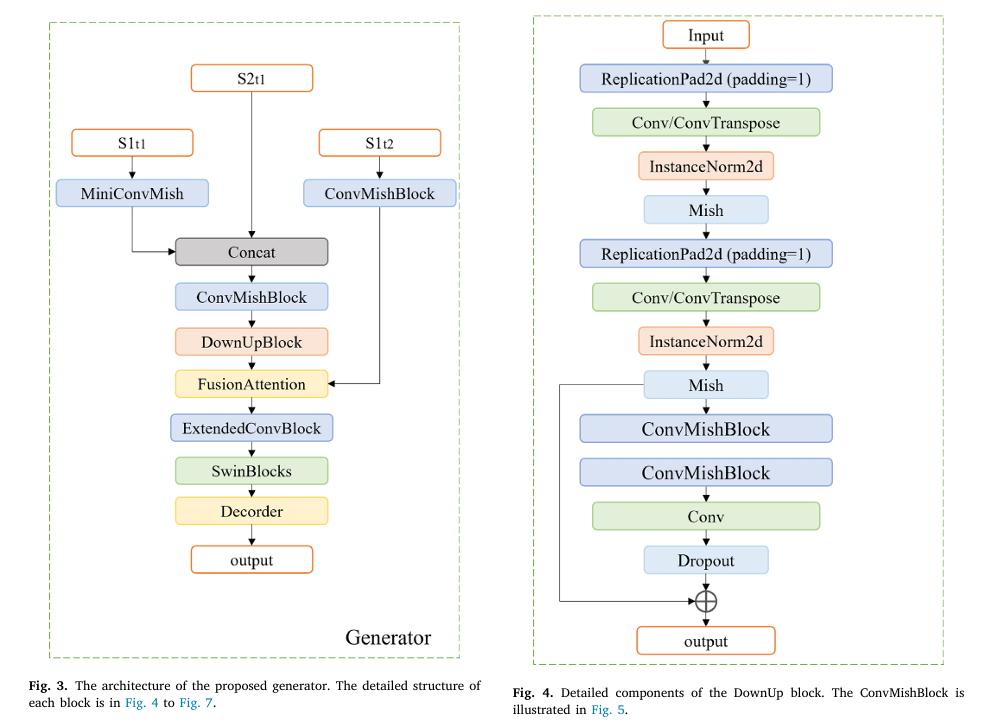
Researchers at the University of Twente built an image generation network that does what every prior method refused to do — accept that your helper image might also be covered in clouds. CRGenNet fuses Sentinel-1 SAR radar data with contaminated…

CRGenNet: Cloud-Free Optical Image Generation Using SAR and Contaminated Optical Data Read More »

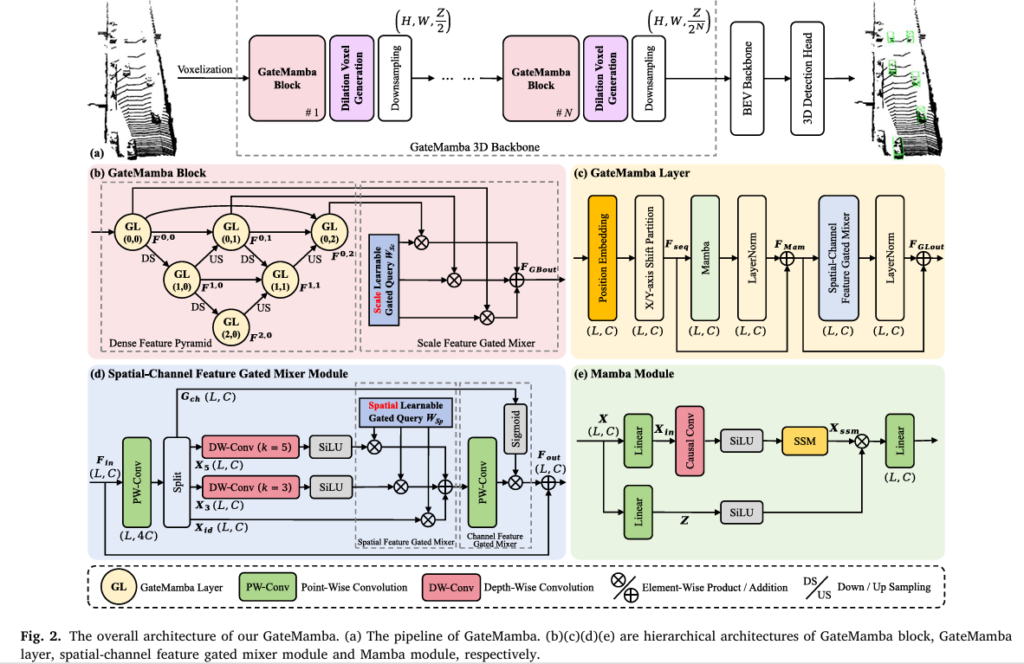
GateMamba: Feature Gated Mixer in State Space Model for Point Cloud 3D Object Detection.

GateMamba: Feature Gated Mixer in State Space Model for Point Cloud 3D Object Detection

Mamba-based 3D detectors achieve impressive overall numbers but consistently under-perform on small and distant targets — the problem is architectural: unidirectional scanning and crude downsampling let weak foreground signals drown in background noise. Researchers at NUDT and Sun Yat-sen University…

GateMamba: Feature Gated Mixer in State Space Model for Point Cloud 3D Object Detection Read More »

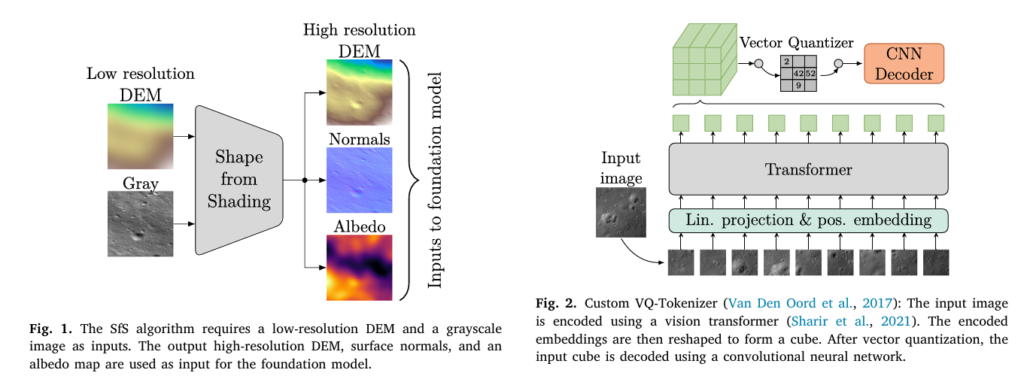
The Moon's Many Faces: A Single Unified Transformer for Multimodal Lunar Reconstruction

The Moon’s Many Faces: A Single Unified Transformer for Multimodal Lunar Reconstruction

A team at TU Dortmund built a single 29.7-million-parameter foundation model that can translate any combination of lunar data — grayscale images, elevation maps, surface normals, and albedo — to any other, all in a single forward pass. The key…

The Moon’s Many Faces: A Single Unified Transformer for Multimodal Lunar Reconstruction Read More »

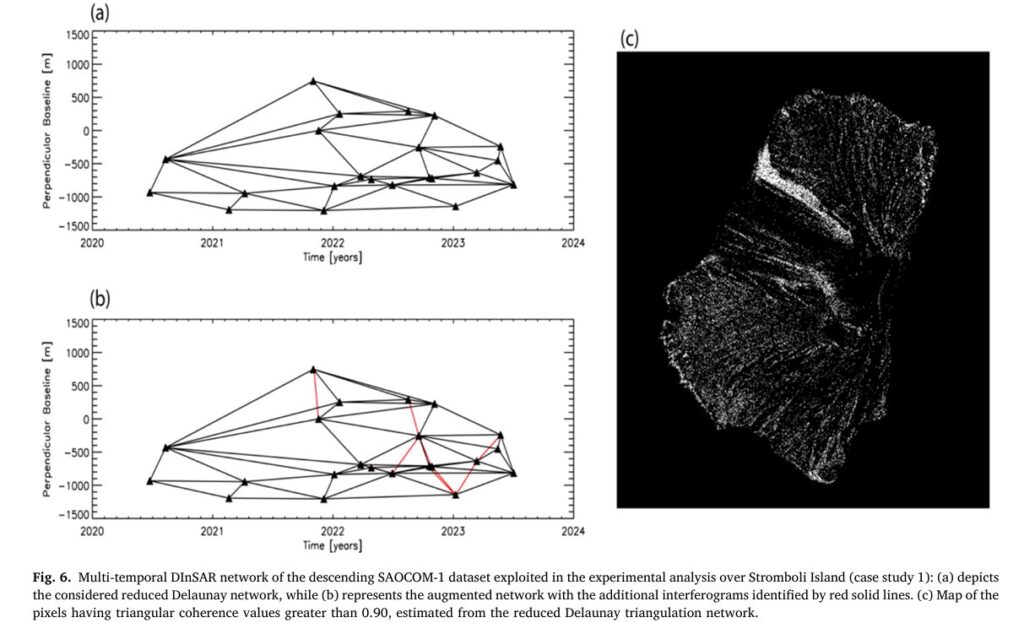
CS-EMCF: Compressive Sensing Phase Unwrapping for SAR Interferometry.

CS-EMCF: Compressive Sensing Phase Unwrapping for SAR Interferometry

Researchers at Italy’s CNR-IREA fused decades-old minimum cost flow theory with modern compressive sensing to build a phase unwrapping algorithm that detected a 40 cm volcanic displacement at Stromboli that the classic EMCF method simply could not recover — and…

CS-EMCF: Compressive Sensing Phase Unwrapping for SAR Interferometry Read More »

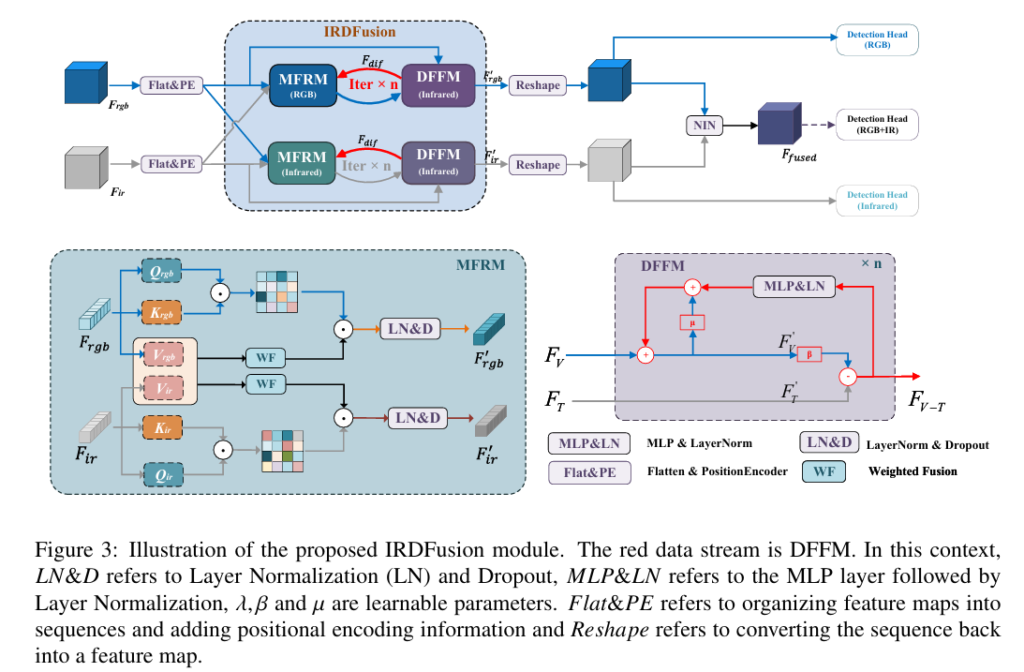
IRDFusion: Iterative Differential Feedback for Multispectral Object Detection.

IRDFusion: Iterative Differential Feedback for Multispectral Object Detection

Researchers at Jiangsu University asked a simple question: what if we treated cross-modal feature fusion the same way electrical engineers treat differential amplifiers? The answer — IRDFusion — hits 88.3 mAP50 on FLIR and works as a plug-and-play module inside…

IRDFusion: Iterative Differential Feedback for Multispectral Object Detection Read More »

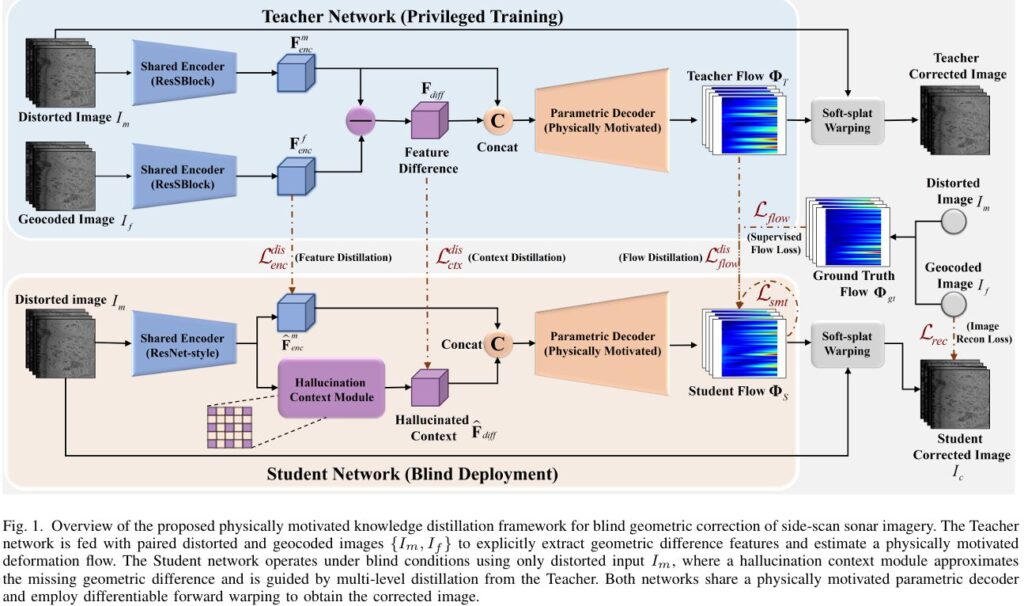
PCKD: Physically Motivated Knowledge Distillation for Blind Side-Scan Sonar Correction.

PCKD: Physically Motivated Knowledge Distillation for Blind Side-Scan Sonar Correction

Researchers at Northwestern Polytechnical University and the University of Girona built a physically motivated knowledge distillation framework that corrects motion-induced geometric distortions in side-scan sonar images from a single distorted input — no GPS, no inertial sensors, no navigation data…

PCKD: Physically Motivated Knowledge Distillation for Blind Side-Scan Sonar Correction Read More »

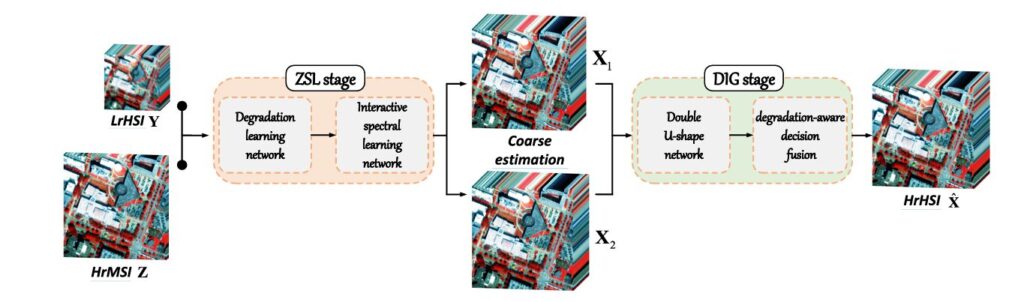
EDIP-Net: Enhanced Deep Image Prior for Unsupervised Hyperspectral Super-Resolution.

EDIP-Net: Enhanced Deep Image Prior for Unsupervised Hyperspectral Super-Resolution

Researchers at the Chinese Academy of Sciences identified a deceptively simple flaw in every DIP-based hyperspectral fusion method published before them — the random noise input — and replaced it with two scene-aware coarse estimations derived entirely from the observations…

EDIP-Net: Enhanced Deep Image Prior for Unsupervised Hyperspectral Super-Resolution Read More »