Adnan Saeed

Adnan Saeed is a deep learning researcher working on medical image analysis, with a focus on multimodal architectures, graph neural networks, and evidential deep learning for clinical imaging tasks. His peer reviewed research has appeared in journals across machine learning and biomedical signal processing. At AI Trend Blend he turns recent papers into clear, practical explainers, with an emphasis on what a method actually does and where it holds up, written for readers who want depth without the hype.

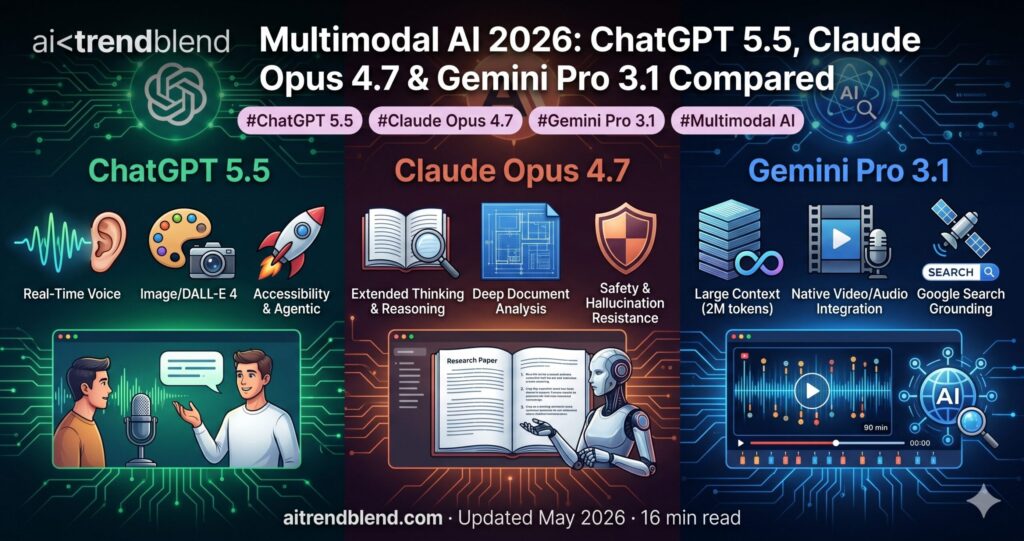
Multimodal AI 2026: ChatGPT 5.5, Claude Opus 4.7 & Gemini Pro 3.1 Compared.

Multimodal AI 2026: ChatGPT 5.5, Claude Opus 4.7 & Gemini Pro 3.1 Compared

Priya had three things open on her screen: a 90-minute product strategy video, a 180-page market research PDF, and a spreadsheet of competitor pricing data. Her deadline was in two hours. Three months ago she would have spent those two…

Multimodal AI 2026: ChatGPT 5.5, Claude Opus 4.7 & Gemini Pro 3.1 Compared Read More »

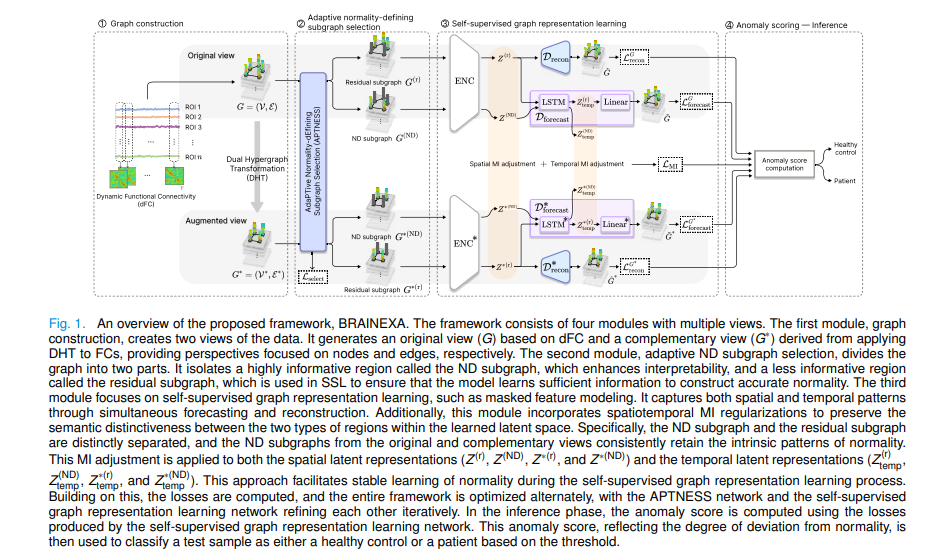
BRAINEXA: Explainable Normative Modeling Detects Brain Disorders from fMRI Without Label.

BRAINEXA: Explainable Normative Modeling Detects Brain Disorders from fMRI Without Label

Korea University researchers built BRAINEXA, an unsupervised normative modeling framework that learns the spatiotemporal fingerprint of healthy brain connectivity from resting-state fMRI, then detects MDD, ASD, ADHD, and Alzheimer’s by measuring deviations — no diagnostic labels required during training, and…

BRAINEXA: Explainable Normative Modeling Detects Brain Disorders from fMRI Without Label Read More »

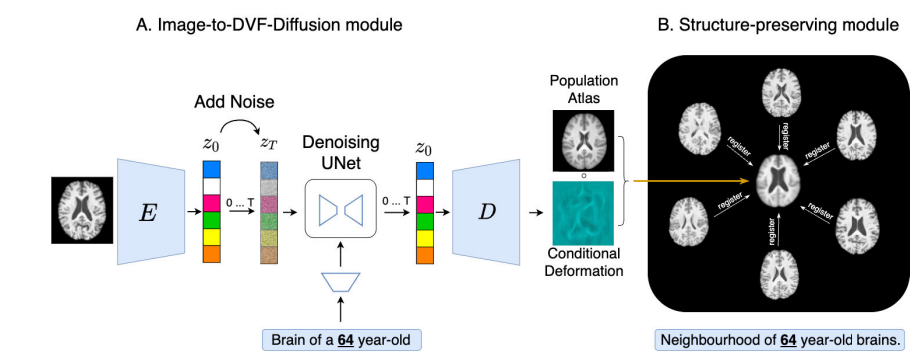
Diff-Def: Diffusion-Generated Deformation Fields for Conditional Brain Atlases.

Diff-Def: Diffusion-Generated Deformation Fields for Conditional Brain Atlases

Researchers from TU Munich and Imperial College London built a latent diffusion model that generates deformation fields — not intensities — to morph a general population brain atlas into condition-specific ones, producing sharper, more anatomically faithful, and fully interpretable atlases…

Diff-Def: Diffusion-Generated Deformation Fields for Conditional Brain Atlases Read More »

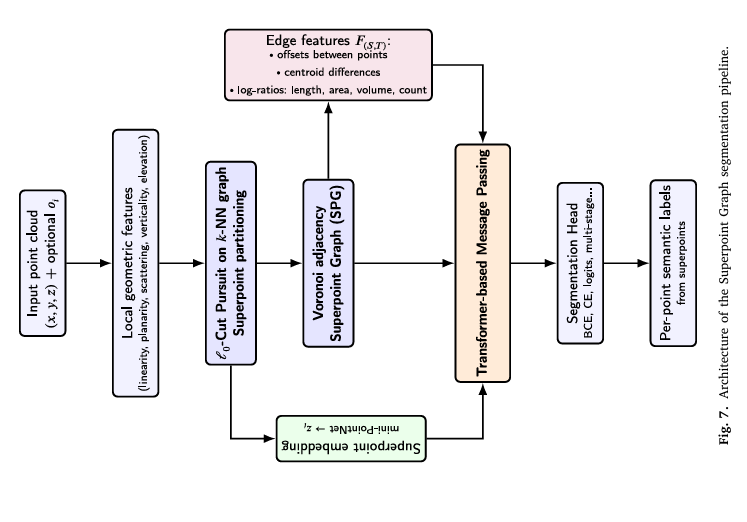
Railway Sinkhole Detection with Physics-Informed Synthetic Data and SuperPoint Transformer.

Railway Sinkhole Detection with Physics-Informed Synthetic Data and SuperPoint Transformer

When you only have a handful of real sinkhole examples, you either accept poor detection or get creative about generating training data. Researchers at Arts et Métiers ParisTech and SNCF Réseau chose the latter — building physics-informed synthetic sinkholes, embedding…

Railway Sinkhole Detection with Physics-Informed Synthetic Data and SuperPoint Transformer Read More »

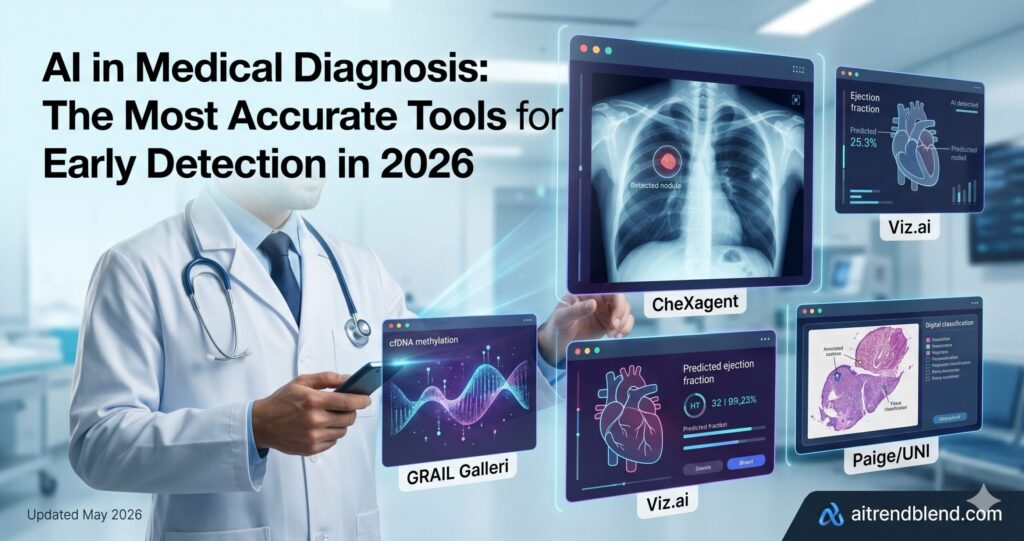
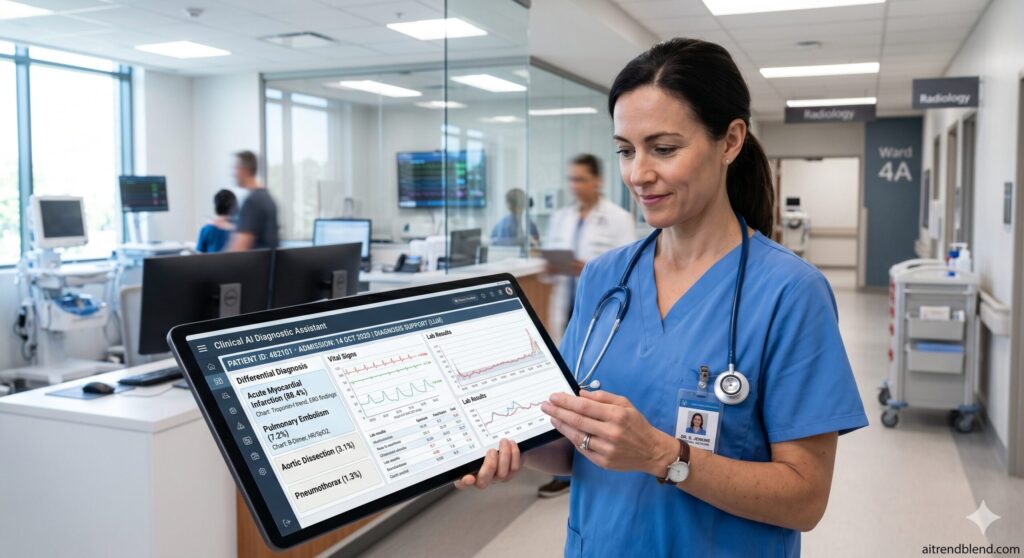
Clinical LLMs 2026: Med-Gemini, Med-PaLM 2, and GPT-5 in Medicine.

Clinical LLMs 2026: Med-Gemini, Med-PaLM 2, and GPT-5 in Medicine

Dr. Fatima Nkosi is managing 19 patients on a Saturday night hospitalist shift. At 2am, she opens the clinical AI assistant embedded in her hospital’s Epic instance and types: “64-year-old male, day 2 post-op colectomy, HR 118, temp 38.9°C, WBC…

Clinical LLMs 2026: Med-Gemini, Med-PaLM 2, and GPT-5 in Medicine Read More »

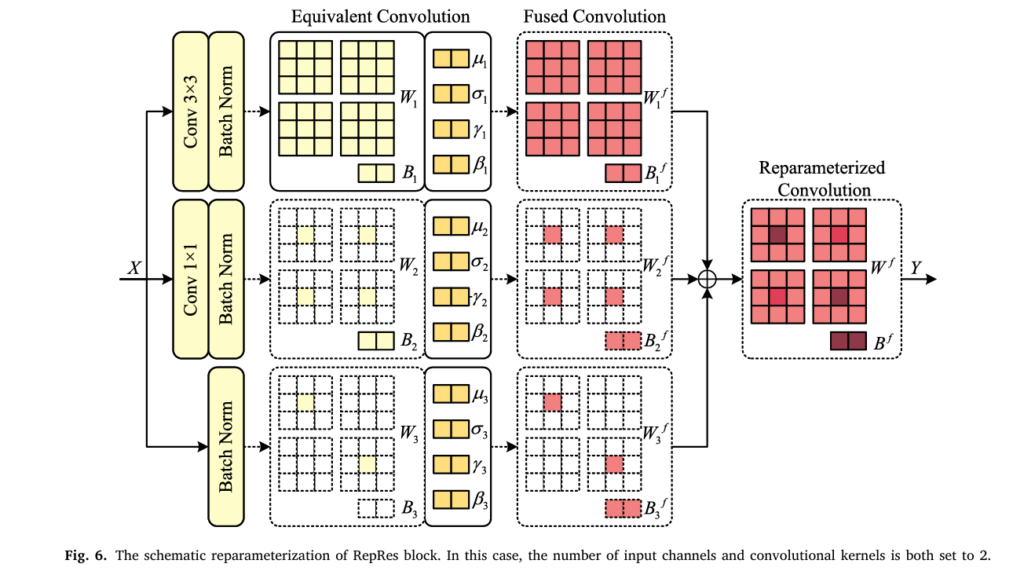
RepVIS-GAN: Nighttime Satellite Visible Image Retrieval from Infrared Data.

RepVIS-GAN: Nighttime Satellite Visible Image Retrieval from Infrared Data

Every night, weather satellites go partially blind — their visible cameras shut off the moment the sun dips below the horizon. Researchers at Ocean University of China built a reparameterized GAN that reads three thermal infrared channels and reconstructs what…

RepVIS-GAN: Nighttime Satellite Visible Image Retrieval from Infrared Data Read More »