Adnan Saeed

Adnan Saeed is a deep learning researcher working on medical image analysis, with a focus on multimodal architectures, graph neural networks, and evidential deep learning for clinical imaging tasks. His peer reviewed research has appeared in journals across machine learning and biomedical signal processing. At AI Trend Blend he turns recent papers into clear, practical explainers, with an emphasis on what a method actually does and where it holds up, written for readers who want depth without the hype.

Dist-SI: Selective Inference with Distributed Data via Randomized Lasso.

Dist-SI: Selective Inference with Distributed Data via Randomized Lasso

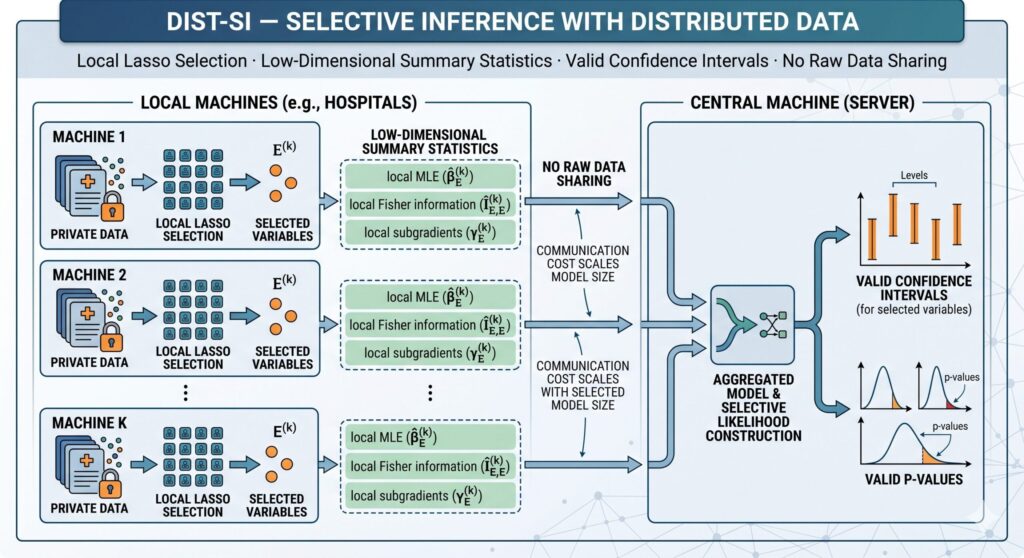
Sifan Liu (Stanford) and Snigdha Panigrahi (University of Michigan) introduce Dist-SI — a procedure that lets distributed machines run lasso independently, share only tiny summary statistics with a central server, and still produce valid confidence intervals and p-values as if…

Dist-SI: Selective Inference with Distributed Data via Randomized Lasso Read More »

Adaptive Client Sampling in Federated Learning via Online Learning with Bandit Feedback.

Adaptive Client Sampling in Federated Learning via Online Learning with Bandit Feedback

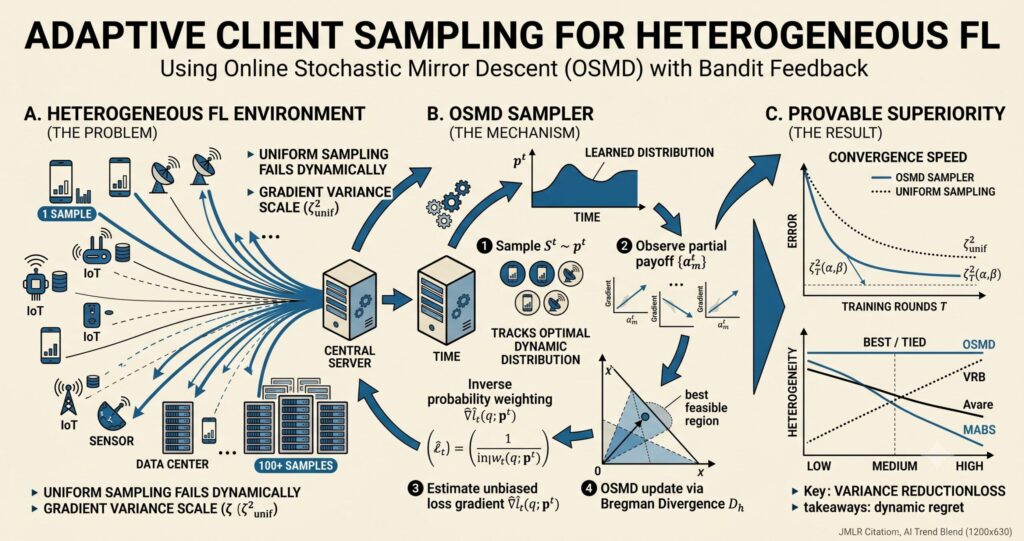
A multi-institution team from the University of Chicago, NJIT, Ant Financial, Zhejiang University, and USC cast client selection as a non-stationary online learning problem — and built an adaptive sampler that provably beats uniform sampling by reducing the gradient variance…

Adaptive Client Sampling in Federated Learning via Online Learning with Bandit Feedback Read More »

Memory Gym: Endless Tasks to Benchmark Memory Capabilities of Agents

Memory Gym: Endless Tasks to Benchmark Memory Capabilities of Agents

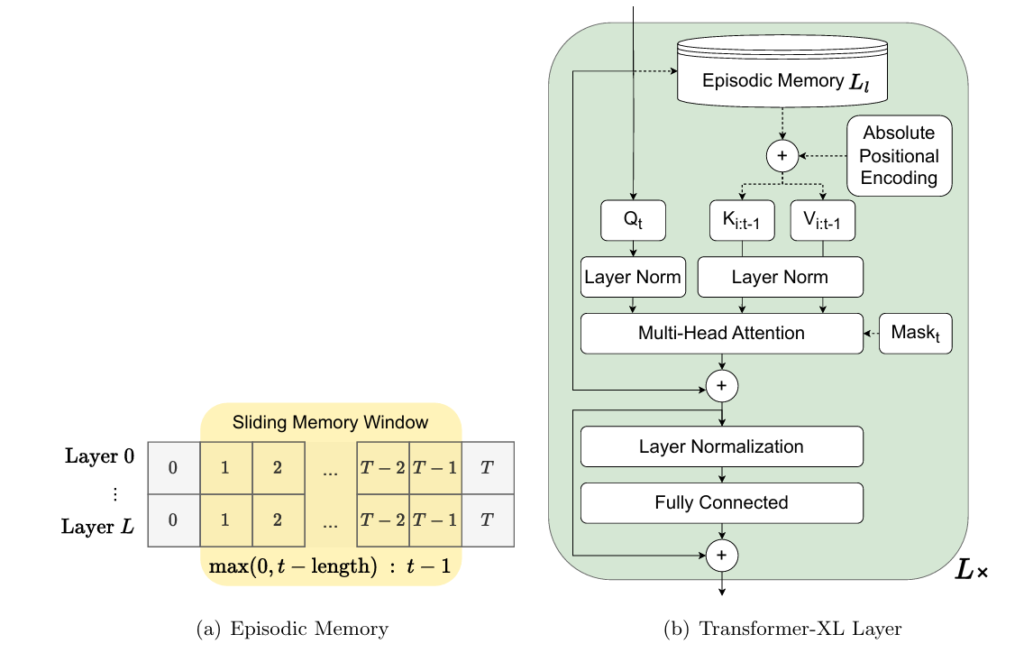
A team from TU Dortmund and Universiteit Leiden transformed three 2D partially observable environments into theoretically infinite challenges — and discovered that GRU, a decade-old recurrent cell, consistently and decisively beats Transformer-XL at sustaining memory over long, escalating horizons.

Memory Gym: Endless Tasks to Benchmark Memory Capabilities of Agents Read More »

PEGN: How Persistent Homology Breaks the WL Barrier in Graph Neural Networks.

PEGN: How Persistent Homology Breaks the WL Barrier in Graph Neural Networks

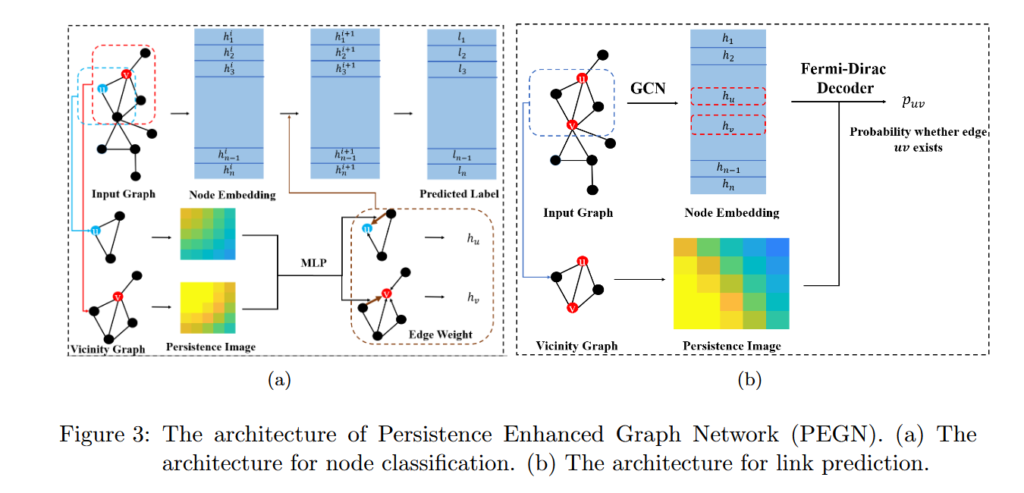
A multi-institution team spanning Peking University, UC San Diego, Stony Brook University, and Weill Cornell Medicine built PEGN — a framework that injects localized topological features from extended persistent homology into graph neural networks, pushing expressiveness beyond the 3-WL barrier…

PEGN: How Persistent Homology Breaks the WL Barrier in Graph Neural Networks Read More »

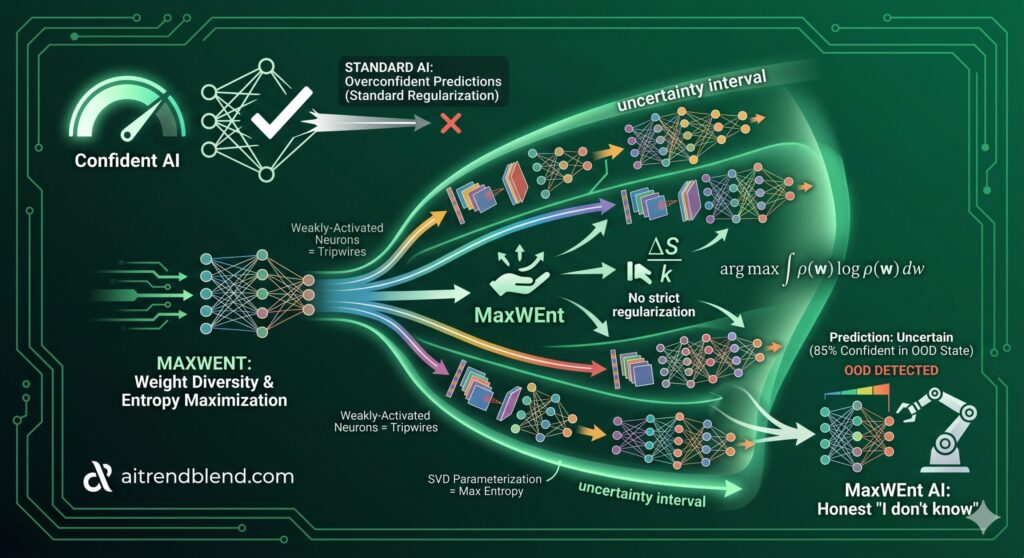
Why Your AI Says It's Confident When It Shouldn't Be — And How MaxWEnt Fixes It.

Why Your AI Says It’s Confident When It Shouldn’t Be — And How MaxWEnt Fixes It

Researchers from Michelin and the Centre Borelli at ENS Paris-Saclay have built a smarter way to make neural networks say “I don’t know” — by maximizing the diversity of possible network weights rather than relying on standard regularization that quietly…

Why Your AI Says It’s Confident When It Shouldn’t Be — And How MaxWEnt Fixes It Read More »

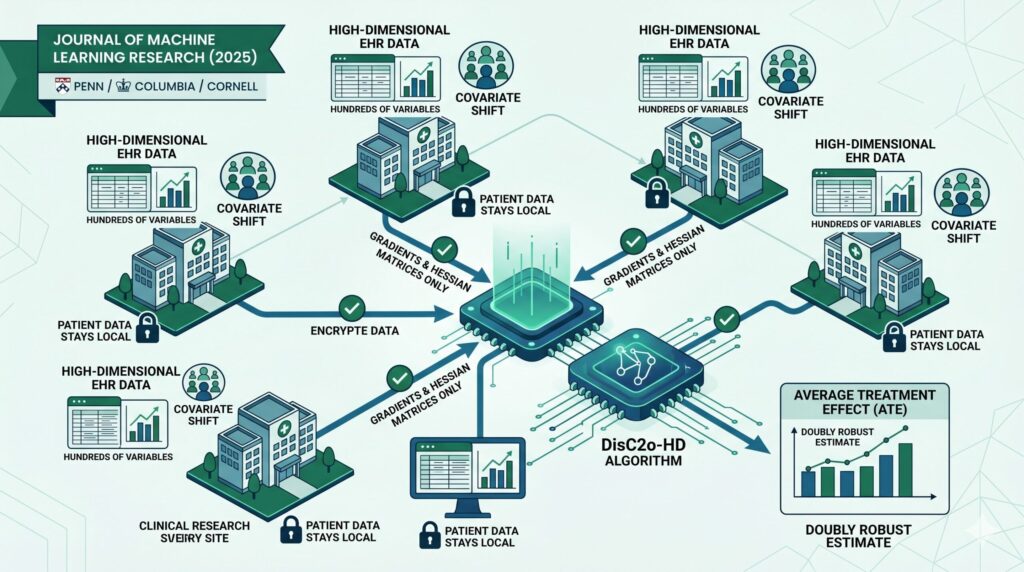
DisC2o-HD: Distributed Causal Inference with Covariate Shift for High-Dimensional Healthcare Data.

DisC2o-HD: Distributed Causal Inference with Covariate Shift for High-Dimensional Healthcare Data

A team from the University of Pennsylvania, Columbia University, and Cornell University has built a distributed algorithm that estimates causal treatment effects from high-dimensional electronic health records spread across multiple clinical sites — without ever sharing a single patient record…

DisC2o-HD: Distributed Causal Inference with Covariate Shift for High-Dimensional Healthcare Data Read More »

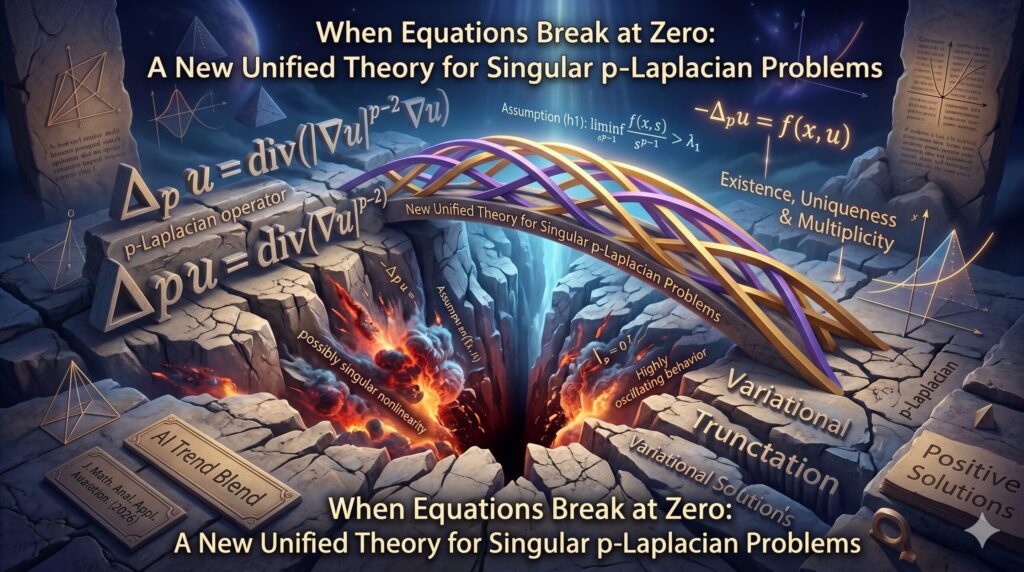
Singular p-Laplacian Problems: Existence, Uniqueness & Multiplicity via Variational Methods.

Singular p-Laplacian Problems: Existence, Uniqueness & Multiplicity via Variational Methods

Mathematicians Pasquale Candito, Giuseppe Failla, and Bruno Vassallo have devised a single variational framework that simultaneously handles bounded, mildly singular, and wildly oscillating reaction terms in quasilinear elliptic equations — proving existence, uniqueness, and multiplicity of positive solutions under one…

Singular p-Laplacian Problems: Existence, Uniqueness & Multiplicity via Variational Methods Read More »