Adnan Saeed

Adnan Saeed is a deep learning researcher working on medical image analysis, with a focus on multimodal architectures, graph neural networks, and evidential deep learning for clinical imaging tasks. His peer reviewed research has appeared in journals across machine learning and biomedical signal processing. At AI Trend Blend he turns recent papers into clear, practical explainers, with an emphasis on what a method actually does and where it holds up, written for readers who want depth without the hype.

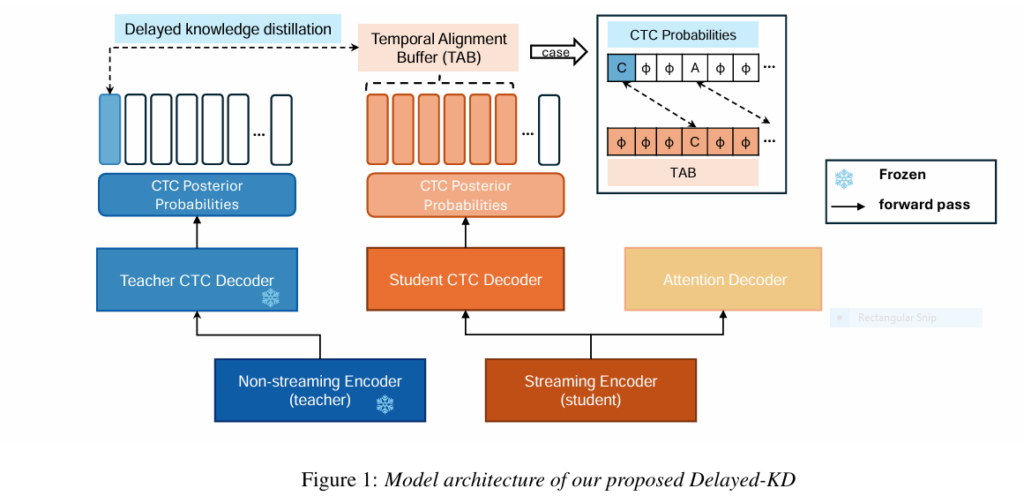
Delayed-KD model architecture diagram showing non-streaming teacher model and streaming student model alignment

Delayed-KD: A Powerful Breakthrough in Low-Latency Streaming ASR (With a 9.4% CER Reduction)

In an era where real-time communication and instant data processing are becoming the norm, streaming automatic speech recognition (ASR) has emerged as a cornerstone technology across industries—from customer service chatbots to live captioning in video conferencing platforms. However, despite significant advancements, streaming ASR still faces two major challenges: accuracy degradation due to small chunk sizes […]
Delayed-KD: A Powerful Breakthrough in Low-Latency Streaming ASR (With a 9.4% CER Reduction) Read More »

Vision-language model distilling knowledge to a compact AI, reducing training costs by 90% with ActiveKD and PCoreSet

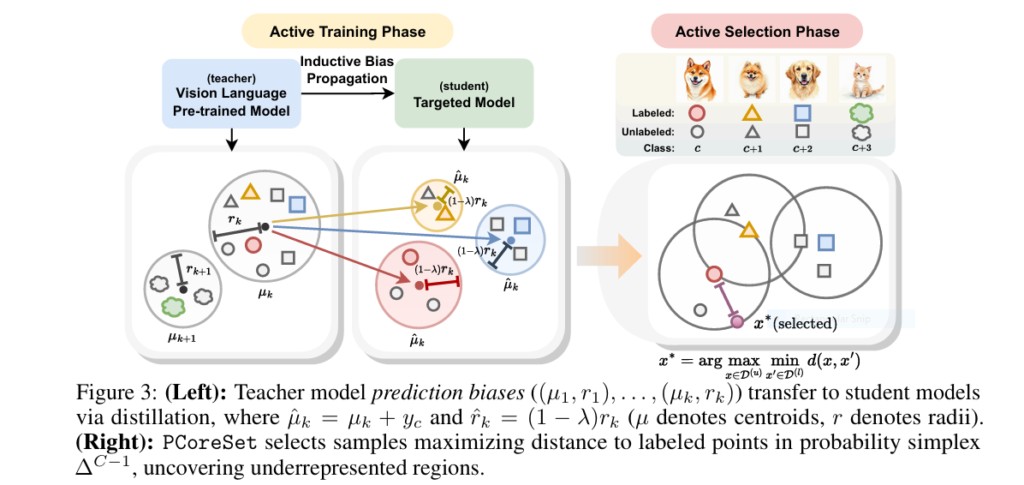
ActiveKD & PCoreSet: 5 Revolutionary Steps to Slash AI Training Costs by 90% (Without Sacrificing Accuracy!)

The $100 Billion Problem: AI’s Annotation Nightmare Training AI models is expensive, slow, and painfully data-hungry. In specialized fields like healthcare or satellite imaging, labeling a single image can cost $50–$500. For a 1,000-class dataset like ImageNet? Millions. But what if you could: Meet ActiveKD and PCoreSet—a breakthrough framework from KAIST and VUNO Inc. that’s turning active learning (AL) and knowledge

ActiveKD & PCoreSet: 5 Revolutionary Steps to Slash AI Training Costs by 90% (Without Sacrificing Accuracy!) Read More »

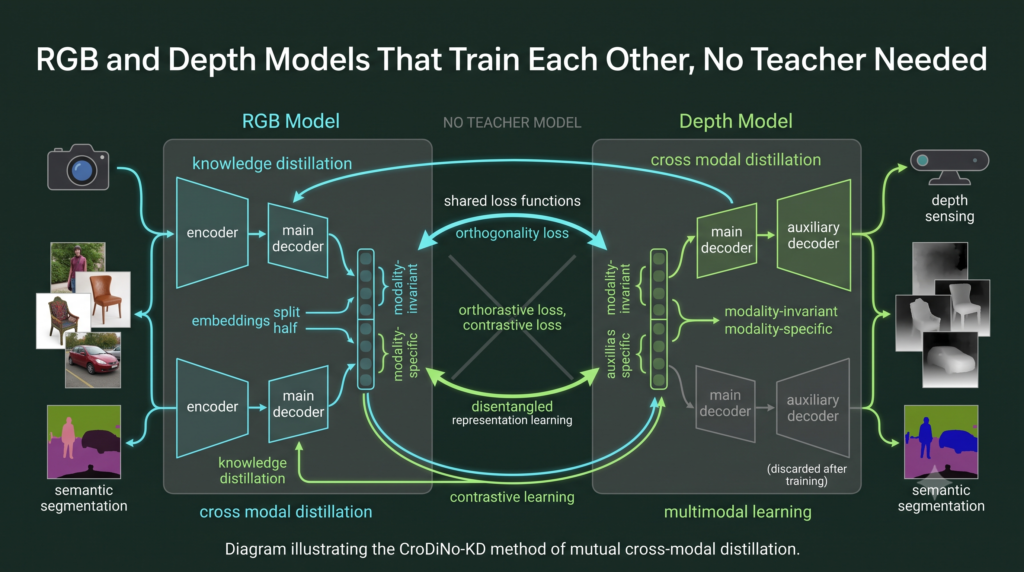
CroDiNo-KD: RGB and Depth Models That Train Each Other, No Teacher Needed

Knowledge Distillation Computer Vision 9 min read Analysis by the aitrendblend editorial team No teacher, no bottleneck. Two students who happen to sit next to each other in class. A robot or a self driving car often sees the world through two eyes that do not match. A camera gives rich color and texture, a

CroDiNo-KD: RGB and Depth Models That Train Each Other, No Teacher Needed Read More »

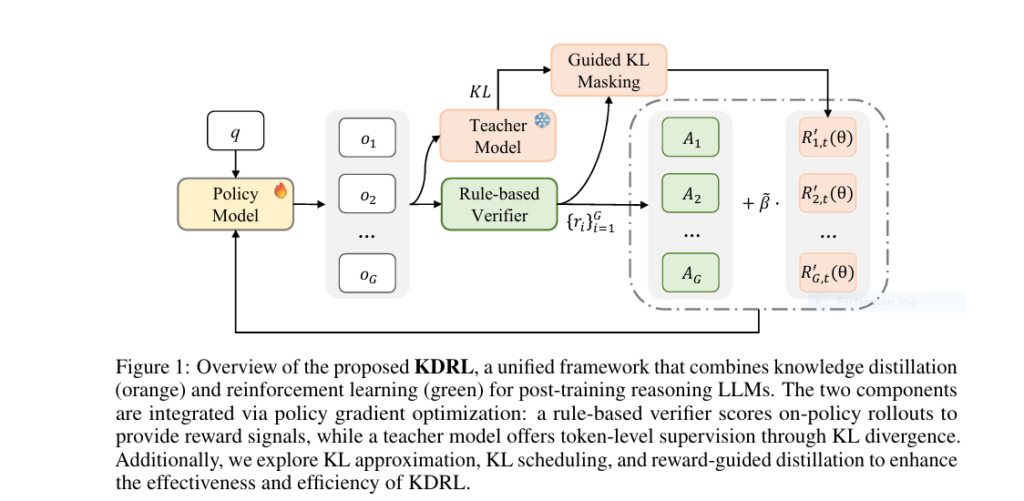
KDRL framework diagram showing teacher-student RL fusion boosting LLM math accuracy

Unlock 57.2% Reasoning Accuracy: KDRL Revolutionary Fusion Crushes LLM Training Limits

The Hidden Flaw Crippling Your LLM’s Reasoning Power Large language models (LLMs) promise revolutionary reasoning capabilities, yet most hit an invisible wall. Traditional training forces a brutal trade-off: Enter KDRL—a Huawei/HIT-developed framework merging KD and RL into a single unified pipeline. Results from 6 reasoning benchmarks reveal: How KDRL Shatters the KD-RL Deadlock Proposed model breakthrough lies

Unlock 57.2% Reasoning Accuracy: KDRL Revolutionary Fusion Crushes LLM Training Limits Read More »

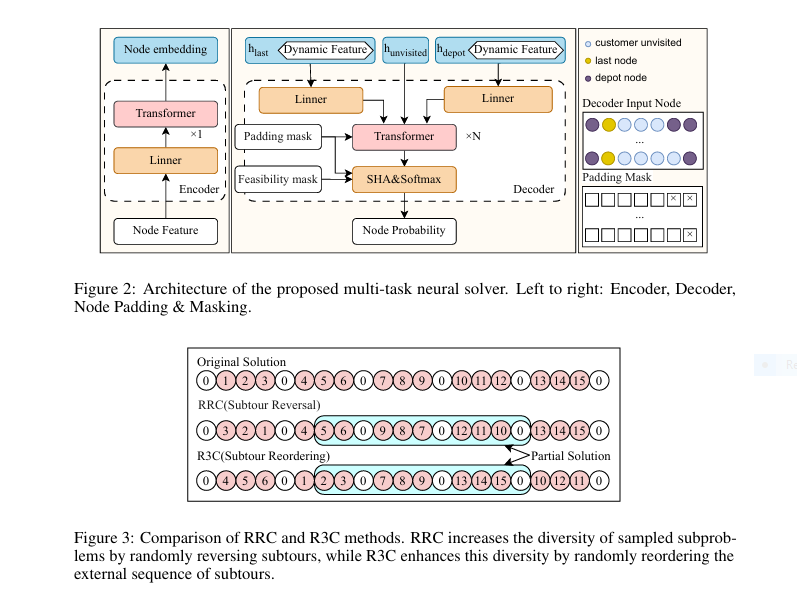
MTL-KD AI model dramatically reducing complex vehicle route distances on a global logistics map, showcasing revolutionary optimization.

MTL-KD: 5 Breakthroughs That Shatter Old Limits in AI Vehicle Routing (But Reveal New Challenges)

The quest for the perfect delivery route, efficient garbage collection circuit, or life-saving emergency response path has plagued businesses and cities for decades. Traditional Vehicle Routing Problem (VRP) solvers often buckle under real-world complexity and scale, demanding expert tuning and struggling with massive datasets. But a seismic shift is occurring. Groundbreaking AI research titled “MTL-KD: Multi-Task

MTL-KD: 5 Breakthroughs That Shatter Old Limits in AI Vehicle Routing (But Reveal New Challenges) Read More »

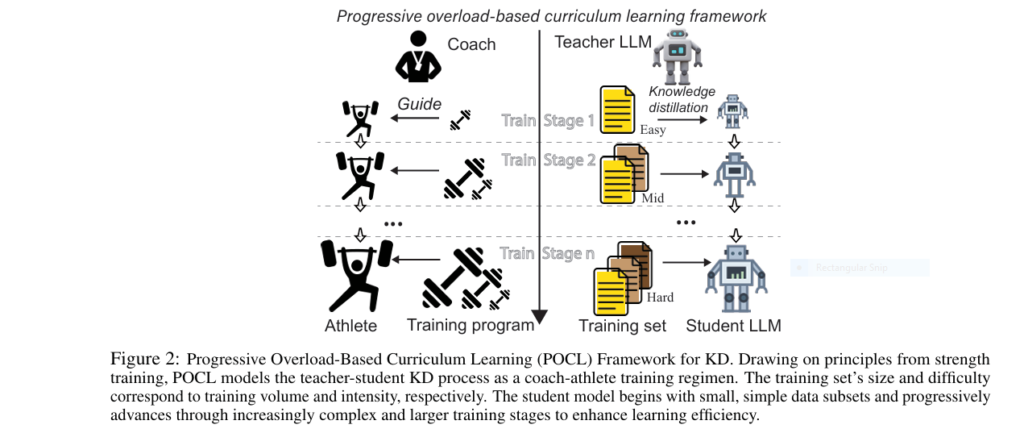
POCL Framework: 2.5X Faster LLMs Distillation Without Collapse

Unlock 2.5X Better LLMs: How Progressive Overload Training Crushes Catastrophic Forgetting

The Painful Reality of Shrinking Giant LLMs Large language models (LLMs) like GPT-4o and Claude 3.5 revolutionized AI—but their massive size makes deployment a nightmare. Imagine slashing compute costs by 90% while retaining 97% of performance. That’s the promise of Knowledge Distillation (KD), where a compact “student” model learns from a “teacher” LLM. Yet traditional KD

Unlock 2.5X Better LLMs: How Progressive Overload Training Crushes Catastrophic Forgetting Read More »

Comparison graph showing WER reduction in CTC ASR using context-dependent ILM vs. traditional methods.

Unlock 13% Better Speech Recognition: How Label-Context-Dependent ILM Estimation Shatters CTC Limits

Connectionist Temporal Classification (CTC) powers countless speech recognition systems. But here’s the dirty secret: its “context-independent” assumption is a myth. Modern encoders do learn context-dependent patterns, and ignoring this wastes potential. This paper reveals how to harness this hidden power, slashing word error rates (WER) by over 13% in cross-domain tasks. If your ASR system uses CTC, this

Unlock 13% Better Speech Recognition: How Label-Context-Dependent ILM Estimation Shatters CTC Limits Read More »

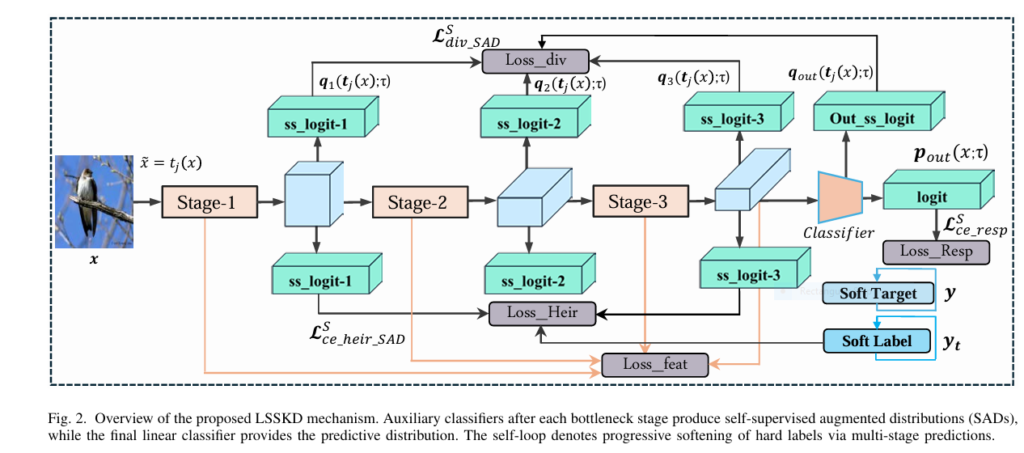
Diagram illustrating the Layered Self‑Supervised Knowledge Distillation (LSSKD) framework, showing auxiliary classifiers enhancing student model performance on edge devices.

7 Incredible Upsides and Downsides of Layered Self‑Supervised Knowledge Distillation (LSSKD) for Edge AI

As deep learning continues its meteoric rise in computer vision and multimodal sensing, deploying high‑performance models on resource‑constrained edge devices remains a major hurdle. Enter Layered Self‑Supervised Knowledge Distillation (LSSKD)—an innovative framework that leverages self‑distillation across multiple network stages to produce compact, high‑accuracy student models without relying on massive pre‑trained teachers. In this article, we’ll

7 Incredible Upsides and Downsides of Layered Self‑Supervised Knowledge Distillation (LSSKD) for Edge AI Read More »

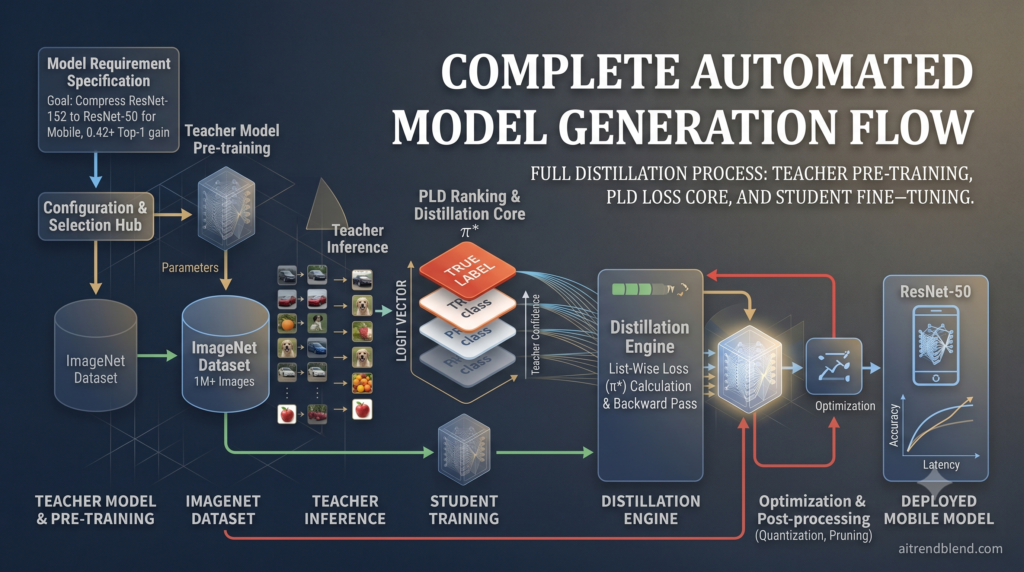
PLD: List Wise Knowledge Distillation with Plackett-Luce.

PLD: List Wise Knowledge Distillation with Plackett-Luce

Machine Learning › Knowledge Distillation › Paper Analysis Knowledge Distillation Plackett-Luce List Wise Ranking ListMLE Image Classification Paper Analysis Analysis by the aitrendblend editorial team · October 2025 · 13 min read · arXiv:2506.12542 aitrendblend.com · Knowledge Distillation PLD, List Wise Knowledge Distillation with the Plackett-Luce Model Almost every logit based distillation method shares an

PLD: List Wise Knowledge Distillation with Plackett-Luce Read More »

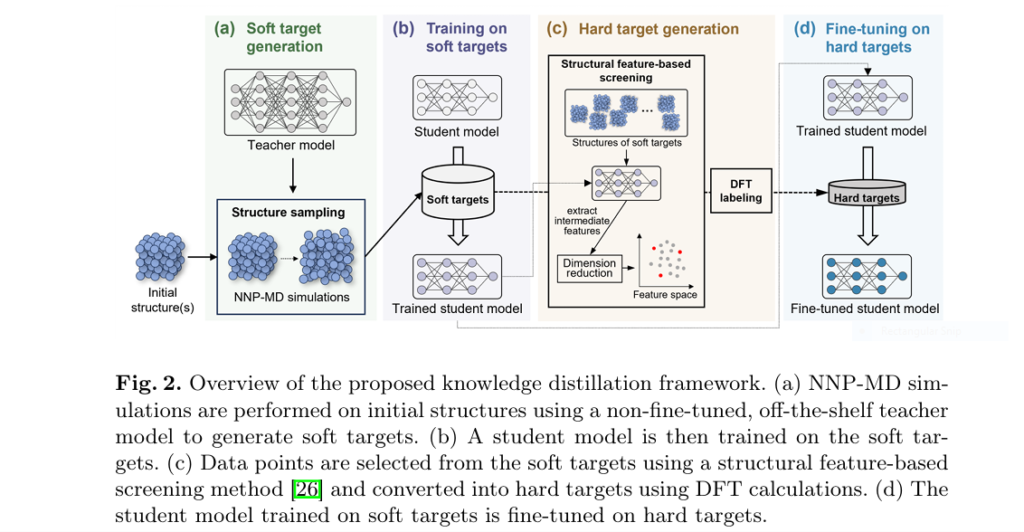
Molecular dynamics simulation speed comparison using traditional vs. new knowledge distillation framework.

Unlock 106x Faster MD Simulations: The Knowledge Distillation Breakthrough Accelerating Materials Discovery

Molecular Dynamics (MD) simulations are the computational microscopes of materials science, allowing researchers to peer into the atomic dance governing everything from battery performance to drug interactions. Neural Network Potentials (NNPs) promised a revolution, offering accuracy approaching costly ab initio methods like Density Functional Theory (DFT) at a fraction of the computational cost. But a harsh reality emerged: Researchers

Unlock 106x Faster MD Simulations: The Knowledge Distillation Breakthrough Accelerating Materials Discovery Read More »