Computer Vision

Computer vision is one of our deepest areas, covering how machines learn to see, segment, and reason about images and video. Articles here range from convolutional and transformer based architectures to dense prediction tasks like detection and segmentation, with regular coverage of medical imaging where reliable vision models carry real clinical weight. The emphasis stays on what makes a method work and where it breaks, backed by the original research.

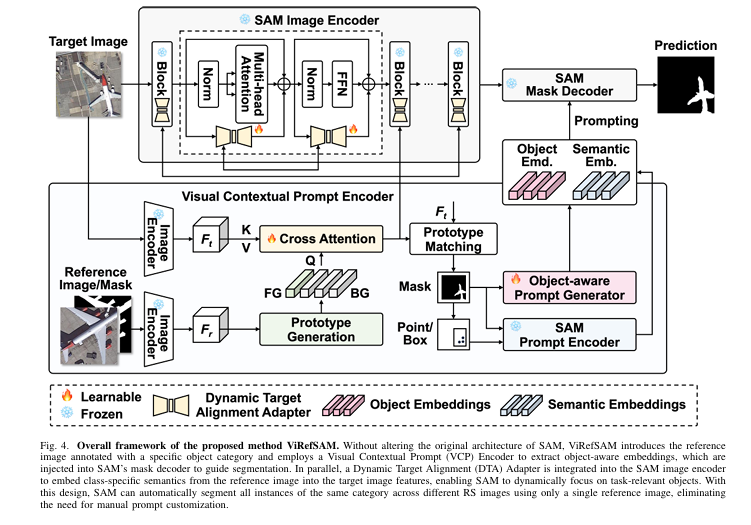
ViRefSAM: How Visual Reference Images Are Finally Making SAM Work for Remote Sensing.

ViRefSAM: How Visual Reference Images Are Finally Making SAM Work for Remote Sensing

Researchers from the Chinese Academy of Sciences built a framework that feeds a handful of annotated reference images into SAM’s pipeline, eliminating the need to manually prompt each aerial scene — and in the process, achieved state-of-the-art few-shot segmentation across…

ViRefSAM: How Visual Reference Images Are Finally Making SAM Work for Remote Sensing Read More »
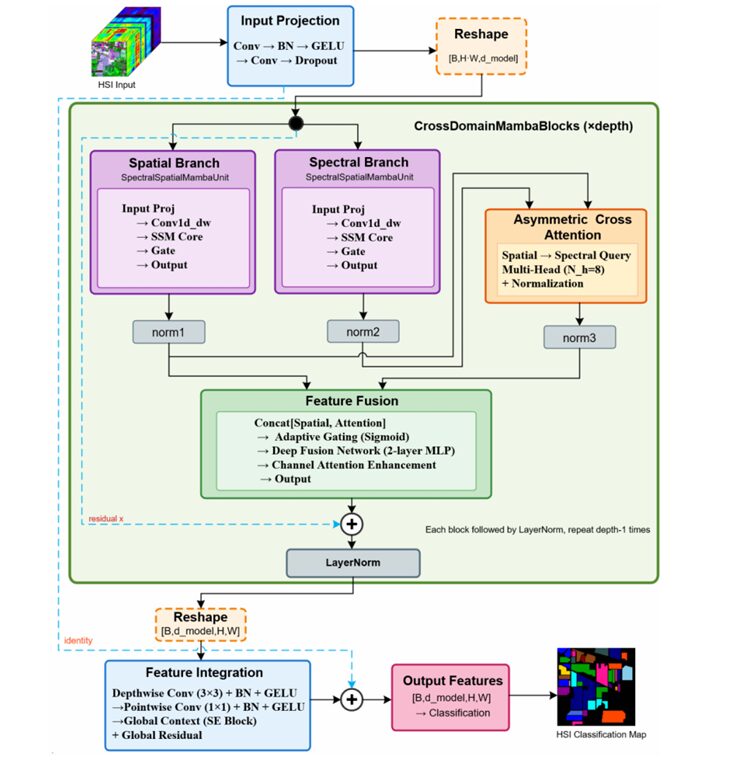
SSA-Mamba: The Hyperspectral Classifier That Finally Lets Spatial and Spectral Features Talk to Each Other

SSA-Mamba: The Hyperspectral Classifier That Finally Lets Spatial and Spectral Features Talk to Each Other

Researchers at Guangzhou Maritime University diagnosed a fundamental flaw in every existing hyperspectral classification model — spatial and spectral features are either forced to share the same representation space, or kept so separate they never productively interact. SSA-Mamba fixes both…

SSA-Mamba: The Hyperspectral Classifier That Finally Lets Spatial and Spectral Features Talk to Each Other Read More »

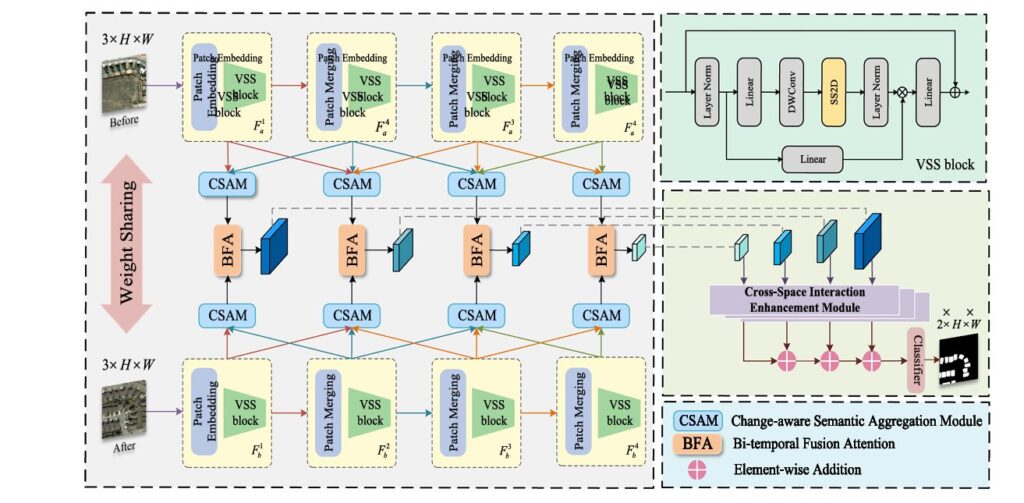
GLMamba: How Global-Local Mamba Detects Change in Satellite Images Better Than CNNs and Transformers.

GLMamba: How Global-Local Mamba Detects Change in Satellite Images Better Than CNNs and Transformers

Shengyan Liu and Min Xia at NUIST introduce GLMamba: a Siamese Mamba network that pairs global state-space modeling with local convolutional detail extraction for remote sensing change detection. On LEVIR-CD it posts F1=91.27% and IoU=83.94%, outperforming ChangeMamba, ChangeFormer, and nine…

GLMamba: How Global-Local Mamba Detects Change in Satellite Images Better Than CNNs and Transformers Read More »

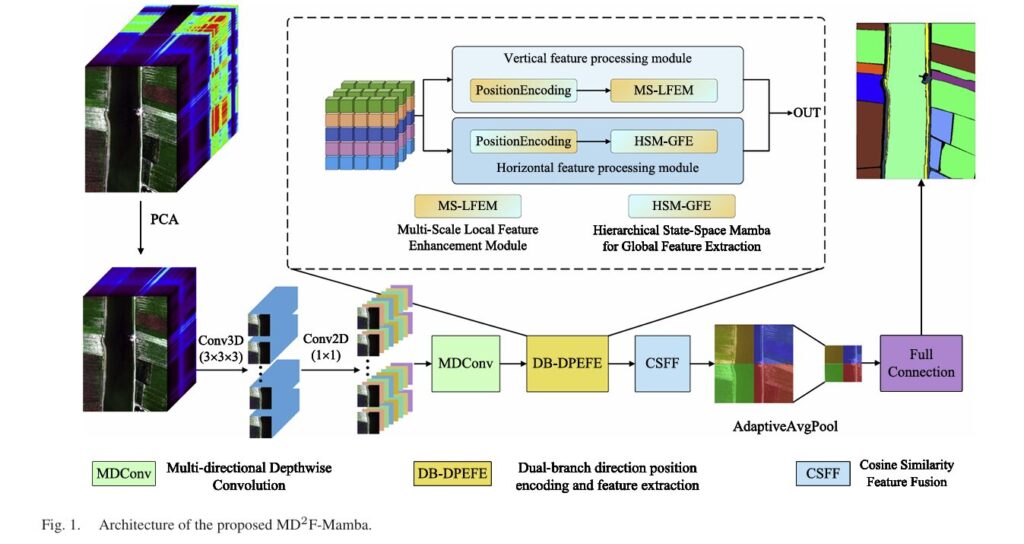
MD2F-Mamba: How Directional Convolution and Dual-Branch Mamba Crack Hyperspectral Image Classification.

MD2F-Mamba: How Directional Convolution and Dual-Branch Mamba Crack Hyperspectral Image Classification

Xiaoqing Wan and colleagues at Hengyang Normal University introduce MD2F-Mamba: a dual-branch architecture pairing multidirectional depthwise convolution with a hierarchical state-space Mamba for hyperspectral classification. With just 92K parameters and 8.3M FLOPs, it posts 99.81% overall accuracy on Pavia University…

MD2F-Mamba: How Directional Convolution and Dual-Branch Mamba Crack Hyperspectral Image Classification Read More »

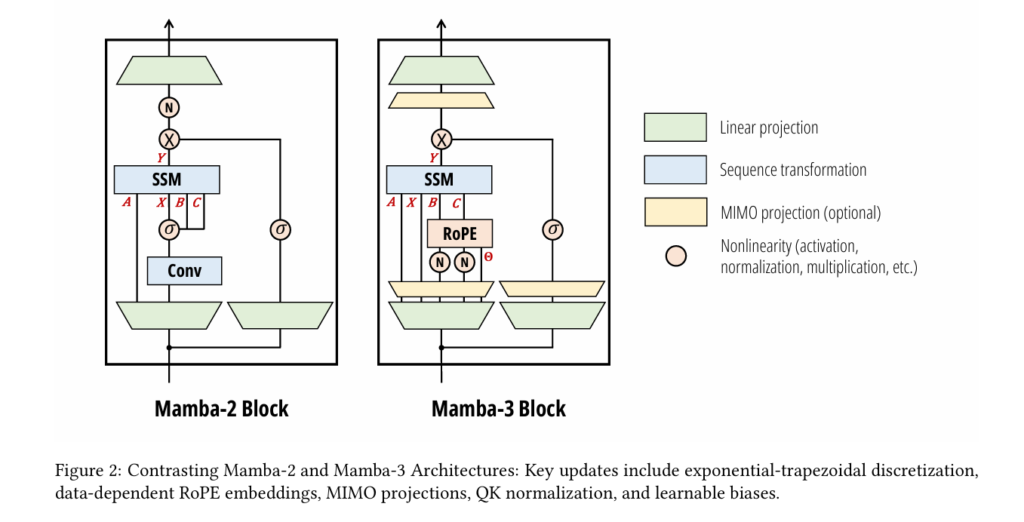
Mamba-3: Three Simple Ideas That Finally Fix What Transformers Get Wrong at Inference.

Mamba-3: Three Simple Ideas That Finally Fix What Transformers Get Wrong at Inference

Researchers at Carnegie Mellon and Princeton took a hard look at why sub-quadratic models keep losing to Transformers on capability while supposedly winning on efficiency — then fixed it. Mamba-3 combines a theoretically grounded discretization, complex-valued states for real tracking…

Mamba-3: Three Simple Ideas That Finally Fix What Transformers Get Wrong at Inference Read More »

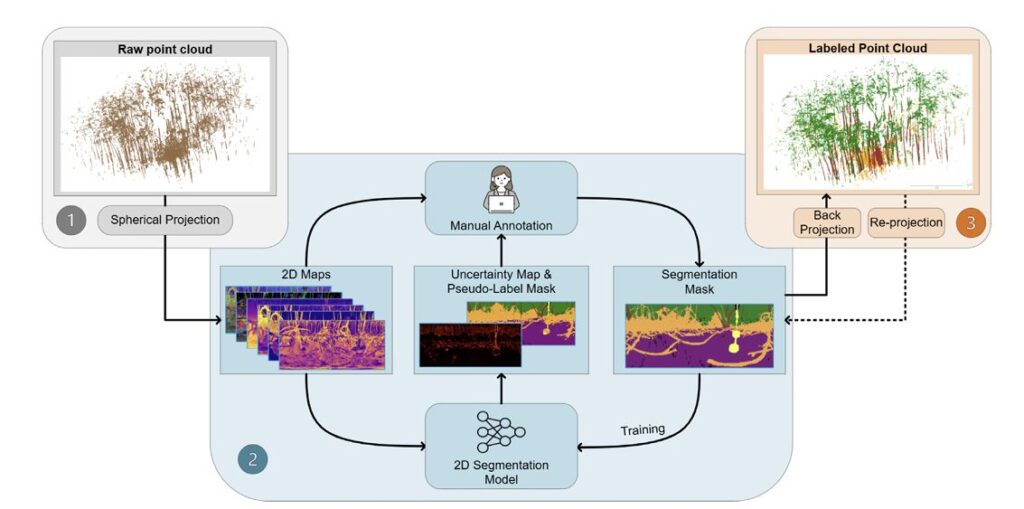
Through the Perspective of LiDAR: Uncertainty-Aware Annotation Pipeline for TLS Point Cloud Segmentation.

Through the Perspective of LiDAR: Uncertainty-Aware Annotation Pipeline for TLS Point Cloud Segmentation

Fei Zhang and colleagues at RIT built a semi-automated pipeline that projects millions of mangrove LiDAR points onto a 2D spherical canvas, trains an ensemble of segmentation networks, harvests uncertainty maps to guide human annotators, and then back-projects everything into…

Through the Perspective of LiDAR: Uncertainty-Aware Annotation Pipeline for TLS Point Cloud Segmentation Read More »

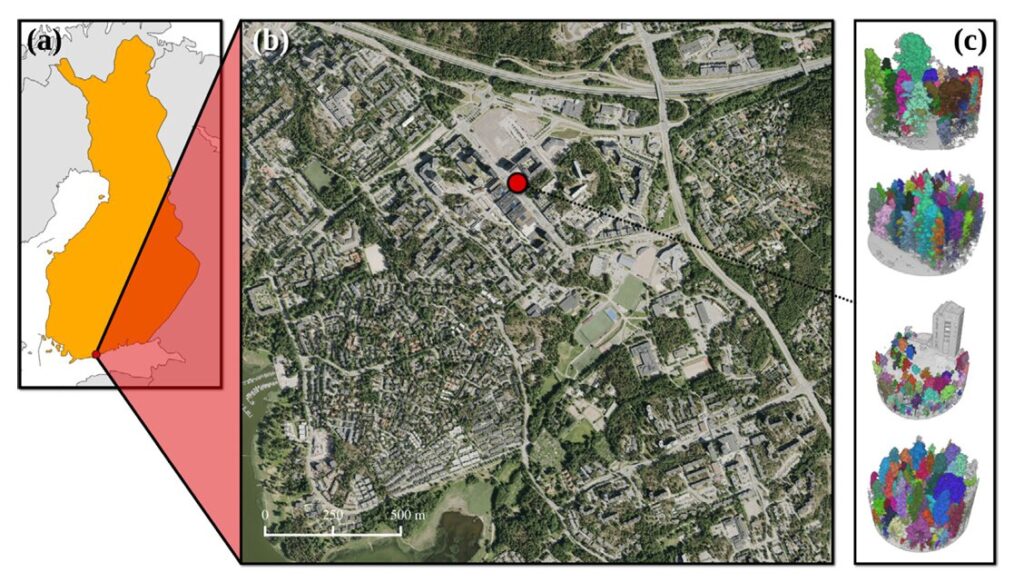
FGI-EMIT: The First Multispectral LiDAR Benchmark That Finally Takes Understory Trees Seriously.

FGI-EMIT: The First Multispectral LiDAR Benchmark That Finally Takes Understory Trees Seriously

Lassi Ruoppa and colleagues at the Finnish Geospatial Research Institute introduce FGI-EMIT: 1,561 manually annotated boreal trees across three wavelengths, with a deliberate emphasis on the small, occluded understory trees that have defeated every benchmark before it. ForestFormer3D wins at…

FGI-EMIT: The First Multispectral LiDAR Benchmark That Finally Takes Understory Trees Seriously Read More »

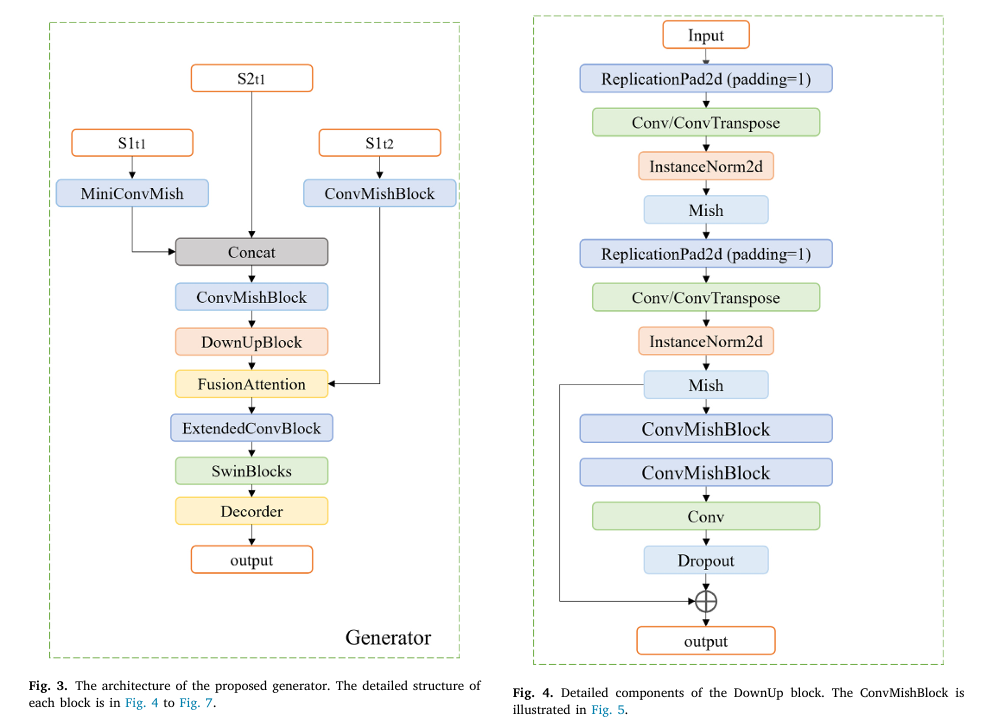
CRGenNet: Cloud-Free Optical Image Generation Using SAR and Contaminated Optical Data.

CRGenNet: Cloud-Free Optical Image Generation Using SAR and Contaminated Optical Data

Researchers at the University of Twente built an image generation network that does what every prior method refused to do — accept that your helper image might also be covered in clouds. CRGenNet fuses Sentinel-1 SAR radar data with contaminated…

CRGenNet: Cloud-Free Optical Image Generation Using SAR and Contaminated Optical Data Read More »

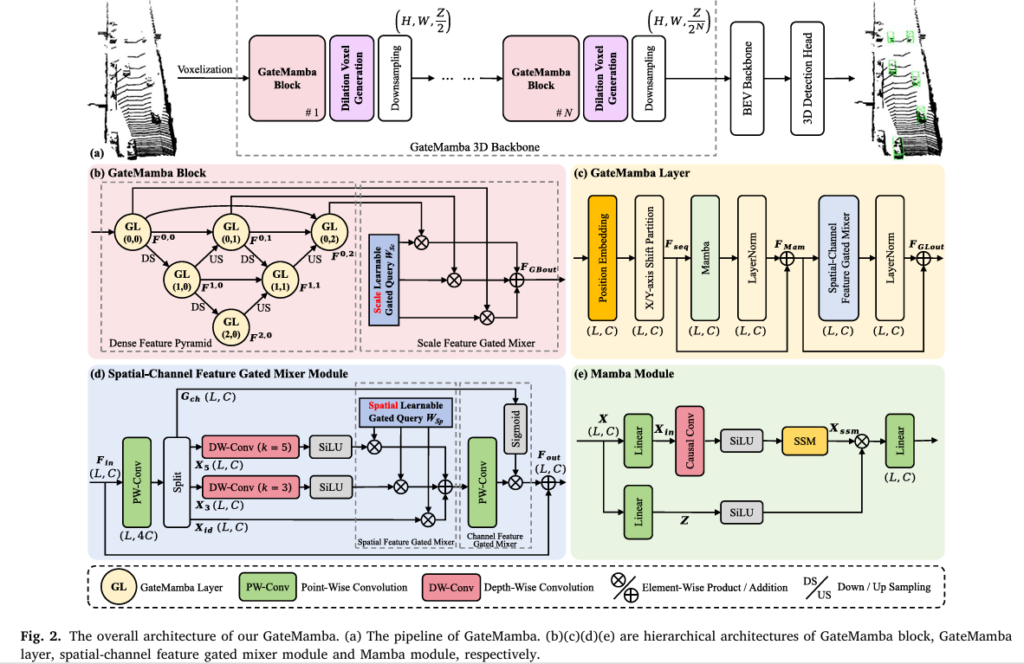
GateMamba: Feature Gated Mixer in State Space Model for Point Cloud 3D Object Detection.

GateMamba: Feature Gated Mixer in State Space Model for Point Cloud 3D Object Detection

Mamba-based 3D detectors achieve impressive overall numbers but consistently under-perform on small and distant targets — the problem is architectural: unidirectional scanning and crude downsampling let weak foreground signals drown in background noise. Researchers at NUDT and Sun Yat-sen University…

GateMamba: Feature Gated Mixer in State Space Model for Point Cloud 3D Object Detection Read More »